How Kolkata's student protest was infiltrated and hijacked
What began as a student-led protest over education reforms, the NEET paper leak and Dharmendra Pradhan's resignation descended into chaos after unidentified groups allegedly joined the march, targeted journalists and clashed with police at Kolkata's Esplanade.
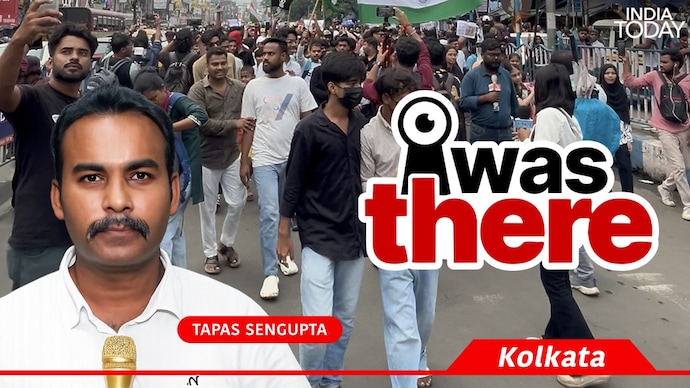
What began as a student-led march demanding reforms in the Indian education system, action over the NEET paper leak, and the resignation of Union Education Minister Dharmendra Pradhan ended in chaos after unidentified elements allegedly infiltrated the procession, targeted journalists, and transformed Kolkata's Esplanade into a flashpoint.
The day began at Sealdah Railway Station, where Left-wing student unions had called for a mass protest rally. Although Kolkata Police had denied official permission for the march, a large number of students gathered and began marching towards Esplanade. I, along with Video Journalist Argha Ghosh and several other media personnel, was positioned at the front of the procession covering the demonstration from the ground.
UNIDENTIFIED GROUPS JOINED RALLY EN ROUTE
Shortly after the march began, we observed a sudden influx of people joining the procession from different directions, particularly from Raja Bazar and Entally. Many of these new entrants did not appear to be students. Several had covered their faces with masks, and their clothing stood in noticeable contrast to that of the student participants.
Despite their distinct appearance, they merged seamlessly into the procession. The student organisers noticed the growing crowd but initially paid little attention as the rally continued to swell.
RALLY PAUSED AT MOULALI BEFORE PROCEEDING TO ESPLANADE
The march reached the Moulali crossing while a Rath Yatra procession was passing through the same intersection. Protesters briefly halted near Moulali Yuva Kendra to allow the religious procession to pass. Once the crossing was cleared, police permitted the rally to continue towards Esplanade.
The march remained peaceful during this stretch, with participants raising slogans against the Central Government and over the NEET paper leak. However, as the procession advanced, the atmosphere began to change. The focus gradually shifted from criticism of government policies to hostility directed at sections of the media.
Meanwhile, additional groups continued joining the rally from Park Circus, Raja Bazar and Chandni. According to observations on the ground, many of these locations have historically posed law-and-order challenges. By the time the procession reached Esplanade and Dorina crossing, the roads were completely packed, overwhelming both the organisers and the police deployment.
DYNAMICS CHANGED AFTER REACHING ESPLANADE
The situation deteriorated rapidly once the rally reached Esplanade.
Individuals who had merged into the procession began abusing journalists without provocation before escalating to organised heckling.
The core organisers, comprising members of Left-wing student organisations, continued raising slogans against the Central Government and sections of the media but did not display violent behaviour. The hostility overwhelmingly came from the second group that had entered the procession from side streets during the march.
While the identities of these individuals remained unclear, several did not appear to be students. Some carried the national flag, which appeared to shield or conceal their identities.
CJP REPRESENTATIVE SAYS HE JOINED IN INDIVIDUAL CAPACITY
During the demonstration, I spoke to a representative from CJP about his participation in the rally.
He said, "I have come and joined this rally in my individual capacity. However, since the cause was alignment with our values, I thought it imperative to show my support on the street."
I also spoke to an SFI supporter on the ground and asked why journalists were being targeted. The supporter condemned the violence.
Student leaders subsequently addressed the gathering through microphones, urging participants not to take the law into their own hands, not to abuse media personnel and not to target police officers.
However, those appeals failed to calm the situation. According to observations at the site, the infiltrating group had effectively taken control of the rally's direction. At one stage, it appeared that nearly 70 per cent of the gathering consisted of non-student intruders who had assembled with the intention of creating disorder.
JOURNALISTS CAME UNDER ATTACK
The violence intensified as rogue elements targeted media personnel, with female journalists among those most severely affected.
I witnessed a female reporter being dragged into a dense crowd by five to six individuals. Nearby journalists immediately shouted for help and rushed towards the group, forcing the attackers to release her.
Several male journalists were also assaulted, suffering visible facial bruises and cuts. According to observations on the ground, between five and seven journalists sustained bleeding injuries and required medical treatment.
Aaj Tak Bangla correspondent Rahi Halder was also heckled while reporting live. His smartphone was snatched during the broadcast in an incident captured on camera. The device was later recovered and handed over to police, who are investigating the matter.
SOCIAL MEDIA CREATORS ALLEGEDLY FUELLED TENSIONS
The aggression also appeared to be amplified by certain digital content creators present at the protest.
According to observations on the ground, some Left-leaning creators who were live-streaming the demonstration pointed out mainstream journalists to the crowd, labelled them as "Godi Media" and urged agitators to isolate them.
This alleged instigation further inflamed the crowd, resulting in verbal abuse, harassment and near-lynching attempts against working journalists.
POLICE MOVED IN AFTER PROLONGED RESTRAINT
Police personnel largely maintained restraint for most of the afternoon despite the swelling crowd.
However, officers intervened after repeated attempts were made to target journalists and disrupt law and order.
Police did not resort to heavy force. Instead, they initiated a targeted pushback aimed at dispersing the aggressive non-student elements. Removing these individuals became necessary to ensure the safety of journalists and police personnel stationed at the protest site.
The confrontation continued until late evening. While the student protesters eventually dispersed peacefully, the unidentified infiltrators who allegedly instigated the violence slipped away after creating widespread disorder.
CONCLUSION
From my observations on the ground, what began as a student-led demonstration demanding reforms in the Indian education system and the resignation of Union Education Minister Dharmendra Pradhan ultimately lost its original focus.
The platform of the students was overtaken by unidentified disruptive elements and political hoodlums who shifted attention away from the protest's stated demands. By targeting journalists and confronting police personnel, these groups transformed a peaceful demonstration into a violent flashpoint, overshadowing the cause that had originally brought students onto the streets.
What began as a student-led march demanding reforms in the Indian education system, action over the NEET paper leak, and the resignation of Union Education Minister Dharmendra Pradhan ended in chaos after unidentified elements allegedly infiltrated the procession, targeted journalists, and transformed Kolkata's Esplanade into a flashpoint.
The day began at Sealdah Railway Station, where Left-wing student unions had called for a mass protest rally. Although Kolkata Police had denied official permission for the march, a large number of students gathered and began marching towards Esplanade. I, along with Video Journalist Argha Ghosh and several other media personnel, was positioned at the front of the procession covering the demonstration from the ground.
UNIDENTIFIED GROUPS JOINED RALLY EN ROUTE
Shortly after the march began, we observed a sudden influx of people joining the procession from different directions, particularly from Raja Bazar and Entally. Many of these new entrants did not appear to be students. Several had covered their faces with masks, and their clothing stood in noticeable contrast to that of the student participants.
Despite their distinct appearance, they merged seamlessly into the procession. The student organisers noticed the growing crowd but initially paid little attention as the rally continued to swell.
RALLY PAUSED AT MOULALI BEFORE PROCEEDING TO ESPLANADE
The march reached the Moulali crossing while a Rath Yatra procession was passing through the same intersection. Protesters briefly halted near Moulali Yuva Kendra to allow the religious procession to pass. Once the crossing was cleared, police permitted the rally to continue towards Esplanade.
The march remained peaceful during this stretch, with participants raising slogans against the Central Government and over the NEET paper leak. However, as the procession advanced, the atmosphere began to change. The focus gradually shifted from criticism of government policies to hostility directed at sections of the media.
Meanwhile, additional groups continued joining the rally from Park Circus, Raja Bazar and Chandni. According to observations on the ground, many of these locations have historically posed law-and-order challenges. By the time the procession reached Esplanade and Dorina crossing, the roads were completely packed, overwhelming both the organisers and the police deployment.
DYNAMICS CHANGED AFTER REACHING ESPLANADE
The situation deteriorated rapidly once the rally reached Esplanade.
Individuals who had merged into the procession began abusing journalists without provocation before escalating to organised heckling.
The core organisers, comprising members of Left-wing student organisations, continued raising slogans against the Central Government and sections of the media but did not display violent behaviour. The hostility overwhelmingly came from the second group that had entered the procession from side streets during the march.
While the identities of these individuals remained unclear, several did not appear to be students. Some carried the national flag, which appeared to shield or conceal their identities.
CJP REPRESENTATIVE SAYS HE JOINED IN INDIVIDUAL CAPACITY
During the demonstration, I spoke to a representative from CJP about his participation in the rally.
He said, "I have come and joined this rally in my individual capacity. However, since the cause was alignment with our values, I thought it imperative to show my support on the street."
I also spoke to an SFI supporter on the ground and asked why journalists were being targeted. The supporter condemned the violence.
Student leaders subsequently addressed the gathering through microphones, urging participants not to take the law into their own hands, not to abuse media personnel and not to target police officers.
However, those appeals failed to calm the situation. According to observations at the site, the infiltrating group had effectively taken control of the rally's direction. At one stage, it appeared that nearly 70 per cent of the gathering consisted of non-student intruders who had assembled with the intention of creating disorder.
JOURNALISTS CAME UNDER ATTACK
The violence intensified as rogue elements targeted media personnel, with female journalists among those most severely affected.
I witnessed a female reporter being dragged into a dense crowd by five to six individuals. Nearby journalists immediately shouted for help and rushed towards the group, forcing the attackers to release her.
Several male journalists were also assaulted, suffering visible facial bruises and cuts. According to observations on the ground, between five and seven journalists sustained bleeding injuries and required medical treatment.
Aaj Tak Bangla correspondent Rahi Halder was also heckled while reporting live. His smartphone was snatched during the broadcast in an incident captured on camera. The device was later recovered and handed over to police, who are investigating the matter.
SOCIAL MEDIA CREATORS ALLEGEDLY FUELLED TENSIONS
The aggression also appeared to be amplified by certain digital content creators present at the protest.
According to observations on the ground, some Left-leaning creators who were live-streaming the demonstration pointed out mainstream journalists to the crowd, labelled them as "Godi Media" and urged agitators to isolate them.
This alleged instigation further inflamed the crowd, resulting in verbal abuse, harassment and near-lynching attempts against working journalists.
POLICE MOVED IN AFTER PROLONGED RESTRAINT
Police personnel largely maintained restraint for most of the afternoon despite the swelling crowd.
However, officers intervened after repeated attempts were made to target journalists and disrupt law and order.
Police did not resort to heavy force. Instead, they initiated a targeted pushback aimed at dispersing the aggressive non-student elements. Removing these individuals became necessary to ensure the safety of journalists and police personnel stationed at the protest site.
The confrontation continued until late evening. While the student protesters eventually dispersed peacefully, the unidentified infiltrators who allegedly instigated the violence slipped away after creating widespread disorder.
CONCLUSION
From my observations on the ground, what began as a student-led demonstration demanding reforms in the Indian education system and the resignation of Union Education Minister Dharmendra Pradhan ultimately lost its original focus.
The platform of the students was overtaken by unidentified disruptive elements and political hoodlums who shifted attention away from the protest's stated demands. By targeting journalists and confronting police personnel, these groups transformed a peaceful demonstration into a violent flashpoint, overshadowing the cause that had originally brought students onto the streets.
What began as a student-led march demanding reforms in the Indian education system, action over the NEET paper leak, and the resignation of Union Education Minister Dharmendra Pradhan ended in chaos after unidentified elements allegedly infiltrated the procession, targeted journalists, and transformed Kolkata's Esplanade into a flashpoint.
The day began at Sealdah Railway Station, where Left-wing student unions had called for a mass protest rally. Although Kolkata Police had denied official permission for the march, a large number of students gathered and began marching towards Esplanade. I, along with Video Journalist Argha Ghosh and several other media personnel, was positioned at the front of the procession covering the demonstration from the ground.
UNIDENTIFIED GROUPS JOINED RALLY EN ROUTE
Shortly after the march began, we observed a sudden influx of people joining the procession from different directions, particularly from Raja Bazar and Entally. Many of these new entrants did not appear to be students. Several had covered their faces with masks, and their clothing stood in noticeable contrast to that of the student participants.
Despite their distinct appearance, they merged seamlessly into the procession. The student organisers noticed the growing crowd but initially paid little attention as the rally continued to swell.
RALLY PAUSED AT MOULALI BEFORE PROCEEDING TO ESPLANADE
The march reached the Moulali crossing while a Rath Yatra procession was passing through the same intersection. Protesters briefly halted near Moulali Yuva Kendra to allow the religious procession to pass. Once the crossing was cleared, police permitted the rally to continue towards Esplanade.
The march remained peaceful during this stretch, with participants raising slogans against the Central Government and over the NEET paper leak. However, as the procession advanced, the atmosphere began to change. The focus gradually shifted from criticism of government policies to hostility directed at sections of the media.
Meanwhile, additional groups continued joining the rally from Park Circus, Raja Bazar and Chandni. According to observations on the ground, many of these locations have historically posed law-and-order challenges. By the time the procession reached Esplanade and Dorina crossing, the roads were completely packed, overwhelming both the organisers and the police deployment.
DYNAMICS CHANGED AFTER REACHING ESPLANADE
The situation deteriorated rapidly once the rally reached Esplanade.
Individuals who had merged into the procession began abusing journalists without provocation before escalating to organised heckling.
The core organisers, comprising members of Left-wing student organisations, continued raising slogans against the Central Government and sections of the media but did not display violent behaviour. The hostility overwhelmingly came from the second group that had entered the procession from side streets during the march.
While the identities of these individuals remained unclear, several did not appear to be students. Some carried the national flag, which appeared to shield or conceal their identities.
CJP REPRESENTATIVE SAYS HE JOINED IN INDIVIDUAL CAPACITY
During the demonstration, I spoke to a representative from CJP about his participation in the rally.
He said, "I have come and joined this rally in my individual capacity. However, since the cause was alignment with our values, I thought it imperative to show my support on the street."
I also spoke to an SFI supporter on the ground and asked why journalists were being targeted. The supporter condemned the violence.
Student leaders subsequently addressed the gathering through microphones, urging participants not to take the law into their own hands, not to abuse media personnel and not to target police officers.
However, those appeals failed to calm the situation. According to observations at the site, the infiltrating group had effectively taken control of the rally's direction. At one stage, it appeared that nearly 70 per cent of the gathering consisted of non-student intruders who had assembled with the intention of creating disorder.
JOURNALISTS CAME UNDER ATTACK
The violence intensified as rogue elements targeted media personnel, with female journalists among those most severely affected.
I witnessed a female reporter being dragged into a dense crowd by five to six individuals. Nearby journalists immediately shouted for help and rushed towards the group, forcing the attackers to release her.
Several male journalists were also assaulted, suffering visible facial bruises and cuts. According to observations on the ground, between five and seven journalists sustained bleeding injuries and required medical treatment.
Aaj Tak Bangla correspondent Rahi Halder was also heckled while reporting live. His smartphone was snatched during the broadcast in an incident captured on camera. The device was later recovered and handed over to police, who are investigating the matter.
SOCIAL MEDIA CREATORS ALLEGEDLY FUELLED TENSIONS
The aggression also appeared to be amplified by certain digital content creators present at the protest.
According to observations on the ground, some Left-leaning creators who were live-streaming the demonstration pointed out mainstream journalists to the crowd, labelled them as "Godi Media" and urged agitators to isolate them.
This alleged instigation further inflamed the crowd, resulting in verbal abuse, harassment and near-lynching attempts against working journalists.
POLICE MOVED IN AFTER PROLONGED RESTRAINT
Police personnel largely maintained restraint for most of the afternoon despite the swelling crowd.
However, officers intervened after repeated attempts were made to target journalists and disrupt law and order.
Police did not resort to heavy force. Instead, they initiated a targeted pushback aimed at dispersing the aggressive non-student elements. Removing these individuals became necessary to ensure the safety of journalists and police personnel stationed at the protest site.
The confrontation continued until late evening. While the student protesters eventually dispersed peacefully, the unidentified infiltrators who allegedly instigated the violence slipped away after creating widespread disorder.
CONCLUSION
From my observations on the ground, what began as a student-led demonstration demanding reforms in the Indian education system and the resignation of Union Education Minister Dharmendra Pradhan ultimately lost its original focus.
The platform of the students was overtaken by unidentified disruptive elements and political hoodlums who shifted attention away from the protest's stated demands. By targeting journalists and confronting police personnel, these groups transformed a peaceful demonstration into a violent flashpoint, overshadowing the cause that had originally brought students onto the streets.

