Flamingo blue-carbon complex: Mumbai NGO chalks out plan to protect wetlands
The proposal to enact a Flamingo Blue Carbon Urban Complex received a swift response from the Ministry of Environment, Forest and Climate Change's Wetland Division, which directed the Maharashtra State Wetland Authority to examine it on a priority basis.
A Mumbai-based NGO has proposed the creation of a wetland conservation initiative and submitted a 10-page policy white paper to Prime Minister Narendra Modi ahead of World Environment Day 2026.
NatConnect Foundation has proposed the establishment of a Flamingo Blue Carbon Urban Complex, a first-of-its-kind initiative across the Mumbai Metropolitan Region (MMR) that seeks to treat wetlands as critical climate infrastructure rather than land available for reclamation or development.
The proposed project aims to integrate wetlands, mangroves, mudflats, flamingo habitats, carbon sequestration, ecotourism, and blue-carbon climate finance into a single conservation framework.
The proposal received a swift response from the Ministry of Environment, Forest and Climate Change's Wetland Division, which directed the Maharashtra State Wetland Authority to examine it on a priority basis. The Centre has also sought an action-taken report from the state authority.
PROTECTING COASTAL ECOSYSTEM
The proposed Flamingo Blue Carbon Urban Complex is a multi-site, landscape-scale programme that views coastal wetlands and tidal ecosystems across the MMR as vital climate assets.
It combines flamingo and wildlife habitat protection, restoration of mangroves and mudflats, carbon accounting and blue-carbon finance, community-based livelihoods, ecotourism, urban flood mitigation, and research and monitoring facilities.
The concept seeks to redefine wetlands from "vacant" or reclaimable land into ecosystem assets that store carbon, reduce storm-surge impacts, support fisheries, and generate tourism and educational benefits.
The NGO's director, BN Kumar, has cautioned against treating ecologically sensitive wetlands as "monetisable land parcels".
KEY AREAS IN MUMBAI IDENTIFIED
Key sites identified under the proposal include Thane Creek, Sewri Mudflats, Uran Wetlands, and coastal ecosystems across Navi Mumbai.
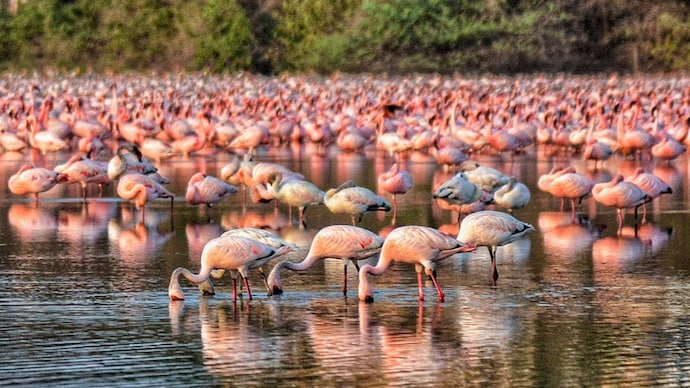
NatConnect Foundation argues that flamingos serve as ecological indicator species, with their movements reflecting the health of the region's interconnected tidal ecosystems.
The proposal also calls for large-scale blue-carbon restoration of mangroves and salt marshes through standardised carbon-baseline assessments, long-term monitoring mechanisms, and permanence guarantees.
According to the NGO, these measures could enable the generation and sale of blue-carbon credits while strengthening conservation efforts across the region.
A Mumbai-based NGO has proposed the creation of a wetland conservation initiative and submitted a 10-page policy white paper to Prime Minister Narendra Modi ahead of World Environment Day 2026.
NatConnect Foundation has proposed the establishment of a Flamingo Blue Carbon Urban Complex, a first-of-its-kind initiative across the Mumbai Metropolitan Region (MMR) that seeks to treat wetlands as critical climate infrastructure rather than land available for reclamation or development.
The proposed project aims to integrate wetlands, mangroves, mudflats, flamingo habitats, carbon sequestration, ecotourism, and blue-carbon climate finance into a single conservation framework.
The proposal received a swift response from the Ministry of Environment, Forest and Climate Change's Wetland Division, which directed the Maharashtra State Wetland Authority to examine it on a priority basis. The Centre has also sought an action-taken report from the state authority.
PROTECTING COASTAL ECOSYSTEM
The proposed Flamingo Blue Carbon Urban Complex is a multi-site, landscape-scale programme that views coastal wetlands and tidal ecosystems across the MMR as vital climate assets.
It combines flamingo and wildlife habitat protection, restoration of mangroves and mudflats, carbon accounting and blue-carbon finance, community-based livelihoods, ecotourism, urban flood mitigation, and research and monitoring facilities.
The concept seeks to redefine wetlands from "vacant" or reclaimable land into ecosystem assets that store carbon, reduce storm-surge impacts, support fisheries, and generate tourism and educational benefits.
The NGO's director, BN Kumar, has cautioned against treating ecologically sensitive wetlands as "monetisable land parcels".
KEY AREAS IN MUMBAI IDENTIFIED
Key sites identified under the proposal include Thane Creek, Sewri Mudflats, Uran Wetlands, and coastal ecosystems across Navi Mumbai.
NatConnect Foundation argues that flamingos serve as ecological indicator species, with their movements reflecting the health of the region's interconnected tidal ecosystems.
The proposal also calls for large-scale blue-carbon restoration of mangroves and salt marshes through standardised carbon-baseline assessments, long-term monitoring mechanisms, and permanence guarantees.
According to the NGO, these measures could enable the generation and sale of blue-carbon credits while strengthening conservation efforts across the region.

