NEET re-test paper leak claim goes viral on Telegram, PIB calls it fake
A viral Telegram screenshot claiming a fresh NEET UG re-exam paper leak has triggered confusion among medical aspirants ahead of the June 21 re-exam. PIB Fact Check has dismissed the allegation as fake, urging students to avoid unverified content and rely only on official examination updates.
With the NEET UG 2026 re-exam just days away, a viral social media claim alleging a fresh question paper leak has sparked renewed debate and anxiety among lakhs of aspiring medical students.
However, the Press Information Bureau's (PIB) Fact Check unit has stepped in to set the record straight, categorically dismissing the allegation and urging students to rely only on official sources for examination-related updates.
WHAT SPARKED THE LATEST NEET PAPER LEAK CLAIM?
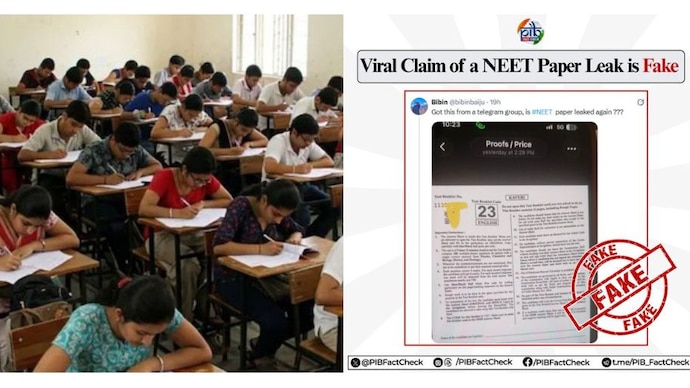
The controversy began after an X user named Bibin shared a screenshot that was allegedly circulating in a Telegram group. The user questioned whether the National Eligibility cum Entrance Test (NEET) paper had been leaked once again, triggering widespread speculation online.
The screenshot appeared to show a question paper booklet bearing the word "KAVERI" at the top. It also displayed the text "Proofs / Price" alongside a timestamp of 2:29 pm from the previous day.
The booklet carried the code "23" and was marked as the English-language version, prompting concerns among aspirants and parents.
HOW DID THE ALLEGATION SPREAD?
The claim gained traction after the screenshot was widely circulated across social media platforms, particularly X and Telegram groups. Several users reposted the image and questioned whether another NEET paper leak had taken place, fuelling fresh concerns among students preparing for the examination.
The viral nature of the post led to confusion and speculation before authorities stepped in with a clarification.
WHAT DID PIB FACT CHECK SAY?
Responding to the viral claim, PIB Fact Check clarified that the allegation was completely false. The agency stated that a question paper image was being circulated on social media with misleading claims suggesting a fresh NEET paper leak.
In its official response, the fact-checking unit categorically labelled the claim as fake and cautioned candidates against trusting, sharing, or acting upon unverified examination-related content circulating online.
WHAT ADVICE HAS BEEN ISSUED TO STUDENTS?
PIB Fact Check urged NEET aspirants to seek information only from official and verified sources. Students were advised to visit the official NEET website for authentic updates regarding the examination and related announcements.
The agency also encouraged users to report suspicious or misleading content linked to the Government of India so that appropriate action could be taken against misinformation.
The clarification comes at a crucial time as authorities intensify efforts to combat misinformation ahead of the NEET UG 2026 re-examination scheduled for June 21.
With over 22 lakh candidates expected to appear for the NEET UG 2026 re-examination on June 21, authorities have urged students to rely only on official sources for updates. PIB Fact Check's clarification highlights the risks of misinformation and the importance of verifying claims before sharing them, especially amid heightened scrutiny surrounding the exam.
With the NEET UG 2026 re-exam just days away, a viral social media claim alleging a fresh question paper leak has sparked renewed debate and anxiety among lakhs of aspiring medical students.
However, the Press Information Bureau's (PIB) Fact Check unit has stepped in to set the record straight, categorically dismissing the allegation and urging students to rely only on official sources for examination-related updates.
WHAT SPARKED THE LATEST NEET PAPER LEAK CLAIM?
The controversy began after an X user named Bibin shared a screenshot that was allegedly circulating in a Telegram group. The user questioned whether the National Eligibility cum Entrance Test (NEET) paper had been leaked once again, triggering widespread speculation online.
The screenshot appeared to show a question paper booklet bearing the word "KAVERI" at the top. It also displayed the text "Proofs / Price" alongside a timestamp of 2:29 pm from the previous day.
The booklet carried the code "23" and was marked as the English-language version, prompting concerns among aspirants and parents.
HOW DID THE ALLEGATION SPREAD?
The claim gained traction after the screenshot was widely circulated across social media platforms, particularly X and Telegram groups. Several users reposted the image and questioned whether another NEET paper leak had taken place, fuelling fresh concerns among students preparing for the examination.
The viral nature of the post led to confusion and speculation before authorities stepped in with a clarification.
WHAT DID PIB FACT CHECK SAY?
Responding to the viral claim, PIB Fact Check clarified that the allegation was completely false. The agency stated that a question paper image was being circulated on social media with misleading claims suggesting a fresh NEET paper leak.
In its official response, the fact-checking unit categorically labelled the claim as fake and cautioned candidates against trusting, sharing, or acting upon unverified examination-related content circulating online.
WHAT ADVICE HAS BEEN ISSUED TO STUDENTS?
PIB Fact Check urged NEET aspirants to seek information only from official and verified sources. Students were advised to visit the official NEET website for authentic updates regarding the examination and related announcements.
The agency also encouraged users to report suspicious or misleading content linked to the Government of India so that appropriate action could be taken against misinformation.
The clarification comes at a crucial time as authorities intensify efforts to combat misinformation ahead of the NEET UG 2026 re-examination scheduled for June 21.
With over 22 lakh candidates expected to appear for the NEET UG 2026 re-examination on June 21, authorities have urged students to rely only on official sources for updates. PIB Fact Check's clarification highlights the risks of misinformation and the importance of verifying claims before sharing them, especially amid heightened scrutiny surrounding the exam.

