No coaching, just YouTube: How a Meerut student became an ISRO scientist
Meerut's Sanket Kumar missed qualifying for JEE Advanced by just two marks but refused to give up. With YouTube lectures, self-study, and no coaching, he cracked the ISRO recruitment process to become a scientist, proving one exam result doesn't define your future.
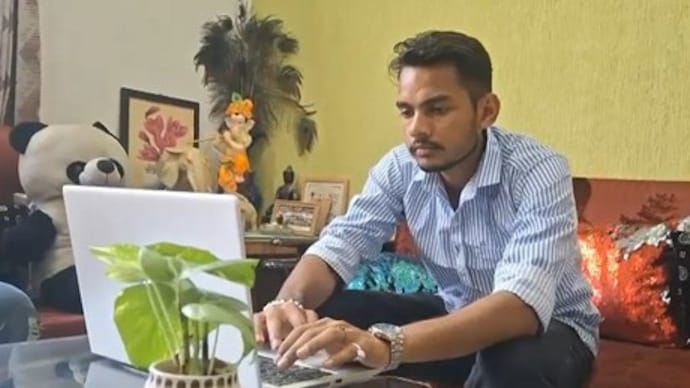
Failure often marks the end of a dream for many. For Meerut youth Sanket Kumar, it marked the beginning of a remarkable journey. After narrowly missing out on JEE Advanced in his first attempt, Sanket found himself at a crossroads familiar to thousands of engineering aspirants: settle for the opportunities already within reach or take the risk of trying again.
He chose the latter. Taking a one-year drop, he relied entirely on self-study, YouTube lectures, handwritten notes and unwavering discipline to prepare for one of India's toughest examinations.
Today, that decision has led him to the Indian Space Research Organisation (ISRO), where he has been appointed as a Scientist at the ISRO Propulsion Complex (IPRC) in Tamil Nadu.
Speaking to GNT, Sanket shares how failure, discipline and family support shaped his journey.
WHY DID HE DECIDE TO TAKE A RISK AFTER FAILING JEE ADVANCED?
Reflecting on his first setback, Sanket says failure forced him to rethink his approach rather than abandon his dream. While preparing for his Class 12 board examinations in 2021, he was simultaneously studying for JEE Main and JEE Advanced, two examinations that demanded entirely different preparation strategies.
"I cleared JEE Main, but I couldn't qualify JEE Advanced," he recalls. "Later, I realised that my biggest weakness was time management. I went into the JEE Advanced examination with the mindset of Main, and that cost me."
Instead of settling for a college seat, Sanket decided against applying to any institution and dedicated an entire year to preparing again.
"It was a challenge I wanted to win. I wanted one more opportunity to prove to myself that I could crack one of India's toughest examinations," he adds.
HOW DID HE PREPARE WITHOUT JOINING ANY COACHING INSTITUTE?
Self-study became the cornerstone of Sanket's preparation. He revised his Class 11 and 12 notes, solved previous years' question papers under strict three-hour exam conditions and consistently worked on improving his speed and accuracy.
Whenever he struggled with a concept, he turned to online learning.
"There are excellent professors on YouTube. Whenever I needed clarity, I watched lectures, referred to books and searched online," he says. "My handwritten notes became my biggest strength because they helped me revise quickly."
According to Sanket, discipline and consistency mattered far more than expensive coaching classes.
WHY DID HE COVER HIS ROOM'S WALLS WITH FORMULAS AND NOTES?
One of the most distinctive aspects of Sanket's preparation was transforming his room into a study space where even the walls served as learning material.
"I found flipping through notebooks every day quite boring," he says with a smile. Instead, he covered the walls with formulas, concepts and quick revision notes so they remained in front of him throughout the day.
"I thought if I kept seeing them daily, they would naturally stay in my mind," he explains.
Before long, every wall had become a classroom in itself.
WHAT'S THE STORY BEHIND THE COLLECTION OF EMPTY PENS?
The collection of empty pens was never planned.
According to Sanket, each pen represented hours of solving problems, writing notes and practising questions.
"I never planned to collect them," he says. "I simply stopped throwing them away. I thought I'd create something from them someday."
Today, those pens stand as reminders of the countless hours he invested in pursuing a single dream.
HOW DID HIS JOURNEY TOWARDS ISRO BEGIN?
Working at ISRO had always been Sanket's ambition.
After qualifying JEE Advanced in 2022, he consciously chose Aerospace Engineering instead of joining the race for Computer Science.
"Most students were thinking about placements and salary packages," he says. "I wanted to study something that genuinely fascinated me."
Joining the Indian Institute of Space Science and Technology (IIST) broadened his understanding of spacecraft, satellites, propulsion systems and launch vehicles.
"I was introduced to spacecraft, satellites, propulsion systems and launch vehicles. That's when I realised I wanted to contribute to India's space programme," he says.
HOW DID HE PREPARE FOR THE ISRO SCIENTIST INTERVIEW?
Maintaining the required CGPA enabled Sanket to appear for ISRO's Scientist recruitment interview.
He describes the preparation as one of the most demanding phases of his academic journey.
"I had just two-and-a-half months to revise four years of engineering," he explains. "The interview panel included experts from different aerospace domains, so I had to prepare every subject thoroughly, even the ones I wasn't very comfortable with."
His efforts paid off when the results were announced in January.
"Receiving the appointment letter was one of the happiest moments of my life," he adds.
WHAT WILL HIS ROLE AT ISRO BE?
Sanket has been appointed at the ISRO Propulsion Complex (IPRC) in Tamil Nadu, where rocket propulsion systems undergo rigorous testing before every launch.
"My exact project hasn't been disclosed yet because the work is confidential," he says. "But I hope to contribute to propulsion-related systems."
WHAT IS HIS BIGGEST DREAM NOW?
Although becoming an ISRO scientist marks a major milestone, Sanket believes his journey has only just begun.
"One day, I want to lead a major space mission," he says confidently.
He hopes to one day be introduced as the Project Director of a successful Indian space mission.
"That is the dream I work towards every day," he adds.
HOW IMPORTANT WAS HIS FAMILY'S SUPPORT?
Sanket credits his success to the unwavering support of his family. "Everything I achieved is because of my family," he says.
After his unsuccessful JEE Advanced attempt, many people advised him against taking a drop year. His parents and elder brother, however, stood firmly behind him.
"They simply told me, 'If you believe in yourself, we believe in you,'" he recalls. "That confidence became my biggest strength."
He also chose not to inform his family that he was appearing for the ISRO Scientist interview.
"I wanted to surprise them only after receiving the appointment letter," he says. "Watching their reaction made every struggle worthwhile."
WHAT MESSAGE DOES HE HAVE FOR YOUNG ASPIRANTS?
Sanket believes setbacks should be treated as opportunities to learn rather than reasons to quit.
"If you fail once, don't assume your journey is over," he says. "Analyse your mistakes, improve yourself and keep moving forward." He believes persistence, more than talent, ultimately determines success.
"Never give up because of one setback," he concludes.
HOW DID HIS FAMILY REACT TO THE NEWS?
For Sanket's parents, the appointment letter symbolised years of sacrifice finally bearing fruit. His father, Gulshan Kumar, says he always believed his son would achieve something extraordinary.
His mother, Sunita Singh, who left her teaching career to devote more time to her children's education, describes the moment with emotion.
"Every parent dreams of seeing their children succeed. Watching Sanket become an ISRO scientist is the proudest moment of my life," she says.
His elder brother, Harshit Kumar, says the family never questioned Sanket's decision to take a drop year despite the uncertainty. Looking back, he believes choosing Aerospace Engineering instead of following conventional career trends proved to be the defining decision of Sanket's journey.
Failure often marks the end of a dream for many. For Meerut youth Sanket Kumar, it marked the beginning of a remarkable journey. After narrowly missing out on JEE Advanced in his first attempt, Sanket found himself at a crossroads familiar to thousands of engineering aspirants: settle for the opportunities already within reach or take the risk of trying again.
He chose the latter. Taking a one-year drop, he relied entirely on self-study, YouTube lectures, handwritten notes and unwavering discipline to prepare for one of India's toughest examinations.
Today, that decision has led him to the Indian Space Research Organisation (ISRO), where he has been appointed as a Scientist at the ISRO Propulsion Complex (IPRC) in Tamil Nadu.
Speaking to GNT, Sanket shares how failure, discipline and family support shaped his journey.
WHY DID HE DECIDE TO TAKE A RISK AFTER FAILING JEE ADVANCED?
Reflecting on his first setback, Sanket says failure forced him to rethink his approach rather than abandon his dream. While preparing for his Class 12 board examinations in 2021, he was simultaneously studying for JEE Main and JEE Advanced, two examinations that demanded entirely different preparation strategies.
"I cleared JEE Main, but I couldn't qualify JEE Advanced," he recalls. "Later, I realised that my biggest weakness was time management. I went into the JEE Advanced examination with the mindset of Main, and that cost me."
Instead of settling for a college seat, Sanket decided against applying to any institution and dedicated an entire year to preparing again.
"It was a challenge I wanted to win. I wanted one more opportunity to prove to myself that I could crack one of India's toughest examinations," he adds.
HOW DID HE PREPARE WITHOUT JOINING ANY COACHING INSTITUTE?
Self-study became the cornerstone of Sanket's preparation. He revised his Class 11 and 12 notes, solved previous years' question papers under strict three-hour exam conditions and consistently worked on improving his speed and accuracy.
Whenever he struggled with a concept, he turned to online learning.
"There are excellent professors on YouTube. Whenever I needed clarity, I watched lectures, referred to books and searched online," he says. "My handwritten notes became my biggest strength because they helped me revise quickly."
According to Sanket, discipline and consistency mattered far more than expensive coaching classes.
WHY DID HE COVER HIS ROOM'S WALLS WITH FORMULAS AND NOTES?
One of the most distinctive aspects of Sanket's preparation was transforming his room into a study space where even the walls served as learning material.
"I found flipping through notebooks every day quite boring," he says with a smile. Instead, he covered the walls with formulas, concepts and quick revision notes so they remained in front of him throughout the day.
"I thought if I kept seeing them daily, they would naturally stay in my mind," he explains.
Before long, every wall had become a classroom in itself.
WHAT'S THE STORY BEHIND THE COLLECTION OF EMPTY PENS?
The collection of empty pens was never planned.
According to Sanket, each pen represented hours of solving problems, writing notes and practising questions.
"I never planned to collect them," he says. "I simply stopped throwing them away. I thought I'd create something from them someday."
Today, those pens stand as reminders of the countless hours he invested in pursuing a single dream.
HOW DID HIS JOURNEY TOWARDS ISRO BEGIN?
Working at ISRO had always been Sanket's ambition.
After qualifying JEE Advanced in 2022, he consciously chose Aerospace Engineering instead of joining the race for Computer Science.
"Most students were thinking about placements and salary packages," he says. "I wanted to study something that genuinely fascinated me."
Joining the Indian Institute of Space Science and Technology (IIST) broadened his understanding of spacecraft, satellites, propulsion systems and launch vehicles.
"I was introduced to spacecraft, satellites, propulsion systems and launch vehicles. That's when I realised I wanted to contribute to India's space programme," he says.
HOW DID HE PREPARE FOR THE ISRO SCIENTIST INTERVIEW?
Maintaining the required CGPA enabled Sanket to appear for ISRO's Scientist recruitment interview.
He describes the preparation as one of the most demanding phases of his academic journey.
"I had just two-and-a-half months to revise four years of engineering," he explains. "The interview panel included experts from different aerospace domains, so I had to prepare every subject thoroughly, even the ones I wasn't very comfortable with."
His efforts paid off when the results were announced in January.
"Receiving the appointment letter was one of the happiest moments of my life," he adds.
WHAT WILL HIS ROLE AT ISRO BE?
Sanket has been appointed at the ISRO Propulsion Complex (IPRC) in Tamil Nadu, where rocket propulsion systems undergo rigorous testing before every launch.
"My exact project hasn't been disclosed yet because the work is confidential," he says. "But I hope to contribute to propulsion-related systems."
WHAT IS HIS BIGGEST DREAM NOW?
Although becoming an ISRO scientist marks a major milestone, Sanket believes his journey has only just begun.
"One day, I want to lead a major space mission," he says confidently.
He hopes to one day be introduced as the Project Director of a successful Indian space mission.
"That is the dream I work towards every day," he adds.
HOW IMPORTANT WAS HIS FAMILY'S SUPPORT?
Sanket credits his success to the unwavering support of his family. "Everything I achieved is because of my family," he says.
After his unsuccessful JEE Advanced attempt, many people advised him against taking a drop year. His parents and elder brother, however, stood firmly behind him.
"They simply told me, 'If you believe in yourself, we believe in you,'" he recalls. "That confidence became my biggest strength."
He also chose not to inform his family that he was appearing for the ISRO Scientist interview.
"I wanted to surprise them only after receiving the appointment letter," he says. "Watching their reaction made every struggle worthwhile."
WHAT MESSAGE DOES HE HAVE FOR YOUNG ASPIRANTS?
Sanket believes setbacks should be treated as opportunities to learn rather than reasons to quit.
"If you fail once, don't assume your journey is over," he says. "Analyse your mistakes, improve yourself and keep moving forward." He believes persistence, more than talent, ultimately determines success.
"Never give up because of one setback," he concludes.
HOW DID HIS FAMILY REACT TO THE NEWS?
For Sanket's parents, the appointment letter symbolised years of sacrifice finally bearing fruit. His father, Gulshan Kumar, says he always believed his son would achieve something extraordinary.
His mother, Sunita Singh, who left her teaching career to devote more time to her children's education, describes the moment with emotion.
"Every parent dreams of seeing their children succeed. Watching Sanket become an ISRO scientist is the proudest moment of my life," she says.
His elder brother, Harshit Kumar, says the family never questioned Sanket's decision to take a drop year despite the uncertainty. Looking back, he believes choosing Aerospace Engineering instead of following conventional career trends proved to be the defining decision of Sanket's journey.

