We've seen enough male gangsters: Akka director on creating a female gangster world
Director Dharmaraj Shetty explained how warrior histories and matriarchal communities shaped Akka. The series challenges familiar gangster conventions by placing women firmly in power.
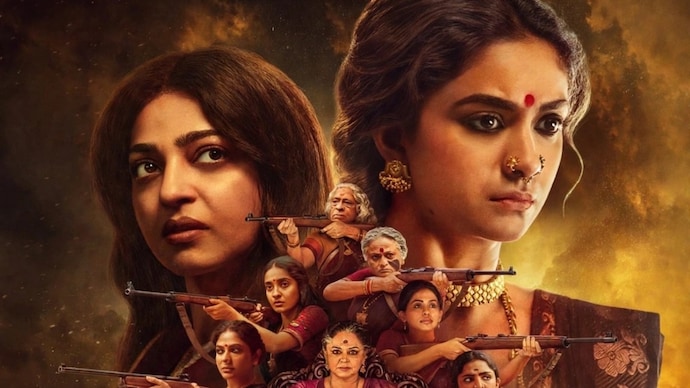
With Akka, his debut series, filmmaker Dharmaraj Shetty has taken audiences into the fictional town of Pernuru, a world where women hold power, rule over territories and lead a gangster empire. Set in the 1980s, the YRF series features Keerthy Suresh as Bhawani and Radhika Apte as Rudra, two women at the centre of a fiercely competitive world.
But the idea for Akka did not begin with a female-led gangster story. In an interview with India Today, Dharmaraj spoke about how his research into the history of gangs, women warriors and matriarchal communities along India's west coast eventually shaped the series. He also discussed the challenges of creating an action-driven world led by women, working with Keerthy and Radhika, and the response to the show from male viewers.
Recalling how the idea took shape, Dharmaraj said he was initially working on a gangster story set in Mumbai before the Covid-19 pandemic. However, after spending time researching the city's underworld, he felt he had explored that subject enough.
"I was in Bombay before Covid, writing a gangster story and studying the history of gangs in the city. After a point, I felt I had explored that world enough. Then Covid happened, and I got stuck in Mangaluru for a couple of years. I thought of setting the gangster story in Mangaluru instead. Initially, it was about a male-dominated gangster world in South India, but that too felt boring because we had seen that before," he said.
It was his reading about women warriors from Mangaluru and Kerala who had fought the British, Dutch and Portuguese that eventually changed the direction of the story.
"I wondered where those women would be today and what their world might look like. That led me to research matrilineal and matriarchal communities along India's west coast, particularly in Kerala and Mangaluru. The region also has a strong tradition of Devi worship. Gradually, these ideas came together and I found the story," he added.
How history shaped the fictional world of Pernuru
Although Pernuru is fictional, its social structure draws from historical communities that followed matrilineal and matriarchal traditions. Dharmaraj said the opening episode itself features references to historical practices, including the rules explained by Tanvi Azmi's character, Muthakka.
"The foundation is real. There were matriarchal communities in Kerala and Mangaluru. Even the first three rules explained by Tanvi Azmi's Muthakka in the opening episode were inspired by a history book I read about Mangaluru. The Travancore kingdom in Kerala also historically followed a matrilineal system," he said.
However, the filmmaker did not want the series to be limited to one region or historical period. His research extended to women rulers and communities across the world, including China's only female emperor, African tribes and women warriors from India.
"As a male writer, I knew there were limits to what I could understand, so research became important. I wanted to bring together different influences and create a world of my own," he explained.
On creating a female-led gangster world
One of the biggest considerations while making Akka was ensuring that audiences accepted women as powerful figures in an action-driven gangster setting. Dharmaraj said he was conscious that viewers were more accustomed to seeing male gangsters in such stories.
He explained, "We were presenting female actors as gangsters, and that meant the audience would have more questions. We have seen enough male gangsters in action films. Even if a male character flies 20 or 30 feet in the air after a fight, audiences are used to accepting it. When a woman performs an action sequence, people may question whether it is possible."
This made the team more particular about the research, action choreography and rehearsals. The female actors underwent months of training to prepare for their roles.
"The actresses, especially Keerthy and the others, put in months of action training. I could guide them through the research, but they were the ones who brought the world to life through their performances. I am proud that we managed to pull it off," he said.
Interestingly, the response from male viewers turned out to be one of the most satisfying aspects of the show's reception. Dharmaraj admitted that he had initially wondered how they would respond to a story centred on women holding power in a gangster world.
"We knew audiences would enjoy the action, the world, the costumes and the dynamic between Keerthy and Radhika. What overwhelmed me was the response from male viewers. I was initially concerned about how they would receive this world, but they have been very accepting of the characters," he said.
He believes viewers may also be connecting with the characters through the women in their own families.
"In some ways, I think they see their own family members – their mothers, sisters and wives – in these women. Many are watching the show with their partners and families, and it is lovely to see them enjoying it together. That has been the most satisfying response for me," he added.
Working with Keerthy Suresh and Radhika Apte
For Dharmaraj, Akka also meant working with established performers Keerthy Suresh and Radhika Apte on his first series. He described the experience as particularly rewarding, crediting both actors for the trust and support they extended to him.
Keerthy, in particular, had to navigate a demanding role involving a different language and period setting. Dharmaraj recalled how seriously she approached the preparation.
"After the shoot, she would sit with me for half an hour or an hour, going through her lines and preparing for the next day. I saw the effort she put in every day," he said.
He also praised the working environment created by the predominantly female cast and crew. According to him, Keerthy and Radhika contributed to making the set a comfortable and collaborative space.
The thought behind Akka's costumes and visual world
The filmmaker wanted the women of Pernuru to look and feel like descendants of royalty rather than conventional street gangsters. This approach influenced everything from their costumes and jewellery to the colours used in their homes.
"The idea was to make these women feel like they came from a lineage of queens, rather than being street gangsters. That is where the scale and grandeur of the world came from," he said.
The team studied the cultures of Mangaluru, Kerala and Tamil Nadu but did not intend to recreate any one location. Instead, they combined different influences to develop Pernuru's distinct visual identity.
Even the colours of the houses were carefully considered. The homes of the water and forest communities had different palettes, while the central house featured earthy and maroon tones. Bhawani's purple wardrobe was another deliberate choice, with the colour used to underline her position as the queen.
Dharmaraj also paid attention to the practical aspects of the costumes, particularly how the women would wear their saris during action sequences.
"I have seen women in my family wear saris differently at home, at work and during special occasions. We used that understanding to make the costumes practical. These women were warriors, so they wouldn't go into battle wearing something uncomfortable or impractical. Their clothing had to work for them," he explained.
Why Bhawani kills Nanda in Akka
One of the significant moments in the series is Bhawani's decision to kill Nanda, played by Vishak Nair. Dharmaraj said the decision was rooted in her responsibilities as a leader rather than her personal feelings towards him.
He recalled that YRF's Aditya Chopra had also questioned him about Bhawani's decision.
"My answer was that, as a leader, she has to do what is right for her people. It is not about whether I like Vishak Nair or want to work with him for five seasons. At that point, Bhawani has to choose between being a lover and being a leader responsible for all of Pernuru," he said.
According to the filmmaker, Bhawani's decision needs to be understood within the social structure and history of the world she belongs to.
"We also have to look at these characters through the history of their lineage and the world they come from, instead of judging them entirely by our understanding of morality and society. Violence is a part of their world, even if they don't necessarily enjoy it. Keeping that in mind, her decision felt natural for the character," he added.
The sequence that stayed with him
Among the many sequences he shot for the series, Dharmaraj particularly remembers the spirit-shrine sequence in the third episode, where the goddess's presence is invoked through a dance.
The sequence was closely connected to the cultural influences that inspired Akka. He revealed that the performer playing the goddess was a trained dancer rather than a professional actor. Despite sustaining cuts from the sharp metal pieces in her jewellery, she continued performing across two nights.
"The jewellery she wore had sharp metal pieces that hurt her during the shoot. She performed over two nights, despite getting cut and bleeding, without losing her energy or passion. She brought the entire group to life. Those are the days when you feel truly happy to be working in this business," he said.
On working with YRF and the possibility of Akka season 2
Dharmaraj credited Yash Raj Films, particularly Aditya Chopra, Akshaye Widhani and Yogendra Mogre, for giving him the creative freedom to develop the series. He said the project came together within two months of him sharing the script with the studio.
As the writer and director, he was involved in shaping not just the story but also its language, costumes and visual identity. He said having the space to develop his own creative voice was important, especially at this stage of his career.
As for a possible second season of Akka, the filmmaker said it was too early to confirm anything, as the decision would depend on the audience response and Netflix and YRF.
However, he admitted that he has already thought about the future of some of the characters. The introduction of Mahesh Manjrekar's character towards the end of the series, in particular, opens up possibilities for a new track.
"The characters stay with you even after you have finished writing and shooting. You keep wondering what might happen to them next. I have several ideas about where the story could go. The ending also introduces a new dynamic through Mahesh Manjrekar's character. There is a lot of scope to explore the father-daughter relationship, especially within this gangster world," he said.
He added that he would be happy to return to Pernuru if the makers decide to take the story forward.
Akka is steaming on Netflix.

