108 Base Hospital review: Zero-death hospital show desperately needs resuscitation
108 Base Hospital - Uri review: The first episode of the show introduces its Kashmir military hospital setting and core doctors. Its strong premise is undercut by heavy dialogue, staged action and thin character work.
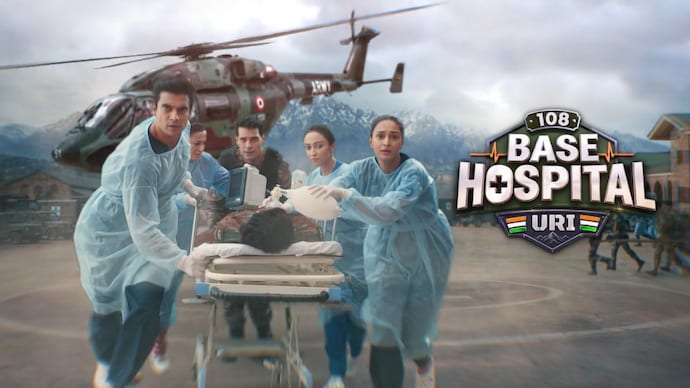
Let's get one thing out of the way. If you are watching 108 Base Hospital - Uri expecting something like Operation Safed Sagar, or a fraction of the intensity of an international medical drama, it is better to lower your expectations before you start. The show premiered on August 15, which is an apt date for a military medical drama inspired by a real hospital in Kashmir. The idea is strong, but the execution, at least in the first two episodes, is less convincing.
The series is set at 108 Base Hospital in Uri, Kashmir. Soldiers arrive wounded, doctors treat them and send them back to duty. The hospital also has a zero-death record to maintain, while a new group of doctors joins the team amid the constant threat of conflict outside its gates.
On paper, this has everything it needs. Kashmir gives you the location without any effort - it looks stunning, and the show knows it. The cast is impressive. And a military hospital in one of India's most sensitive regions offers plenty of dramatic potential.
The problem is not the idea. The problem is what the show does with it.
When a wounded soldier is brought in after a clash with terrorists in Khairwan, you expect urgency. Doctors should be moving quickly, making decisions and dealing with the chaos of an emergency room in a conflict zone.
Instead, Erica Fernandes' character, Major Naina Sanyal, pauses to deliver a line: “Yeh 108 Base Hospital hai. Yahan patients aate hain stretcher pe, par jaate hain apne pairon pe (This is 108 Base Hospital. Patients arrive here on stretchers, but they leave walking on their own feet)." She then says it again to the patient himself, just to make sure everyone in the room, and watching at home, has understood the hospital's reputation.
The soldier is still on the stretcher. There is a bullet inside him. But the dialogue must be delivered.
This is the central issue with the initial episodes. The show spends so much time introducing its characters through big dialogues that it forgets to make their world feel real.
Hiten Tejwani's Colonel Dr Suryakant Thakur shows bullets removed from soldiers and says, “These, bullets and shrapnel, you see. These are not pieces of iron, but these are trophies taken out of the bodies of our soldiers." It is the kind of dialogue that could work at the right moment. But when it comes this early, before we have any reason to care about the characters, it feels forced.
This is also disappointing because Erica Fernandes, Gashmeer Mahajani and Nikhil Khurana are all capable of much more than what the first two episodes give them.
Gashmeer, as Major Dr Anirudh Jaiswal, a doctor who has requested a posting to Uri looking for some form of peace in a place the rest of the world considers dangerous, has an interesting premise for a character. His chemistry with Erica is also good, but the two waltzing while dealing with a terrorist in a hospital ward was a bit too much to handle.
Nikhil Khurana's introduction as Major Sameer Dixit involves him pulling a truck. It is unclear why. It is the kind of scene that exists entirely to establish that a character is physically strong, which is perhaps the least interesting thing you can establish about a person in a medical drama set during an active conflict.
Erica's Naina, meanwhile, is given so many establishing moments in the first episode — the dramatic line deliveries, the admiring reactions from those around her — that it starts to feel less like a character being introduced and more like a character being insisted upon. The show is telling you she is remarkable before it has shown you anything to justify that.
There is an ambush sequence in the first episode involving Nikhil and Gashmeer's characters crossing a bridge. It should be tense. Instead, it feels staged in the way that action scenes feel staged when the extras around the leads exist only to absorb enemy fire so that the main characters can look heroic. The soldiers in the background are not people in a dangerous situation. They are obstacles in the choreography. Remember Shah Rukh Khan's 'bhaago' in a scene from Om Shanti Om? That's what it feels like - over-the-top and gimmicky.
The military combat scenes throughout the episode are also not helped by a background score that has been turned up considerably higher than the material requires. Kashmir's landscape communicates danger and beauty entirely on its own. The music does not need to underline it quite so emphatically.
108 Base Hospital - Uri is not without potential. The setting is compelling, the cast has the ability to do something interesting with the right material, and a zero-death record in a war zone is a dramatic premise with possibilities.
But the first two episodes suggest that the show does not fully trust its own story. It relies on heavy dialogue and heroic moments instead of letting the situation speak for itself. After the restraint and realism of Operation Safed Sagar, the contrast is hard to ignore.
There is still time for the show to improve. The upcoming episodes will show whether it can find its footing. The show also features Shaheer Sheikh and Kuch Rang Pyaar Ke Aise Bhi fans might be looking forward to it. But, for now, it is best to keep your expectations in check.
108 Base Hospital - Uri airs on Colors TV and streams on JioHotstar. New episodes are released every Saturday and Sunday.
Let's get one thing out of the way. If you are watching 108 Base Hospital - Uri expecting something like Operation Safed Sagar, or a fraction of the intensity of an international medical drama, it is better to lower your expectations before you start. The show premiered on August 15, which is an apt date for a military medical drama inspired by a real hospital in Kashmir. The idea is strong, but the execution, at least in the first two episodes, is less convincing.
The series is set at 108 Base Hospital in Uri, Kashmir. Soldiers arrive wounded, doctors treat them and send them back to duty. The hospital also has a zero-death record to maintain, while a new group of doctors joins the team amid the constant threat of conflict outside its gates.
On paper, this has everything it needs. Kashmir gives you the location without any effort - it looks stunning, and the show knows it. The cast is impressive. And a military hospital in one of India's most sensitive regions offers plenty of dramatic potential.
The problem is not the idea. The problem is what the show does with it.
When a wounded soldier is brought in after a clash with terrorists in Khairwan, you expect urgency. Doctors should be moving quickly, making decisions and dealing with the chaos of an emergency room in a conflict zone.
Instead, Erica Fernandes' character, Major Naina Sanyal, pauses to deliver a line: “Yeh 108 Base Hospital hai. Yahan patients aate hain stretcher pe, par jaate hain apne pairon pe (This is 108 Base Hospital. Patients arrive here on stretchers, but they leave walking on their own feet)." She then says it again to the patient himself, just to make sure everyone in the room, and watching at home, has understood the hospital's reputation.
The soldier is still on the stretcher. There is a bullet inside him. But the dialogue must be delivered.
This is the central issue with the initial episodes. The show spends so much time introducing its characters through big dialogues that it forgets to make their world feel real.
Hiten Tejwani's Colonel Dr Suryakant Thakur shows bullets removed from soldiers and says, “These, bullets and shrapnel, you see. These are not pieces of iron, but these are trophies taken out of the bodies of our soldiers." It is the kind of dialogue that could work at the right moment. But when it comes this early, before we have any reason to care about the characters, it feels forced.
This is also disappointing because Erica Fernandes, Gashmeer Mahajani and Nikhil Khurana are all capable of much more than what the first two episodes give them.
Gashmeer, as Major Dr Anirudh Jaiswal, a doctor who has requested a posting to Uri looking for some form of peace in a place the rest of the world considers dangerous, has an interesting premise for a character. His chemistry with Erica is also good, but the two waltzing while dealing with a terrorist in a hospital ward was a bit too much to handle.
Nikhil Khurana's introduction as Major Sameer Dixit involves him pulling a truck. It is unclear why. It is the kind of scene that exists entirely to establish that a character is physically strong, which is perhaps the least interesting thing you can establish about a person in a medical drama set during an active conflict.
Erica's Naina, meanwhile, is given so many establishing moments in the first episode — the dramatic line deliveries, the admiring reactions from those around her — that it starts to feel less like a character being introduced and more like a character being insisted upon. The show is telling you she is remarkable before it has shown you anything to justify that.
There is an ambush sequence in the first episode involving Nikhil and Gashmeer's characters crossing a bridge. It should be tense. Instead, it feels staged in the way that action scenes feel staged when the extras around the leads exist only to absorb enemy fire so that the main characters can look heroic. The soldiers in the background are not people in a dangerous situation. They are obstacles in the choreography. Remember Shah Rukh Khan's 'bhaago' in a scene from Om Shanti Om? That's what it feels like - over-the-top and gimmicky.
The military combat scenes throughout the episode are also not helped by a background score that has been turned up considerably higher than the material requires. Kashmir's landscape communicates danger and beauty entirely on its own. The music does not need to underline it quite so emphatically.
108 Base Hospital - Uri is not without potential. The setting is compelling, the cast has the ability to do something interesting with the right material, and a zero-death record in a war zone is a dramatic premise with possibilities.
But the first two episodes suggest that the show does not fully trust its own story. It relies on heavy dialogue and heroic moments instead of letting the situation speak for itself. After the restraint and realism of Operation Safed Sagar, the contrast is hard to ignore.
There is still time for the show to improve. The upcoming episodes will show whether it can find its footing. The show also features Shaheer Sheikh and Kuch Rang Pyaar Ke Aise Bhi fans might be looking forward to it. But, for now, it is best to keep your expectations in check.
108 Base Hospital - Uri airs on Colors TV and streams on JioHotstar. New episodes are released every Saturday and Sunday.
Let's get one thing out of the way. If you are watching 108 Base Hospital - Uri expecting something like Operation Safed Sagar, or a fraction of the intensity of an international medical drama, it is better to lower your expectations before you start. The show premiered on August 15, which is an apt date for a military medical drama inspired by a real hospital in Kashmir. The idea is strong, but the execution, at least in the first two episodes, is less convincing.
The series is set at 108 Base Hospital in Uri, Kashmir. Soldiers arrive wounded, doctors treat them and send them back to duty. The hospital also has a zero-death record to maintain, while a new group of doctors joins the team amid the constant threat of conflict outside its gates.
On paper, this has everything it needs. Kashmir gives you the location without any effort - it looks stunning, and the show knows it. The cast is impressive. And a military hospital in one of India's most sensitive regions offers plenty of dramatic potential.
The problem is not the idea. The problem is what the show does with it.
When a wounded soldier is brought in after a clash with terrorists in Khairwan, you expect urgency. Doctors should be moving quickly, making decisions and dealing with the chaos of an emergency room in a conflict zone.
Instead, Erica Fernandes' character, Major Naina Sanyal, pauses to deliver a line: “Yeh 108 Base Hospital hai. Yahan patients aate hain stretcher pe, par jaate hain apne pairon pe (This is 108 Base Hospital. Patients arrive here on stretchers, but they leave walking on their own feet)." She then says it again to the patient himself, just to make sure everyone in the room, and watching at home, has understood the hospital's reputation.
The soldier is still on the stretcher. There is a bullet inside him. But the dialogue must be delivered.
This is the central issue with the initial episodes. The show spends so much time introducing its characters through big dialogues that it forgets to make their world feel real.
Hiten Tejwani's Colonel Dr Suryakant Thakur shows bullets removed from soldiers and says, “These, bullets and shrapnel, you see. These are not pieces of iron, but these are trophies taken out of the bodies of our soldiers." It is the kind of dialogue that could work at the right moment. But when it comes this early, before we have any reason to care about the characters, it feels forced.
This is also disappointing because Erica Fernandes, Gashmeer Mahajani and Nikhil Khurana are all capable of much more than what the first two episodes give them.
Gashmeer, as Major Dr Anirudh Jaiswal, a doctor who has requested a posting to Uri looking for some form of peace in a place the rest of the world considers dangerous, has an interesting premise for a character. His chemistry with Erica is also good, but the two waltzing while dealing with a terrorist in a hospital ward was a bit too much to handle.
Nikhil Khurana's introduction as Major Sameer Dixit involves him pulling a truck. It is unclear why. It is the kind of scene that exists entirely to establish that a character is physically strong, which is perhaps the least interesting thing you can establish about a person in a medical drama set during an active conflict.
Erica's Naina, meanwhile, is given so many establishing moments in the first episode — the dramatic line deliveries, the admiring reactions from those around her — that it starts to feel less like a character being introduced and more like a character being insisted upon. The show is telling you she is remarkable before it has shown you anything to justify that.
There is an ambush sequence in the first episode involving Nikhil and Gashmeer's characters crossing a bridge. It should be tense. Instead, it feels staged in the way that action scenes feel staged when the extras around the leads exist only to absorb enemy fire so that the main characters can look heroic. The soldiers in the background are not people in a dangerous situation. They are obstacles in the choreography. Remember Shah Rukh Khan's 'bhaago' in a scene from Om Shanti Om? That's what it feels like - over-the-top and gimmicky.
The military combat scenes throughout the episode are also not helped by a background score that has been turned up considerably higher than the material requires. Kashmir's landscape communicates danger and beauty entirely on its own. The music does not need to underline it quite so emphatically.
108 Base Hospital - Uri is not without potential. The setting is compelling, the cast has the ability to do something interesting with the right material, and a zero-death record in a war zone is a dramatic premise with possibilities.
But the first two episodes suggest that the show does not fully trust its own story. It relies on heavy dialogue and heroic moments instead of letting the situation speak for itself. After the restraint and realism of Operation Safed Sagar, the contrast is hard to ignore.
There is still time for the show to improve. The upcoming episodes will show whether it can find its footing. The show also features Shaheer Sheikh and Kuch Rang Pyaar Ke Aise Bhi fans might be looking forward to it. But, for now, it is best to keep your expectations in check.
108 Base Hospital - Uri airs on Colors TV and streams on JioHotstar. New episodes are released every Saturday and Sunday.

