Lung cancer is now India's deadliest cancer. More women, non-smokers in its grip
Lung cancers in India accounted for 7.2 % of all new malignancies registered in India but led to 10.8 % of all deaths, showed Globocan 2024, released by the World Health Organisation- International Agency for Research in Cancer (WHO-IARC) released on July 8 this year.
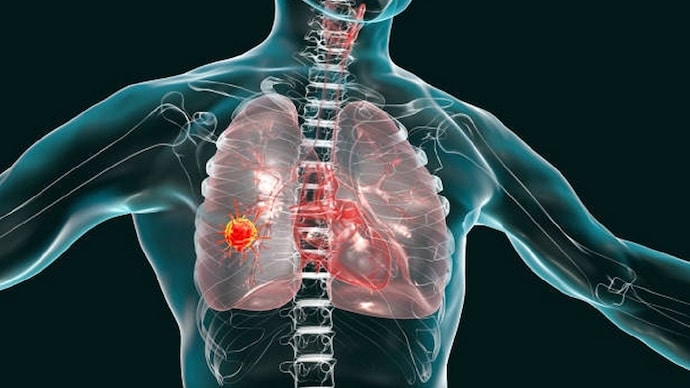
When a 50-year-old woman walked into pulmonologist Dr Sachin Kumar's clinic in Bengaluru seeking a second opinion, she expected another inhaler prescription. Instead, a simple chest X-ray uncovered a devastating truth: her lungs were surrounded by fluid. Further tests confirmed advanced lung cancer that had already spread to the pleura.
"It is a reminder that not every cough or episode of breathlessness is asthma," says Dr Kumar. "When symptoms persist or do not respond as expected, they deserve a fresh look."
Her story is no longer an exception.
India is witnessing a worrying shift in one of its deadliest cancers. Lung cancer, once considered a disease of older male smokers, is increasingly being diagnosed in women and people who have never smoked.
Even more alarming, it has emerged as the country's largest cancer killer, claiming more lives than any other malignancy.
According to Globocan 2024 estimates released just weeks ago, India recorded 1,12,659 new lung cancer cases last year, making it the third most common cancer. But it caused 98,687 deaths, ranking first among all cancers in mortality.
In other words, while lung cancer comprised 7.2 % of all 15.62 lakh malignancies registered in the country in 2024, it caused 10.9 percent of cancer-related deaths, which – in all – stood at 9,01, 828 that year.
Few cancers demonstrate such a grim mismatch between incidence and deaths.
Dr Kumar says the change is becoming increasingly visible in clinical practice.
"In our own practice, we now diagnose around two to three new cases of primary lung cancer every three months, and nearly 40 per cent of these patients are either women or people who have never smoked."
A SILENT SHIFT
The numbers reveal how rapidly the disease is tightening its grip.
India's estimated annual lung cancer cases have more than doubled over the past two decades – from around 55,000 cases in 2004 to 1,12,659 in 2024.
The increase among women has been particularly striking.
Women accounted for roughly 20 per cent of all lung cancer cases in 2004. By 2024, that share had climbed to nearly 30 per cent, translating into more than 33,600 women diagnosed in a single year.
Equally concerning is the growing recognition that lung cancer is no longer synonymous with smoking.
Although India does not maintain national statistics based on smoking status, hospital studies consistently show that 15 to 35 per cent of lung cancer patients have never smoked. Among Indian women, 60 to 85 per cent of those diagnosed with lung cancer have no history of smoking.
For oncologists, this changing profile is one of the biggest puzzles in cancer medicine.
Dr Vijay Kumar Srinivasalu, medical oncologist at Sakra World Hospital, says multiple environmental and biological factors appear to be converging.
"Prolonged exposure to indoor biomass fuel smoke, worsening outdoor air pollution, passive smoking, occupational exposures and radon gas are all likely contributors. At the same time, genetic alterations such as EGFR mutations, which are more common in Asian populations and in never-smokers, are playing an increasingly important role."
He says women who have never smoked are particularly vulnerable because they are more likely to develop EGFR-mutated adenocarcinoma, a subtype of lung cancer.
Long-term exposure to indoor cooking fumes, second-hand smoke and polluted air may further increase their risk, while hormonal and genetic influences are also under active investigation.
WHY SO DEADLY?
If lung cancer ranks only third in incidence, why is it the leading cause of cancer deaths?
The answer lies in how silently it grows.
Unlike cancers that produce obvious warning signs early, lung cancer often masquerades as common respiratory illnesses. A lingering cough, breathlessness or chest discomfort is frequently dismissed as asthma, infection, allergies or even tuberculosis.
By the time the diagnosis is made, the disease has often spread beyond the lungs.
"The biggest challenge is that most patients are diagnosed at an advanced stage because early lung cancer either produces no symptoms or symptoms that mimic common respiratory illnesses," says Dr Vijay.
Delayed diagnosis, limited access to molecular testing, unequal availability of targeted therapies and financial barriers further worsen outcomes, he adds.
One of India’s leading oncologists and Tata Memorial Centre (TMC) researcher, Dr Kumar Prabhash, says the problem is even more complex in India because tuberculosis often clouds the clinical picture.
"The symptoms of lung cancer overlap with tuberculosis. Persistent cough and abnormalities on chest imaging are often initially attributed to TB, delaying the correct diagnosis."
He points out that the lung's large capacity also allows tumours to grow silently for months before causing noticeable symptoms.
The consequences are stark for a cancer whose 5-year survival rate – even with early diagnosis is just about 27–28%.
According to Dr Prabhash, fewer than one in ten patients are diagnosed early enough to be considered for surgery, the treatment with the best chance of cure. In reality, the proportion undergoing surgery may be even lower.
Without organised population-level screening programmes for lung cancer in India, early detection remains elusive.
BEYOND SMOKING
The surge in lung cancer among non-smokers has also challenged long-held assumptions about who is at risk.
Dr Prabhash notes that India has historically had a lower cigarette smoking rate than many Western countries. As a result, non-smokers have always formed a larger share of Indian lung cancer patients. Research from his own team had earlier shown that nearly half of lung cancer patients in their cohort were non-smokers.
While declining smoking rates in several countries have naturally increased the proportion of non-smoker cases, experts believe that cannot entirely explain what is now being observed among Indian women.
"There is a good reason to believe that indoor pollution is a strong contributing factor," Dr Prabhash told India Today, pointing to evidence from China linking prolonged indoor pollution exposure to increased lung cancer risk. Outdoor air pollution may also produce lung injury severe enough to substantially raise cancer risk.
Yet many questions remain unanswered.
"The reasons behind the increase, especially among younger women and non-smokers, are still not fully understood," he pointed out. "A lot of investigations are underway."
For doctors, the immediate priority is not only discovering why more women are developing lung cancer but ensuring they are diagnosed before it is too late.
That begins with changing public perception. A persistent cough that refuses to settle, breathlessness that does not improve with treatment, recurrent chest infections or unexplained weight loss should never be ignored simply because a person has never smoked.
When a 50-year-old woman walked into pulmonologist Dr Sachin Kumar's clinic in Bengaluru seeking a second opinion, she expected another inhaler prescription. Instead, a simple chest X-ray uncovered a devastating truth: her lungs were surrounded by fluid. Further tests confirmed advanced lung cancer that had already spread to the pleura.
"It is a reminder that not every cough or episode of breathlessness is asthma," says Dr Kumar. "When symptoms persist or do not respond as expected, they deserve a fresh look."
Her story is no longer an exception.
India is witnessing a worrying shift in one of its deadliest cancers. Lung cancer, once considered a disease of older male smokers, is increasingly being diagnosed in women and people who have never smoked.
Even more alarming, it has emerged as the country's largest cancer killer, claiming more lives than any other malignancy.
According to Globocan 2024 estimates released just weeks ago, India recorded 1,12,659 new lung cancer cases last year, making it the third most common cancer. But it caused 98,687 deaths, ranking first among all cancers in mortality.
In other words, while lung cancer comprised 7.2 % of all 15.62 lakh malignancies registered in the country in 2024, it caused 10.9 percent of cancer-related deaths, which – in all – stood at 9,01, 828 that year.
Few cancers demonstrate such a grim mismatch between incidence and deaths.
Dr Kumar says the change is becoming increasingly visible in clinical practice.
"In our own practice, we now diagnose around two to three new cases of primary lung cancer every three months, and nearly 40 per cent of these patients are either women or people who have never smoked."
A SILENT SHIFT
The numbers reveal how rapidly the disease is tightening its grip.
India's estimated annual lung cancer cases have more than doubled over the past two decades – from around 55,000 cases in 2004 to 1,12,659 in 2024.
The increase among women has been particularly striking.
Women accounted for roughly 20 per cent of all lung cancer cases in 2004. By 2024, that share had climbed to nearly 30 per cent, translating into more than 33,600 women diagnosed in a single year.
Equally concerning is the growing recognition that lung cancer is no longer synonymous with smoking.
Although India does not maintain national statistics based on smoking status, hospital studies consistently show that 15 to 35 per cent of lung cancer patients have never smoked. Among Indian women, 60 to 85 per cent of those diagnosed with lung cancer have no history of smoking.
For oncologists, this changing profile is one of the biggest puzzles in cancer medicine.
Dr Vijay Kumar Srinivasalu, medical oncologist at Sakra World Hospital, says multiple environmental and biological factors appear to be converging.
"Prolonged exposure to indoor biomass fuel smoke, worsening outdoor air pollution, passive smoking, occupational exposures and radon gas are all likely contributors. At the same time, genetic alterations such as EGFR mutations, which are more common in Asian populations and in never-smokers, are playing an increasingly important role."
He says women who have never smoked are particularly vulnerable because they are more likely to develop EGFR-mutated adenocarcinoma, a subtype of lung cancer.
Long-term exposure to indoor cooking fumes, second-hand smoke and polluted air may further increase their risk, while hormonal and genetic influences are also under active investigation.
WHY SO DEADLY?
If lung cancer ranks only third in incidence, why is it the leading cause of cancer deaths?
The answer lies in how silently it grows.
Unlike cancers that produce obvious warning signs early, lung cancer often masquerades as common respiratory illnesses. A lingering cough, breathlessness or chest discomfort is frequently dismissed as asthma, infection, allergies or even tuberculosis.
By the time the diagnosis is made, the disease has often spread beyond the lungs.
"The biggest challenge is that most patients are diagnosed at an advanced stage because early lung cancer either produces no symptoms or symptoms that mimic common respiratory illnesses," says Dr Vijay.
Delayed diagnosis, limited access to molecular testing, unequal availability of targeted therapies and financial barriers further worsen outcomes, he adds.
One of India’s leading oncologists and Tata Memorial Centre (TMC) researcher, Dr Kumar Prabhash, says the problem is even more complex in India because tuberculosis often clouds the clinical picture.
"The symptoms of lung cancer overlap with tuberculosis. Persistent cough and abnormalities on chest imaging are often initially attributed to TB, delaying the correct diagnosis."
He points out that the lung's large capacity also allows tumours to grow silently for months before causing noticeable symptoms.
The consequences are stark for a cancer whose 5-year survival rate – even with early diagnosis is just about 27–28%.
According to Dr Prabhash, fewer than one in ten patients are diagnosed early enough to be considered for surgery, the treatment with the best chance of cure. In reality, the proportion undergoing surgery may be even lower.
Without organised population-level screening programmes for lung cancer in India, early detection remains elusive.
BEYOND SMOKING
The surge in lung cancer among non-smokers has also challenged long-held assumptions about who is at risk.
Dr Prabhash notes that India has historically had a lower cigarette smoking rate than many Western countries. As a result, non-smokers have always formed a larger share of Indian lung cancer patients. Research from his own team had earlier shown that nearly half of lung cancer patients in their cohort were non-smokers.
While declining smoking rates in several countries have naturally increased the proportion of non-smoker cases, experts believe that cannot entirely explain what is now being observed among Indian women.
"There is a good reason to believe that indoor pollution is a strong contributing factor," Dr Prabhash told India Today, pointing to evidence from China linking prolonged indoor pollution exposure to increased lung cancer risk. Outdoor air pollution may also produce lung injury severe enough to substantially raise cancer risk.
Yet many questions remain unanswered.
"The reasons behind the increase, especially among younger women and non-smokers, are still not fully understood," he pointed out. "A lot of investigations are underway."
For doctors, the immediate priority is not only discovering why more women are developing lung cancer but ensuring they are diagnosed before it is too late.
That begins with changing public perception. A persistent cough that refuses to settle, breathlessness that does not improve with treatment, recurrent chest infections or unexplained weight loss should never be ignored simply because a person has never smoked.
When a 50-year-old woman walked into pulmonologist Dr Sachin Kumar's clinic in Bengaluru seeking a second opinion, she expected another inhaler prescription. Instead, a simple chest X-ray uncovered a devastating truth: her lungs were surrounded by fluid. Further tests confirmed advanced lung cancer that had already spread to the pleura.
"It is a reminder that not every cough or episode of breathlessness is asthma," says Dr Kumar. "When symptoms persist or do not respond as expected, they deserve a fresh look."
Her story is no longer an exception.
India is witnessing a worrying shift in one of its deadliest cancers. Lung cancer, once considered a disease of older male smokers, is increasingly being diagnosed in women and people who have never smoked.
Even more alarming, it has emerged as the country's largest cancer killer, claiming more lives than any other malignancy.
According to Globocan 2024 estimates released just weeks ago, India recorded 1,12,659 new lung cancer cases last year, making it the third most common cancer. But it caused 98,687 deaths, ranking first among all cancers in mortality.
In other words, while lung cancer comprised 7.2 % of all 15.62 lakh malignancies registered in the country in 2024, it caused 10.9 percent of cancer-related deaths, which – in all – stood at 9,01, 828 that year.
Few cancers demonstrate such a grim mismatch between incidence and deaths.
Dr Kumar says the change is becoming increasingly visible in clinical practice.
"In our own practice, we now diagnose around two to three new cases of primary lung cancer every three months, and nearly 40 per cent of these patients are either women or people who have never smoked."
A SILENT SHIFT
The numbers reveal how rapidly the disease is tightening its grip.
India's estimated annual lung cancer cases have more than doubled over the past two decades – from around 55,000 cases in 2004 to 1,12,659 in 2024.
The increase among women has been particularly striking.
Women accounted for roughly 20 per cent of all lung cancer cases in 2004. By 2024, that share had climbed to nearly 30 per cent, translating into more than 33,600 women diagnosed in a single year.
Equally concerning is the growing recognition that lung cancer is no longer synonymous with smoking.
Although India does not maintain national statistics based on smoking status, hospital studies consistently show that 15 to 35 per cent of lung cancer patients have never smoked. Among Indian women, 60 to 85 per cent of those diagnosed with lung cancer have no history of smoking.
For oncologists, this changing profile is one of the biggest puzzles in cancer medicine.
Dr Vijay Kumar Srinivasalu, medical oncologist at Sakra World Hospital, says multiple environmental and biological factors appear to be converging.
"Prolonged exposure to indoor biomass fuel smoke, worsening outdoor air pollution, passive smoking, occupational exposures and radon gas are all likely contributors. At the same time, genetic alterations such as EGFR mutations, which are more common in Asian populations and in never-smokers, are playing an increasingly important role."
He says women who have never smoked are particularly vulnerable because they are more likely to develop EGFR-mutated adenocarcinoma, a subtype of lung cancer.
Long-term exposure to indoor cooking fumes, second-hand smoke and polluted air may further increase their risk, while hormonal and genetic influences are also under active investigation.
WHY SO DEADLY?
If lung cancer ranks only third in incidence, why is it the leading cause of cancer deaths?
The answer lies in how silently it grows.
Unlike cancers that produce obvious warning signs early, lung cancer often masquerades as common respiratory illnesses. A lingering cough, breathlessness or chest discomfort is frequently dismissed as asthma, infection, allergies or even tuberculosis.
By the time the diagnosis is made, the disease has often spread beyond the lungs.
"The biggest challenge is that most patients are diagnosed at an advanced stage because early lung cancer either produces no symptoms or symptoms that mimic common respiratory illnesses," says Dr Vijay.
Delayed diagnosis, limited access to molecular testing, unequal availability of targeted therapies and financial barriers further worsen outcomes, he adds.
One of India’s leading oncologists and Tata Memorial Centre (TMC) researcher, Dr Kumar Prabhash, says the problem is even more complex in India because tuberculosis often clouds the clinical picture.
"The symptoms of lung cancer overlap with tuberculosis. Persistent cough and abnormalities on chest imaging are often initially attributed to TB, delaying the correct diagnosis."
He points out that the lung's large capacity also allows tumours to grow silently for months before causing noticeable symptoms.
The consequences are stark for a cancer whose 5-year survival rate – even with early diagnosis is just about 27–28%.
According to Dr Prabhash, fewer than one in ten patients are diagnosed early enough to be considered for surgery, the treatment with the best chance of cure. In reality, the proportion undergoing surgery may be even lower.
Without organised population-level screening programmes for lung cancer in India, early detection remains elusive.
BEYOND SMOKING
The surge in lung cancer among non-smokers has also challenged long-held assumptions about who is at risk.
Dr Prabhash notes that India has historically had a lower cigarette smoking rate than many Western countries. As a result, non-smokers have always formed a larger share of Indian lung cancer patients. Research from his own team had earlier shown that nearly half of lung cancer patients in their cohort were non-smokers.
While declining smoking rates in several countries have naturally increased the proportion of non-smoker cases, experts believe that cannot entirely explain what is now being observed among Indian women.
"There is a good reason to believe that indoor pollution is a strong contributing factor," Dr Prabhash told India Today, pointing to evidence from China linking prolonged indoor pollution exposure to increased lung cancer risk. Outdoor air pollution may also produce lung injury severe enough to substantially raise cancer risk.
Yet many questions remain unanswered.
"The reasons behind the increase, especially among younger women and non-smokers, are still not fully understood," he pointed out. "A lot of investigations are underway."
For doctors, the immediate priority is not only discovering why more women are developing lung cancer but ensuring they are diagnosed before it is too late.
That begins with changing public perception. A persistent cough that refuses to settle, breathlessness that does not improve with treatment, recurrent chest infections or unexplained weight loss should never be ignored simply because a person has never smoked.

