From Crypto to Financial Infrastructure: Binance Co CEO Richard Teng on Why the Future of Finance Will Look Nothing Like Today
On Raj Shamani's podcast, Binance CEO Richard Teng explains why blockchain, AI, and a multi-asset ecosystem could influence how people access and move money.
When cryptocurrency first entered the mainstream conversation, it was often discussed primarily as a new asset class. Over time, the discussion has broadened. Increasingly, blockchain is being evaluated as technology that could support financial infrastructure, including faster settlement, more transparent recordkeeping, and new ways to move value digitally.
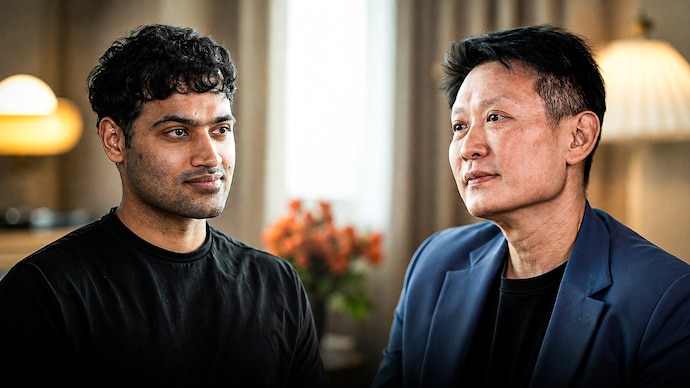
That was a central theme discussed by Richard Teng, Co-CEO of Binance, in a recent conversation on Raj Shamani’s Figuring Out podcast. Drawing on his experience in financial services and regulation, Teng said that if financial institutions were designed from scratch today, many would likely look different, shaped by new tools such as blockchain networks and artificial intelligence.
Building a financial super app
For Binance, Teng described a longer-term vision that goes beyond operating a crypto exchange.
Binance began as a crypto exchange in 2017. Since then, it has expanded its broader ecosystem, including products and services that vary by region, user eligibility, and applicable regulations. Teng described this direction as part of a wider industry trend toward building more integrated platforms, where users can access different categories of financial tools in one place.
“We are a financial super app,” Teng said during the conversation, describing the evolution of crypto exchanges to platforms that offer access to a wider suite of services.
Across the industry, the boundaries between traditional finance and blockchain-based markets have continued to evolve. Some platforms are exploring ways to integrate multiple asset types and payment flows, while regulators and market participants continue to debate the right frameworks for consumer protection and innovation.
Why financial infrastructure needs an upgrade
Teng said the case for modernizing financial infrastructure becomes clearer when looking at areas where friction still exists.
Cross-border transfers can take time to settle, and remittance fees can be meaningful, depending on the corridor and service provider. For many migrant workers supporting families abroad or businesses, even small percentage costs can add up over time.
“If you do a bank transfer across borders, it takes two to three days and banks charge significant fees,” Teng noted, arguing that blockchain technology could help reduce settlement times and lower costs in some scenarios.
He also pointed to the difference between systems that operate during fixed market hours and networks that can run continuously. In principle, blockchain-based infrastructure can support 24/7 transactions, which may improve capital efficiency and reduce operational delays, depending on how services are implemented.
Expanding financial access
Despite years of investment in financial access and digital payments, a significant number of people globally still lack access to traditional banking services. Teng said this remains a core issue, particularly where account fees, distance to branches, or limited payment rails keep participation costs high.
Richard emphasized financial inclusion, noting 1.4 billion people remain unbanked largely due to cost and access issues . Teng pointed out that blockchain-based services, alongside other digital infrastructure, could help lower barriers by enabling access through internet-connected devices, while acknowledging that real-world adoption depends on usability, trust, and appropriate safeguards.
“Financial institutions have spoken about inclusion for decades, yet 1.4 billion people still don’t have access to proper banking or payment systems because the costs remain too high,” Teng observed.
Regulation and innovation can coexist
Teng also discussed regulation, one of the most closely watched issues in the digital-asset industry.
Rather than framing regulation as a barrier, he mentioned that clearer, well-designed rules can support long-term growth by improving consumer confidence and reducing bad actors, while still allowing responsible innovation.
“We want proper regulations. Our interests are aligned with users and regulators,” he said.
Teng added that Binance has invested in compliance measures and works with regulators in multiple jurisdictions. He also referenced industry-wide initiatives aimed at improving transparency, including proof of reserves, while noting that regulatory approaches and requirements differ across countries.
Education remains the first line of defense
Teng said technological change does not eliminate the risks that come with financial markets, including fraud and scams.
He noted that scammers often rely on urgency and emotion, and that new tools, including AI, can make impersonation and deceptive campaigns more convincing. His advice to users was to take time to understand what they are doing before committing funds, and to be cautious of claims that sound too good to be true.
“Do your own research,” Teng said repeatedly throughout the conversation, encouraging users to verify information, understand risks, and start small rather than acting on hype.
He emphasized that education and risk awareness remain essential for responsible participation in any market, including digital assets.
Looking ahead
For Teng, cryptocurrency’s long-term significance is not limited to short-term price cycles. He argued that the underlying infrastructure could play a larger role as blockchain networks, AI systems, and tokenization tools mature, and as financial services continue to digitize.
He said the future of finance may be shaped by systems that prioritize speed, accessibility, interoperability, and transparency, while also requiring clear rules and strong user protections.
Whether that future ultimately resembles today’s financial landscape remains to be seen. But in Teng’s view, the conversation is increasingly moving beyond crypto as an asset class and toward blockchain as one of several technologies that could influence the next generation of global financial infrastructure.
Disclaimer: The material, content, and/or information contained within this impact feature are published strictly for advertorial purposes. T.V. Today Network Limited hereby disclaims any and all responsibility, representation, or endorsement with respect to the accuracy, reliability, or quality of the products and/or services featured or promoted herein. Viewers or consumers are strongly advised to conduct their own due diligence and make independent inquiries before relying on or making any decisions based on the information or claims presented in the impact feature. Any reliance placed on such content is strictly at the individual's own discretion and risk.
When cryptocurrency first entered the mainstream conversation, it was often discussed primarily as a new asset class. Over time, the discussion has broadened. Increasingly, blockchain is being evaluated as technology that could support financial infrastructure, including faster settlement, more transparent recordkeeping, and new ways to move value digitally.
That was a central theme discussed by Richard Teng, Co-CEO of Binance, in a recent conversation on Raj Shamani’s Figuring Out podcast. Drawing on his experience in financial services and regulation, Teng said that if financial institutions were designed from scratch today, many would likely look different, shaped by new tools such as blockchain networks and artificial intelligence.
Building a financial super app
For Binance, Teng described a longer-term vision that goes beyond operating a crypto exchange.
Binance began as a crypto exchange in 2017. Since then, it has expanded its broader ecosystem, including products and services that vary by region, user eligibility, and applicable regulations. Teng described this direction as part of a wider industry trend toward building more integrated platforms, where users can access different categories of financial tools in one place.
“We are a financial super app,” Teng said during the conversation, describing the evolution of crypto exchanges to platforms that offer access to a wider suite of services.
Across the industry, the boundaries between traditional finance and blockchain-based markets have continued to evolve. Some platforms are exploring ways to integrate multiple asset types and payment flows, while regulators and market participants continue to debate the right frameworks for consumer protection and innovation.
Why financial infrastructure needs an upgrade
Teng said the case for modernizing financial infrastructure becomes clearer when looking at areas where friction still exists.
Cross-border transfers can take time to settle, and remittance fees can be meaningful, depending on the corridor and service provider. For many migrant workers supporting families abroad or businesses, even small percentage costs can add up over time.
“If you do a bank transfer across borders, it takes two to three days and banks charge significant fees,” Teng noted, arguing that blockchain technology could help reduce settlement times and lower costs in some scenarios.
He also pointed to the difference between systems that operate during fixed market hours and networks that can run continuously. In principle, blockchain-based infrastructure can support 24/7 transactions, which may improve capital efficiency and reduce operational delays, depending on how services are implemented.
Expanding financial access
Despite years of investment in financial access and digital payments, a significant number of people globally still lack access to traditional banking services. Teng said this remains a core issue, particularly where account fees, distance to branches, or limited payment rails keep participation costs high.
Richard emphasized financial inclusion, noting 1.4 billion people remain unbanked largely due to cost and access issues . Teng pointed out that blockchain-based services, alongside other digital infrastructure, could help lower barriers by enabling access through internet-connected devices, while acknowledging that real-world adoption depends on usability, trust, and appropriate safeguards.
“Financial institutions have spoken about inclusion for decades, yet 1.4 billion people still don’t have access to proper banking or payment systems because the costs remain too high,” Teng observed.
Regulation and innovation can coexist
Teng also discussed regulation, one of the most closely watched issues in the digital-asset industry.
Rather than framing regulation as a barrier, he mentioned that clearer, well-designed rules can support long-term growth by improving consumer confidence and reducing bad actors, while still allowing responsible innovation.
“We want proper regulations. Our interests are aligned with users and regulators,” he said.
Teng added that Binance has invested in compliance measures and works with regulators in multiple jurisdictions. He also referenced industry-wide initiatives aimed at improving transparency, including proof of reserves, while noting that regulatory approaches and requirements differ across countries.
Education remains the first line of defense
Teng said technological change does not eliminate the risks that come with financial markets, including fraud and scams.
He noted that scammers often rely on urgency and emotion, and that new tools, including AI, can make impersonation and deceptive campaigns more convincing. His advice to users was to take time to understand what they are doing before committing funds, and to be cautious of claims that sound too good to be true.
“Do your own research,” Teng said repeatedly throughout the conversation, encouraging users to verify information, understand risks, and start small rather than acting on hype.
He emphasized that education and risk awareness remain essential for responsible participation in any market, including digital assets.
Looking ahead
For Teng, cryptocurrency’s long-term significance is not limited to short-term price cycles. He argued that the underlying infrastructure could play a larger role as blockchain networks, AI systems, and tokenization tools mature, and as financial services continue to digitize.
He said the future of finance may be shaped by systems that prioritize speed, accessibility, interoperability, and transparency, while also requiring clear rules and strong user protections.
Whether that future ultimately resembles today’s financial landscape remains to be seen. But in Teng’s view, the conversation is increasingly moving beyond crypto as an asset class and toward blockchain as one of several technologies that could influence the next generation of global financial infrastructure.
Disclaimer: The material, content, and/or information contained within this impact feature are published strictly for advertorial purposes. T.V. Today Network Limited hereby disclaims any and all responsibility, representation, or endorsement with respect to the accuracy, reliability, or quality of the products and/or services featured or promoted herein. Viewers or consumers are strongly advised to conduct their own due diligence and make independent inquiries before relying on or making any decisions based on the information or claims presented in the impact feature. Any reliance placed on such content is strictly at the individual's own discretion and risk.

