As CM Bhajan Lal Sharma chats with Rajasthan villagers, why BJP bosses are all ears
Sharma's Gram Chaupal campaign uses village night halts and instant governance fixes to build both his public image and standing with the BJP high command
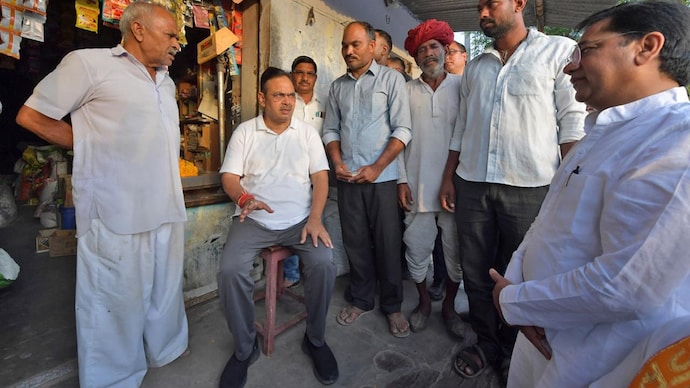
Over the past week, Sharma has already stayed in Bambori village in Pratapgarh, Jajod in Sikar, Kadel in Ajmer and Panseri in Jalore. More such halts are planned. During these visits, he spends the evening interacting with villagers about problems related to roads, schools, health services and welfare delivery. He also uses the platform to publicise state and central schemes.
The symbolism is carefully designed: the chief minister stays in a villager’s home, walks through the village the next morning, chats with schoolchildren and hands out chocolates on the way.
The political messaging is significant too. Rajasthan has seen chief ministers touring extensively before, but overnight stays in villages by a sitting BJP chief minister are rare. Sharma appears to be trying to create an image of accessibility and grassroots connect at a time when the BJP central leadership is closely evaluating governance performance across states.
The immediate outcomes of the chaupals are meant to demonstrate responsiveness. In Kadel, Sharma ordered the upgradation of a primary health centre into a community health centre and sanctioned a boundary wall for a girls’ school. In Jajod, he approved the opening of science stream in a girls’ school and even intervened in a job transfer matter after a mother requested that her son be posted closer to home.
Such gestures matter in rural Rajasthan, where administrative responsiveness carries more political weight than large policy announcements. The BJP understands this well. Prime Minister Narendra Modi himself built much of his political capital around the idea of direct connect and visible governance. Sharma’s village halts appear inspired by the same template: personalise governance, humanise authority and reduce the distance between ruler and voter.
Yet the campaign also reveals an underlying anxiety within the Rajasthan BJP. Sharma is nearing the halfway mark of his tenure. While he has maintained a hectic public schedule—travelling across the state, attending social and religious events, conducting review meetings and meeting party workers—questions within sections of the BJP over his long-term political durability have not entirely disappeared.
Insiders admit that discussions about reviewing Sharma’s performance have periodically surfaced. The chatter gained momentum after the BJP appointed another Brahmin chief minister Suvendu Adhikari in West Bengal, adding to the list that already includes Sharma, Maharashtra’s Devendra Fadanavis and Assam’s Himanta Biswa Sarma. Until recently, some believed the BJP high command would avoid replacing Sharma to prevent alienating Brahmin voters. But with multiple Brahmin chief ministers now in place, Sharma’s internal detractors argue that the “caste compulsion” argument has weakened.
Nevertheless, in the BJP, speculation around leadership changes is almost institutionalised. Chief ministers frequently operate under an invisible audit system driven by electoral calculations rather than conventional political stability. Ultimately, decisions rest with Modi and Union home minister Amit Shah, both of whom have repeatedly shown preference for relatively low-profile leaders over established satraps.
The BJP’s recent history offers enough examples. Leaders once considered politically vulnerable, such as Manohar Lal Khattar in Haryana and Pushkar Singh Dhami in Uttarakhand, eventually delivered electoral victories and consolidated themselves. Sharma appears keenly aware that survival in the BJP depends less on public perception alone and more on convincing the Modi-Shah leadership that one can convert governance into votes.
That explains another important dimension of Sharma’s politics: his consistent engagement with Union ministers in Delhi. Officially, these meetings are linked to state projects and clearances. Politically, they also help him build informal equations within the central leadership ecosystem. In a party where central approval matters enormously, personal access and goodwill remain valuable political capital.
But the Rajasthan equation is more complicated because the BJP’s organisational structure in the state remains unusually incomplete. The party has not appointed an organisational general secretary—the crucial RSS-linked post—since January 2024. State BJP president Madan Rathore remains relatively low profile. The high command’s apparent strategy has been to avoid the emergence of rival power centres that could weaken the chief minister.
Even senior BJP leader Vasudev Devnani, once considered a contender for the chief minister’s post, has largely maintained a supportive role. This has helped shield a government where several ministers are political novices and vulnerable to criticism.
Rathore’s public endorsement of Sharma is therefore politically significant. He insists the government is performing reasonably well and says the BJP machinery is being aggressively strengthened ahead of the 2028 assembly elections. According to him, around 62,000 booth-level committees have been constituted while the party is preparing to deploy panna pramukhs after the revised voters’ list is completed. Training camps for booth workers are already underway.
The BJP in Rajasthan believes governance achievements in power supply, solar energy expansion, job creation and the modified Eastern Rajasthan Canal Project can become major electoral assets. But the party also recognises that welfare delivery and perception at the village level will determine whether those achievements translate into votes.
That is where Sharma’s Gram Chaupal experiment becomes important. It serves three purposes simultaneously: governance feedback, image building and cadre mobilisation. Reports suggest BJP MLAs, ministers and local leaders have begun emulating Sharma’s night halts after initially ignoring his repeated instructions to undertake similar grassroots outreach.
In effect, the chief minister is trying to energise both the government and the organisation through a highly visible political exercise. But visibility alone will not settle the leadership question. Within BJP circles, there is growing expectation that the central leadership may first opt for a cabinet reshuffle before taking any larger political call.
Some ministers, including experienced faces who were expected to perform strongly, are perceived to have disappointed both the government and the organisation. A reshuffle could allow the BJP to signal course-correction without destabilising the government and also reward some good first-timers.
Beyond that, the final decision on Sharma’s future will depend on a harder political calculation: whether Modi and Shah believe he can carry Rajasthan into 2028 as an electoral asset rather than merely an administrative placeholder. For now, Sharma’s village nights are as much about listening to villagers as they are about sending a message to the high command in Delhi.
Subscribe to India Today Magazine
Over the past week, Sharma has already stayed in Bambori village in Pratapgarh, Jajod in Sikar, Kadel in Ajmer and Panseri in Jalore. More such halts are planned. During these visits, he spends the evening interacting with villagers about problems related to roads, schools, health services and welfare delivery. He also uses the platform to publicise state and central schemes.
The symbolism is carefully designed: the chief minister stays in a villager’s home, walks through the village the next morning, chats with schoolchildren and hands out chocolates on the way.
The political messaging is significant too. Rajasthan has seen chief ministers touring extensively before, but overnight stays in villages by a sitting BJP chief minister are rare. Sharma appears to be trying to create an image of accessibility and grassroots connect at a time when the BJP central leadership is closely evaluating governance performance across states.
The immediate outcomes of the chaupals are meant to demonstrate responsiveness. In Kadel, Sharma ordered the upgradation of a primary health centre into a community health centre and sanctioned a boundary wall for a girls’ school. In Jajod, he approved the opening of science stream in a girls’ school and even intervened in a job transfer matter after a mother requested that her son be posted closer to home.
Such gestures matter in rural Rajasthan, where administrative responsiveness carries more political weight than large policy announcements. The BJP understands this well. Prime Minister Narendra Modi himself built much of his political capital around the idea of direct connect and visible governance. Sharma’s village halts appear inspired by the same template: personalise governance, humanise authority and reduce the distance between ruler and voter.
Yet the campaign also reveals an underlying anxiety within the Rajasthan BJP. Sharma is nearing the halfway mark of his tenure. While he has maintained a hectic public schedule—travelling across the state, attending social and religious events, conducting review meetings and meeting party workers—questions within sections of the BJP over his long-term political durability have not entirely disappeared.
Insiders admit that discussions about reviewing Sharma’s performance have periodically surfaced. The chatter gained momentum after the BJP appointed another Brahmin chief minister Suvendu Adhikari in West Bengal, adding to the list that already includes Sharma, Maharashtra’s Devendra Fadanavis and Assam’s Himanta Biswa Sarma. Until recently, some believed the BJP high command would avoid replacing Sharma to prevent alienating Brahmin voters. But with multiple Brahmin chief ministers now in place, Sharma’s internal detractors argue that the “caste compulsion” argument has weakened.
Nevertheless, in the BJP, speculation around leadership changes is almost institutionalised. Chief ministers frequently operate under an invisible audit system driven by electoral calculations rather than conventional political stability. Ultimately, decisions rest with Modi and Union home minister Amit Shah, both of whom have repeatedly shown preference for relatively low-profile leaders over established satraps.
The BJP’s recent history offers enough examples. Leaders once considered politically vulnerable, such as Manohar Lal Khattar in Haryana and Pushkar Singh Dhami in Uttarakhand, eventually delivered electoral victories and consolidated themselves. Sharma appears keenly aware that survival in the BJP depends less on public perception alone and more on convincing the Modi-Shah leadership that one can convert governance into votes.
That explains another important dimension of Sharma’s politics: his consistent engagement with Union ministers in Delhi. Officially, these meetings are linked to state projects and clearances. Politically, they also help him build informal equations within the central leadership ecosystem. In a party where central approval matters enormously, personal access and goodwill remain valuable political capital.
But the Rajasthan equation is more complicated because the BJP’s organisational structure in the state remains unusually incomplete. The party has not appointed an organisational general secretary—the crucial RSS-linked post—since January 2024. State BJP president Madan Rathore remains relatively low profile. The high command’s apparent strategy has been to avoid the emergence of rival power centres that could weaken the chief minister.
Even senior BJP leader Vasudev Devnani, once considered a contender for the chief minister’s post, has largely maintained a supportive role. This has helped shield a government where several ministers are political novices and vulnerable to criticism.
Rathore’s public endorsement of Sharma is therefore politically significant. He insists the government is performing reasonably well and says the BJP machinery is being aggressively strengthened ahead of the 2028 assembly elections. According to him, around 62,000 booth-level committees have been constituted while the party is preparing to deploy panna pramukhs after the revised voters’ list is completed. Training camps for booth workers are already underway.
The BJP in Rajasthan believes governance achievements in power supply, solar energy expansion, job creation and the modified Eastern Rajasthan Canal Project can become major electoral assets. But the party also recognises that welfare delivery and perception at the village level will determine whether those achievements translate into votes.
That is where Sharma’s Gram Chaupal experiment becomes important. It serves three purposes simultaneously: governance feedback, image building and cadre mobilisation. Reports suggest BJP MLAs, ministers and local leaders have begun emulating Sharma’s night halts after initially ignoring his repeated instructions to undertake similar grassroots outreach.
In effect, the chief minister is trying to energise both the government and the organisation through a highly visible political exercise. But visibility alone will not settle the leadership question. Within BJP circles, there is growing expectation that the central leadership may first opt for a cabinet reshuffle before taking any larger political call.
Some ministers, including experienced faces who were expected to perform strongly, are perceived to have disappointed both the government and the organisation. A reshuffle could allow the BJP to signal course-correction without destabilising the government and also reward some good first-timers.
Beyond that, the final decision on Sharma’s future will depend on a harder political calculation: whether Modi and Shah believe he can carry Rajasthan into 2028 as an electoral asset rather than merely an administrative placeholder. For now, Sharma’s village nights are as much about listening to villagers as they are about sending a message to the high command in Delhi.
Subscribe to India Today Magazine

