Dominant ire to disciplined exit: What next for Jantar Mantar protesters?
CJP supporters had spent weeks turning the 'cockroach' insult into political identity. At Jantar Mantar, the metaphor had found its most dramatic payoff
By the time word began to move through the crowd on July 25 that Dharmendra Pradhan had resigned as Union education minister, the protest site had already lived through long days of speeches, negotiations, barricades and uncertainty. The announcement did not land quietly.
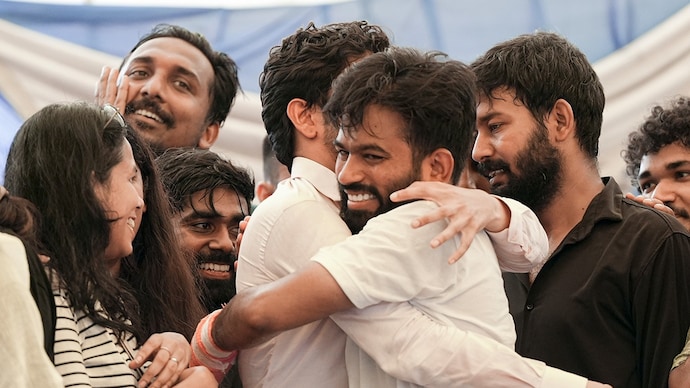
It seemed to travel from phone to phone, from one cluster of students to another, before turning into a roar. For a moment, the crowd appeared to be trying to confirm what it had heard. Then came the release. Young protesters began shouting victory slogans. Some danced where they stood.
Supporters lifted Cockroach Janta Party (CJP) founder Abhijeet Dipke onto their shoulders or raised their hands above the people pressed around them. ‘Jai Hind’ rang out again and again, not as a casual slogan but as an answer to the weeks in which the protest had been portrayed by critics as disorderly or politically suspect.
The celebration, however, did not settle the central question. The CJP had won the resignation it demanded; now it had to ensure that promises on cases against protesters, compensation for families of students who died by suicide, examination reform and a public apology from Delhi police and the Rapid Action Force survived beyond the euphoria.
The hard part of a protest victory is often what follows: turning an announcement into a written assurance, a commitment into an order, and a promise into something that changes people's lives.
The national anthem played over loudspeakers. In the crowd, people stood together, some singing, some holding flags still, some filming the scene with their phones. Sweets were distributed. The mood had shifted from anger to disbelief, then to joy. What had begun as a protest over the paper-leak crisis and the fate of students had become, in those hours, an unmistakable public celebration. The visual contrast made the scene hard to miss.
Around the demonstrators remained the apparatus of a heavily policed capital: security personnel, barriers and the residue of the confrontations that had marked the preceding days. But inside the protest site, the mood was jubilant. The very young people who had been waiting for a response from the government were now celebrating what they saw as proof that their pressure had mattered.
CJP supporters had spent weeks turning the language of insult into a political identity. The cockroach, a creature associated with survival and contempt, had become their symbol of refusal: difficult to remove, impossible to ignore. At Jantar Mantar, the metaphor had found its most dramatic payoff.
The crowd did not see Pradhan’s resignation merely as the departure of a minister. It saw it as recognition of a wider wound—the fear and anger produced by examinations in which the stakes are immense and trust has been repeatedly shaken.
Dipke addressed the crowd to loud cheers. His message was brief and direct: "We have done it." The words belonged as much to the people gathered before him as to the group's leadership. The movement had been driven by students and young job-seekers who felt that the consequences of institutional failure were routinely borne by those with the least power to absorb them.
Among the crowd was a protester carrying a copy of the Constitution, a small but deliberate symbol in a demonstration that had repeatedly framed itself as a demand for dignity and accountability. He described the moment as a victory for the Constitution and rejected the idea that his generation was apathetic or unserious. The statement captured a larger feeling at the site.
This was not, in the protesters' view, simply a win over one minister. It was an argument for the right of young people to be heard. Yet resignation alone did not end the gathering. The celebration paused for politics to catch up with it. CJP representatives returned from talks with Union ministers, and the attention of the crowd shifted once more towards the stage and the formal announcement. The tone was noticeably different from the first explosion of joy. It was calmer, more deliberate.
CJP's leaders said the government had accepted the demands raised by the movement and announced that the agitation would be withdrawn in good faith. They asked those who had gathered at Jantar Mantar, and those watching from elsewhere, to leave peacefully. The appeal carried the force of a turning point.
CJP spokesperson Ashutosh Ranka told supporters that their struggle, hard work and patience had paid off. The words recognised the effort that had gone into sustaining the protest, but they also marked its closure. The crowd that had spent so long demanding to be seen was now being asked to show that it could end a mobilisation on its own terms.
That is how the night of July 25 at Jantar Mantar came to feel: a victory rally, certainly, with singing, sweets, flags and chants. it was also a disciplined withdrawal, shaped by the insistence that the work was not finished merely because the crowd was going home.
Subscribe to India Today Magazine
By the time word began to move through the crowd on July 25 that Dharmendra Pradhan had resigned as Union education minister, the protest site had already lived through long days of speeches, negotiations, barricades and uncertainty. The announcement did not land quietly.
It seemed to travel from phone to phone, from one cluster of students to another, before turning into a roar. For a moment, the crowd appeared to be trying to confirm what it had heard. Then came the release. Young protesters began shouting victory slogans. Some danced where they stood.
Supporters lifted Cockroach Janta Party (CJP) founder Abhijeet Dipke onto their shoulders or raised their hands above the people pressed around them. ‘Jai Hind’ rang out again and again, not as a casual slogan but as an answer to the weeks in which the protest had been portrayed by critics as disorderly or politically suspect.
The celebration, however, did not settle the central question. The CJP had won the resignation it demanded; now it had to ensure that promises on cases against protesters, compensation for families of students who died by suicide, examination reform and a public apology from Delhi police and the Rapid Action Force survived beyond the euphoria.
The hard part of a protest victory is often what follows: turning an announcement into a written assurance, a commitment into an order, and a promise into something that changes people's lives.
The national anthem played over loudspeakers. In the crowd, people stood together, some singing, some holding flags still, some filming the scene with their phones. Sweets were distributed. The mood had shifted from anger to disbelief, then to joy. What had begun as a protest over the paper-leak crisis and the fate of students had become, in those hours, an unmistakable public celebration. The visual contrast made the scene hard to miss.
Around the demonstrators remained the apparatus of a heavily policed capital: security personnel, barriers and the residue of the confrontations that had marked the preceding days. But inside the protest site, the mood was jubilant. The very young people who had been waiting for a response from the government were now celebrating what they saw as proof that their pressure had mattered.
CJP supporters had spent weeks turning the language of insult into a political identity. The cockroach, a creature associated with survival and contempt, had become their symbol of refusal: difficult to remove, impossible to ignore. At Jantar Mantar, the metaphor had found its most dramatic payoff.
The crowd did not see Pradhan’s resignation merely as the departure of a minister. It saw it as recognition of a wider wound—the fear and anger produced by examinations in which the stakes are immense and trust has been repeatedly shaken.
Dipke addressed the crowd to loud cheers. His message was brief and direct: "We have done it." The words belonged as much to the people gathered before him as to the group's leadership. The movement had been driven by students and young job-seekers who felt that the consequences of institutional failure were routinely borne by those with the least power to absorb them.
Among the crowd was a protester carrying a copy of the Constitution, a small but deliberate symbol in a demonstration that had repeatedly framed itself as a demand for dignity and accountability. He described the moment as a victory for the Constitution and rejected the idea that his generation was apathetic or unserious. The statement captured a larger feeling at the site.
This was not, in the protesters' view, simply a win over one minister. It was an argument for the right of young people to be heard. Yet resignation alone did not end the gathering. The celebration paused for politics to catch up with it. CJP representatives returned from talks with Union ministers, and the attention of the crowd shifted once more towards the stage and the formal announcement. The tone was noticeably different from the first explosion of joy. It was calmer, more deliberate.
CJP's leaders said the government had accepted the demands raised by the movement and announced that the agitation would be withdrawn in good faith. They asked those who had gathered at Jantar Mantar, and those watching from elsewhere, to leave peacefully. The appeal carried the force of a turning point.
CJP spokesperson Ashutosh Ranka told supporters that their struggle, hard work and patience had paid off. The words recognised the effort that had gone into sustaining the protest, but they also marked its closure. The crowd that had spent so long demanding to be seen was now being asked to show that it could end a mobilisation on its own terms.
That is how the night of July 25 at Jantar Mantar came to feel: a victory rally, certainly, with singing, sweets, flags and chants. it was also a disciplined withdrawal, shaped by the insistence that the work was not finished merely because the crowd was going home.
Subscribe to India Today Magazine
By the time word began to move through the crowd on July 25 that Dharmendra Pradhan had resigned as Union education minister, the protest site had already lived through long days of speeches, negotiations, barricades and uncertainty. The announcement did not land quietly.
It seemed to travel from phone to phone, from one cluster of students to another, before turning into a roar. For a moment, the crowd appeared to be trying to confirm what it had heard. Then came the release. Young protesters began shouting victory slogans. Some danced where they stood.
Supporters lifted Cockroach Janta Party (CJP) founder Abhijeet Dipke onto their shoulders or raised their hands above the people pressed around them. ‘Jai Hind’ rang out again and again, not as a casual slogan but as an answer to the weeks in which the protest had been portrayed by critics as disorderly or politically suspect.
The celebration, however, did not settle the central question. The CJP had won the resignation it demanded; now it had to ensure that promises on cases against protesters, compensation for families of students who died by suicide, examination reform and a public apology from Delhi police and the Rapid Action Force survived beyond the euphoria.
The hard part of a protest victory is often what follows: turning an announcement into a written assurance, a commitment into an order, and a promise into something that changes people's lives.
The national anthem played over loudspeakers. In the crowd, people stood together, some singing, some holding flags still, some filming the scene with their phones. Sweets were distributed. The mood had shifted from anger to disbelief, then to joy. What had begun as a protest over the paper-leak crisis and the fate of students had become, in those hours, an unmistakable public celebration. The visual contrast made the scene hard to miss.
Around the demonstrators remained the apparatus of a heavily policed capital: security personnel, barriers and the residue of the confrontations that had marked the preceding days. But inside the protest site, the mood was jubilant. The very young people who had been waiting for a response from the government were now celebrating what they saw as proof that their pressure had mattered.
CJP supporters had spent weeks turning the language of insult into a political identity. The cockroach, a creature associated with survival and contempt, had become their symbol of refusal: difficult to remove, impossible to ignore. At Jantar Mantar, the metaphor had found its most dramatic payoff.
The crowd did not see Pradhan’s resignation merely as the departure of a minister. It saw it as recognition of a wider wound—the fear and anger produced by examinations in which the stakes are immense and trust has been repeatedly shaken.
Dipke addressed the crowd to loud cheers. His message was brief and direct: "We have done it." The words belonged as much to the people gathered before him as to the group's leadership. The movement had been driven by students and young job-seekers who felt that the consequences of institutional failure were routinely borne by those with the least power to absorb them.
Among the crowd was a protester carrying a copy of the Constitution, a small but deliberate symbol in a demonstration that had repeatedly framed itself as a demand for dignity and accountability. He described the moment as a victory for the Constitution and rejected the idea that his generation was apathetic or unserious. The statement captured a larger feeling at the site.
This was not, in the protesters' view, simply a win over one minister. It was an argument for the right of young people to be heard. Yet resignation alone did not end the gathering. The celebration paused for politics to catch up with it. CJP representatives returned from talks with Union ministers, and the attention of the crowd shifted once more towards the stage and the formal announcement. The tone was noticeably different from the first explosion of joy. It was calmer, more deliberate.
CJP's leaders said the government had accepted the demands raised by the movement and announced that the agitation would be withdrawn in good faith. They asked those who had gathered at Jantar Mantar, and those watching from elsewhere, to leave peacefully. The appeal carried the force of a turning point.
CJP spokesperson Ashutosh Ranka told supporters that their struggle, hard work and patience had paid off. The words recognised the effort that had gone into sustaining the protest, but they also marked its closure. The crowd that had spent so long demanding to be seen was now being asked to show that it could end a mobilisation on its own terms.
That is how the night of July 25 at Jantar Mantar came to feel: a victory rally, certainly, with singing, sweets, flags and chants. it was also a disciplined withdrawal, shaped by the insistence that the work was not finished merely because the crowd was going home.
Subscribe to India Today Magazine

