Why BJP cannot be dismissive of Prashant Kishor in Bankipur bypoll
BJP leaders say the only question is the margin of victory. But the party's extraordinary electioneering suggests this contest isn't being taken for granted
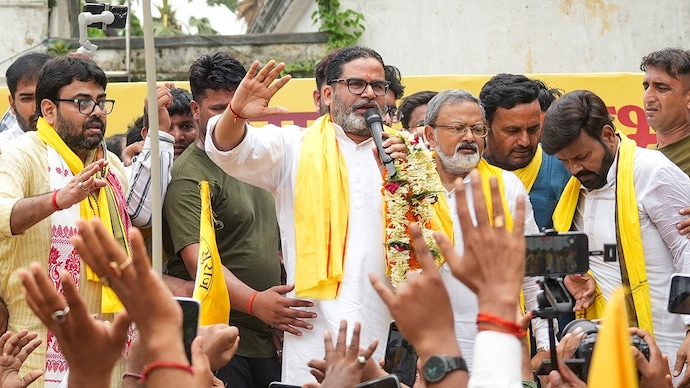
Instead, Kishor turned his attention to Jeevika, the state’s internationally acclaimed network of women's self-help groups that successive governments have proudly showcased as a remarkable governance story.
Addressing a packed media conference in Patna, Kishor accused the ruling BJP of deploying Jeevika Didis (beneficiaries of the scheme) to influence voters in Bankipur. He demanded that the Election Commission prohibit anyone associated with Jeevika or any government-supported institution from participating in electioneering. He gave the commission 24 hours to respond, failing which he would stage a dharna.
Whether those allegations are upheld is a matter for the Election Commission to consider. But politically, the significance lies elsewhere. A politician who foresees inevitable defeat rarely chooses the final week of campaigning to raise the stakes; instead softens expectations, blames the odds and prepares an explanation for the verdict.
Kishor has done precisely the opposite. Rather than lower the political temperature, he has attempted to turn a routine by-election into a referendum on the conduct of the government.
That confidence deserves closer attention. Less than a year ago, Bihar had dismissed Kishor's debut in the assembly polls as an expensive failure. Jan Suraaj, which he painstakingly built walking thousands of kilometres across Bihar, failed to win a single assembly seat. Just two of the party’s 238 candidates could save their deposits.
Critics declared that India's most celebrated election strategist had discovered the difference between winning elections for others and one himself. It was an irresistible narrative, but one incomplete. Lost amidst the triumphalism of Bihar's established parties was a number that has since refused to disappear—1.67 million.
That was the number of votes Jan Suraaj received in its very election. In most democracies, 1.6 million votes would be enough to establish a significant political force. In India’s first-past-the-post electoral system, those votes translated into no seats, legislative presence or relevance.
Except that politics seldom works that neatly. Across more than two dozen assembly constituencies, Jan Suraaj polled more votes than the eventual margin of victory. It did not win those seats but most certainly influenced who did. The party became what political scientists describe as a spoiler.
Spoilers, however, are usually transient phenomena. Jan Suraaj appeared instead to be constructing an entirely new electoral constituency—voters dissatisfied with both the BJP-led National Democratic Alliance (NDA) and the Rashtriya Janata Dal (RJD)-led Opposition.
The distinction matters. For before parties in Bihar become winners, they often become disruptors. They alter political calculations, fragment social coalitions and compel larger parties to fight battles they once considered beneath them. That is precisely what Bankipur has become.
On paper, the constituency has remained one of the BJP’s safest urban bastions for nearly three decades. Naveen Kishore Sinha represented the seat through the 1990s before his demise passed the baton to Nitin Nabin, whose five consecutive victories turned electoral success into political routine. The present bypoll is being conducted only because Nabin vacated the seat following his elevation as the BJP's national president and subsequent election to the Rajya Sabha.
For Kishor, Bankipur is the first occasion to prove admiration for his political ideas can translate into votes. For the BJP, the stakes are subtler but no less important. A defeat in Bankipur could puncture the perception that Bihar's urban middle classes remain firmly within its political embrace. More importantly, it would give Kishor a victory over the BJP in one of its own fortresses.
Officially, BJP leaders dismiss the ‘PK factor’ and insist the only question is the margin of victory. Yet parties rarely commit extraordinary organisational resources to opponents they consider irrelevant. Senior BJP leaders, including Ravi Shankar Prasad and Ram Kripal Yadav, have campaigned extensively. Nabin himself has toured the constituency. Booth-level management has acquired the intensity of a closely fought assembly election. Every neighbourhood has witnessed an unusually visible BJP campaign, suggesting a quieter recognition that this contest cannot be taken for granted.
Kishor has consciously avoided fighting Bihar on familiar terrain. Unlike the RJD, whose politics continues to rely heavily upon social coalitions, or the BJP, whose electoral appeal blends welfare delivery with Hindutva, Jan Suraaj has sought to build its campaign around governance—exam paper leaks, youth unemployment, migration, government schools, recruitment examinations, administrative accountability and so on.
The Jeevika controversy fits comfortably within that narrative. It allows Kishor to argue that the contest is not merely between political parties but between an entrenched state apparatus and a challenger attempting to compete without institutional advantage. Whether voters accept that argument remains uncertain. Yet even sceptics acknowledge Kishor has altered the conversation.
Until recently, Bihar's electoral debate revolved around whether Jan Suraaj could survive. Today, it revolves around whether it can win Bankipur. That is a remarkable transformation.
Bankipur will not decide Bihar's future. Nor will it determine who governs the state. But it could answer an intriguing question. Has Kishor finally crossed the invisible line that separates a political consultant from a political contender? The polling on July 30 will settle the immediate contest.
The larger verdict—whether Bihar has discovered a credible third pole capable of unsettling its entrenched political order—will probably take longer to come. But one conclusion is already difficult to escape. A man whose party won no seats in 2025 has somehow persuaded the BJP to fight as though the election matters enormously. In politics, that is rarely the behaviour reserved for a pushover.
Subscribe to India Today Magazine
Instead, Kishor turned his attention to Jeevika, the state’s internationally acclaimed network of women's self-help groups that successive governments have proudly showcased as a remarkable governance story.
Addressing a packed media conference in Patna, Kishor accused the ruling BJP of deploying Jeevika Didis (beneficiaries of the scheme) to influence voters in Bankipur. He demanded that the Election Commission prohibit anyone associated with Jeevika or any government-supported institution from participating in electioneering. He gave the commission 24 hours to respond, failing which he would stage a dharna.
Whether those allegations are upheld is a matter for the Election Commission to consider. But politically, the significance lies elsewhere. A politician who foresees inevitable defeat rarely chooses the final week of campaigning to raise the stakes; instead softens expectations, blames the odds and prepares an explanation for the verdict.
Kishor has done precisely the opposite. Rather than lower the political temperature, he has attempted to turn a routine by-election into a referendum on the conduct of the government.
That confidence deserves closer attention. Less than a year ago, Bihar had dismissed Kishor's debut in the assembly polls as an expensive failure. Jan Suraaj, which he painstakingly built walking thousands of kilometres across Bihar, failed to win a single assembly seat. Just two of the party’s 238 candidates could save their deposits.
Critics declared that India's most celebrated election strategist had discovered the difference between winning elections for others and one himself. It was an irresistible narrative, but one incomplete. Lost amidst the triumphalism of Bihar's established parties was a number that has since refused to disappear—1.67 million.
That was the number of votes Jan Suraaj received in its very election. In most democracies, 1.6 million votes would be enough to establish a significant political force. In India’s first-past-the-post electoral system, those votes translated into no seats, legislative presence or relevance.
Except that politics seldom works that neatly. Across more than two dozen assembly constituencies, Jan Suraaj polled more votes than the eventual margin of victory. It did not win those seats but most certainly influenced who did. The party became what political scientists describe as a spoiler.
Spoilers, however, are usually transient phenomena. Jan Suraaj appeared instead to be constructing an entirely new electoral constituency—voters dissatisfied with both the BJP-led National Democratic Alliance (NDA) and the Rashtriya Janata Dal (RJD)-led Opposition.
The distinction matters. For before parties in Bihar become winners, they often become disruptors. They alter political calculations, fragment social coalitions and compel larger parties to fight battles they once considered beneath them. That is precisely what Bankipur has become.
On paper, the constituency has remained one of the BJP’s safest urban bastions for nearly three decades. Naveen Kishore Sinha represented the seat through the 1990s before his demise passed the baton to Nitin Nabin, whose five consecutive victories turned electoral success into political routine. The present bypoll is being conducted only because Nabin vacated the seat following his elevation as the BJP's national president and subsequent election to the Rajya Sabha.
For Kishor, Bankipur is the first occasion to prove admiration for his political ideas can translate into votes. For the BJP, the stakes are subtler but no less important. A defeat in Bankipur could puncture the perception that Bihar's urban middle classes remain firmly within its political embrace. More importantly, it would give Kishor a victory over the BJP in one of its own fortresses.
Officially, BJP leaders dismiss the ‘PK factor’ and insist the only question is the margin of victory. Yet parties rarely commit extraordinary organisational resources to opponents they consider irrelevant. Senior BJP leaders, including Ravi Shankar Prasad and Ram Kripal Yadav, have campaigned extensively. Nabin himself has toured the constituency. Booth-level management has acquired the intensity of a closely fought assembly election. Every neighbourhood has witnessed an unusually visible BJP campaign, suggesting a quieter recognition that this contest cannot be taken for granted.
Kishor has consciously avoided fighting Bihar on familiar terrain. Unlike the RJD, whose politics continues to rely heavily upon social coalitions, or the BJP, whose electoral appeal blends welfare delivery with Hindutva, Jan Suraaj has sought to build its campaign around governance—exam paper leaks, youth unemployment, migration, government schools, recruitment examinations, administrative accountability and so on.
The Jeevika controversy fits comfortably within that narrative. It allows Kishor to argue that the contest is not merely between political parties but between an entrenched state apparatus and a challenger attempting to compete without institutional advantage. Whether voters accept that argument remains uncertain. Yet even sceptics acknowledge Kishor has altered the conversation.
Until recently, Bihar's electoral debate revolved around whether Jan Suraaj could survive. Today, it revolves around whether it can win Bankipur. That is a remarkable transformation.
Bankipur will not decide Bihar's future. Nor will it determine who governs the state. But it could answer an intriguing question. Has Kishor finally crossed the invisible line that separates a political consultant from a political contender? The polling on July 30 will settle the immediate contest.
The larger verdict—whether Bihar has discovered a credible third pole capable of unsettling its entrenched political order—will probably take longer to come. But one conclusion is already difficult to escape. A man whose party won no seats in 2025 has somehow persuaded the BJP to fight as though the election matters enormously. In politics, that is rarely the behaviour reserved for a pushover.
Subscribe to India Today Magazine
Instead, Kishor turned his attention to Jeevika, the state’s internationally acclaimed network of women's self-help groups that successive governments have proudly showcased as a remarkable governance story.
Addressing a packed media conference in Patna, Kishor accused the ruling BJP of deploying Jeevika Didis (beneficiaries of the scheme) to influence voters in Bankipur. He demanded that the Election Commission prohibit anyone associated with Jeevika or any government-supported institution from participating in electioneering. He gave the commission 24 hours to respond, failing which he would stage a dharna.
Whether those allegations are upheld is a matter for the Election Commission to consider. But politically, the significance lies elsewhere. A politician who foresees inevitable defeat rarely chooses the final week of campaigning to raise the stakes; instead softens expectations, blames the odds and prepares an explanation for the verdict.
Kishor has done precisely the opposite. Rather than lower the political temperature, he has attempted to turn a routine by-election into a referendum on the conduct of the government.
That confidence deserves closer attention. Less than a year ago, Bihar had dismissed Kishor's debut in the assembly polls as an expensive failure. Jan Suraaj, which he painstakingly built walking thousands of kilometres across Bihar, failed to win a single assembly seat. Just two of the party’s 238 candidates could save their deposits.
Critics declared that India's most celebrated election strategist had discovered the difference between winning elections for others and one himself. It was an irresistible narrative, but one incomplete. Lost amidst the triumphalism of Bihar's established parties was a number that has since refused to disappear—1.67 million.
That was the number of votes Jan Suraaj received in its very election. In most democracies, 1.6 million votes would be enough to establish a significant political force. In India’s first-past-the-post electoral system, those votes translated into no seats, legislative presence or relevance.
Except that politics seldom works that neatly. Across more than two dozen assembly constituencies, Jan Suraaj polled more votes than the eventual margin of victory. It did not win those seats but most certainly influenced who did. The party became what political scientists describe as a spoiler.
Spoilers, however, are usually transient phenomena. Jan Suraaj appeared instead to be constructing an entirely new electoral constituency—voters dissatisfied with both the BJP-led National Democratic Alliance (NDA) and the Rashtriya Janata Dal (RJD)-led Opposition.
The distinction matters. For before parties in Bihar become winners, they often become disruptors. They alter political calculations, fragment social coalitions and compel larger parties to fight battles they once considered beneath them. That is precisely what Bankipur has become.
On paper, the constituency has remained one of the BJP’s safest urban bastions for nearly three decades. Naveen Kishore Sinha represented the seat through the 1990s before his demise passed the baton to Nitin Nabin, whose five consecutive victories turned electoral success into political routine. The present bypoll is being conducted only because Nabin vacated the seat following his elevation as the BJP's national president and subsequent election to the Rajya Sabha.
For Kishor, Bankipur is the first occasion to prove admiration for his political ideas can translate into votes. For the BJP, the stakes are subtler but no less important. A defeat in Bankipur could puncture the perception that Bihar's urban middle classes remain firmly within its political embrace. More importantly, it would give Kishor a victory over the BJP in one of its own fortresses.
Officially, BJP leaders dismiss the ‘PK factor’ and insist the only question is the margin of victory. Yet parties rarely commit extraordinary organisational resources to opponents they consider irrelevant. Senior BJP leaders, including Ravi Shankar Prasad and Ram Kripal Yadav, have campaigned extensively. Nabin himself has toured the constituency. Booth-level management has acquired the intensity of a closely fought assembly election. Every neighbourhood has witnessed an unusually visible BJP campaign, suggesting a quieter recognition that this contest cannot be taken for granted.
Kishor has consciously avoided fighting Bihar on familiar terrain. Unlike the RJD, whose politics continues to rely heavily upon social coalitions, or the BJP, whose electoral appeal blends welfare delivery with Hindutva, Jan Suraaj has sought to build its campaign around governance—exam paper leaks, youth unemployment, migration, government schools, recruitment examinations, administrative accountability and so on.
The Jeevika controversy fits comfortably within that narrative. It allows Kishor to argue that the contest is not merely between political parties but between an entrenched state apparatus and a challenger attempting to compete without institutional advantage. Whether voters accept that argument remains uncertain. Yet even sceptics acknowledge Kishor has altered the conversation.
Until recently, Bihar's electoral debate revolved around whether Jan Suraaj could survive. Today, it revolves around whether it can win Bankipur. That is a remarkable transformation.
Bankipur will not decide Bihar's future. Nor will it determine who governs the state. But it could answer an intriguing question. Has Kishor finally crossed the invisible line that separates a political consultant from a political contender? The polling on July 30 will settle the immediate contest.
The larger verdict—whether Bihar has discovered a credible third pole capable of unsettling its entrenched political order—will probably take longer to come. But one conclusion is already difficult to escape. A man whose party won no seats in 2025 has somehow persuaded the BJP to fight as though the election matters enormously. In politics, that is rarely the behaviour reserved for a pushover.
Subscribe to India Today Magazine

