Amaravati vs MaViGun: How Andhra capital remains a political fault line
Amaravati vs MaViGun: Twelve years after bifurcation, Andhra Pradesh's capital debate is far from settled. With Amaravati now the legal capital and Jagan pitching MaViGun as an alternative vision, the battle over the state's future is set to define Andhra Pradesh's politics ahead of 2029 polls.
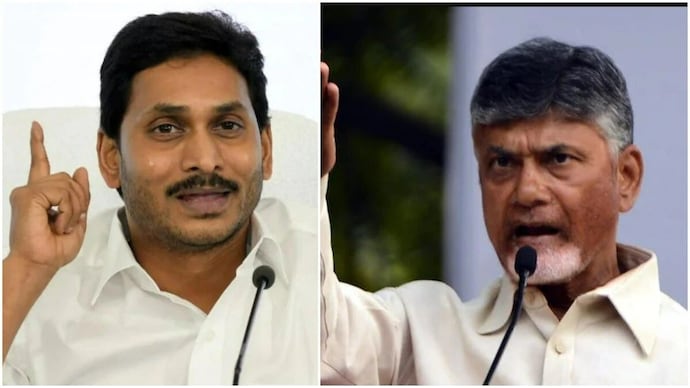
Twelve years after Andhra Pradesh lost Hyderabad to Telangana, the state is still debating where its political heart should lie.
YSRCP chief YS Jagan Mohan Reddy has pitched MaViGun, a proposed development corridor linking Machilipatnam, Vijayawada and Guntur, as an alternative to Amaravati, arguing that the ruling TDP's capital project has become a "scam" even as Parliament has now made Amaravati the state's sole and permanent capital.
What began as an administrative exercise after bifurcation has evolved into one of Andhra Pradesh's most polarising political issues, pitting competing models of development against each other.
HOW THE CAPITAL QUESTION BEGAN
When Telangana was carved out in 2014, residual Andhra Pradesh was left without a capital of its own. The Andhra Pradesh Reorganisation Act, 2014, designated Hyderabad as the common capital for both states for a period of up to ten years and asked the Centre to help facilitate a new capital for Andhra Pradesh.
To guide that process, the Centre set up the Sivaramakrishnan Committee. The panel's recommendation ran counter to the idea of a single, mega capital. It cautioned against concentrating development in one city and instead favoured strengthening multiple existing urban centres across the state.
The committee also specifically warned against building a large concrete capital over the highly fertile agricultural belt around Amaravati, arguing that such a project would consume productive farmland while imposing heavy financial and environmental costs.
The committee's recommendations later became central to Reddy's case for decentralising the state's capital functions.
WHY NAIDU CHOSE AMARAVATI
N. Chandrababu Naidu, who became the first chief minister of residual Andhra Pradesh in 2014, settled on a greenfield site with Krishna river frontage and a central location between Vijayawada and Guntur. This was after rejecting other ideas such as expanding Vijayawada or relying on an existing city in the residual state.
He commissioned a master plan for what was billed as a "people's capital", built through voluntary land pooling. Nearly 34,000 acres were pooled by farmers on the promise of developed plots and annuities in return.
The plan included a legislature, secretariat, high court and an international riverfront city designed to attract global investment.
The land-pooling model itself was presented as an alternative to forced acquisition, an approach the TDP argued was more consensual than conventional land acquisition elsewhere in the country.
Critics, however, flagged the scale of the financial burden on the truncated state, the project's dependence on monetising pooled land to fund construction, and environmental concerns tied to building a permanent capital on the Krishna floodplain.
THE CASTE QUESTION
No account of the Amaravati debate is complete without addressing caste, though it deserves careful framing rather than a reductive one.
Many political analysts point out that Amaravati came to be associated with the dominant Kamma community. A large share of the pooled land belonged to Kamma farmers, and Naidu, who belongs to the community, draws substantial political support from it.
YSRCP built on this to argue that Amaravati disproportionately benefited one region and one social group, while Rayalaseema and North Coastal Andhra remained neglected in the distribution of state institutions and investment.
The three-capital proposal was framed, in part, as a corrective measure to reduce both regional and social imbalance.
Critics of Reddy's stand rejected the argument, saying farmers from several communities, not just Kammas, had voluntarily pooled land for Amaravati. They argued that abandoning the capital project dented investor confidence and undermined confidence in Andhra Pradesh's long-term development plans.
YSRCP GOVERNMENT'S THREE-CAPITALS FORMULA
In late 2019, the YSRCP government proposed splitting capital functions into three: an executive capital in Visakhapatnam, the legislature at Amaravati and a judicial capital in Kurnool.
Kurnool's inclusion was rooted in history. It served as the capital of the erstwhile Andhra State between 1953 and 1956 before Andhra merged with the Telangana region of the former Hyderabad State to form Andhra Pradesh, with Hyderabad as the new capital.
Rayalaseema leaders had agreed to shift the capital to Hyderabad under the understanding that the region would not be neglected in the united state. After bifurcation in 2014, many in the region argued that losing Hyderabad without restoring Kurnool's historic status amounted to another setback for Rayalaseema.
The stated reasoning behind the three-capital proposal was decentralised development, correcting regional imbalances and spreading growth rather than repeating the Hyderabad model, where one city cornered the state's investment for decades.
Supporters argued that North Coastal Andhra and Rayalaseema had waited long enough for their share of institutions.
That formula, however, is no longer Reddy's central pitch.
Having watched the three-capital plan fail to yield political dividends, including setbacks for the YSRCP in Visakhapatnam, Krishna and Guntur districts in the 2024 elections, Reddy has since shifted to a new proposal built around existing coastal towns rather than a fresh administrative split.
SUPREME COURT JUNKS THREE-CAPITALS FORMULA
The response from Amaravati's land-pooling farmers became one of the longest-running land-related agitations in independent India.
Women led many of the protest marches and padayatras that stretched over years, alongside court battles over compensation and stalled investments. The agitation kept Amaravati in the spotlight even as construction work slowed.
Even as the protests continued, the YSRCP government withdrew the three-capitals legislation in November 2021, while maintaining that its commitment to decentralised development remained unchanged.
In March 2022, the Andhra Pradesh High Court ruled that the government was bound by the assurances given to land-pooling farmers and was obligated to develop Amaravati as the capital. The court also held that the state government did not have the power to bifurcate or trifurcate the capital and directed it to complete the capital city's development within six months.
Naidu's return to power in 2024 with a decisive mandate marked a turning point for Amaravati. His government revived stalled infrastructure projects, secured fresh funding and enjoyed the backing of the BJP-led Centre.
On April 2 this year, Parliament further cemented Amaravati's status by passing the Andhra Pradesh Reorganisation (Amendment) Bill, making it the sole and permanent capital of Andhra Pradesh.
WHY REDDY IS NOW PITCHING MAVIGUN?
Reddy's latest proposal envisages developing a roughly 110-km corridor linking Machilipatnam, Vijayawada and Guntur, rather than building a capital city from scratch.
Unlike the earlier three-capital proposal, MaViGun is located entirely within Coastal Andhra. That makes it politically distinct. Instead of reviving a Coastal Andhra-versus-Rayalaseema debate, Reddy has reframed the issue as one of governance, financial prudence and alleged corruption.
He argues that Andhra Pradesh does not need to invest heavily in creating a greenfield capital when it can instead strengthen an existing urban corridor with established infrastructure and economic activity.
The former chief minister has framed this explicitly as a cost argument. He alleges that Amaravati's infrastructure is being built at inflated costs and that thousands of crores in central grants and the value of pooled farmland are being misused under the guise of capital construction.
He has repeatedly described Amaravati as a "mega real estate scam", a charge the TDP has rejected outright.
Politically, the shift also broadens YSRCP's appeal.
While Amaravati has largely remained identified with the TDP's traditional support base among sections of the Kamma community and land-pooling farmers, MaViGun is being projected as a development alternative that appeals to YSRCP's core support among sections of the Reddy community, backward classes and voters who believe the Amaravati project has become financially unsustainable.
More importantly, the proposal avoids reopening the regional fault lines that defined the three-capital debate by retaining the focus on Coastal Andhra itself.
THE MAVIGUN VERSUS AMARAVATI DEBATE
Two competing schools of thought now dominate Andhra Pradesh's capital debate.
Supporters of Amaravati argue that a single capital provides administrative certainty, sends a stable signal to investors and honours the commitments made to thousands of farmers who voluntarily pooled their land. They contend that repeated policy reversals have undermined the state's credibility and delayed development.
Supporters of MaViGun counter that Andhra Pradesh, unlike Telangana with Hyderabad, lacks a single dominant metropolitan city. They argue that strengthening an existing corridor of urban centres would be more economical and practical than pouring public resources into a greenfield capital.
Unlike the earlier three-capital proposal, which inevitably invoked competing regional aspirations in Rayalaseema and North Coastal Andhra, MaViGun keeps the debate within Coastal Andhra. As a result, the political argument has shifted from one centred on regional balance to one focused on competing claims over governance, public expenditure and corruption.
Yet both sides broadly agree on one point: repeated changes in capital policy have imposed significant costs on the state. Every change of government since bifurcation has brought a fresh vision for the capital, leaving farmers, investors, businesses and bureaucrats facing prolonged uncertainty.
Parliament's 2026 amendment to the Andhra Pradesh Reorganisation Act may have legally settled Amaravati's status as the state's sole capital, retrospectively ending Hyderabad's decade-long tenure as the common capital.
Yet, Reddy has made it clear that the political battle is far from over. By pitching the 2029 Assembly election as a contest between MaViGun and Amaravati, he has ensured that the state's capital debate will remain at the centre of Andhra Pradesh's politics.
Twelve years after Andhra Pradesh lost Hyderabad to Telangana, the state is still debating where its political heart should lie.
YSRCP chief YS Jagan Mohan Reddy has pitched MaViGun, a proposed development corridor linking Machilipatnam, Vijayawada and Guntur, as an alternative to Amaravati, arguing that the ruling TDP's capital project has become a "scam" even as Parliament has now made Amaravati the state's sole and permanent capital.
What began as an administrative exercise after bifurcation has evolved into one of Andhra Pradesh's most polarising political issues, pitting competing models of development against each other.
HOW THE CAPITAL QUESTION BEGAN
When Telangana was carved out in 2014, residual Andhra Pradesh was left without a capital of its own. The Andhra Pradesh Reorganisation Act, 2014, designated Hyderabad as the common capital for both states for a period of up to ten years and asked the Centre to help facilitate a new capital for Andhra Pradesh.
To guide that process, the Centre set up the Sivaramakrishnan Committee. The panel's recommendation ran counter to the idea of a single, mega capital. It cautioned against concentrating development in one city and instead favoured strengthening multiple existing urban centres across the state.
The committee also specifically warned against building a large concrete capital over the highly fertile agricultural belt around Amaravati, arguing that such a project would consume productive farmland while imposing heavy financial and environmental costs.
The committee's recommendations later became central to Reddy's case for decentralising the state's capital functions.
WHY NAIDU CHOSE AMARAVATI
N. Chandrababu Naidu, who became the first chief minister of residual Andhra Pradesh in 2014, settled on a greenfield site with Krishna river frontage and a central location between Vijayawada and Guntur. This was after rejecting other ideas such as expanding Vijayawada or relying on an existing city in the residual state.
He commissioned a master plan for what was billed as a "people's capital", built through voluntary land pooling. Nearly 34,000 acres were pooled by farmers on the promise of developed plots and annuities in return.
The plan included a legislature, secretariat, high court and an international riverfront city designed to attract global investment.
The land-pooling model itself was presented as an alternative to forced acquisition, an approach the TDP argued was more consensual than conventional land acquisition elsewhere in the country.
Critics, however, flagged the scale of the financial burden on the truncated state, the project's dependence on monetising pooled land to fund construction, and environmental concerns tied to building a permanent capital on the Krishna floodplain.
THE CASTE QUESTION
No account of the Amaravati debate is complete without addressing caste, though it deserves careful framing rather than a reductive one.
Many political analysts point out that Amaravati came to be associated with the dominant Kamma community. A large share of the pooled land belonged to Kamma farmers, and Naidu, who belongs to the community, draws substantial political support from it.
YSRCP built on this to argue that Amaravati disproportionately benefited one region and one social group, while Rayalaseema and North Coastal Andhra remained neglected in the distribution of state institutions and investment.
The three-capital proposal was framed, in part, as a corrective measure to reduce both regional and social imbalance.
Critics of Reddy's stand rejected the argument, saying farmers from several communities, not just Kammas, had voluntarily pooled land for Amaravati. They argued that abandoning the capital project dented investor confidence and undermined confidence in Andhra Pradesh's long-term development plans.
YSRCP GOVERNMENT'S THREE-CAPITALS FORMULA
In late 2019, the YSRCP government proposed splitting capital functions into three: an executive capital in Visakhapatnam, the legislature at Amaravati and a judicial capital in Kurnool.
Kurnool's inclusion was rooted in history. It served as the capital of the erstwhile Andhra State between 1953 and 1956 before Andhra merged with the Telangana region of the former Hyderabad State to form Andhra Pradesh, with Hyderabad as the new capital.
Rayalaseema leaders had agreed to shift the capital to Hyderabad under the understanding that the region would not be neglected in the united state. After bifurcation in 2014, many in the region argued that losing Hyderabad without restoring Kurnool's historic status amounted to another setback for Rayalaseema.
The stated reasoning behind the three-capital proposal was decentralised development, correcting regional imbalances and spreading growth rather than repeating the Hyderabad model, where one city cornered the state's investment for decades.
Supporters argued that North Coastal Andhra and Rayalaseema had waited long enough for their share of institutions.
That formula, however, is no longer Reddy's central pitch.
Having watched the three-capital plan fail to yield political dividends, including setbacks for the YSRCP in Visakhapatnam, Krishna and Guntur districts in the 2024 elections, Reddy has since shifted to a new proposal built around existing coastal towns rather than a fresh administrative split.
SUPREME COURT JUNKS THREE-CAPITALS FORMULA
The response from Amaravati's land-pooling farmers became one of the longest-running land-related agitations in independent India.
Women led many of the protest marches and padayatras that stretched over years, alongside court battles over compensation and stalled investments. The agitation kept Amaravati in the spotlight even as construction work slowed.
Even as the protests continued, the YSRCP government withdrew the three-capitals legislation in November 2021, while maintaining that its commitment to decentralised development remained unchanged.
In March 2022, the Andhra Pradesh High Court ruled that the government was bound by the assurances given to land-pooling farmers and was obligated to develop Amaravati as the capital. The court also held that the state government did not have the power to bifurcate or trifurcate the capital and directed it to complete the capital city's development within six months.
Naidu's return to power in 2024 with a decisive mandate marked a turning point for Amaravati. His government revived stalled infrastructure projects, secured fresh funding and enjoyed the backing of the BJP-led Centre.
On April 2 this year, Parliament further cemented Amaravati's status by passing the Andhra Pradesh Reorganisation (Amendment) Bill, making it the sole and permanent capital of Andhra Pradesh.
WHY REDDY IS NOW PITCHING MAVIGUN?
Reddy's latest proposal envisages developing a roughly 110-km corridor linking Machilipatnam, Vijayawada and Guntur, rather than building a capital city from scratch.
Unlike the earlier three-capital proposal, MaViGun is located entirely within Coastal Andhra. That makes it politically distinct. Instead of reviving a Coastal Andhra-versus-Rayalaseema debate, Reddy has reframed the issue as one of governance, financial prudence and alleged corruption.
He argues that Andhra Pradesh does not need to invest heavily in creating a greenfield capital when it can instead strengthen an existing urban corridor with established infrastructure and economic activity.
The former chief minister has framed this explicitly as a cost argument. He alleges that Amaravati's infrastructure is being built at inflated costs and that thousands of crores in central grants and the value of pooled farmland are being misused under the guise of capital construction.
He has repeatedly described Amaravati as a "mega real estate scam", a charge the TDP has rejected outright.
Politically, the shift also broadens YSRCP's appeal.
While Amaravati has largely remained identified with the TDP's traditional support base among sections of the Kamma community and land-pooling farmers, MaViGun is being projected as a development alternative that appeals to YSRCP's core support among sections of the Reddy community, backward classes and voters who believe the Amaravati project has become financially unsustainable.
More importantly, the proposal avoids reopening the regional fault lines that defined the three-capital debate by retaining the focus on Coastal Andhra itself.
THE MAVIGUN VERSUS AMARAVATI DEBATE
Two competing schools of thought now dominate Andhra Pradesh's capital debate.
Supporters of Amaravati argue that a single capital provides administrative certainty, sends a stable signal to investors and honours the commitments made to thousands of farmers who voluntarily pooled their land. They contend that repeated policy reversals have undermined the state's credibility and delayed development.
Supporters of MaViGun counter that Andhra Pradesh, unlike Telangana with Hyderabad, lacks a single dominant metropolitan city. They argue that strengthening an existing corridor of urban centres would be more economical and practical than pouring public resources into a greenfield capital.
Unlike the earlier three-capital proposal, which inevitably invoked competing regional aspirations in Rayalaseema and North Coastal Andhra, MaViGun keeps the debate within Coastal Andhra. As a result, the political argument has shifted from one centred on regional balance to one focused on competing claims over governance, public expenditure and corruption.
Yet both sides broadly agree on one point: repeated changes in capital policy have imposed significant costs on the state. Every change of government since bifurcation has brought a fresh vision for the capital, leaving farmers, investors, businesses and bureaucrats facing prolonged uncertainty.
Parliament's 2026 amendment to the Andhra Pradesh Reorganisation Act may have legally settled Amaravati's status as the state's sole capital, retrospectively ending Hyderabad's decade-long tenure as the common capital.
Yet, Reddy has made it clear that the political battle is far from over. By pitching the 2029 Assembly election as a contest between MaViGun and Amaravati, he has ensured that the state's capital debate will remain at the centre of Andhra Pradesh's politics.

