From symbolism to youth-centric push: DK Shivakumar's first 24 hours as Karnataka CM
In his first 24 hours as Karnataka Chief Minister, DK Shivakumar combined public symbolism with a series of policy and administrative decisions, signalling a government pushing for swift action on jobs, youth outreach, civic issues and institutional accountability.
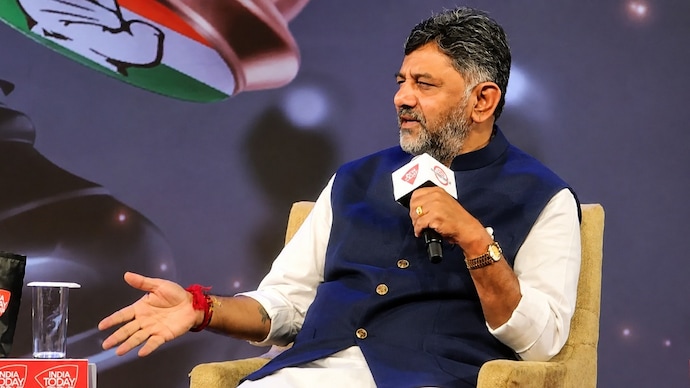
New Karnataka Chief Minister DK Shivakumar has wasted little time in setting the tone for his administration, combining powerful symbolism with a series of policy announcements and administrative directives within the first two days of taking office.
Sworn in on the evening of June 3, Shivakumar moved swiftly to project a message of humility and public service. Moments before taking the oath, he bowed on the stage in tribute to the people of Karnataka for entrusting him with the state’s highest elected office. Holding a copy of the Constitution and dressed in traditional attire, he took oath in a ceremony marked by Kannada cultural symbolism and attended by senior Congress leaders and ministers.
Following the ceremony, Shivakumar visited Vidhana Soudha, where he paid floral tributes to the statues of BR Ambedkar, 12th-century Lingayat social reformer Basavanna, Bengaluru founder Nadaprabhu Kempegowda, Jawaharlal Nehru and Mahatma Gandhi. He also bowed before the northern entrance steps of the legislature building before formally assuming charge as Chief Minister.
YOUTH-CENTRIC GOVERNANCE TAKES CENTRE STAGE
Within hours of taking office, Shivakumar convened his first Cabinet meeting and unveiled what he described as a roadmap for ushering in a "Youth Era" in Karnataka. The government announced six major initiatives focusing on students, employment, urban development and property regularisation.
Among the key decisions was the introduction of free bus passes for all school and college students travelling on non-luxury government buses. The government also announced plans to recruit 56,000 personnel into government service and establish a state-supported private employment exchange to connect job seekers with opportunities in the private sector.
The Chief Minister also proposed the creation of 10,000 youth associations across Karnataka, with each association set to receive a grant of Rs 10 lakh to promote sports, cultural activities, leadership development and community engagement.
Other major decisions included a one-time relief measure for homeowners facing Occupancy Certificate (OC) and Completion Certificate (CC) issues, the statewide conversion of B Khata properties into A Khata, and a Rs 2,000-crore allocation for asphalt roads across Bengaluru that are not covered under existing projects.
Addressing the media after the Cabinet meeting, Shivakumar said the Chief Minister’s chair did not belong to him, but to the people of Karnataka. Describing the authority vested in him as a responsibility dedicated to public service, he pledged to draw on his four decades of political experience to deliver effective governance.
ADMINISTRATIVE RESET ON DAY TWO
On Thursday, less than 24 hours after taking office, Shivakumar shifted focus from political messaging to governance and administration.
At Vidhana Soudha, he chaired a high-level meeting with senior IAS, IPS and Forest Service officers, outlining the government’s governance priorities. Officials were instructed to function without yielding to political, caste, religious or external pressures and to ensure transparent and corruption-free administration.
Shivakumar directed all departments to prepare detailed action plans within 15 days and submit information on pending works and vacant posts. The government intends to announce a timeline for filling 56,000 vacancies across departments while simultaneously establishing a private employment exchange to create opportunities for Karnataka’s youth.
In another major announcement, the Chief Minister revealed plans to establish two new ministries — one dedicated to addressing public grievances and another focused on Non-Resident Indians (NRIs). The proposed NRI Ministry is expected to facilitate investment and engagement from Kannadigas living abroad, while the Public Grievances Ministry will provide a dedicated institutional mechanism to address citizens’ concerns.
FOCUS ON ELECTORAL ROLLS, CSR FUNDS AND LAW ENFORCEMENT
The Chief Minister also expressed concern over the ongoing Special Intensive Revision (SIR) of electoral rolls and directed officials to ensure that no eligible voter loses voting rights due to procedural lapses. District-level awareness campaigns and facilitation centres are expected to be set up to assist citizens in completing the required documentation.
On the development front, Shivakumar sought comprehensive data on Corporate Social Responsibility (CSR) spending in Karnataka, estimating that nearly Rs 8,000 crore is available under CSR initiatives. The government plans to channel a substantial portion of these resources towards primary education and healthcare.
Law and order also featured prominently during the discussions, with the Chief Minister directing police authorities to establish dedicated taluk-level squads to monitor and curb rowdy and criminal activities.
A GOVERNMENT SEEKING MOMENTUM
The first 24 hours of Shivakumar’s tenure have been marked by a blend of symbolism, welfare measures and administrative activism. While the first day focused on signalling a political and generational transition through youth-oriented initiatives, the second day reflected an effort to put the state bureaucracy on notice and establish a governance framework.
From free bus passes and employment initiatives to administrative reforms, electoral vigilance and new institutional mechanisms, the new Chief Minister has sought to project urgency and purpose at the outset of what he has repeatedly described as an opportunity to create a "new era" for Karnataka.
New Karnataka Chief Minister DK Shivakumar has wasted little time in setting the tone for his administration, combining powerful symbolism with a series of policy announcements and administrative directives within the first two days of taking office.
Sworn in on the evening of June 3, Shivakumar moved swiftly to project a message of humility and public service. Moments before taking the oath, he bowed on the stage in tribute to the people of Karnataka for entrusting him with the state’s highest elected office. Holding a copy of the Constitution and dressed in traditional attire, he took oath in a ceremony marked by Kannada cultural symbolism and attended by senior Congress leaders and ministers.
Following the ceremony, Shivakumar visited Vidhana Soudha, where he paid floral tributes to the statues of BR Ambedkar, 12th-century Lingayat social reformer Basavanna, Bengaluru founder Nadaprabhu Kempegowda, Jawaharlal Nehru and Mahatma Gandhi. He also bowed before the northern entrance steps of the legislature building before formally assuming charge as Chief Minister.
YOUTH-CENTRIC GOVERNANCE TAKES CENTRE STAGE
Within hours of taking office, Shivakumar convened his first Cabinet meeting and unveiled what he described as a roadmap for ushering in a "Youth Era" in Karnataka. The government announced six major initiatives focusing on students, employment, urban development and property regularisation.
Among the key decisions was the introduction of free bus passes for all school and college students travelling on non-luxury government buses. The government also announced plans to recruit 56,000 personnel into government service and establish a state-supported private employment exchange to connect job seekers with opportunities in the private sector.
The Chief Minister also proposed the creation of 10,000 youth associations across Karnataka, with each association set to receive a grant of Rs 10 lakh to promote sports, cultural activities, leadership development and community engagement.
Other major decisions included a one-time relief measure for homeowners facing Occupancy Certificate (OC) and Completion Certificate (CC) issues, the statewide conversion of B Khata properties into A Khata, and a Rs 2,000-crore allocation for asphalt roads across Bengaluru that are not covered under existing projects.
Addressing the media after the Cabinet meeting, Shivakumar said the Chief Minister’s chair did not belong to him, but to the people of Karnataka. Describing the authority vested in him as a responsibility dedicated to public service, he pledged to draw on his four decades of political experience to deliver effective governance.
ADMINISTRATIVE RESET ON DAY TWO
On Thursday, less than 24 hours after taking office, Shivakumar shifted focus from political messaging to governance and administration.
At Vidhana Soudha, he chaired a high-level meeting with senior IAS, IPS and Forest Service officers, outlining the government’s governance priorities. Officials were instructed to function without yielding to political, caste, religious or external pressures and to ensure transparent and corruption-free administration.
Shivakumar directed all departments to prepare detailed action plans within 15 days and submit information on pending works and vacant posts. The government intends to announce a timeline for filling 56,000 vacancies across departments while simultaneously establishing a private employment exchange to create opportunities for Karnataka’s youth.
In another major announcement, the Chief Minister revealed plans to establish two new ministries — one dedicated to addressing public grievances and another focused on Non-Resident Indians (NRIs). The proposed NRI Ministry is expected to facilitate investment and engagement from Kannadigas living abroad, while the Public Grievances Ministry will provide a dedicated institutional mechanism to address citizens’ concerns.
FOCUS ON ELECTORAL ROLLS, CSR FUNDS AND LAW ENFORCEMENT
The Chief Minister also expressed concern over the ongoing Special Intensive Revision (SIR) of electoral rolls and directed officials to ensure that no eligible voter loses voting rights due to procedural lapses. District-level awareness campaigns and facilitation centres are expected to be set up to assist citizens in completing the required documentation.
On the development front, Shivakumar sought comprehensive data on Corporate Social Responsibility (CSR) spending in Karnataka, estimating that nearly Rs 8,000 crore is available under CSR initiatives. The government plans to channel a substantial portion of these resources towards primary education and healthcare.
Law and order also featured prominently during the discussions, with the Chief Minister directing police authorities to establish dedicated taluk-level squads to monitor and curb rowdy and criminal activities.
A GOVERNMENT SEEKING MOMENTUM
The first 24 hours of Shivakumar’s tenure have been marked by a blend of symbolism, welfare measures and administrative activism. While the first day focused on signalling a political and generational transition through youth-oriented initiatives, the second day reflected an effort to put the state bureaucracy on notice and establish a governance framework.
From free bus passes and employment initiatives to administrative reforms, electoral vigilance and new institutional mechanisms, the new Chief Minister has sought to project urgency and purpose at the outset of what he has repeatedly described as an opportunity to create a "new era" for Karnataka.

