Chhattisgarh | Too many heads, but situation vacant
Chhattisgarh Congress struggles to find a new chief to lead it to 2028 poll

Established on December 28, 1885, the Indian National Congress (INC) stands as a venerable institution within India's political panorama. As one of the oldest and most influential political parties, the INC played a pivotal role in India's freedom struggle for independence from British colonial rule. Guided by visionary leaders, including Mahatma Gandhi and Jawaharlal Nehru, the INC spearheaded moves and campaigns that subsequently led to India’s independence in 1947.
Renowned for its dedication to inclusive politics, the INC espouses the standards of secular governance, social justice, and democratic beliefs. Historically, it has remained steadfast in its advocacy for the rights and welfare of farmers, employees, and marginalized communities.
Over the years, the INC has contributed immensely to the shaping of Indian politics. Sonia Gandhi, the longest-serving president of INC, has brought many vital regulations and projects in the fields of education, health, and rural development. After which, she was succeeded by her son, Rahul Gandhi, who was elected unopposed in the 2017 INC presidential election.
Symbolized by the hand, the INC determines its unwavering dedication to uplifting the downtrodden and empowering the masses. Championing progressive reforms aimed at assuaging poverty, promoting gender equality, and fostering sustainable economic growth, the party remains steadfast in proposing transformative alternatives.
Despite encountering challenges and electoral setbacks, the INC remains a powerful force in Indian politics, securing 52 seats in the 2019 Lok Sabha elections. Adaptability has been key to the party's resilience because it navigates the moving tides of the political landscape. In current years, the INC has undertaken many efforts to modernize its organizational shape and reconnect with grassroots supporters, leveraging technology and social media structures to hook up with younger citizens.
Opposition parties under the INDIA bloc are preparing to present a united front against the Chief Election Commissioner, demanding his resignation. A crucial meeting of key alliance leaders is scheduled to take place on September 30 at the Constitution Club of India in Delhi. The gathering follows individual party discussions, including the Congress Working Committee meeting slated for September 29. Alliance partners, including the Congress, Trinamool Congress, and the Communist Party of India (Marxist), are formulating strategies to challenge the CEC and the central government over recent revelations. Leaders are deliberating plans for coordinated nationwide agitations and state-level demonstrations. Outreach efforts are also underway to bring together additional opposition groups and regional leaders under an expanded alliance platform. A joint press conference is expected following the conclusion of the September 30 meeting to announce their collective strategy and outline subsequent plans for protest action.
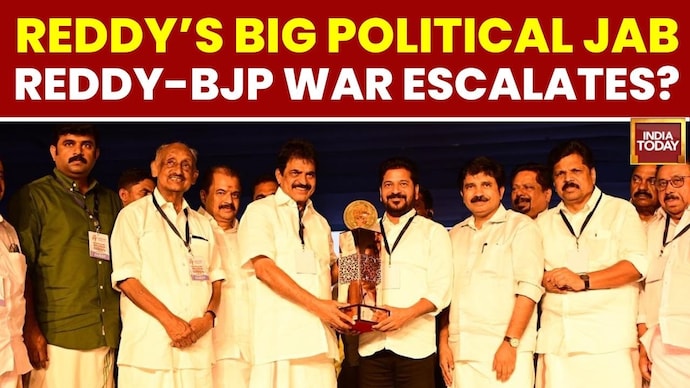
A major political controversy has emerged following remarks made by the Telangana Chief Minister regarding a confrontation between two political lineages in India. Speaking at a facilitation event in Kerala, the Chief Minister remarked on the contrast between the Sangh Parivaar and the Gandhi Parivaar, asserting that while one attempts division across caste, religion, region, and language, the other has sacrificed extensively for the nation. The statements triggered sharp responses from Bharatiya Janata Party leaders, including Andhra Pradesh Health Minister Satya Kumar Yadav, who defended the Sangh Parivaar as an embodiment of discipline, sewa, and nationalism, while accusing the Gandhi Parivaar of dynastic rule, corruption, and vote bank politics. The exchange intensifies existing frictions between both sides, coming against the backdrop of an ongoing national row surrounding the Chief Election Commissioner.
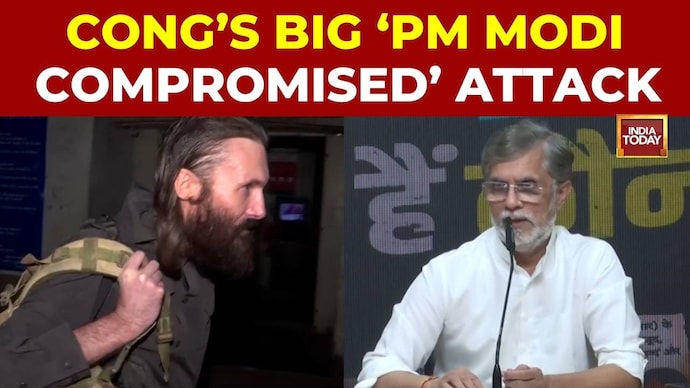
The Congress has launched an attack on the government following the grant of temporary bail to foreign nationals, including American mercenary Matthew VanDyke, allowing visits to the United States and Ukraine. The accused had reportedly entered Mizoram without mandatory permits and crossed into Myanmar before being arrested by the National Investigation Agency for allegedly attempting to foment trouble, promote weapons usage, and spark confrontation affecting India's Northeast border areas. Congress raised concerns over differential treatment compared to jailed Indian youth, questioning how individuals facing serious security charges were permitted to leave the country.
Congress leader and Member of Parliament Abhishek Manu Singhvi targeted the Election Commission of India over alleged internal suppression of dissenting views by election commissioners. Singhvi cited the 1995 Supreme Court judgment establishing that the Chief Election Commissioner is first among equals within a collegiate body governed by majority rule. Referring to fourteen written objections recorded by Election Commissioners Sukhbir Singh Sandhu and Vivek Joshi over ten months, Singhvi alleged that decisions are being labelled unanimous after dissents are overridden without replies. Singhvi stated, "Dissent inside the EC means that you suffer the fate of Lavasa. Dissent inside the EC means that you are roadrolled." He argued that two out of three commissioners constitute a majority and described the administrative handling of disagreements as an internal bulldozer overriding colleagues. Questioning procedural changes regarding voter forms and access restrictions for Electoral Registration Officers, Singhvi argued that ignoring written dissent undermines transparency and constitutional decision-making.
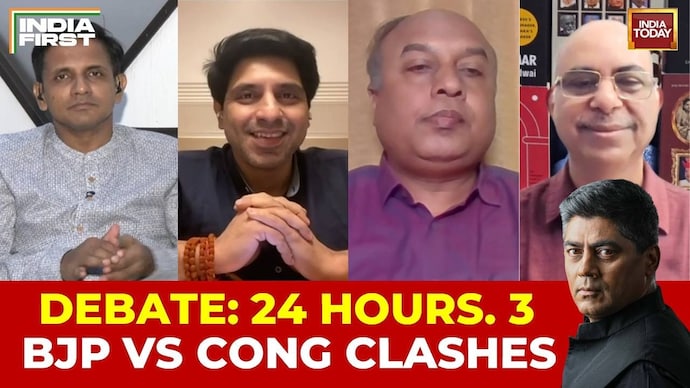
On India First with Gaurav Sawant, panellists debate major political rows surrounding national identity, secularism, and constitutional principles. The discussion examines the controversy over singing the national song, Vande Mataram, and the Karnataka legal dispute regarding legislative competence over limiting the song to two stanzas, with BJP national spokesperson Tuhin Sinha and Congress national spokesperson Brijesh Kalappa trading historical and political arguments alongside political analysts Shehzad Poonawalla and Rashid Kidwai. The broadcast also addresses the political fallout over remarks by former Vice President Hamid Ansari and Congress leader Rahul Gandhi concerning nationalism, religiosity, and Sharia courts. Panellists further analyse the ideological distinctions between Hinduism and Hindutva, the presence of religious figures in electoral politics, and allegations of minority appeasement versus secular governance under the Indian Constitution.
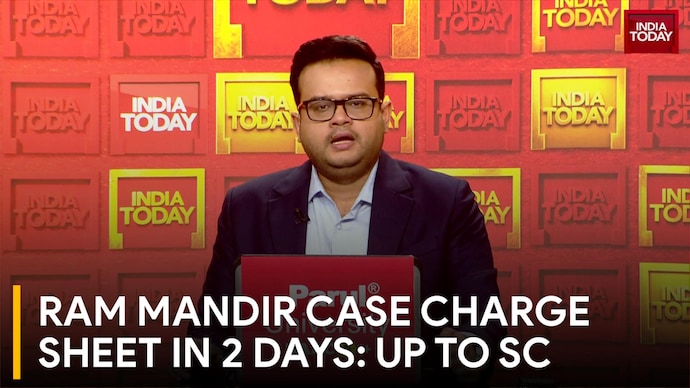
The Uttar Pradesh government informed the Supreme Court that the initial charge sheet in the Ram Mandir Chanda Chori case will be filed within two days to prevent the accused from obtaining statutory bail. Appearing for the state, Solicitor General Tushar Mehta submitted a detailed status report from the Special Investigation Team in a sealed cover. The court noted that CCTV footage, material evidence, and software donation receipts are being analyzed, while directing the jurisdictional sessions court to handle the trial proceedings. Meanwhile, a political confrontation erupted in Karnataka over the singing of Vande Mataram. Union Minister Pralhad Joshi criticized the Congress government after only two stanzas were played in the Karnataka Assembly, prompting opposition BJP MLAs to sing the remaining stanzas on the floor of the House.
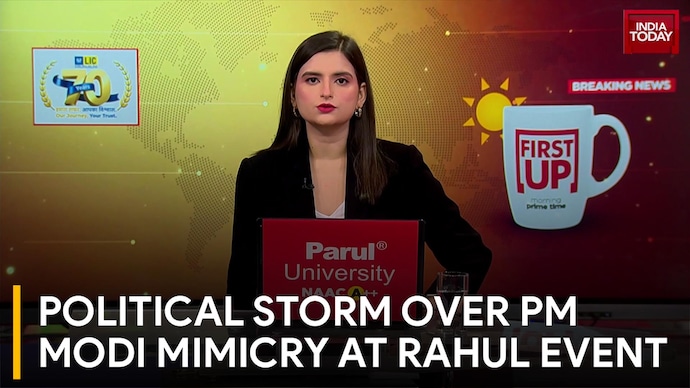
A political controversy erupted following Congress leader Rahul Gandhi's 'Chhatron Ki Goonj' student outreach event after comedian Pulkit Mani performed a satirical mimicry of Prime Minister Narendra Modi. The act satirised the Prime Minister's mannerisms, his interactions with foreign leaders, and an incident where he offered a chair to an elderly woman whom he addressed as mother. The Bharatiya Janata Party attacked the Congress and Rahul Gandhi, with Uttar Pradesh Chief Minister Yogi Adityanath and other leaders accusing the party of insulting women and misleading youth, while demanding Rahul Gandhi quit politics. Defending the event, Congress leaders stated that the performance was political satire and mimicry rather than a serious statement, pointing out the presence of women in the audience who enjoyed the act. The opposition also questioned why similar outrage was absent when Sonia Gandhi faced political insults, as both sides traded fierce charges over political propriety.
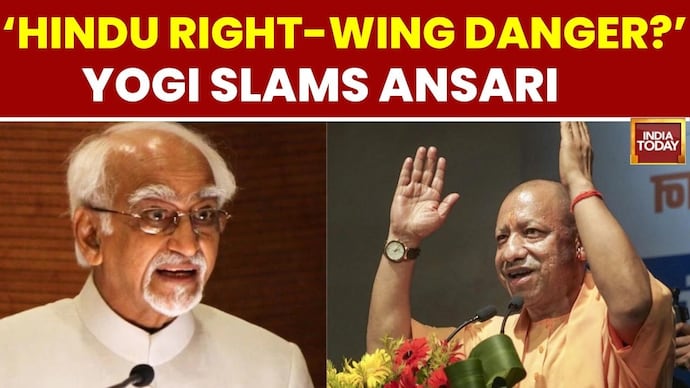
A political controversy has erupted following remarks made by former Vice President Hamid Ansari during the A.G. Noorani Memorial Lecture in New Delhi. Citing an observation attributed to Jawaharlal Nehru, Ansari stated that the greater danger facing India was Hindu right-wing communalism rather than communism, while highlighting emerging challenges to civic nationalism. The Bharatiya Janata Party condemned the remarks as unfortunate and anti-Hindu propaganda, demanding an apology. Uttar Pradesh Chief Minister Yogi Adityanath criticised the statement, alleging it disrespected India's ancient Sanatan traditions and diminished the dignity of constitutional offices. Senior Muslim cleric and imam body chief Umar Ahmad Ilyasi also hit back at Ansari, accusing him of attempting to provoke Muslims and alleging a broader conspiracy behind the remarks. Political leaders defended the inclusive nature of Indian society, asserting that communal harmony remains resilient.
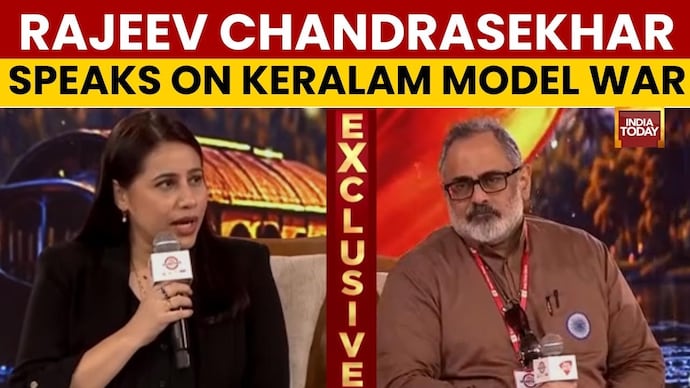
In an interview, Kerala BJP Chief and Nemom MLA Rajeev Chandrasekhar discusses Kerala's political landscape, governance, and economic challenges. Criticizing the past decade under the CPM, he states, "It was not a Kerala model, it was a CPM model. And that model was a very, very dysfunctional model." Chandrasekhar evaluates the state's financial crisis, emphasizing that severe debt and lack of investment pose major headwinds for Chief Minister VD Satheesan's administration. He addresses controversies surrounding UPI merchant discount rates, terming opposition criticism manufactured and affirming that consumer transactions remain unaffected. He also comments on the Vande Mataram controversy, asserting that constitutional laws must be upheld uniformly across all states.
The Election Commission of India has frozen the Trinamool Congress party name and its conjoined flowers and grass symbol ahead of the upcoming West Bengal Assembly by-elections. The order prohibits both rival factions from using the reserved party name and the Jora Ghashphal symbol. Both sides have been directed to submit three choices each for interim party names and symbols by 11:00 AM on September 18. According to the Election Commission's directives, the groups may incorporate a linkage to the parent party if they desire, and separate symbols will be allotted from the notified list for the by-polls. The dispute centres around the rivalry between the faction led by party founder Mamata Banerjee and the breakaway group associated with Ritabrata Banerjee, who is contesting the Nandigram by-poll. While the Ritabrata Banerjee faction stated it would abide by the decision, the development marks a significant shift for the party founded on January 1, 1998, after breaking away from the Indian National Congress.
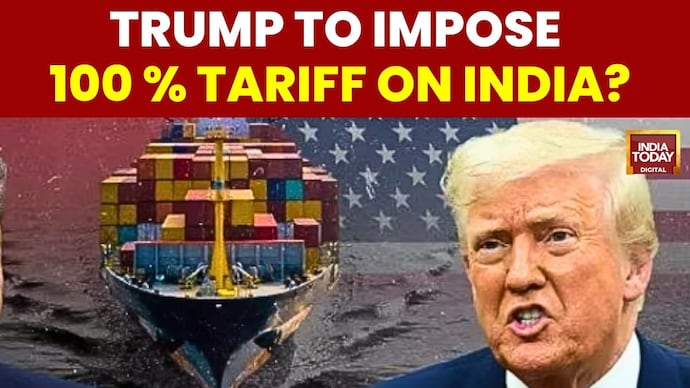
Tensions in India-US ties are likely to escalate as the United States House moved a bill seeking to authorize 100 percent tariffs on countries importing Russian crude oil, including India and China. The legislation, connected to Russia sanctions, aims to curb crude trade funding the war in Ukraine and grants discretionary powers to the US President to impose duties on trading partners. The proposed measure puts India's energy security and exports under scrutiny, while also impacting bilateral trade dynamics. Responding to the development, Ministry of External Affairs spokesperson Randhir Jaiswal reiterated India's stance, asserting that energy sourcing decisions are strictly guided by national interest. He emphasized that national interest remains paramount for the country when choosing its energy partners, even as the proposed legislation heads for a final vote in the US Congress.
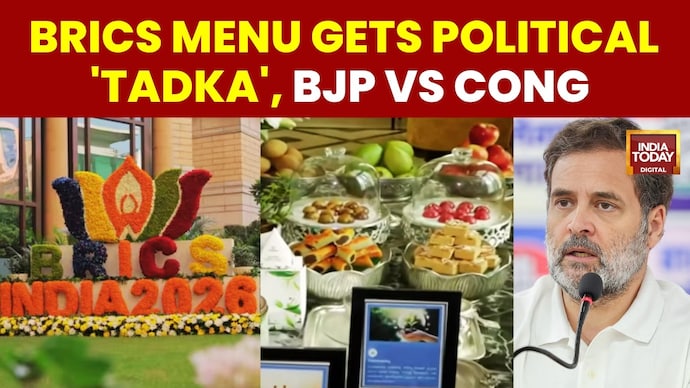
A political controversy has erupted over the BRICS gala dinner menu after Rahul Gandhi questioned the decision to serve an entirely vegetarian spread, arguing that it does not reflect the dietary diversity of India where a majority consume non-vegetarian food. The Bharatiya Janata Party responded by criticising the opposition for focusing on the menu rather than India's diplomatic achievements at BRICS. The dinner hosted by Prime Minister Narendra Modi showcased traditional Indian dishes and millets, including Khandvi, Paneer Lababdar, Millet Pulao, Mushroom Galouti, and Jalebi. The debate has drawn attention to previous diplomatic banquets, such as the 2023 G20 Summit dinner hosted by President Droupadi Murmu and international events where plant-based spreads were served. Furthermore, the discussion touches upon nutritional profiles of vegetarian and non-vegetarian diets, alongside national consumption statistics and the economic role of livestock and fisheries.
In an interview on global diplomacy and the 18th BRICS Summit in New Delhi, former External Affairs Minister Salman Khurshid discussed India's leadership role amid geopolitical tensions. Khurshid emphasized that India must prioritize addressing internal divides among member states before seeking broader global impact, stating, "India has a very, very critical role to first patch up things as far as BRICS is concerned." He advocated for the enduring ideology of non-alignment over multi-alignment, describing the latter as "an escape." Khurshid also addressed international summits, balancing ties with the West, and preparing for global diplomatic shifts following US elections.
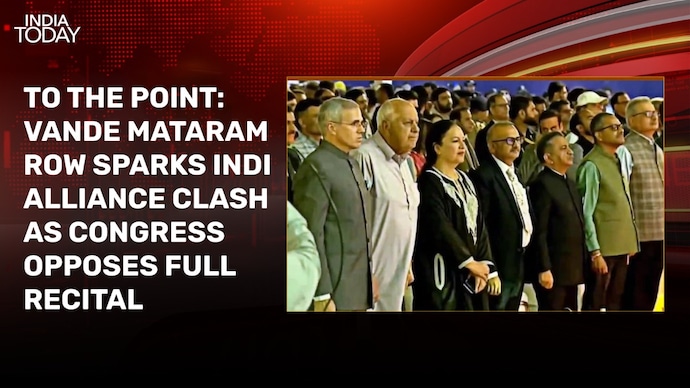
A major political debate has erupted in Jammu and Kashmir over the recital of all six stanzas of Vande Mataram. National Conference leaders Farooq Abdullah and Chief Minister Omar Abdullah stood for the full national song at an event in Srinagar following parliamentary approval.
A television debate examined the political dispute surrounding the rendition of the national song Vande Mataram following parliamentary amendments regarding its protection. Discussions focused on the differing approaches taken by political allies, with the National Conference choosing to stand for the full six stanzas citing constitutional obligations, while the Congress maintained its traditional adherence to the two-stanza version formulated in nineteen thirty-seven. Representatives debated whether the requirement to sing the complete version constitutes an enforced loyalty test or a legitimate constitutional duty passed by Parliament. The panel also addressed ideological consistency, historical resolutions from the pre-independence era, and broader differences within political alliances over national symbols and legislative compliance.
A political controversy has erupted between allies National Conference and Congress in Jammu and Kashmir over the rendition of Vande Mataram. Congress expressed displeasure after the full version of the national song was played at the International Film Festival inauguration in Srinagar, where Chief Minister Omar Abdullah and Farooq Abdullah stood in respect. Congress argued that only three stanzas should be sung to maintain communal harmony. Hitting back, the National Conference stated that Parliament enacted a law regarding Vande Mataram and the entire nation must respect the national song. The National Conference urged Congress to avoid falling into the Bharatiya Janata Party's narrative trap and to focus on pressing national issues like unemployment and the economy. The party also cited instances of leaders standing for the full song during Independence Day events in Karnataka, calling the controversy unnecessary.
A political confrontation has intensified between the Bharatiya Janata Party and the Congress over the singing of the full rendition of Vande Mataram. The BJP accused the Congress of harbouring an anti-national mindset and disrespecting freedom fighters after Congress leaders reaffirmed their stance of singing only the first two stanzas to maintain communal harmony. Meanwhile, the central government has proposed legislation penalising disrespect to the national song on par with the national anthem. The issue has also exposed divisions within the opposition alliance after National Conference leaders Farooq Abdullah and Jammu and Kashmir Chief Minister Omar Abdullah stood for all six verses played at an event in Srinagar following new guidelines. Congress leader K. C. Venugopal stated that the full version sits uneasily with India's pluralist ethos, urging allies to adhere only to the version adopted during the freedom movement, while the BJP criticised the Congress for opposing the original version of the national song.
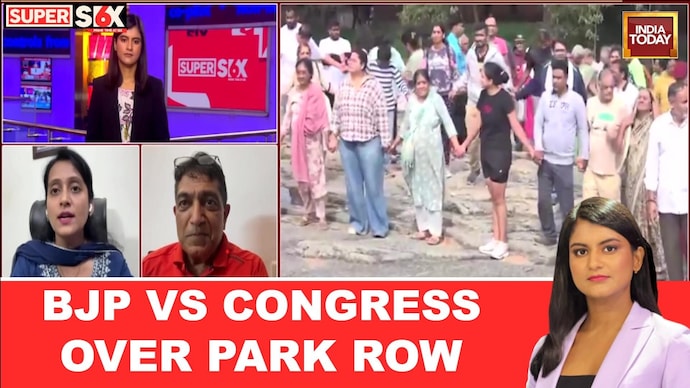
In this debate on Super Six, BJP spokesperson Bhaskar Rao and Congress spokesperson Bhavya Narasimhamurthy clash over the Karnataka government's decision to withdraw a proposed amendment affecting public park land in Bengaluru. Bhaskar Rao asserts that public uproar and BJP-led opposition forced a hasty retreat, stating, 'This Congress government has proposed. People of Bangalore have disposed. This government was under the mistaken assumption that parks are vacant government lands.' He accuses the ruling administration of pushing unscientific projects and neglecting public transport infrastructure. Defending the move, Bhavya Narasimhamurthy maintains that rolling back the amendment reflects a citizen-friendly democracy that listens to public sentiment and balances development with ecological concerns. Anchor Akshata questions both political representatives on infrastructure priorities and governance in Bengaluru.
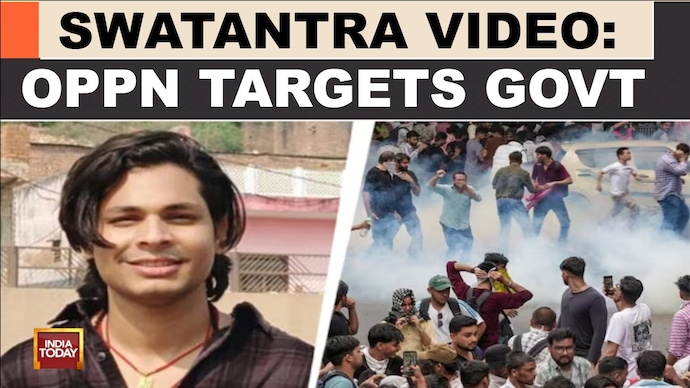
Political controversy erupted after viral video statements from Satyendra Bhardwaj triggered fresh confrontations between the opposition, the government, and Delhi Police. The opposition, led by Rahul Gandhi and the Congress alongside Azad Samaj Party MP Chandrashekhar Azad, accused the authorities of providing patronage to lumpen elements involved in the July 21 violence during student protests at Jantar Mantar. Bhardwaj claimed in an interview that he assaulted Nishu Azad's father, wielded police equipment, and escaped strict action due to political links. Delhi Police issued a fact-check refuting political interference and stating medical reports showed superficial injuries. However, following demands from political leaders and legal representatives who visited Parliament Street Police Station, Delhi Police invoked the SC/ST Act and agreed to conduct a fresh MLC to ascertain if the injuries were grievous enough to warrant an attempt to murder charge.
HarperCollins India has announced the publication of Sonia Gandhi's memoir, titled 'Belonging: A Journey of Love', scheduled for release on November 10, 2026. The announcement follows a dispute after former publisher Penguin backed out of negotiations over disagreements concerning content revisions and verification demands. The Congress party had earlier alleged political pressure over sensitive subjects in the manuscript, while Penguin stated it had requested fact-checking prior to publication. Following the breakdown of negotiations with Penguin, HarperCollins acquired the publishing rights for India. The publishing house described the memoir as an account covering themes of love, identity, duty, and India's political journey. An official media embargo will remain in effect until the scheduled release date in November, when the book will hit bookstores.