Not 24x7 entertainment channel: SC bars sharing of hearing videos without prior nod
Taking note of the misuse of audio and video recordings of court proceedings, the Supreme Court barred their unauthorised posting, editing, sharing and uploading on social media and digital platforms without prior court approval.
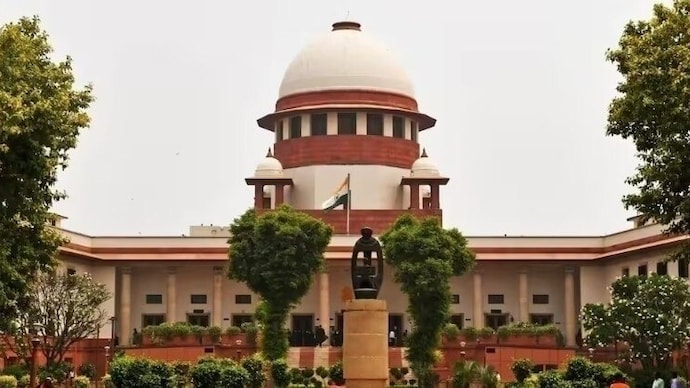
Observing that courts can't be a 24x7 entertainment channel, the Supreme Court on Friday passed an interim order prohibiting the extraction, editing, dissemination, reposting, uploading or monetisation of audio and video recordings of judicial proceedings on social media and other digital platforms without prior permission from the concerned court.
A Bench comprising Chief Justice of India Surya Kant, Justice Joymalya Bagchi and Justice V Mohan passed the interim direction while hearing a public interest litigation filed by journalist Harshita Grover seeking guidelines to regulate the clipping, editing, dissemination and monetisation of audiovisual recordings of court proceedings.
"There shall be no extraction, modification, dissemination, posting, re-posting, uploading or monetisation of audio/video recordings of the judicial proceedings on social media or other digital platforms without the prior permission of the Registrar General of the concerned High Courts or the Secretary General of the Supreme Court," the Bench said.
According to a report in Live Law, the court, however, clarified that the interim order would not affect fair news reporting of judicial proceedings.
The Bench issued notice on the petition and impleaded all High Courts in the matter. It also directed the Union government to place before the court a proposal identifying the nodal ministries that could implement the reliefs sought in the plea.
The High Courts have also been asked to submit reports on the adoption of the Supreme Court's model livestreaming guidelines and explain the impact of continuous livestreaming of proceedings.
Notices were also issued to social media intermediaries, including Meta and X.
During the hearing, senior advocate Vikas Singh, appearing for the petitioner, clarified that the plea was not against livestreaming of court proceedings but against the misuse of selectively edited clips circulating online.
"I personally don't see any problem with livestream," Singh submitted, adding that snippets of hearings were often taken out of context and went viral. Referring to a recent incident, he said a clip from proceedings before Justice Viswanathan had become viral, making "the judiciary a joke before the lay people".
Singh relied on the Supreme Court's Model Rules for Live-Streaming and Recording of Court Proceedings, which prohibit any unauthorised recording, sharing, reproduction, modification or republication of livestreamed proceedings without prior written approval of the court, and sought an interim order enforcing those provisions.
Justice Joymalya Bagchi observed that regulating digital data had emerged as "one of the biggest challenges" and suggested that livestreaming should become "an exception rather than a norm."
"Regulating data is one of the biggest challenges in digital space... so we should ensure limited access and therefore restrict livestream itself. Parties must expressly make a prayer that they want to see. It can't be a 24/7 entertainment channel by court," Justice Bagchi remarked, while expressing concern over virtual hearing links being shared indiscriminately.
"It can't be a 24x7 entertainment channel by the court," the bench observed, adding that there was a need to ensure limited access.
Solicitor General Tushar Mehta supported the plea for interim protection and cautioned against the misuse of artificial intelligence to manipulate courtroom videos.
"Suppose your lordships are saying something to me and I am responding. There are AI tools. With the same lip movement, my and your lordships' words can be changed in our respective voices," Mehta submitted.
He also argued that selectively edited clips were often used to create misleading narratives about court proceedings.
The Chief Justice agreed that distorted reporting posed a growing challenge, saying he had personally experienced his remarks being misrepresented.
"In the print forum, I have already experienced. What I never said was thrust upon me by these people," CJI Kant observed, referring to media reports on an earlier plea concerning student protests.
The petition contends that while livestreaming was introduced to promote transparency and the principle of open justice, the absence of a regulatory framework has enabled courtroom recordings to be clipped, edited and circulated with misleading captions, sensational commentary and clickbait content, often for commercial gain.
Filed under Article 32 of the Constitution, the plea argues that isolated courtroom exchanges and oral observations are routinely taken out of context, exposing judges, lawyers and litigants to trolling, reputational harm and distorted public narratives.
It seeks guidelines governing the recording, clipping, redistribution and monetisation of audiovisual recordings while preserving the principles of open justice and fair reporting.
The petition also cites multiple instances of alleged misuse of judicial recordings, including controversies involving judges' remarks, and misleading social media content featuring courtroom exchanges.
The plea also highlights international practices such as the United Kingdom Supreme Court's copyright framework governing audiovisual recordings.
Observing that courts can't be a 24x7 entertainment channel, the Supreme Court on Friday passed an interim order prohibiting the extraction, editing, dissemination, reposting, uploading or monetisation of audio and video recordings of judicial proceedings on social media and other digital platforms without prior permission from the concerned court.
A Bench comprising Chief Justice of India Surya Kant, Justice Joymalya Bagchi and Justice V Mohan passed the interim direction while hearing a public interest litigation filed by journalist Harshita Grover seeking guidelines to regulate the clipping, editing, dissemination and monetisation of audiovisual recordings of court proceedings.
"There shall be no extraction, modification, dissemination, posting, re-posting, uploading or monetisation of audio/video recordings of the judicial proceedings on social media or other digital platforms without the prior permission of the Registrar General of the concerned High Courts or the Secretary General of the Supreme Court," the Bench said.
According to a report in Live Law, the court, however, clarified that the interim order would not affect fair news reporting of judicial proceedings.
The Bench issued notice on the petition and impleaded all High Courts in the matter. It also directed the Union government to place before the court a proposal identifying the nodal ministries that could implement the reliefs sought in the plea.
The High Courts have also been asked to submit reports on the adoption of the Supreme Court's model livestreaming guidelines and explain the impact of continuous livestreaming of proceedings.
Notices were also issued to social media intermediaries, including Meta and X.
During the hearing, senior advocate Vikas Singh, appearing for the petitioner, clarified that the plea was not against livestreaming of court proceedings but against the misuse of selectively edited clips circulating online.
"I personally don't see any problem with livestream," Singh submitted, adding that snippets of hearings were often taken out of context and went viral. Referring to a recent incident, he said a clip from proceedings before Justice Viswanathan had become viral, making "the judiciary a joke before the lay people".
Singh relied on the Supreme Court's Model Rules for Live-Streaming and Recording of Court Proceedings, which prohibit any unauthorised recording, sharing, reproduction, modification or republication of livestreamed proceedings without prior written approval of the court, and sought an interim order enforcing those provisions.
Justice Joymalya Bagchi observed that regulating digital data had emerged as "one of the biggest challenges" and suggested that livestreaming should become "an exception rather than a norm."
"Regulating data is one of the biggest challenges in digital space... so we should ensure limited access and therefore restrict livestream itself. Parties must expressly make a prayer that they want to see. It can't be a 24/7 entertainment channel by court," Justice Bagchi remarked, while expressing concern over virtual hearing links being shared indiscriminately.
"It can't be a 24x7 entertainment channel by the court," the bench observed, adding that there was a need to ensure limited access.
Solicitor General Tushar Mehta supported the plea for interim protection and cautioned against the misuse of artificial intelligence to manipulate courtroom videos.
"Suppose your lordships are saying something to me and I am responding. There are AI tools. With the same lip movement, my and your lordships' words can be changed in our respective voices," Mehta submitted.
He also argued that selectively edited clips were often used to create misleading narratives about court proceedings.
The Chief Justice agreed that distorted reporting posed a growing challenge, saying he had personally experienced his remarks being misrepresented.
"In the print forum, I have already experienced. What I never said was thrust upon me by these people," CJI Kant observed, referring to media reports on an earlier plea concerning student protests.
The petition contends that while livestreaming was introduced to promote transparency and the principle of open justice, the absence of a regulatory framework has enabled courtroom recordings to be clipped, edited and circulated with misleading captions, sensational commentary and clickbait content, often for commercial gain.
Filed under Article 32 of the Constitution, the plea argues that isolated courtroom exchanges and oral observations are routinely taken out of context, exposing judges, lawyers and litigants to trolling, reputational harm and distorted public narratives.
It seeks guidelines governing the recording, clipping, redistribution and monetisation of audiovisual recordings while preserving the principles of open justice and fair reporting.
The petition also cites multiple instances of alleged misuse of judicial recordings, including controversies involving judges' remarks, and misleading social media content featuring courtroom exchanges.
The plea also highlights international practices such as the United Kingdom Supreme Court's copyright framework governing audiovisual recordings.
Observing that courts can't be a 24x7 entertainment channel, the Supreme Court on Friday passed an interim order prohibiting the extraction, editing, dissemination, reposting, uploading or monetisation of audio and video recordings of judicial proceedings on social media and other digital platforms without prior permission from the concerned court.
A Bench comprising Chief Justice of India Surya Kant, Justice Joymalya Bagchi and Justice V Mohan passed the interim direction while hearing a public interest litigation filed by journalist Harshita Grover seeking guidelines to regulate the clipping, editing, dissemination and monetisation of audiovisual recordings of court proceedings.
"There shall be no extraction, modification, dissemination, posting, re-posting, uploading or monetisation of audio/video recordings of the judicial proceedings on social media or other digital platforms without the prior permission of the Registrar General of the concerned High Courts or the Secretary General of the Supreme Court," the Bench said.
According to a report in Live Law, the court, however, clarified that the interim order would not affect fair news reporting of judicial proceedings.
The Bench issued notice on the petition and impleaded all High Courts in the matter. It also directed the Union government to place before the court a proposal identifying the nodal ministries that could implement the reliefs sought in the plea.
The High Courts have also been asked to submit reports on the adoption of the Supreme Court's model livestreaming guidelines and explain the impact of continuous livestreaming of proceedings.
Notices were also issued to social media intermediaries, including Meta and X.
During the hearing, senior advocate Vikas Singh, appearing for the petitioner, clarified that the plea was not against livestreaming of court proceedings but against the misuse of selectively edited clips circulating online.
"I personally don't see any problem with livestream," Singh submitted, adding that snippets of hearings were often taken out of context and went viral. Referring to a recent incident, he said a clip from proceedings before Justice Viswanathan had become viral, making "the judiciary a joke before the lay people".
Singh relied on the Supreme Court's Model Rules for Live-Streaming and Recording of Court Proceedings, which prohibit any unauthorised recording, sharing, reproduction, modification or republication of livestreamed proceedings without prior written approval of the court, and sought an interim order enforcing those provisions.
Justice Joymalya Bagchi observed that regulating digital data had emerged as "one of the biggest challenges" and suggested that livestreaming should become "an exception rather than a norm."
"Regulating data is one of the biggest challenges in digital space... so we should ensure limited access and therefore restrict livestream itself. Parties must expressly make a prayer that they want to see. It can't be a 24/7 entertainment channel by court," Justice Bagchi remarked, while expressing concern over virtual hearing links being shared indiscriminately.
"It can't be a 24x7 entertainment channel by the court," the bench observed, adding that there was a need to ensure limited access.
Solicitor General Tushar Mehta supported the plea for interim protection and cautioned against the misuse of artificial intelligence to manipulate courtroom videos.
"Suppose your lordships are saying something to me and I am responding. There are AI tools. With the same lip movement, my and your lordships' words can be changed in our respective voices," Mehta submitted.
He also argued that selectively edited clips were often used to create misleading narratives about court proceedings.
The Chief Justice agreed that distorted reporting posed a growing challenge, saying he had personally experienced his remarks being misrepresented.
"In the print forum, I have already experienced. What I never said was thrust upon me by these people," CJI Kant observed, referring to media reports on an earlier plea concerning student protests.
The petition contends that while livestreaming was introduced to promote transparency and the principle of open justice, the absence of a regulatory framework has enabled courtroom recordings to be clipped, edited and circulated with misleading captions, sensational commentary and clickbait content, often for commercial gain.
Filed under Article 32 of the Constitution, the plea argues that isolated courtroom exchanges and oral observations are routinely taken out of context, exposing judges, lawyers and litigants to trolling, reputational harm and distorted public narratives.
It seeks guidelines governing the recording, clipping, redistribution and monetisation of audiovisual recordings while preserving the principles of open justice and fair reporting.
The petition also cites multiple instances of alleged misuse of judicial recordings, including controversies involving judges' remarks, and misleading social media content featuring courtroom exchanges.
The plea also highlights international practices such as the United Kingdom Supreme Court's copyright framework governing audiovisual recordings.

