Desh Ki Tabahi Ka Hisaab Dijiye: Anthem that roared before Pradhan's resignation
A protest anthem titled Desh Ki Tabaahi Ka Hisaab Dijiye echoed across Jantar Mantar and Instagram, before Dharmendra Pradhan's resignation as Union Minister of Education. The lyrics tied the NEET paper leak to wider questions of silence, dissent and accountability.
"Mujhko apne bank ki kitab dijiye, desh ki tabaahi ka hisaab dijiye."
India's student-led protests found a new soundtrack before Dharmendra Pradhan resigned as Union Minister of Education following a month long protest led by Cockroach Janta Party (CJP).
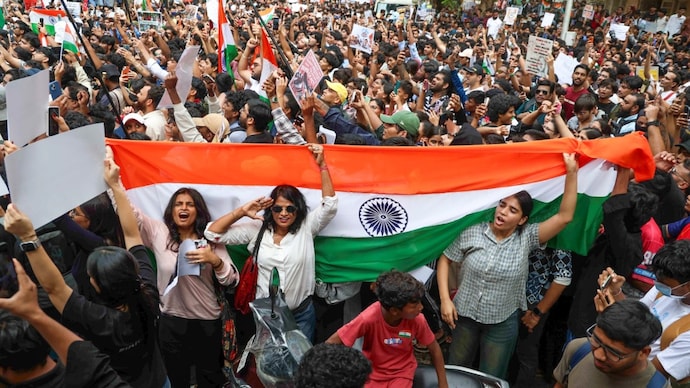
For over a month, young protesters across the nation led by the CJP filled the streets with slogans, witty placards, viral memes and satirical performances. And a day before Pradhan’s resignation, as the protest grew, it found a new anthem - one that became the movement's loudest voice.
The song at the heart of the protest was inspired by Manzar Bhopali's poetry Mujhko Apne Bank Ki Kitab Dijiye. The young protesters rewrote the lyrics to resonate with their demands, constantly asking the government for accountability for the NEET paper leak.
More than just another protest song, it strung together many of the questions students have been asking for weeks. The lyrics went on to question:
"Mujhko apne bank ki kitab dijiye, desh ki tabaahi ka hisaab dijiye.
Yuva saare desh ke sadak par aa gaye, NEET paper leak par tum chuppi kha gaye.
Bhagwaan ko bhi loot kar Thenga dikha gaye, desh ki tabaahi ka hisaab dijiye.
Azaad har awaaz ko ye shor keh gaye, Insaaf maange inse ye desh droh keh gaye
Tadapti rahi betiyan ye maun reh gaye, jalte Manipur ka bhi ilaaj kijiye.
Mandiron ke naam par tum vote le gaye, uska chanda rozgar aur tumhare dost desh bech ke crore le gaye
harm ke thekedaar insaaf kijiye, desh ki tabaahi ka hisaab dijiye."
The lyrics go on to question the government's silence over the NEET paper leak, while also referring to issues such as the Ram Temple theft controversy, Manipur violence and the branding of dissent as "anti-national".
Loosely translated, the song said:
"Give me your bank passbook. Give an account of the nation's ruin.
The youth of this country have taken to the streets, Yet you chose silence over the NEET paper leak.
You even looted God and walked away unashamed.
Give an account of the nation's ruin.
Every free voice was dismissed as mere noise. Those seeking justice were branded anti-national.
Our daughters suffered while you remained silent. Heal the wounds of a burning Manipur too.
You sought votes in the name of temples, while donations disappeared and your friends made crores by selling the country.
Custodians of religion, deliver justice.
Give an account of the nation's ruin."
The song became a constant presence at Jantar Mantar, echoing through the protest site well into the night. It accompanied countless reels, protest videos and online posts demanding accountability for the NEET paper leak and the resignation of Union Education Minister Dharmendra Pradhan.
If it meant anything, it was the fact that slogans were the language of yesterday's protests, because today's generation seems to have expanded the vocabulary. Memes, street art, fashion, poetry, music, flash performances and now original songs have all become instruments of dissent.
The movement at Jantar Mantar repeatedly showed that young Indians aren't just marching, they are creating. Every placard was designed to go viral, every slogan was written to be remembered, and every performance was made to travel far beyond the protest site.
Desh Ki Tabaahi Ka Hisaab Dijiye was just a new addition to that shift, another way for India's youth to ask the one question that mattered the most: who was to be held accountable?
"Mujhko apne bank ki kitab dijiye, desh ki tabaahi ka hisaab dijiye."
India's student-led protests found a new soundtrack before Dharmendra Pradhan resigned as Union Minister of Education following a month long protest led by Cockroach Janta Party (CJP).
For over a month, young protesters across the nation led by the CJP filled the streets with slogans, witty placards, viral memes and satirical performances. And a day before Pradhan’s resignation, as the protest grew, it found a new anthem - one that became the movement's loudest voice.
The song at the heart of the protest was inspired by Manzar Bhopali's poetry Mujhko Apne Bank Ki Kitab Dijiye. The young protesters rewrote the lyrics to resonate with their demands, constantly asking the government for accountability for the NEET paper leak.
More than just another protest song, it strung together many of the questions students have been asking for weeks. The lyrics went on to question:
"Mujhko apne bank ki kitab dijiye, desh ki tabaahi ka hisaab dijiye.
Yuva saare desh ke sadak par aa gaye, NEET paper leak par tum chuppi kha gaye.
Bhagwaan ko bhi loot kar Thenga dikha gaye, desh ki tabaahi ka hisaab dijiye.
Azaad har awaaz ko ye shor keh gaye, Insaaf maange inse ye desh droh keh gaye
Tadapti rahi betiyan ye maun reh gaye, jalte Manipur ka bhi ilaaj kijiye.
Mandiron ke naam par tum vote le gaye, uska chanda rozgar aur tumhare dost desh bech ke crore le gaye
harm ke thekedaar insaaf kijiye, desh ki tabaahi ka hisaab dijiye."
The lyrics go on to question the government's silence over the NEET paper leak, while also referring to issues such as the Ram Temple theft controversy, Manipur violence and the branding of dissent as "anti-national".
Loosely translated, the song said:
"Give me your bank passbook. Give an account of the nation's ruin.
The youth of this country have taken to the streets, Yet you chose silence over the NEET paper leak.
You even looted God and walked away unashamed.
Give an account of the nation's ruin.
Every free voice was dismissed as mere noise. Those seeking justice were branded anti-national.
Our daughters suffered while you remained silent. Heal the wounds of a burning Manipur too.
You sought votes in the name of temples, while donations disappeared and your friends made crores by selling the country.
Custodians of religion, deliver justice.
Give an account of the nation's ruin."
The song became a constant presence at Jantar Mantar, echoing through the protest site well into the night. It accompanied countless reels, protest videos and online posts demanding accountability for the NEET paper leak and the resignation of Union Education Minister Dharmendra Pradhan.
If it meant anything, it was the fact that slogans were the language of yesterday's protests, because today's generation seems to have expanded the vocabulary. Memes, street art, fashion, poetry, music, flash performances and now original songs have all become instruments of dissent.
The movement at Jantar Mantar repeatedly showed that young Indians aren't just marching, they are creating. Every placard was designed to go viral, every slogan was written to be remembered, and every performance was made to travel far beyond the protest site.
Desh Ki Tabaahi Ka Hisaab Dijiye was just a new addition to that shift, another way for India's youth to ask the one question that mattered the most: who was to be held accountable?
"Mujhko apne bank ki kitab dijiye, desh ki tabaahi ka hisaab dijiye."
India's student-led protests found a new soundtrack before Dharmendra Pradhan resigned as Union Minister of Education following a month long protest led by Cockroach Janta Party (CJP).
For over a month, young protesters across the nation led by the CJP filled the streets with slogans, witty placards, viral memes and satirical performances. And a day before Pradhan’s resignation, as the protest grew, it found a new anthem - one that became the movement's loudest voice.
The song at the heart of the protest was inspired by Manzar Bhopali's poetry Mujhko Apne Bank Ki Kitab Dijiye. The young protesters rewrote the lyrics to resonate with their demands, constantly asking the government for accountability for the NEET paper leak.
More than just another protest song, it strung together many of the questions students have been asking for weeks. The lyrics went on to question:
"Mujhko apne bank ki kitab dijiye, desh ki tabaahi ka hisaab dijiye.
Yuva saare desh ke sadak par aa gaye, NEET paper leak par tum chuppi kha gaye.
Bhagwaan ko bhi loot kar Thenga dikha gaye, desh ki tabaahi ka hisaab dijiye.
Azaad har awaaz ko ye shor keh gaye, Insaaf maange inse ye desh droh keh gaye
Tadapti rahi betiyan ye maun reh gaye, jalte Manipur ka bhi ilaaj kijiye.
Mandiron ke naam par tum vote le gaye, uska chanda rozgar aur tumhare dost desh bech ke crore le gaye
harm ke thekedaar insaaf kijiye, desh ki tabaahi ka hisaab dijiye."
The lyrics go on to question the government's silence over the NEET paper leak, while also referring to issues such as the Ram Temple theft controversy, Manipur violence and the branding of dissent as "anti-national".
Loosely translated, the song said:
"Give me your bank passbook. Give an account of the nation's ruin.
The youth of this country have taken to the streets, Yet you chose silence over the NEET paper leak.
You even looted God and walked away unashamed.
Give an account of the nation's ruin.
Every free voice was dismissed as mere noise. Those seeking justice were branded anti-national.
Our daughters suffered while you remained silent. Heal the wounds of a burning Manipur too.
You sought votes in the name of temples, while donations disappeared and your friends made crores by selling the country.
Custodians of religion, deliver justice.
Give an account of the nation's ruin."
The song became a constant presence at Jantar Mantar, echoing through the protest site well into the night. It accompanied countless reels, protest videos and online posts demanding accountability for the NEET paper leak and the resignation of Union Education Minister Dharmendra Pradhan.
If it meant anything, it was the fact that slogans were the language of yesterday's protests, because today's generation seems to have expanded the vocabulary. Memes, street art, fashion, poetry, music, flash performances and now original songs have all become instruments of dissent.
The movement at Jantar Mantar repeatedly showed that young Indians aren't just marching, they are creating. Every placard was designed to go viral, every slogan was written to be remembered, and every performance was made to travel far beyond the protest site.
Desh Ki Tabaahi Ka Hisaab Dijiye was just a new addition to that shift, another way for India's youth to ask the one question that mattered the most: who was to be held accountable?

