How Abhijeet Dipke pulls a Houdini, each time, every time
Activist Sonam Wangchuk's fast gave the CJP protest its defining moments. CJP founder Abhijeet Dipke, meanwhile, seemed to reappear after each defining moment. Whether it was Wangchuk's detention, the march to the Parliament on Monday or the confusion over his own alleged detention.
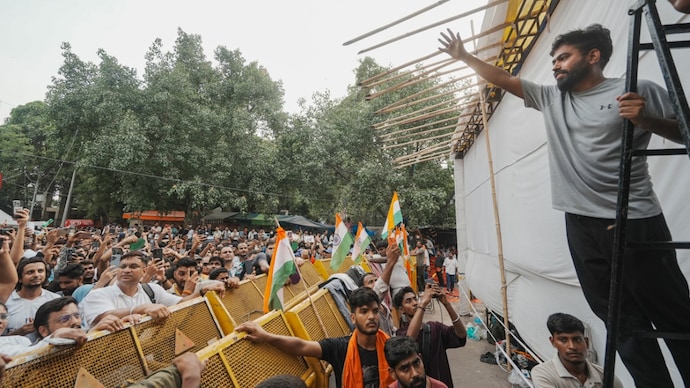
On June 6, Abhijeet Dipke landed in India to lead the Cockroach Janata Party's (CJP) agitation against exam paper leaks, demanding the resignation of Union Education Minister Dharmendra Pradhan. As the protest gathered momentum and drew national attention in the weeks to come, it was activist-innovator Sonam Wangchuk, not Dipke, who became its face. Forget leading the protests, critics suggest that Dipke seemed missing from the most intense moments. What had been taking place for over a month, was repeated on Monday — the day the protest was supposed to culminate. Like a Houdini act, every disappearance was followed by a reappearance.
In the month leading up to July 20, Wangchuk undertook an indefinite fast, risked his health, and was ultimately removed by police from the protest site at Jantar Mantar. At that defining moment, Dipke said he had stepped away to use the restroom at a nearby friend's house. And, by the time Dipke returned, Wangchuk had already been taken away by police to Safdarjung Hospital.
Wangchuk's fast lent the movement much of its credibility and public attention, even as Dipke remained its principal organiser.
Fast-forward to Saturday morning. Hours after Wangchuk was "shifted" to the Safdarjung Hospital, Dipke responded by launching an "indefinite hunger strike" at Jantar Mantar, saying he would continue until "Sonam Sir was released".
Over the weekend, Dipke was on the verge of becoming the movement's most visible face. But his "indefinite hunger strike", too, didn't last long. Dipke ended his hunger strike after Wangchuk reportedly requested him to do so from the hospital. Dipke took a sip or two from a glass of juice. That Wangchuk had suggested Dipke break his fast as he needed energy to continue the protest, was conveyed by the CJP.
Wangchuk, meanwhile, remains on his hunger strike from a hospital bed.
On Monday, CJP's spokespersons, Saurav Das and Ashutosh Ranka submitted a memorandum to Union Health MInister and senior BJP leader JP Nadda with three demands, one of which is the return of Wangchuk to the protest site at Jantar Mantar.
While Wangchuk is still reported to be continuing his fast, which will be in its 22nd day on Monday, Dipke gave up in about 48 hours. Dipke began his fast after Wangchuk was "shifted" from the protest site to Safdarjung Hospital.
Columnist-satirist Kamlesh Singh, in an Opinion piece on Monday, said that the movement, led by an unknown, was the reason "why Dipke had to go shopping for a track record".
"He found one in Sonam Wangchuk, whose fast lent the disparate crowd some credibility and, because only he could, some sanity... Many saw widespread support for the movement. I saw a desperate cry for a leader. Any leader," he wrote.
On Monday morning, as thousands of CJP supporters and protesters, who had gathered at Jantar Mantar on Dipke's call, marched towards Parliament under the "Sansad Chalo" campaign, Delhi Police personnel detained many of them as they attempted to cross barricades towards Parliament Street. They braved tear-gas and lathicharge. Dipke was not leading the march.
Instead, Dipke remained at the Jantar Mantar stage, where his hunger strike was brought to an end after Wangchuk appealed to him to call it off. This, even as the protesters were clashing with police.
At roughly the same time, another episode added to the confusion over Dipke's whereabouts. The CJP's spokesperson, Saurav Das, claimed Dipke was detained by the police. About an hour later, Das clarified that Dipke had not, in fact, been detained.
Soon afterwards, as Dipke reappeared at Jantar Mantar, he had ended the fast he had begun on Saturday.
Interestingly, Dipke was also absent from another key development on Monday. As the roads and streets leading to the Parliament witnessed protests, detentions and a crackdown by the Delhi Police and the CRPF's Rapid Action Force, a CJP delegation comprising Das and Ranka and Saurav Das met Nadda at his residence. Dipke, again, missed both the alleged two-hour wait and the reported 10-minute meeting with Nadda.
This is when CJP spokesperson Ranka said: "Nadda ji requested some time to align with their leadership with regards to our following demands: 1) Immediate release of Sonam Wangchuk. 2) Dharmendra Pradhan's resignation. 3) Rs 1 crore compensation for all NEET aspirants who died after the NEET-UG paper leak".
Here too, Dipke was missing from the defining moment. So was his demand for a systemic overhaul of India's education system.
While these episodes, individually, necessarily might not mean much. Viewed together, they paint a picture of a leader who seems to be not too keen on going through the rigours of tough agitation.
Dipke landed in India as the CJP's founder. Wangchuk became its moral centre. Dipke then briefly became the face of the protest after Wangchuk's detention, only to miss the moment of the detention. He also missed leading the march to Parliament that he had called. He couldn't meet Nadda for the defining meeting, and briefly became the subject of rumours that he himself had been detained. Courtesy, Saurav Das.
One thing is remarkable though. Dipke was never really missing for long. He reappeared every time. But the moments he was gone were crucial moments. One key moment awaits Dipke right now as protesters return to Jantar Mantar after clashing with the police and look for what's ahead. Will Dipke be there for them?
On June 6, Abhijeet Dipke landed in India to lead the Cockroach Janata Party's (CJP) agitation against exam paper leaks, demanding the resignation of Union Education Minister Dharmendra Pradhan. As the protest gathered momentum and drew national attention in the weeks to come, it was activist-innovator Sonam Wangchuk, not Dipke, who became its face. Forget leading the protests, critics suggest that Dipke seemed missing from the most intense moments. What had been taking place for over a month, was repeated on Monday — the day the protest was supposed to culminate. Like a Houdini act, every disappearance was followed by a reappearance.
In the month leading up to July 20, Wangchuk undertook an indefinite fast, risked his health, and was ultimately removed by police from the protest site at Jantar Mantar. At that defining moment, Dipke said he had stepped away to use the restroom at a nearby friend's house. And, by the time Dipke returned, Wangchuk had already been taken away by police to Safdarjung Hospital.
Wangchuk's fast lent the movement much of its credibility and public attention, even as Dipke remained its principal organiser.
Fast-forward to Saturday morning. Hours after Wangchuk was "shifted" to the Safdarjung Hospital, Dipke responded by launching an "indefinite hunger strike" at Jantar Mantar, saying he would continue until "Sonam Sir was released".
Over the weekend, Dipke was on the verge of becoming the movement's most visible face. But his "indefinite hunger strike", too, didn't last long. Dipke ended his hunger strike after Wangchuk reportedly requested him to do so from the hospital. Dipke took a sip or two from a glass of juice. That Wangchuk had suggested Dipke break his fast as he needed energy to continue the protest, was conveyed by the CJP.
Wangchuk, meanwhile, remains on his hunger strike from a hospital bed.
On Monday, CJP's spokespersons, Saurav Das and Ashutosh Ranka submitted a memorandum to Union Health MInister and senior BJP leader JP Nadda with three demands, one of which is the return of Wangchuk to the protest site at Jantar Mantar.
While Wangchuk is still reported to be continuing his fast, which will be in its 22nd day on Monday, Dipke gave up in about 48 hours. Dipke began his fast after Wangchuk was "shifted" from the protest site to Safdarjung Hospital.
Columnist-satirist Kamlesh Singh, in an Opinion piece on Monday, said that the movement, led by an unknown, was the reason "why Dipke had to go shopping for a track record".
"He found one in Sonam Wangchuk, whose fast lent the disparate crowd some credibility and, because only he could, some sanity... Many saw widespread support for the movement. I saw a desperate cry for a leader. Any leader," he wrote.
On Monday morning, as thousands of CJP supporters and protesters, who had gathered at Jantar Mantar on Dipke's call, marched towards Parliament under the "Sansad Chalo" campaign, Delhi Police personnel detained many of them as they attempted to cross barricades towards Parliament Street. They braved tear-gas and lathicharge. Dipke was not leading the march.
Instead, Dipke remained at the Jantar Mantar stage, where his hunger strike was brought to an end after Wangchuk appealed to him to call it off. This, even as the protesters were clashing with police.
At roughly the same time, another episode added to the confusion over Dipke's whereabouts. The CJP's spokesperson, Saurav Das, claimed Dipke was detained by the police. About an hour later, Das clarified that Dipke had not, in fact, been detained.
Soon afterwards, as Dipke reappeared at Jantar Mantar, he had ended the fast he had begun on Saturday.
Interestingly, Dipke was also absent from another key development on Monday. As the roads and streets leading to the Parliament witnessed protests, detentions and a crackdown by the Delhi Police and the CRPF's Rapid Action Force, a CJP delegation comprising Das and Ranka and Saurav Das met Nadda at his residence. Dipke, again, missed both the alleged two-hour wait and the reported 10-minute meeting with Nadda.
This is when CJP spokesperson Ranka said: "Nadda ji requested some time to align with their leadership with regards to our following demands: 1) Immediate release of Sonam Wangchuk. 2) Dharmendra Pradhan's resignation. 3) Rs 1 crore compensation for all NEET aspirants who died after the NEET-UG paper leak".
Here too, Dipke was missing from the defining moment. So was his demand for a systemic overhaul of India's education system.
While these episodes, individually, necessarily might not mean much. Viewed together, they paint a picture of a leader who seems to be not too keen on going through the rigours of tough agitation.
Dipke landed in India as the CJP's founder. Wangchuk became its moral centre. Dipke then briefly became the face of the protest after Wangchuk's detention, only to miss the moment of the detention. He also missed leading the march to Parliament that he had called. He couldn't meet Nadda for the defining meeting, and briefly became the subject of rumours that he himself had been detained. Courtesy, Saurav Das.
One thing is remarkable though. Dipke was never really missing for long. He reappeared every time. But the moments he was gone were crucial moments. One key moment awaits Dipke right now as protesters return to Jantar Mantar after clashing with the police and look for what's ahead. Will Dipke be there for them?
On June 6, Abhijeet Dipke landed in India to lead the Cockroach Janata Party's (CJP) agitation against exam paper leaks, demanding the resignation of Union Education Minister Dharmendra Pradhan. As the protest gathered momentum and drew national attention in the weeks to come, it was activist-innovator Sonam Wangchuk, not Dipke, who became its face. Forget leading the protests, critics suggest that Dipke seemed missing from the most intense moments. What had been taking place for over a month, was repeated on Monday — the day the protest was supposed to culminate. Like a Houdini act, every disappearance was followed by a reappearance.
In the month leading up to July 20, Wangchuk undertook an indefinite fast, risked his health, and was ultimately removed by police from the protest site at Jantar Mantar. At that defining moment, Dipke said he had stepped away to use the restroom at a nearby friend's house. And, by the time Dipke returned, Wangchuk had already been taken away by police to Safdarjung Hospital.
Wangchuk's fast lent the movement much of its credibility and public attention, even as Dipke remained its principal organiser.
Fast-forward to Saturday morning. Hours after Wangchuk was "shifted" to the Safdarjung Hospital, Dipke responded by launching an "indefinite hunger strike" at Jantar Mantar, saying he would continue until "Sonam Sir was released".
Over the weekend, Dipke was on the verge of becoming the movement's most visible face. But his "indefinite hunger strike", too, didn't last long. Dipke ended his hunger strike after Wangchuk reportedly requested him to do so from the hospital. Dipke took a sip or two from a glass of juice. That Wangchuk had suggested Dipke break his fast as he needed energy to continue the protest, was conveyed by the CJP.
Wangchuk, meanwhile, remains on his hunger strike from a hospital bed.
On Monday, CJP's spokespersons, Saurav Das and Ashutosh Ranka submitted a memorandum to Union Health MInister and senior BJP leader JP Nadda with three demands, one of which is the return of Wangchuk to the protest site at Jantar Mantar.
While Wangchuk is still reported to be continuing his fast, which will be in its 22nd day on Monday, Dipke gave up in about 48 hours. Dipke began his fast after Wangchuk was "shifted" from the protest site to Safdarjung Hospital.
Columnist-satirist Kamlesh Singh, in an Opinion piece on Monday, said that the movement, led by an unknown, was the reason "why Dipke had to go shopping for a track record".
"He found one in Sonam Wangchuk, whose fast lent the disparate crowd some credibility and, because only he could, some sanity... Many saw widespread support for the movement. I saw a desperate cry for a leader. Any leader," he wrote.
On Monday morning, as thousands of CJP supporters and protesters, who had gathered at Jantar Mantar on Dipke's call, marched towards Parliament under the "Sansad Chalo" campaign, Delhi Police personnel detained many of them as they attempted to cross barricades towards Parliament Street. They braved tear-gas and lathicharge. Dipke was not leading the march.
Instead, Dipke remained at the Jantar Mantar stage, where his hunger strike was brought to an end after Wangchuk appealed to him to call it off. This, even as the protesters were clashing with police.
At roughly the same time, another episode added to the confusion over Dipke's whereabouts. The CJP's spokesperson, Saurav Das, claimed Dipke was detained by the police. About an hour later, Das clarified that Dipke had not, in fact, been detained.
Soon afterwards, as Dipke reappeared at Jantar Mantar, he had ended the fast he had begun on Saturday.
Interestingly, Dipke was also absent from another key development on Monday. As the roads and streets leading to the Parliament witnessed protests, detentions and a crackdown by the Delhi Police and the CRPF's Rapid Action Force, a CJP delegation comprising Das and Ranka and Saurav Das met Nadda at his residence. Dipke, again, missed both the alleged two-hour wait and the reported 10-minute meeting with Nadda.
This is when CJP spokesperson Ranka said: "Nadda ji requested some time to align with their leadership with regards to our following demands: 1) Immediate release of Sonam Wangchuk. 2) Dharmendra Pradhan's resignation. 3) Rs 1 crore compensation for all NEET aspirants who died after the NEET-UG paper leak".
Here too, Dipke was missing from the defining moment. So was his demand for a systemic overhaul of India's education system.
While these episodes, individually, necessarily might not mean much. Viewed together, they paint a picture of a leader who seems to be not too keen on going through the rigours of tough agitation.
Dipke landed in India as the CJP's founder. Wangchuk became its moral centre. Dipke then briefly became the face of the protest after Wangchuk's detention, only to miss the moment of the detention. He also missed leading the march to Parliament that he had called. He couldn't meet Nadda for the defining meeting, and briefly became the subject of rumours that he himself had been detained. Courtesy, Saurav Das.
One thing is remarkable though. Dipke was never really missing for long. He reappeared every time. But the moments he was gone were crucial moments. One key moment awaits Dipke right now as protesters return to Jantar Mantar after clashing with the police and look for what's ahead. Will Dipke be there for them?

