Manan Mishra lowered the Bar with NALSAR threat. Shouldn't he pay for it?
The Bar Council of India withdrew its order blocking enrolment of NALSAR's 2026 batch after criticism and Supreme Court scrutiny. The episode has triggered questions about the council's statutory powers and fresh calls for chairman Manan Kumar Mishra's resignation.
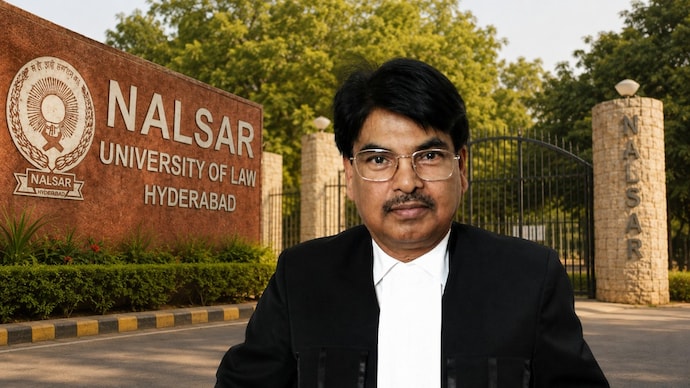
The Bar Council of India's (BCI) now-withdrawn circular to block the enrolment of NALSAR's entire 2026 graduating batch has raised a larger question — how far can a statutory professional body go in "punishing" students for exercising their right to dissent? Can it even regulate people who are not yet members of the profession?
It was BCI Chairman Manan Kumar Mishra, a BJP Rajya Sabha member from Bihar, who issued the August 13 order directing State Bar Councils to freeze the enrolment of NALSAR's entire 2026 graduating batch.
For an institution as prestigious as NALSAR, such an extreme measure appears particularly disproportionate, especially given the university's strong placement record. NALSAR reported 100% placement among graduates who opted for the placement process in each of the four years from 2020 to 2023.
There are now growing calls for Manan Kumar Mishra's resignation. Saurav Das, co-convenor of the Cockroach Janata Party (CJP), called for BCI chairman Manan Kumar Mishra to step down, hours after CJI Surya Kant criticised the Bar Council's intervention in the NALSAR enrolment controversy.
"Moral responsibility commands that Manan Kumar Mishra resigns. Cockroaches both inside and outside courts should ensure this happens," Das said in a post on X.
AIMIM MP Asaduddin Owaisi also rapped both the Bar Council of India and Manan Kumar Mishra, saying, "The BCI Chairman first directed State Bar Councils not to enrol NALSAR's 2026 graduates as advocates. The BCI has now withdrawn that order and instead ordered an inquiry into who organised the student campaign over the CJI's participation in the convocation. What power does the BCI or its chairman have to do this?"
MATTER STANDS CLOSED, SAYS BCI'S MANAN MISHRA. REALLY?
Commenting on the controversy, Manan Kumar Mishra told India Today, "Now the matter stands closed. Everything has been withdrawn. Matter has now reached Supreme Court, BCI will explain the things on the next date of hearing. But for the present, it's not an issue. BCI stands for protecting the rights & interests of Law Students and Lawyers only."
The BCI initially directed state bar councils on Thursday not to enrol any student from NALSAR's 2026 batch as an advocate, after a section of students opposed the CJI being invited as chief guest for the convocation. More than 450 students had signed a representation to university authorities raising concerns over recent judicial developments, including the handling of alleged police excesses during the July 20 Parliament march.
The BCI said it was examining allegations surrounding the campaign and sought a report identifying those responsible. It said a final decision would be taken on August 19. But within hours, after widespread criticism, the Council modified its order and allowed the batch to enrol, saying the "vast majority" of students were innocent. It subsequently went further and dropped the proceedings altogether.
What makes the episode more troubling is not merely that the BCI order was withdrawn, but that such a sweeping directive was issued in the first place. For a statutory body entrusted with upholding the standards of the legal profession, the decision let the bar down.
The episode, however, leaves behind a fundamental question: what exactly is the BCI's statutory power over enrolment, and can that power be used as a punitive measure against a group of law students?
WHAT DOES THE ADVOCATES ACT, 1961, SAY?
Let's examine what the law actually says.
Under the Advocates Act, 1961, the admission of people to a State roll is primarily a function of the State Bar Councils. Section 6 expressly empowers a State Bar Council to "admit persons as advocates on its roll" and maintain that roll. Section 25 says applications for enrolment are made to the State Bar Council in whose jurisdiction the applicant proposes to practise.
The BCI does, however, have significant supervisory powers. Section 7 gives it general supervision and control over State Bar Councils, besides empowering it to set standards for legal education and recognise universities whose law degrees qualify students for enrolment. Section 48B further allows the BCI to issue directions to State Bar Councils for the proper and efficient discharge of their functions.
That does not mean the BCI has an unlimited power to punish students.
WHEN CAN BAR COUNCIL REMOVE AN ENROLLED LAWYER?
The Act provides specific mechanisms for removing a person who is already enrolled. Section 26(1), for instance, allows the BCI to remove a name from the roll where it is satisfied that the person secured entry through misrepresentation of an essential fact, fraud or undue influence, after giving that person an opportunity to be heard.
The Act separately lays down disciplinary mechanisms for advocates guilty of professional or other misconduct.
However, the NALSAR graduates were, at the time of the initial order, not yet advocates on a State roll. That distinction matters.
The statutory framework clearly gives the BCI disciplinary authority over advocates and supervisory authority over State Bar Councils, but the question of whether those powers extend to imposing a blanket enrolment freeze on an entire graduating batch merely because some students participated in a protest is far less straightforward.
A senior corporate lawyer working for a media conglomerate told India Today Digital on the condition of anonymity, "The BCI chairman has repeatedly used his office to issue orders or directives on matters that are, at best, within the jurisdiction of the Council. The law never granted him such powers, and yet he continues to employ them willy nilly."
"A statutory body for the regulation of lawyers, perhaps more than any other organisation, should be mindful of the limits of their jurisdiction. By permitting him to continue occupying the chair, the Council is reducing itself to a farce," the senior lawyer added.
THE SUPREME COURT'S REACTION HAS SETTLED THE DUST
A bench headed by CJI Surya Kant called the BCI's now-withdrawn order "absolutely unnecessary" and said students had a right to protest.
The bench observed that the matter was a dialogue between the students and the CJI and questioned the BCI's role in it. It also directed that no punitive action be taken against the students or NALSAR faculty at the instance of the BCI or State Bar Councils.
It was Kant's remarks referring to unemployed youths as "cockroaches" that eventually gave rise to the Cockroach Janta Party (CJP), which turned those remarks into a broader campaign around the concerns of young people.
Now, in the NALSAR row, the CJI is asserting that students have every right to dissent and protest. The remarks that sparked a movement have now been followed by an affirmation from the CJI that dissent itself is a legitimate right.
The constitutional position on peaceful protest is also well established.
So when a professional regulator seeks to impose a collective professional penalty on people for expressing a political or institutional disagreement, such an exercise of regulatory power is highly unusual.
The comparison with other professions is instructive, though not exact. A medical regulator can regulate entry into the medical profession and discipline registered practitioners, but any restriction on registration still has to trace its authority to the governing statutory framework. The existence of regulatory power does not by itself mean that a regulator can create new grounds for disqualification at will.
In the NALSAR case, the BCI ultimately reversed course. Its chairman, Manan Kumar Mishra, said there was "never any intention" to harm students and that the decision was withdrawn after the matter was discussed by senior members of the Council. The Supreme Court has intervened, essentially backing the students. But should a person in a position of authority wield arbitrary power and get away without paying for it?
The Bar Council of India's (BCI) now-withdrawn circular to block the enrolment of NALSAR's entire 2026 graduating batch has raised a larger question — how far can a statutory professional body go in "punishing" students for exercising their right to dissent? Can it even regulate people who are not yet members of the profession?
It was BCI Chairman Manan Kumar Mishra, a BJP Rajya Sabha member from Bihar, who issued the August 13 order directing State Bar Councils to freeze the enrolment of NALSAR's entire 2026 graduating batch.
For an institution as prestigious as NALSAR, such an extreme measure appears particularly disproportionate, especially given the university's strong placement record. NALSAR reported 100% placement among graduates who opted for the placement process in each of the four years from 2020 to 2023.
There are now growing calls for Manan Kumar Mishra's resignation. Saurav Das, co-convenor of the Cockroach Janata Party (CJP), called for BCI chairman Manan Kumar Mishra to step down, hours after CJI Surya Kant criticised the Bar Council's intervention in the NALSAR enrolment controversy.
"Moral responsibility commands that Manan Kumar Mishra resigns. Cockroaches both inside and outside courts should ensure this happens," Das said in a post on X.
AIMIM MP Asaduddin Owaisi also rapped both the Bar Council of India and Manan Kumar Mishra, saying, "The BCI Chairman first directed State Bar Councils not to enrol NALSAR's 2026 graduates as advocates. The BCI has now withdrawn that order and instead ordered an inquiry into who organised the student campaign over the CJI's participation in the convocation. What power does the BCI or its chairman have to do this?"
MATTER STANDS CLOSED, SAYS BCI'S MANAN MISHRA. REALLY?
Commenting on the controversy, Manan Kumar Mishra told India Today, "Now the matter stands closed. Everything has been withdrawn. Matter has now reached Supreme Court, BCI will explain the things on the next date of hearing. But for the present, it's not an issue. BCI stands for protecting the rights & interests of Law Students and Lawyers only."
The BCI initially directed state bar councils on Thursday not to enrol any student from NALSAR's 2026 batch as an advocate, after a section of students opposed the CJI being invited as chief guest for the convocation. More than 450 students had signed a representation to university authorities raising concerns over recent judicial developments, including the handling of alleged police excesses during the July 20 Parliament march.
The BCI said it was examining allegations surrounding the campaign and sought a report identifying those responsible. It said a final decision would be taken on August 19. But within hours, after widespread criticism, the Council modified its order and allowed the batch to enrol, saying the "vast majority" of students were innocent. It subsequently went further and dropped the proceedings altogether.
What makes the episode more troubling is not merely that the BCI order was withdrawn, but that such a sweeping directive was issued in the first place. For a statutory body entrusted with upholding the standards of the legal profession, the decision let the bar down.
The episode, however, leaves behind a fundamental question: what exactly is the BCI's statutory power over enrolment, and can that power be used as a punitive measure against a group of law students?
WHAT DOES THE ADVOCATES ACT, 1961, SAY?
Let's examine what the law actually says.
Under the Advocates Act, 1961, the admission of people to a State roll is primarily a function of the State Bar Councils. Section 6 expressly empowers a State Bar Council to "admit persons as advocates on its roll" and maintain that roll. Section 25 says applications for enrolment are made to the State Bar Council in whose jurisdiction the applicant proposes to practise.
The BCI does, however, have significant supervisory powers. Section 7 gives it general supervision and control over State Bar Councils, besides empowering it to set standards for legal education and recognise universities whose law degrees qualify students for enrolment. Section 48B further allows the BCI to issue directions to State Bar Councils for the proper and efficient discharge of their functions.
That does not mean the BCI has an unlimited power to punish students.
WHEN CAN BAR COUNCIL REMOVE AN ENROLLED LAWYER?
The Act provides specific mechanisms for removing a person who is already enrolled. Section 26(1), for instance, allows the BCI to remove a name from the roll where it is satisfied that the person secured entry through misrepresentation of an essential fact, fraud or undue influence, after giving that person an opportunity to be heard.
The Act separately lays down disciplinary mechanisms for advocates guilty of professional or other misconduct.
However, the NALSAR graduates were, at the time of the initial order, not yet advocates on a State roll. That distinction matters.
The statutory framework clearly gives the BCI disciplinary authority over advocates and supervisory authority over State Bar Councils, but the question of whether those powers extend to imposing a blanket enrolment freeze on an entire graduating batch merely because some students participated in a protest is far less straightforward.
A senior corporate lawyer working for a media conglomerate told India Today Digital on the condition of anonymity, "The BCI chairman has repeatedly used his office to issue orders or directives on matters that are, at best, within the jurisdiction of the Council. The law never granted him such powers, and yet he continues to employ them willy nilly."
"A statutory body for the regulation of lawyers, perhaps more than any other organisation, should be mindful of the limits of their jurisdiction. By permitting him to continue occupying the chair, the Council is reducing itself to a farce," the senior lawyer added.
THE SUPREME COURT'S REACTION HAS SETTLED THE DUST
A bench headed by CJI Surya Kant called the BCI's now-withdrawn order "absolutely unnecessary" and said students had a right to protest.
The bench observed that the matter was a dialogue between the students and the CJI and questioned the BCI's role in it. It also directed that no punitive action be taken against the students or NALSAR faculty at the instance of the BCI or State Bar Councils.
It was Kant's remarks referring to unemployed youths as "cockroaches" that eventually gave rise to the Cockroach Janta Party (CJP), which turned those remarks into a broader campaign around the concerns of young people.
Now, in the NALSAR row, the CJI is asserting that students have every right to dissent and protest. The remarks that sparked a movement have now been followed by an affirmation from the CJI that dissent itself is a legitimate right.
The constitutional position on peaceful protest is also well established.
So when a professional regulator seeks to impose a collective professional penalty on people for expressing a political or institutional disagreement, such an exercise of regulatory power is highly unusual.
The comparison with other professions is instructive, though not exact. A medical regulator can regulate entry into the medical profession and discipline registered practitioners, but any restriction on registration still has to trace its authority to the governing statutory framework. The existence of regulatory power does not by itself mean that a regulator can create new grounds for disqualification at will.
In the NALSAR case, the BCI ultimately reversed course. Its chairman, Manan Kumar Mishra, said there was "never any intention" to harm students and that the decision was withdrawn after the matter was discussed by senior members of the Council. The Supreme Court has intervened, essentially backing the students. But should a person in a position of authority wield arbitrary power and get away without paying for it?
The Bar Council of India's (BCI) now-withdrawn circular to block the enrolment of NALSAR's entire 2026 graduating batch has raised a larger question — how far can a statutory professional body go in "punishing" students for exercising their right to dissent? Can it even regulate people who are not yet members of the profession?
It was BCI Chairman Manan Kumar Mishra, a BJP Rajya Sabha member from Bihar, who issued the August 13 order directing State Bar Councils to freeze the enrolment of NALSAR's entire 2026 graduating batch.
For an institution as prestigious as NALSAR, such an extreme measure appears particularly disproportionate, especially given the university's strong placement record. NALSAR reported 100% placement among graduates who opted for the placement process in each of the four years from 2020 to 2023.
There are now growing calls for Manan Kumar Mishra's resignation. Saurav Das, co-convenor of the Cockroach Janata Party (CJP), called for BCI chairman Manan Kumar Mishra to step down, hours after CJI Surya Kant criticised the Bar Council's intervention in the NALSAR enrolment controversy.
"Moral responsibility commands that Manan Kumar Mishra resigns. Cockroaches both inside and outside courts should ensure this happens," Das said in a post on X.
AIMIM MP Asaduddin Owaisi also rapped both the Bar Council of India and Manan Kumar Mishra, saying, "The BCI Chairman first directed State Bar Councils not to enrol NALSAR's 2026 graduates as advocates. The BCI has now withdrawn that order and instead ordered an inquiry into who organised the student campaign over the CJI's participation in the convocation. What power does the BCI or its chairman have to do this?"
MATTER STANDS CLOSED, SAYS BCI'S MANAN MISHRA. REALLY?
Commenting on the controversy, Manan Kumar Mishra told India Today, "Now the matter stands closed. Everything has been withdrawn. Matter has now reached Supreme Court, BCI will explain the things on the next date of hearing. But for the present, it's not an issue. BCI stands for protecting the rights & interests of Law Students and Lawyers only."
The BCI initially directed state bar councils on Thursday not to enrol any student from NALSAR's 2026 batch as an advocate, after a section of students opposed the CJI being invited as chief guest for the convocation. More than 450 students had signed a representation to university authorities raising concerns over recent judicial developments, including the handling of alleged police excesses during the July 20 Parliament march.
The BCI said it was examining allegations surrounding the campaign and sought a report identifying those responsible. It said a final decision would be taken on August 19. But within hours, after widespread criticism, the Council modified its order and allowed the batch to enrol, saying the "vast majority" of students were innocent. It subsequently went further and dropped the proceedings altogether.
What makes the episode more troubling is not merely that the BCI order was withdrawn, but that such a sweeping directive was issued in the first place. For a statutory body entrusted with upholding the standards of the legal profession, the decision let the bar down.
The episode, however, leaves behind a fundamental question: what exactly is the BCI's statutory power over enrolment, and can that power be used as a punitive measure against a group of law students?
WHAT DOES THE ADVOCATES ACT, 1961, SAY?
Let's examine what the law actually says.
Under the Advocates Act, 1961, the admission of people to a State roll is primarily a function of the State Bar Councils. Section 6 expressly empowers a State Bar Council to "admit persons as advocates on its roll" and maintain that roll. Section 25 says applications for enrolment are made to the State Bar Council in whose jurisdiction the applicant proposes to practise.
The BCI does, however, have significant supervisory powers. Section 7 gives it general supervision and control over State Bar Councils, besides empowering it to set standards for legal education and recognise universities whose law degrees qualify students for enrolment. Section 48B further allows the BCI to issue directions to State Bar Councils for the proper and efficient discharge of their functions.
That does not mean the BCI has an unlimited power to punish students.
WHEN CAN BAR COUNCIL REMOVE AN ENROLLED LAWYER?
The Act provides specific mechanisms for removing a person who is already enrolled. Section 26(1), for instance, allows the BCI to remove a name from the roll where it is satisfied that the person secured entry through misrepresentation of an essential fact, fraud or undue influence, after giving that person an opportunity to be heard.
The Act separately lays down disciplinary mechanisms for advocates guilty of professional or other misconduct.
However, the NALSAR graduates were, at the time of the initial order, not yet advocates on a State roll. That distinction matters.
The statutory framework clearly gives the BCI disciplinary authority over advocates and supervisory authority over State Bar Councils, but the question of whether those powers extend to imposing a blanket enrolment freeze on an entire graduating batch merely because some students participated in a protest is far less straightforward.
A senior corporate lawyer working for a media conglomerate told India Today Digital on the condition of anonymity, "The BCI chairman has repeatedly used his office to issue orders or directives on matters that are, at best, within the jurisdiction of the Council. The law never granted him such powers, and yet he continues to employ them willy nilly."
"A statutory body for the regulation of lawyers, perhaps more than any other organisation, should be mindful of the limits of their jurisdiction. By permitting him to continue occupying the chair, the Council is reducing itself to a farce," the senior lawyer added.
THE SUPREME COURT'S REACTION HAS SETTLED THE DUST
A bench headed by CJI Surya Kant called the BCI's now-withdrawn order "absolutely unnecessary" and said students had a right to protest.
The bench observed that the matter was a dialogue between the students and the CJI and questioned the BCI's role in it. It also directed that no punitive action be taken against the students or NALSAR faculty at the instance of the BCI or State Bar Councils.
It was Kant's remarks referring to unemployed youths as "cockroaches" that eventually gave rise to the Cockroach Janta Party (CJP), which turned those remarks into a broader campaign around the concerns of young people.
Now, in the NALSAR row, the CJI is asserting that students have every right to dissent and protest. The remarks that sparked a movement have now been followed by an affirmation from the CJI that dissent itself is a legitimate right.
The constitutional position on peaceful protest is also well established.
So when a professional regulator seeks to impose a collective professional penalty on people for expressing a political or institutional disagreement, such an exercise of regulatory power is highly unusual.
The comparison with other professions is instructive, though not exact. A medical regulator can regulate entry into the medical profession and discipline registered practitioners, but any restriction on registration still has to trace its authority to the governing statutory framework. The existence of regulatory power does not by itself mean that a regulator can create new grounds for disqualification at will.
In the NALSAR case, the BCI ultimately reversed course. Its chairman, Manan Kumar Mishra, said there was "never any intention" to harm students and that the decision was withdrawn after the matter was discussed by senior members of the Council. The Supreme Court has intervened, essentially backing the students. But should a person in a position of authority wield arbitrary power and get away without paying for it?

