How rookies outplayed India's political veterans
No political pedigree. No party machinery. No decades of protest experience. Yet the CJP and student protesters managed to outmanoeuvre India's political class — and compelled the government to blink.
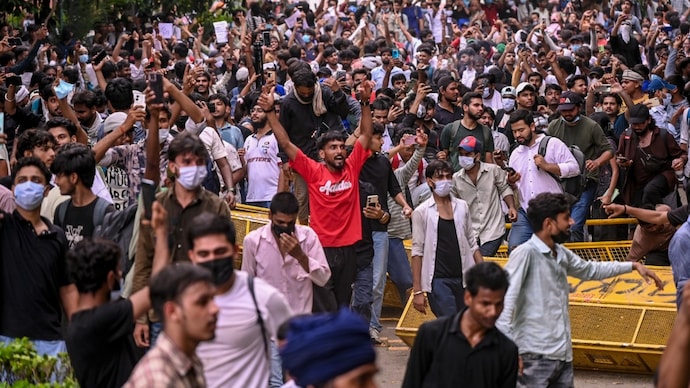
When the Cockroach Janta Party (CJP) first appeared on the national stage, it looked like the kind of outfit India's political establishment has seen, and survived, many times before. A handful of young faces, angry students, slogans demanding accountability and a government insisting it would not bend. The script felt familiar. The ending did not.
With the CJP starting the students' protest and pressing on for weeks, the Narendra Modi government finally blinked on Saturday. The government accepted its key demands, Education Minister Dharmendra Pradhan resigned, and the students called off their protest claiming victory. In a political system where governments, especially this one, have earned a reputation for digging in their heels, this is no small achievement.
The obvious explanation is that the protests became too big to ignore. But size alone doesn't explain what happened. India has witnessed larger demonstrations over the past decade — from anti-CAA protests to the year-long farmers' agitation to the demonstrations over Manipur violence. They drew enormous crowds, dominated television debates and, in some cases, forced policy recalibrations. Yet few managed to extract political accountability at the very top.
Even during the NEET paper leak controversy in 2024, the government weathered weeks of outrage without sacrificing its Education Minister. This time, it blinked. The difference lay not just in what the students demanded, but in how they fought.
The political class spent much of the protest assuming experience would eventually prevail. After all, Indian politics has no shortage of professionals when it comes to agitations. There are politicians who have spent decades mastering the optics of dharnas, hunger strikes and Parliament walkouts. There are leaders who know precisely when to escalate, when to negotiate and when to settle for incremental gains.
Standing across from them was a group of individuals, who, until a few weeks ago, were virtually unknown. On paper, it looked like a mismatch. In practice, it turned into a masterclass in how the rules of protest politics have quietly changed.
WHAT WORKED FOR CJP
One of CJP's biggest advantages was that it didn't behave like a political party because it wasn't one. That may sound obvious, but it fundamentally altered the government's response.
Over the years, some within the protests gave the BJP the scope to reframe their movements through an absolute political lens. Be it the 2024-25 farmers' agitation, anti-CAA demonstrations, or campus protests. Once a movement acquires a partisan identity, governments find it easier to dismiss criticism as electoral theatre rather than public anger.
The students denied the government that familiar script. Opposition leaders rushed to support them, sensing an opportunity, but the CJP carefully ensured that politicians remained supporters, not protagonists.
Several Opposition parties and regional leaders amplified the movement, yet the cameras stayed fixed on student protesters rather than seasoned politicians. The distinction mattered. It became increasingly difficult to argue that the agitation was orchestrated by political rivals when its most recognisable faces had no electoral ambitions, no party offices and no obvious political careers to protect.
Ironically, what looked like inexperience turned into one of CJP's greatest strengths.
Veteran politicians often negotiate with one eye on the immediate issue and the other on future political equations. Students don't. The movement's demands remained strikingly consistent from beginning to end. Accountability, systemic reforms and Dharmendra Pradhan's resignation were not bargaining chips to be traded away in backroom negotiations; they were presented as non-negotiable. That consistency gave the protests an authenticity that political campaigns often struggle to maintain.
The rhetoric followed the same pattern. Instead of allowing the movement to balloon into a catch-all campaign against the government, the student leaders repeatedly returned to the same message: this was about examinations, merit and the future of millions of young Indians. That discipline prevented the debate from drifting into ideological territory.
It also made the protests relatable to parents, teachers and even many who may not have agreed with the Opposition politically but believed students deserved answers.
THE BATTLES THAT WERE NOT FOUGHT ON STREETS
If the streets were one battlefield, however, social media was the other — and this is where the generational divide became impossible to ignore.
Previous protest movements treated platforms like Facebook, X or Instagram as places to post updates. The CJP treated them as the protest itself. For the past few days, it has become almost impossible to scroll through Instagram without encountering another protest reel.
A student confronting police. A hunger strike update. A stirring speech that was clipped, captioned and circulating within minutes. Drone shots of swelling crowds. Parents breaking down before television cameras. Handwritten placards that doubled as memes. Before television studios had assembled their nightly debate panels, the algorithm had already decided what millions of people would watch.
That wasn't accidental. This generation instinctively understands the internet in a way that India's political veterans often do not. Political parties still tend to see social media as a digital extension of traditional campaigning — a place to upload speeches, issue statements and circulate press conferences.
Gen Z speaks an entirely different language. Their political communication is visual, fast, collaborative and deeply shaped by internet culture. A powerful 20-second reel often carries more emotional weight than a 20-minute press conference, while a clever meme can puncture an official narrative before the evening news has even begun.
In many ways, CJP supporters and student protesters out-posted everyone.
The government struggled to keep pace with the speed at which protest content travelled. Opposition parties, despite their digital teams, often looked like they were reacting to trends rather than creating them. The movement never disappeared between news cycles because there were no news cycles any more. Every student's phone became a broadcasting station, every protester a content creator and every viral clip a fresh reminder that the agitation was still alive.
Long after television cameras packed up for the day, Instagram, YouTube Shorts and WhatsApp groups continued the protest into the night.
That also explains why CJP's leaders acquired credibility so quickly. They didn't sound like politicians because they weren't trying to. Their speeches occasionally lacked polish, their interviews were sometimes raw and emotional, and their social media videos often felt spontaneous rather than carefully produced. Yet those rough edges became an asset.
In an age when audiences are increasingly sceptical of scripted politics, authenticity often beats perfection. The students didn't appear to be delivering lines drafted by communication strategists; they appeared to be speaking for themselves. For a generation raised on influencers, creators and livestreams, that distinction matters.
The government, meanwhile, found itself confronting a kind of protest it had rarely encountered before. Its communication machinery is built to withstand Opposition attacks, parliamentary disruptions and hostile television debates. It is far less equipped to respond when thousands of decentralised voices flood social media with content that cannot be countered through a single press conference or spokesperson. You cannot hold a briefing every time another protest reel racks up two million views before lunch.
None of this diminishes the importance of traditional politics. Opposition parties kept pressure alive inside Parliament, amplified the students' demands and ensured the issue remained in the national conversation. But they were no longer directing the movement. They were following it. That subtle reversal may be one of the most remarkable aspects of the entire episode. For perhaps the first time in years, India's political class found itself taking cues from students instead of asking students to rally behind politicians.
The CJP protest has already exposed one undeniable fact: India's political playbook, refined over decades of rallies, roadshows and parliamentary showdowns, is no longer the only one that works.
For the political establishment, perhaps the biggest surprise wasn't that students protested. Students always have. It was that a generation many dismiss as chronically online ended up using that very instinct as a political advantage. While seasoned politicians were still trying to own the narrative through speeches, press conferences and television debates, the CJP had already turned every protest site into a content factory and every supporter into a distributor. By the time the political class caught up, the students had already won the attention economy — and, eventually, much of the political battle too.
When the Cockroach Janta Party (CJP) first appeared on the national stage, it looked like the kind of outfit India's political establishment has seen, and survived, many times before. A handful of young faces, angry students, slogans demanding accountability and a government insisting it would not bend. The script felt familiar. The ending did not.
With the CJP starting the students' protest and pressing on for weeks, the Narendra Modi government finally blinked on Saturday. The government accepted its key demands, Education Minister Dharmendra Pradhan resigned, and the students called off their protest claiming victory. In a political system where governments, especially this one, have earned a reputation for digging in their heels, this is no small achievement.
The obvious explanation is that the protests became too big to ignore. But size alone doesn't explain what happened. India has witnessed larger demonstrations over the past decade — from anti-CAA protests to the year-long farmers' agitation to the demonstrations over Manipur violence. They drew enormous crowds, dominated television debates and, in some cases, forced policy recalibrations. Yet few managed to extract political accountability at the very top.
Even during the NEET paper leak controversy in 2024, the government weathered weeks of outrage without sacrificing its Education Minister. This time, it blinked. The difference lay not just in what the students demanded, but in how they fought.
The political class spent much of the protest assuming experience would eventually prevail. After all, Indian politics has no shortage of professionals when it comes to agitations. There are politicians who have spent decades mastering the optics of dharnas, hunger strikes and Parliament walkouts. There are leaders who know precisely when to escalate, when to negotiate and when to settle for incremental gains.
Standing across from them was a group of individuals, who, until a few weeks ago, were virtually unknown. On paper, it looked like a mismatch. In practice, it turned into a masterclass in how the rules of protest politics have quietly changed.
WHAT WORKED FOR CJP
One of CJP's biggest advantages was that it didn't behave like a political party because it wasn't one. That may sound obvious, but it fundamentally altered the government's response.
Over the years, some within the protests gave the BJP the scope to reframe their movements through an absolute political lens. Be it the 2024-25 farmers' agitation, anti-CAA demonstrations, or campus protests. Once a movement acquires a partisan identity, governments find it easier to dismiss criticism as electoral theatre rather than public anger.
The students denied the government that familiar script. Opposition leaders rushed to support them, sensing an opportunity, but the CJP carefully ensured that politicians remained supporters, not protagonists.
Several Opposition parties and regional leaders amplified the movement, yet the cameras stayed fixed on student protesters rather than seasoned politicians. The distinction mattered. It became increasingly difficult to argue that the agitation was orchestrated by political rivals when its most recognisable faces had no electoral ambitions, no party offices and no obvious political careers to protect.
Ironically, what looked like inexperience turned into one of CJP's greatest strengths.
Veteran politicians often negotiate with one eye on the immediate issue and the other on future political equations. Students don't. The movement's demands remained strikingly consistent from beginning to end. Accountability, systemic reforms and Dharmendra Pradhan's resignation were not bargaining chips to be traded away in backroom negotiations; they were presented as non-negotiable. That consistency gave the protests an authenticity that political campaigns often struggle to maintain.
The rhetoric followed the same pattern. Instead of allowing the movement to balloon into a catch-all campaign against the government, the student leaders repeatedly returned to the same message: this was about examinations, merit and the future of millions of young Indians. That discipline prevented the debate from drifting into ideological territory.
It also made the protests relatable to parents, teachers and even many who may not have agreed with the Opposition politically but believed students deserved answers.
THE BATTLES THAT WERE NOT FOUGHT ON STREETS
If the streets were one battlefield, however, social media was the other — and this is where the generational divide became impossible to ignore.
Previous protest movements treated platforms like Facebook, X or Instagram as places to post updates. The CJP treated them as the protest itself. For the past few days, it has become almost impossible to scroll through Instagram without encountering another protest reel.
A student confronting police. A hunger strike update. A stirring speech that was clipped, captioned and circulating within minutes. Drone shots of swelling crowds. Parents breaking down before television cameras. Handwritten placards that doubled as memes. Before television studios had assembled their nightly debate panels, the algorithm had already decided what millions of people would watch.
That wasn't accidental. This generation instinctively understands the internet in a way that India's political veterans often do not. Political parties still tend to see social media as a digital extension of traditional campaigning — a place to upload speeches, issue statements and circulate press conferences.
Gen Z speaks an entirely different language. Their political communication is visual, fast, collaborative and deeply shaped by internet culture. A powerful 20-second reel often carries more emotional weight than a 20-minute press conference, while a clever meme can puncture an official narrative before the evening news has even begun.
In many ways, CJP supporters and student protesters out-posted everyone.
The government struggled to keep pace with the speed at which protest content travelled. Opposition parties, despite their digital teams, often looked like they were reacting to trends rather than creating them. The movement never disappeared between news cycles because there were no news cycles any more. Every student's phone became a broadcasting station, every protester a content creator and every viral clip a fresh reminder that the agitation was still alive.
Long after television cameras packed up for the day, Instagram, YouTube Shorts and WhatsApp groups continued the protest into the night.
That also explains why CJP's leaders acquired credibility so quickly. They didn't sound like politicians because they weren't trying to. Their speeches occasionally lacked polish, their interviews were sometimes raw and emotional, and their social media videos often felt spontaneous rather than carefully produced. Yet those rough edges became an asset.
In an age when audiences are increasingly sceptical of scripted politics, authenticity often beats perfection. The students didn't appear to be delivering lines drafted by communication strategists; they appeared to be speaking for themselves. For a generation raised on influencers, creators and livestreams, that distinction matters.
The government, meanwhile, found itself confronting a kind of protest it had rarely encountered before. Its communication machinery is built to withstand Opposition attacks, parliamentary disruptions and hostile television debates. It is far less equipped to respond when thousands of decentralised voices flood social media with content that cannot be countered through a single press conference or spokesperson. You cannot hold a briefing every time another protest reel racks up two million views before lunch.
None of this diminishes the importance of traditional politics. Opposition parties kept pressure alive inside Parliament, amplified the students' demands and ensured the issue remained in the national conversation. But they were no longer directing the movement. They were following it. That subtle reversal may be one of the most remarkable aspects of the entire episode. For perhaps the first time in years, India's political class found itself taking cues from students instead of asking students to rally behind politicians.
The CJP protest has already exposed one undeniable fact: India's political playbook, refined over decades of rallies, roadshows and parliamentary showdowns, is no longer the only one that works.
For the political establishment, perhaps the biggest surprise wasn't that students protested. Students always have. It was that a generation many dismiss as chronically online ended up using that very instinct as a political advantage. While seasoned politicians were still trying to own the narrative through speeches, press conferences and television debates, the CJP had already turned every protest site into a content factory and every supporter into a distributor. By the time the political class caught up, the students had already won the attention economy — and, eventually, much of the political battle too.
When the Cockroach Janta Party (CJP) first appeared on the national stage, it looked like the kind of outfit India's political establishment has seen, and survived, many times before. A handful of young faces, angry students, slogans demanding accountability and a government insisting it would not bend. The script felt familiar. The ending did not.
With the CJP starting the students' protest and pressing on for weeks, the Narendra Modi government finally blinked on Saturday. The government accepted its key demands, Education Minister Dharmendra Pradhan resigned, and the students called off their protest claiming victory. In a political system where governments, especially this one, have earned a reputation for digging in their heels, this is no small achievement.
The obvious explanation is that the protests became too big to ignore. But size alone doesn't explain what happened. India has witnessed larger demonstrations over the past decade — from anti-CAA protests to the year-long farmers' agitation to the demonstrations over Manipur violence. They drew enormous crowds, dominated television debates and, in some cases, forced policy recalibrations. Yet few managed to extract political accountability at the very top.
Even during the NEET paper leak controversy in 2024, the government weathered weeks of outrage without sacrificing its Education Minister. This time, it blinked. The difference lay not just in what the students demanded, but in how they fought.
The political class spent much of the protest assuming experience would eventually prevail. After all, Indian politics has no shortage of professionals when it comes to agitations. There are politicians who have spent decades mastering the optics of dharnas, hunger strikes and Parliament walkouts. There are leaders who know precisely when to escalate, when to negotiate and when to settle for incremental gains.
Standing across from them was a group of individuals, who, until a few weeks ago, were virtually unknown. On paper, it looked like a mismatch. In practice, it turned into a masterclass in how the rules of protest politics have quietly changed.
WHAT WORKED FOR CJP
One of CJP's biggest advantages was that it didn't behave like a political party because it wasn't one. That may sound obvious, but it fundamentally altered the government's response.
Over the years, some within the protests gave the BJP the scope to reframe their movements through an absolute political lens. Be it the 2024-25 farmers' agitation, anti-CAA demonstrations, or campus protests. Once a movement acquires a partisan identity, governments find it easier to dismiss criticism as electoral theatre rather than public anger.
The students denied the government that familiar script. Opposition leaders rushed to support them, sensing an opportunity, but the CJP carefully ensured that politicians remained supporters, not protagonists.
Several Opposition parties and regional leaders amplified the movement, yet the cameras stayed fixed on student protesters rather than seasoned politicians. The distinction mattered. It became increasingly difficult to argue that the agitation was orchestrated by political rivals when its most recognisable faces had no electoral ambitions, no party offices and no obvious political careers to protect.
Ironically, what looked like inexperience turned into one of CJP's greatest strengths.
Veteran politicians often negotiate with one eye on the immediate issue and the other on future political equations. Students don't. The movement's demands remained strikingly consistent from beginning to end. Accountability, systemic reforms and Dharmendra Pradhan's resignation were not bargaining chips to be traded away in backroom negotiations; they were presented as non-negotiable. That consistency gave the protests an authenticity that political campaigns often struggle to maintain.
The rhetoric followed the same pattern. Instead of allowing the movement to balloon into a catch-all campaign against the government, the student leaders repeatedly returned to the same message: this was about examinations, merit and the future of millions of young Indians. That discipline prevented the debate from drifting into ideological territory.
It also made the protests relatable to parents, teachers and even many who may not have agreed with the Opposition politically but believed students deserved answers.
THE BATTLES THAT WERE NOT FOUGHT ON STREETS
If the streets were one battlefield, however, social media was the other — and this is where the generational divide became impossible to ignore.
Previous protest movements treated platforms like Facebook, X or Instagram as places to post updates. The CJP treated them as the protest itself. For the past few days, it has become almost impossible to scroll through Instagram without encountering another protest reel.
A student confronting police. A hunger strike update. A stirring speech that was clipped, captioned and circulating within minutes. Drone shots of swelling crowds. Parents breaking down before television cameras. Handwritten placards that doubled as memes. Before television studios had assembled their nightly debate panels, the algorithm had already decided what millions of people would watch.
That wasn't accidental. This generation instinctively understands the internet in a way that India's political veterans often do not. Political parties still tend to see social media as a digital extension of traditional campaigning — a place to upload speeches, issue statements and circulate press conferences.
Gen Z speaks an entirely different language. Their political communication is visual, fast, collaborative and deeply shaped by internet culture. A powerful 20-second reel often carries more emotional weight than a 20-minute press conference, while a clever meme can puncture an official narrative before the evening news has even begun.
In many ways, CJP supporters and student protesters out-posted everyone.
The government struggled to keep pace with the speed at which protest content travelled. Opposition parties, despite their digital teams, often looked like they were reacting to trends rather than creating them. The movement never disappeared between news cycles because there were no news cycles any more. Every student's phone became a broadcasting station, every protester a content creator and every viral clip a fresh reminder that the agitation was still alive.
Long after television cameras packed up for the day, Instagram, YouTube Shorts and WhatsApp groups continued the protest into the night.
That also explains why CJP's leaders acquired credibility so quickly. They didn't sound like politicians because they weren't trying to. Their speeches occasionally lacked polish, their interviews were sometimes raw and emotional, and their social media videos often felt spontaneous rather than carefully produced. Yet those rough edges became an asset.
In an age when audiences are increasingly sceptical of scripted politics, authenticity often beats perfection. The students didn't appear to be delivering lines drafted by communication strategists; they appeared to be speaking for themselves. For a generation raised on influencers, creators and livestreams, that distinction matters.
The government, meanwhile, found itself confronting a kind of protest it had rarely encountered before. Its communication machinery is built to withstand Opposition attacks, parliamentary disruptions and hostile television debates. It is far less equipped to respond when thousands of decentralised voices flood social media with content that cannot be countered through a single press conference or spokesperson. You cannot hold a briefing every time another protest reel racks up two million views before lunch.
None of this diminishes the importance of traditional politics. Opposition parties kept pressure alive inside Parliament, amplified the students' demands and ensured the issue remained in the national conversation. But they were no longer directing the movement. They were following it. That subtle reversal may be one of the most remarkable aspects of the entire episode. For perhaps the first time in years, India's political class found itself taking cues from students instead of asking students to rally behind politicians.
The CJP protest has already exposed one undeniable fact: India's political playbook, refined over decades of rallies, roadshows and parliamentary showdowns, is no longer the only one that works.
For the political establishment, perhaps the biggest surprise wasn't that students protested. Students always have. It was that a generation many dismiss as chronically online ended up using that very instinct as a political advantage. While seasoned politicians were still trying to own the narrative through speeches, press conferences and television debates, the CJP had already turned every protest site into a content factory and every supporter into a distributor. By the time the political class caught up, the students had already won the attention economy — and, eventually, much of the political battle too.

