Gujarat Police uncover fake desi ghee racket, turmeric used for colour
Police claimed the accused mixed vanaspati with soybean and palmolein oil, heated the blend and added turmeric to mimic the colour of pure ghee. The adulterated product was packed in 15-kg containers and allegedly sold in wholesale and retail markets as "pure desi ghee" using an FSSAI licence.
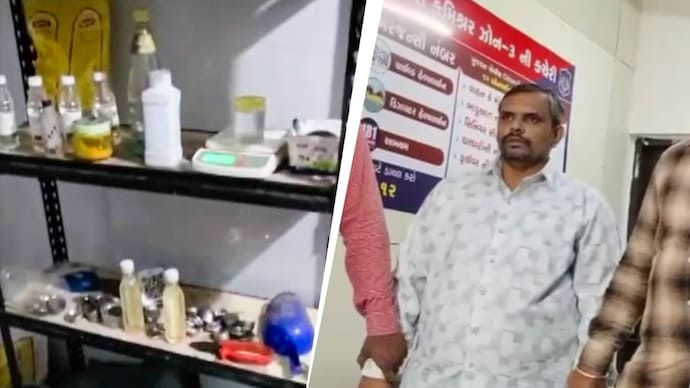
A food adulteration racket has been unearthed in Gujarat's Surat, where police arrested the operator of a local dairy for manufacturing and selling fake desi ghee by mixing vanaspati (hydrogenated vegetable fat), soybean and palmolein oil, and turmeric.
The action was carried out jointly by the Chowk Bazaar Police Station and the Zone-3 Local Crime Branch (LCB) after they received specific inputs that fake ghee was being manufactured at Jai Yogeshwar Dairy in Surat's Ved Road area. Officials from the Surat Municipal Corporation's Food Safety Department accompanied the police during the raid.
A search of the dairy's rear room revealed a complete setup for manufacturing adulterated ghee, including large steel containers, a mixing machine, weighing scales, a sealing machine, gas cylinders and turmeric used to colour the product.
Police seized around 34.05 kg of adulterated ghee, raw materials, processing equipment and a mobile phone, with the total value of the seized items estimated at Rs 43,535.
According to police, the accused mixed inexpensive vanaspati with soybean and palmolein oil, heated the mixture over a gas stove and added turmeric powder to give it the yellow colour associated with pure cow ghee.
The mixture was then packed into 15-kg containers using a sealing machine and sold in wholesale and retail markets as "pure desi ghee" while allegedly misusing an FSSAI licence.
The accused has been identified as Rajeshkumar Jayantibhai Patel (42), a native of Randhanpur village in Chanasma taluka of Gujarat's Patan district.
Police said further investigation is under way to identify traders and buyers who may have received supplies of the adulterated product.
Deputy Commissioner of Police Raghav Jain said the raid was conducted after the Zone-3 LCB received information about adulterated ghee being manufactured in the area. Samples collected during the raid were sent to the Surat Municipal Corporation's Food Laboratory for analysis.
According to the laboratory report, the seized product was found to be unsafe for human consumption and adulterated.
Officials said the report detected the presence of turmeric and beta-sitosterol, substances not normally found in pure ghee, indicating adulteration. The moisture content was also significantly below the prescribed standard, while free fatty acid levels were lower than expected.
During questioning, Patel allegedly told investigators that he carried out the manufacturing process late at night, between 10 pm and 2 am, to avoid attracting the attention of food safety authorities. Police said he had allegedly been operating the racket for nearly one year.
Police further claimed that the accused typically produced fake ghee only against specific orders, manufacturing 50 kg to 100 kg at a time instead of maintaining large stocks to avoid detection. The adulterated product was sold through his local grocery shop, where customers allegedly purchased it believing it to be pure ghee.
A food adulteration racket has been unearthed in Gujarat's Surat, where police arrested the operator of a local dairy for manufacturing and selling fake desi ghee by mixing vanaspati (hydrogenated vegetable fat), soybean and palmolein oil, and turmeric.
The action was carried out jointly by the Chowk Bazaar Police Station and the Zone-3 Local Crime Branch (LCB) after they received specific inputs that fake ghee was being manufactured at Jai Yogeshwar Dairy in Surat's Ved Road area. Officials from the Surat Municipal Corporation's Food Safety Department accompanied the police during the raid.
A search of the dairy's rear room revealed a complete setup for manufacturing adulterated ghee, including large steel containers, a mixing machine, weighing scales, a sealing machine, gas cylinders and turmeric used to colour the product.
Police seized around 34.05 kg of adulterated ghee, raw materials, processing equipment and a mobile phone, with the total value of the seized items estimated at Rs 43,535.
According to police, the accused mixed inexpensive vanaspati with soybean and palmolein oil, heated the mixture over a gas stove and added turmeric powder to give it the yellow colour associated with pure cow ghee.
The mixture was then packed into 15-kg containers using a sealing machine and sold in wholesale and retail markets as "pure desi ghee" while allegedly misusing an FSSAI licence.
The accused has been identified as Rajeshkumar Jayantibhai Patel (42), a native of Randhanpur village in Chanasma taluka of Gujarat's Patan district.
Police said further investigation is under way to identify traders and buyers who may have received supplies of the adulterated product.
Deputy Commissioner of Police Raghav Jain said the raid was conducted after the Zone-3 LCB received information about adulterated ghee being manufactured in the area. Samples collected during the raid were sent to the Surat Municipal Corporation's Food Laboratory for analysis.
According to the laboratory report, the seized product was found to be unsafe for human consumption and adulterated.
Officials said the report detected the presence of turmeric and beta-sitosterol, substances not normally found in pure ghee, indicating adulteration. The moisture content was also significantly below the prescribed standard, while free fatty acid levels were lower than expected.
During questioning, Patel allegedly told investigators that he carried out the manufacturing process late at night, between 10 pm and 2 am, to avoid attracting the attention of food safety authorities. Police said he had allegedly been operating the racket for nearly one year.
Police further claimed that the accused typically produced fake ghee only against specific orders, manufacturing 50 kg to 100 kg at a time instead of maintaining large stocks to avoid detection. The adulterated product was sold through his local grocery shop, where customers allegedly purchased it believing it to be pure ghee.
A food adulteration racket has been unearthed in Gujarat's Surat, where police arrested the operator of a local dairy for manufacturing and selling fake desi ghee by mixing vanaspati (hydrogenated vegetable fat), soybean and palmolein oil, and turmeric.
The action was carried out jointly by the Chowk Bazaar Police Station and the Zone-3 Local Crime Branch (LCB) after they received specific inputs that fake ghee was being manufactured at Jai Yogeshwar Dairy in Surat's Ved Road area. Officials from the Surat Municipal Corporation's Food Safety Department accompanied the police during the raid.
A search of the dairy's rear room revealed a complete setup for manufacturing adulterated ghee, including large steel containers, a mixing machine, weighing scales, a sealing machine, gas cylinders and turmeric used to colour the product.
Police seized around 34.05 kg of adulterated ghee, raw materials, processing equipment and a mobile phone, with the total value of the seized items estimated at Rs 43,535.
According to police, the accused mixed inexpensive vanaspati with soybean and palmolein oil, heated the mixture over a gas stove and added turmeric powder to give it the yellow colour associated with pure cow ghee.
The mixture was then packed into 15-kg containers using a sealing machine and sold in wholesale and retail markets as "pure desi ghee" while allegedly misusing an FSSAI licence.
The accused has been identified as Rajeshkumar Jayantibhai Patel (42), a native of Randhanpur village in Chanasma taluka of Gujarat's Patan district.
Police said further investigation is under way to identify traders and buyers who may have received supplies of the adulterated product.
Deputy Commissioner of Police Raghav Jain said the raid was conducted after the Zone-3 LCB received information about adulterated ghee being manufactured in the area. Samples collected during the raid were sent to the Surat Municipal Corporation's Food Laboratory for analysis.
According to the laboratory report, the seized product was found to be unsafe for human consumption and adulterated.
Officials said the report detected the presence of turmeric and beta-sitosterol, substances not normally found in pure ghee, indicating adulteration. The moisture content was also significantly below the prescribed standard, while free fatty acid levels were lower than expected.
During questioning, Patel allegedly told investigators that he carried out the manufacturing process late at night, between 10 pm and 2 am, to avoid attracting the attention of food safety authorities. Police said he had allegedly been operating the racket for nearly one year.
Police further claimed that the accused typically produced fake ghee only against specific orders, manufacturing 50 kg to 100 kg at a time instead of maintaining large stocks to avoid detection. The adulterated product was sold through his local grocery shop, where customers allegedly purchased it believing it to be pure ghee.

