France minister quit over bees. Why does India still allow pesticides killing them?
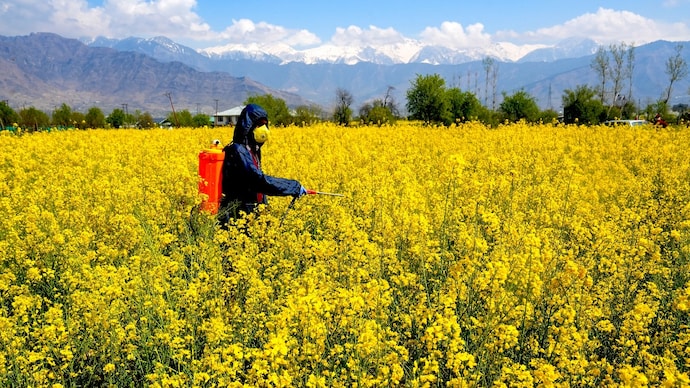
A French minister's decision to quit over pesticides harmful to bees has put the spotlight on India's own battle with hazardous agrochemicals. Despite growing concerns over their impact on pollinators, soil and human health, several toxic chemicals continue to be used in Indian agriculture.
The resignation of France's Minister for Ecological Transition, Monique Barbut, was more than just a political move. It was a principled stand against what she saw as the growing influence of agrochemical companies and their commercial interests. When pesticides such as acetamiprid and flupyradifurone – chemicals considered highly harmful to bees – were approved amid corporate pressure and political pushback, Barbut chose to stand by her commitment to environmental protection and sustainable agriculture rather than remain in office.
Her decision to walk away from power rather than endorse what she viewed as a damaging move spotlighted the belief that safeguarding the environment must take precedence over political interests and economic gains.
In stark contrast, India's present-day reality presents a disturbing paradox. An unethical nexus between sections of the government and agrochemical companies has flourished, sacrificing the country's fertile soil, voiceless creatures and public health for the sake of profits.
While some scientists, sustained by funding from agrochemical companies, continue to defend deadly chemicals as safe, several countries that take the health of their citizens seriously have imposed complete bans on them. Shielded by certain agricultural scientists and bureaucrats, these companies continue to fill their coffers by turning India's fertile land barren and injecting a slow poison into human lives.
A U-TURN IN THE FINAL ORDER
In 2020, the Ministry of Agriculture prepared a draft proposal to ban 27 highly hazardous pesticides. At the time, it appeared that the government was serious about protecting the health of its citizens. However, that intent was effectively overturned in the final order issued in 2023.
Faced with the commercial influence and profit-driven pressure of the agrochemical lobby, policymakers not only backed down but also allowed 24 of the hazardous chemicals to continue being used in agriculture. This was not merely an administrative U-turn; it was, in effect, a licence for environmental destruction. Chemicals that are being restricted or banned across the world because of their devastating impact on bees were given a free pass to continue wreaking havoc in Indian fields.
The alleged nexus between the government and agrochemical companies is even more alarming because bees are the lifeblood of the entire agricultural ecosystem. Through pollination, they give crops new life, enabling them to bear fruit and produce seeds.
Today, the situation has become so serious that it calls for a "Save the Farms" campaign. If this nexus continues to peddle poisonous chemicals unchecked, India is bound to face a severe food security crisis in the years ahead, because without these tiny bees, more than half of the country's crops will never produce grain.
WARNINGS FROM GREAT MINDS
Some of the world's greatest thinkers and scientists have long warned that human existence would be impossible without bees. Physicist Albert Einstein is widely quoted as saying: "If bees disappeared from the face of the Earth, humans would have only four years left to live. No bees, no pollination; no pollination, no plants; no plants, no animals; and no animals, no humans."
Similarly, renowned naturalist David Attenborough said: "If bees were to disappear tomorrow, our entire food chain and economy would collapse like a house of cards. They are the primary engine that keeps this planet alive."
Unfortunately, no such seriousness is visible in India on this issue. Agrochemical companies argue that food security would be threatened without pesticides, but they never explain what the consequences will be if bees continue to die.
EARTHWORMS: THE ENGINEERS OF THE SOIL
The poison unleashed by agrochemical companies has not only killed bees but has also wiped out earthworms – the farmer's most faithful ally, working tirelessly beneath the soil day and night.
Earthworms consume and turn over the soil, allowing oxygen to penetrate deeper and making it more fertile. However, when pesticides such as chlorpyrifos and carbofuran are sprayed indiscriminately on fields, these chemicals seep into the soil along with water.
The toxic chemicals enter the earthworms' bodies through their delicate skin, paralysing their nervous system, destroying their reproductive capacity and ultimately causing them to suffocate to death beneath the ground. Soil that should have been teeming with millions of earthworms has now been rendered lifeless and hollow by chemical companies.
BEES: THE REAL PROVIDERS OF FOOD
We often believe that farmers alone produce our food, but the truth is that without bees, more than half of the world's crops would never bear fruit or produce grain. Major Indian crops such as mustard, sunflower, apple, mango, guava, pulses and cotton depend heavily on bee pollination.
According to scientific data, the presence of bees in mustard fields can increase yields by 25 to 40 per cent. Nearly one-third of the vitamins and minerals consumed by humans come from fruits and vegetables that rely on bee pollination.
PESTICIDES THAT THREATEN BEES' EXISTENCE
Following the policy reversal by the Union Agriculture Ministry in 2023, the 24 chemicals that were exempted from the proposed ban include several pesticides classified as highly toxic in documents maintained by the Central Insecticides Board and Registration Committee (CIBRC) and PAN India records.
Details of some of the major pesticides considered harmful to bees are as follows:
ACEPHATE: Acephate blocks the neuro-enzymes in a bee's brain. Soon after exposure, the bee's wings and legs begin to twitch uncontrollably, eventually leading to paralysis and death.
CHLORPYRIFOS: As sunlight falls on it, chlorpyrifos releases toxic compounds in fields. When this poison enters the respiratory system of flying bees, they suffocate and die in the fields. Under the 2023 order, restrictions on chlorpyrifos were limited to certain crops such as fruits (ber and citrus) and tobacco, while its use continues to be permitted on other crops.
It is also considered a major contributor to the killing of earthworms beneath the soil.
MALATHION: When malathion enters a bee's body, enzymes convert it into malaoxon, a compound that is far more toxic. The chemical is considered significantly more harmful than the original compound. When bees come into contact with airborne particles of malathion, they can collapse and fall to the ground.
The government has imposed partial restrictions on its use in crops such as tomatoes, apples and mangoes, but its use continues in cotton cultivation and mosquito-control spraying.
CARBOFURAN: Carbofuran is an extremely hazardous pesticide that carries a red triangle warning label. It affects earthworms living beneath the soil and can disrupt the central nervous system of bees almost immediately after exposure.
Under the 2023 order, only 3 per cent CG formulation of carbofuran was approved, which is among the most widely sold formulations in Indian markets.
DIMETHOATE: Dimethoate damages the part of a bee's brain responsible for navigation using the position of the sun. Under its influence, bees lose their ability to find their way back to their hives and die outside, leaving the entire colony affected.
THIODICARB: When bees consume nectar from crops treated with thiodicarb, the chemical damages their digestive system from within. As a result, they die in the fields before they can return to their hives.
QUINALPHOS: This chemical penetrates the outer body layer of bees and disrupts their nervous system. It continues to be widely sold for use on paddy and oilseed crops.
DELTAMETHRIN: Deltamethrin is a synthetic pyrethroid chemical that sends electrical-like signals through the nervous system. After exposure, bees suffer from extreme overstimulation, begin to lose control of their bodily functions and eventually die due to dehydration.
MANCOZEB: Mancozeb fungicides were included in the 2020 list of chemicals proposed for restriction. When sprayed along with other pesticides, they weaken the immune systems of earthworms and bees, leaving them vulnerable to even minor infections and causing mass deaths.
THE COST OF CHEMICAL GREED
As long as government systems continue to give in to the unchecked pursuit of profits by chemical companies, the health of our soil, ecosystems and food systems will continue to deteriorate. The poison of a slow and silent crisis will eventually find its way to our plates.
This policy insensitivity is not merely a government decision or a regulatory U-turn. It is, according to critics, a ruthless assault on the tiny, innocent and most loyal bees that work tirelessly to bring life to our crops, even while sustaining themselves on limited resources.
When these tiny wings fall silent and our fields lose their natural balance, the consequences will extend far beyond declining bee populations. The silence of empty hives could one day echo through human settlements in the form of food shortages and insecurity.
This pursuit of chemical profits is pushing future generations towards a cycle of endless hunger and famine – a cost that our children may have to pay with their lives. History will never forgive this greed.
The resignation of France's Minister for Ecological Transition, Monique Barbut, was more than just a political move. It was a principled stand against what she saw as the growing influence of agrochemical companies and their commercial interests. When pesticides such as acetamiprid and flupyradifurone – chemicals considered highly harmful to bees – were approved amid corporate pressure and political pushback, Barbut chose to stand by her commitment to environmental protection and sustainable agriculture rather than remain in office.
Her decision to walk away from power rather than endorse what she viewed as a damaging move spotlighted the belief that safeguarding the environment must take precedence over political interests and economic gains.
In stark contrast, India's present-day reality presents a disturbing paradox. An unethical nexus between sections of the government and agrochemical companies has flourished, sacrificing the country's fertile soil, voiceless creatures and public health for the sake of profits.
While some scientists, sustained by funding from agrochemical companies, continue to defend deadly chemicals as safe, several countries that take the health of their citizens seriously have imposed complete bans on them. Shielded by certain agricultural scientists and bureaucrats, these companies continue to fill their coffers by turning India's fertile land barren and injecting a slow poison into human lives.
A U-TURN IN THE FINAL ORDER
In 2020, the Ministry of Agriculture prepared a draft proposal to ban 27 highly hazardous pesticides. At the time, it appeared that the government was serious about protecting the health of its citizens. However, that intent was effectively overturned in the final order issued in 2023.
Faced with the commercial influence and profit-driven pressure of the agrochemical lobby, policymakers not only backed down but also allowed 24 of the hazardous chemicals to continue being used in agriculture. This was not merely an administrative U-turn; it was, in effect, a licence for environmental destruction. Chemicals that are being restricted or banned across the world because of their devastating impact on bees were given a free pass to continue wreaking havoc in Indian fields.
The alleged nexus between the government and agrochemical companies is even more alarming because bees are the lifeblood of the entire agricultural ecosystem. Through pollination, they give crops new life, enabling them to bear fruit and produce seeds.
Today, the situation has become so serious that it calls for a "Save the Farms" campaign. If this nexus continues to peddle poisonous chemicals unchecked, India is bound to face a severe food security crisis in the years ahead, because without these tiny bees, more than half of the country's crops will never produce grain.
WARNINGS FROM GREAT MINDS
Some of the world's greatest thinkers and scientists have long warned that human existence would be impossible without bees. Physicist Albert Einstein is widely quoted as saying: "If bees disappeared from the face of the Earth, humans would have only four years left to live. No bees, no pollination; no pollination, no plants; no plants, no animals; and no animals, no humans."
Similarly, renowned naturalist David Attenborough said: "If bees were to disappear tomorrow, our entire food chain and economy would collapse like a house of cards. They are the primary engine that keeps this planet alive."
Unfortunately, no such seriousness is visible in India on this issue. Agrochemical companies argue that food security would be threatened without pesticides, but they never explain what the consequences will be if bees continue to die.
EARTHWORMS: THE ENGINEERS OF THE SOIL
The poison unleashed by agrochemical companies has not only killed bees but has also wiped out earthworms – the farmer's most faithful ally, working tirelessly beneath the soil day and night.
Earthworms consume and turn over the soil, allowing oxygen to penetrate deeper and making it more fertile. However, when pesticides such as chlorpyrifos and carbofuran are sprayed indiscriminately on fields, these chemicals seep into the soil along with water.
The toxic chemicals enter the earthworms' bodies through their delicate skin, paralysing their nervous system, destroying their reproductive capacity and ultimately causing them to suffocate to death beneath the ground. Soil that should have been teeming with millions of earthworms has now been rendered lifeless and hollow by chemical companies.
BEES: THE REAL PROVIDERS OF FOOD
We often believe that farmers alone produce our food, but the truth is that without bees, more than half of the world's crops would never bear fruit or produce grain. Major Indian crops such as mustard, sunflower, apple, mango, guava, pulses and cotton depend heavily on bee pollination.
According to scientific data, the presence of bees in mustard fields can increase yields by 25 to 40 per cent. Nearly one-third of the vitamins and minerals consumed by humans come from fruits and vegetables that rely on bee pollination.
PESTICIDES THAT THREATEN BEES' EXISTENCE
Following the policy reversal by the Union Agriculture Ministry in 2023, the 24 chemicals that were exempted from the proposed ban include several pesticides classified as highly toxic in documents maintained by the Central Insecticides Board and Registration Committee (CIBRC) and PAN India records.
Details of some of the major pesticides considered harmful to bees are as follows:
ACEPHATE: Acephate blocks the neuro-enzymes in a bee's brain. Soon after exposure, the bee's wings and legs begin to twitch uncontrollably, eventually leading to paralysis and death.
CHLORPYRIFOS: As sunlight falls on it, chlorpyrifos releases toxic compounds in fields. When this poison enters the respiratory system of flying bees, they suffocate and die in the fields. Under the 2023 order, restrictions on chlorpyrifos were limited to certain crops such as fruits (ber and citrus) and tobacco, while its use continues to be permitted on other crops.
It is also considered a major contributor to the killing of earthworms beneath the soil.
MALATHION: When malathion enters a bee's body, enzymes convert it into malaoxon, a compound that is far more toxic. The chemical is considered significantly more harmful than the original compound. When bees come into contact with airborne particles of malathion, they can collapse and fall to the ground.
The government has imposed partial restrictions on its use in crops such as tomatoes, apples and mangoes, but its use continues in cotton cultivation and mosquito-control spraying.
CARBOFURAN: Carbofuran is an extremely hazardous pesticide that carries a red triangle warning label. It affects earthworms living beneath the soil and can disrupt the central nervous system of bees almost immediately after exposure.
Under the 2023 order, only 3 per cent CG formulation of carbofuran was approved, which is among the most widely sold formulations in Indian markets.
DIMETHOATE: Dimethoate damages the part of a bee's brain responsible for navigation using the position of the sun. Under its influence, bees lose their ability to find their way back to their hives and die outside, leaving the entire colony affected.
THIODICARB: When bees consume nectar from crops treated with thiodicarb, the chemical damages their digestive system from within. As a result, they die in the fields before they can return to their hives.
QUINALPHOS: This chemical penetrates the outer body layer of bees and disrupts their nervous system. It continues to be widely sold for use on paddy and oilseed crops.
DELTAMETHRIN: Deltamethrin is a synthetic pyrethroid chemical that sends electrical-like signals through the nervous system. After exposure, bees suffer from extreme overstimulation, begin to lose control of their bodily functions and eventually die due to dehydration.
MANCOZEB: Mancozeb fungicides were included in the 2020 list of chemicals proposed for restriction. When sprayed along with other pesticides, they weaken the immune systems of earthworms and bees, leaving them vulnerable to even minor infections and causing mass deaths.
THE COST OF CHEMICAL GREED
As long as government systems continue to give in to the unchecked pursuit of profits by chemical companies, the health of our soil, ecosystems and food systems will continue to deteriorate. The poison of a slow and silent crisis will eventually find its way to our plates.
This policy insensitivity is not merely a government decision or a regulatory U-turn. It is, according to critics, a ruthless assault on the tiny, innocent and most loyal bees that work tirelessly to bring life to our crops, even while sustaining themselves on limited resources.
When these tiny wings fall silent and our fields lose their natural balance, the consequences will extend far beyond declining bee populations. The silence of empty hives could one day echo through human settlements in the form of food shortages and insecurity.
This pursuit of chemical profits is pushing future generations towards a cycle of endless hunger and famine – a cost that our children may have to pay with their lives. History will never forgive this greed.
The resignation of France's Minister for Ecological Transition, Monique Barbut, was more than just a political move. It was a principled stand against what she saw as the growing influence of agrochemical companies and their commercial interests. When pesticides such as acetamiprid and flupyradifurone – chemicals considered highly harmful to bees – were approved amid corporate pressure and political pushback, Barbut chose to stand by her commitment to environmental protection and sustainable agriculture rather than remain in office.
Her decision to walk away from power rather than endorse what she viewed as a damaging move spotlighted the belief that safeguarding the environment must take precedence over political interests and economic gains.
In stark contrast, India's present-day reality presents a disturbing paradox. An unethical nexus between sections of the government and agrochemical companies has flourished, sacrificing the country's fertile soil, voiceless creatures and public health for the sake of profits.
While some scientists, sustained by funding from agrochemical companies, continue to defend deadly chemicals as safe, several countries that take the health of their citizens seriously have imposed complete bans on them. Shielded by certain agricultural scientists and bureaucrats, these companies continue to fill their coffers by turning India's fertile land barren and injecting a slow poison into human lives.
A U-TURN IN THE FINAL ORDER
In 2020, the Ministry of Agriculture prepared a draft proposal to ban 27 highly hazardous pesticides. At the time, it appeared that the government was serious about protecting the health of its citizens. However, that intent was effectively overturned in the final order issued in 2023.
Faced with the commercial influence and profit-driven pressure of the agrochemical lobby, policymakers not only backed down but also allowed 24 of the hazardous chemicals to continue being used in agriculture. This was not merely an administrative U-turn; it was, in effect, a licence for environmental destruction. Chemicals that are being restricted or banned across the world because of their devastating impact on bees were given a free pass to continue wreaking havoc in Indian fields.
The alleged nexus between the government and agrochemical companies is even more alarming because bees are the lifeblood of the entire agricultural ecosystem. Through pollination, they give crops new life, enabling them to bear fruit and produce seeds.
Today, the situation has become so serious that it calls for a "Save the Farms" campaign. If this nexus continues to peddle poisonous chemicals unchecked, India is bound to face a severe food security crisis in the years ahead, because without these tiny bees, more than half of the country's crops will never produce grain.
WARNINGS FROM GREAT MINDS
Some of the world's greatest thinkers and scientists have long warned that human existence would be impossible without bees. Physicist Albert Einstein is widely quoted as saying: "If bees disappeared from the face of the Earth, humans would have only four years left to live. No bees, no pollination; no pollination, no plants; no plants, no animals; and no animals, no humans."
Similarly, renowned naturalist David Attenborough said: "If bees were to disappear tomorrow, our entire food chain and economy would collapse like a house of cards. They are the primary engine that keeps this planet alive."
Unfortunately, no such seriousness is visible in India on this issue. Agrochemical companies argue that food security would be threatened without pesticides, but they never explain what the consequences will be if bees continue to die.
EARTHWORMS: THE ENGINEERS OF THE SOIL
The poison unleashed by agrochemical companies has not only killed bees but has also wiped out earthworms – the farmer's most faithful ally, working tirelessly beneath the soil day and night.
Earthworms consume and turn over the soil, allowing oxygen to penetrate deeper and making it more fertile. However, when pesticides such as chlorpyrifos and carbofuran are sprayed indiscriminately on fields, these chemicals seep into the soil along with water.
The toxic chemicals enter the earthworms' bodies through their delicate skin, paralysing their nervous system, destroying their reproductive capacity and ultimately causing them to suffocate to death beneath the ground. Soil that should have been teeming with millions of earthworms has now been rendered lifeless and hollow by chemical companies.
BEES: THE REAL PROVIDERS OF FOOD
We often believe that farmers alone produce our food, but the truth is that without bees, more than half of the world's crops would never bear fruit or produce grain. Major Indian crops such as mustard, sunflower, apple, mango, guava, pulses and cotton depend heavily on bee pollination.
According to scientific data, the presence of bees in mustard fields can increase yields by 25 to 40 per cent. Nearly one-third of the vitamins and minerals consumed by humans come from fruits and vegetables that rely on bee pollination.
PESTICIDES THAT THREATEN BEES' EXISTENCE
Following the policy reversal by the Union Agriculture Ministry in 2023, the 24 chemicals that were exempted from the proposed ban include several pesticides classified as highly toxic in documents maintained by the Central Insecticides Board and Registration Committee (CIBRC) and PAN India records.
Details of some of the major pesticides considered harmful to bees are as follows:
ACEPHATE: Acephate blocks the neuro-enzymes in a bee's brain. Soon after exposure, the bee's wings and legs begin to twitch uncontrollably, eventually leading to paralysis and death.
CHLORPYRIFOS: As sunlight falls on it, chlorpyrifos releases toxic compounds in fields. When this poison enters the respiratory system of flying bees, they suffocate and die in the fields. Under the 2023 order, restrictions on chlorpyrifos were limited to certain crops such as fruits (ber and citrus) and tobacco, while its use continues to be permitted on other crops.
It is also considered a major contributor to the killing of earthworms beneath the soil.
MALATHION: When malathion enters a bee's body, enzymes convert it into malaoxon, a compound that is far more toxic. The chemical is considered significantly more harmful than the original compound. When bees come into contact with airborne particles of malathion, they can collapse and fall to the ground.
The government has imposed partial restrictions on its use in crops such as tomatoes, apples and mangoes, but its use continues in cotton cultivation and mosquito-control spraying.
CARBOFURAN: Carbofuran is an extremely hazardous pesticide that carries a red triangle warning label. It affects earthworms living beneath the soil and can disrupt the central nervous system of bees almost immediately after exposure.
Under the 2023 order, only 3 per cent CG formulation of carbofuran was approved, which is among the most widely sold formulations in Indian markets.
DIMETHOATE: Dimethoate damages the part of a bee's brain responsible for navigation using the position of the sun. Under its influence, bees lose their ability to find their way back to their hives and die outside, leaving the entire colony affected.
THIODICARB: When bees consume nectar from crops treated with thiodicarb, the chemical damages their digestive system from within. As a result, they die in the fields before they can return to their hives.
QUINALPHOS: This chemical penetrates the outer body layer of bees and disrupts their nervous system. It continues to be widely sold for use on paddy and oilseed crops.
DELTAMETHRIN: Deltamethrin is a synthetic pyrethroid chemical that sends electrical-like signals through the nervous system. After exposure, bees suffer from extreme overstimulation, begin to lose control of their bodily functions and eventually die due to dehydration.
MANCOZEB: Mancozeb fungicides were included in the 2020 list of chemicals proposed for restriction. When sprayed along with other pesticides, they weaken the immune systems of earthworms and bees, leaving them vulnerable to even minor infections and causing mass deaths.
THE COST OF CHEMICAL GREED
As long as government systems continue to give in to the unchecked pursuit of profits by chemical companies, the health of our soil, ecosystems and food systems will continue to deteriorate. The poison of a slow and silent crisis will eventually find its way to our plates.
This policy insensitivity is not merely a government decision or a regulatory U-turn. It is, according to critics, a ruthless assault on the tiny, innocent and most loyal bees that work tirelessly to bring life to our crops, even while sustaining themselves on limited resources.
When these tiny wings fall silent and our fields lose their natural balance, the consequences will extend far beyond declining bee populations. The silence of empty hives could one day echo through human settlements in the form of food shortages and insecurity.
This pursuit of chemical profits is pushing future generations towards a cycle of endless hunger and famine – a cost that our children may have to pay with their lives. History will never forgive this greed.

