India to get fifth S-400 system by year-end, full deployment by February 2027
The development comes months after the fourth S-400 system arrived in India in May this year. The system has been deployed close to Assam, strengthening the country's air defence network in the northeastern sector.
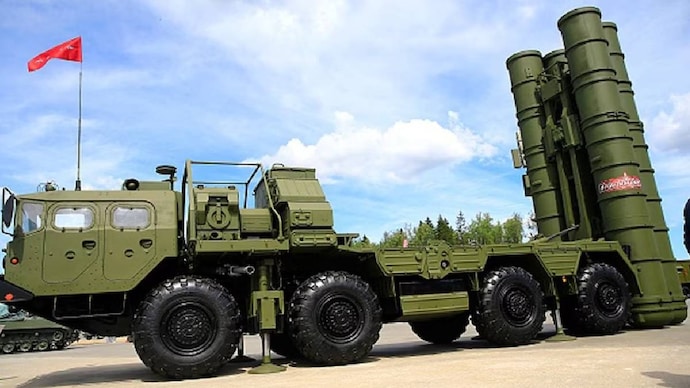
India is set to complete the first phase of its acquisition of the Russian S-400 air defence system, with the fifth and final system expected to begin arriving by the end of this year. The shipment will be dispatched in multiple parts, and the entire system is expected to be assembled and made operational along India's western border by February 2027, defence officials told India Today.
The development comes months after the fourth S-400 system arrived in India in May this year. The system has been deployed close to Assam, strengthening the country's air defence network in the northeastern sector.
The arrival of the fifth system will complete India's original order of five S-400 squadrons, signed with Russia in 2018. India is also looking to expand its long-range air defence capabilities, with work on the next phase of procurement expected to follow.
India Today had earlier reported in April that ships carrying components of the fourth S-400 system had set sail for India. The shipment reached the country in May, following which the system was assembled and deployed.
S-400 SYSTEMS GAIN SIGNIFICANCE AFTER OPERATION SINDOOR
The S-400 systems have assumed greater significance following Operation Sindoor. During the operation, India's air defence network, which included the Russian-origin S-400 and indigenous systems, played a crucial role in countering Pakistani aerial threats, including missiles and drones.
India signed a deal worth approximately Rs 35,000 crore with Russia in 2018 for five S-400 squadrons. Of the first three systems received, one was deployed to protect the strategically important Siliguri Corridor, which connects the northeastern states with the rest of the country.
Another system was positioned in the Pathankot region to strengthen air defence coverage over Jammu and Kashmir and Punjab. The third was deployed along the western front to protect strategic locations in Rajasthan and Gujarat.
The fourth system's deployment close to Assam adds another layer to India's air defence network in the northeast. The region is strategically sensitive because of its proximity to China.
Each S-400 squadron comprises launchers, radar units, command and control centres, and support vehicles. The system can track aerial threats at distances of up to 600 km and engage targets at ranges of up to 400 km, depending on the missile used.
It is designed to intercept a range of threats, including fighter aircraft, cruise missiles, ballistic missiles and drones.
INDIA LOOKS AT NEXT PHASE OF S-400 PROCUREMENT
The arrival of the fifth system will fulfil India's original S-400 contract with Russia. The country is now looking to expand its long-range air defence capabilities as it prepares to counter evolving aerial threats.
The Defence Acquisition Council, chaired by Defence Minister Rajnath Singh, approved proposals in March 2026 for the procurement of additional S-400 systems. The proposals were part of a larger defence procurement package worth approximately Rs 2.38 lakh crore.
The proposed acquisition is aimed at further strengthening India's air defence capabilities against hostile aircraft, missiles and drones, particularly along its sensitive borders with Pakistan and China.

