Govt likely to waive road tax for trucks, buses switching to clean fuel in NCR
The Centre's 'Parivartan' initiative aims to speed up replacement of polluting commercial vehicles by encouraging Delhi-NCR truck and bus owners to shift from pre-BS VI vehicles to BS-VI-compliant or electric alternatives.
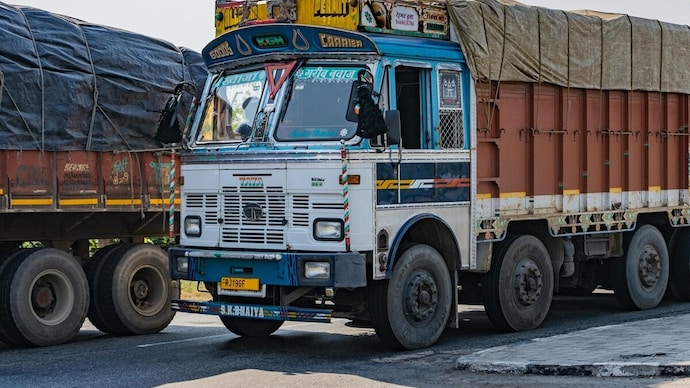
In a major push to reduce vehicular pollution across the National Capital Region (NCR), the Centre expects Delhi, Haryana, Rajasthan and Uttar Pradesh to roll out a complete road tax waiver for buyers replacing ageing trucks and buses with cleaner alternatives under the newly approved vehicle scrappage programme, sources told India Today.
Delhi and Haryana have already approved the proposal, while Rajasthan is expected to announce its decision soon and Uttar Pradesh is likely to join later, they added.
The proposed exemption is part of the Centre’s ‘Parivartan’ initiative, aimed at accelerating the replacement of older, high-emission commercial vehicles with cleaner technologies.
The scheme, approved by the Union Cabinet, is designed to encourage owners of trucks and buses registered in Delhi-NCR to move away from pre-BS VI vehicles and adopt BS-VI-compliant or electric alternatives.
Sources said that discussions with the NCR states had been completed and notifications were expected in the coming days or weeks. The road tax waiver is likely to be rolled out within 15 days.
The benefit will apply to owners who scrap older commercial vehicles and purchase new clean-fuel trucks or buses.
Vehicle manufacturers have also agreed to support the transition by offering around 8 per cent discounts on the ex-showroom price of eligible vehicles.
Officials underlined that the government’s strategy extends beyond a single technology pathway. "We don’t want to look at just one solution. A bouquet of solutions is the need of the hour, and the customer should ultimately decide," he said, adding that the government preferred incentives over punitive measures to encourage cleaner mobility.
WHAT IS THE SCHEME ABOUT?
- The two-year scheme has a total outlay of Rs 9,585 crore, including Rs 5,041 crore from the Centre and an estimated Rs 1,601 crore in tax concessions by participating states.
- The initiative is expected to benefit nearly 2.07 lakh vehicle owners across Delhi-NCR, including around 1.91 lakh trucks and more than 16,000 buses.
- BS-III and older vehicles must be scrapped through authorised vehicle scrapping facilities.
- BS-IV vehicles may either be scrapped or sold outside NCR in non-NCAP areas.
- Owners must purchase and register cleaner replacement vehicles within NCR to avail benefits.
- In Delhi, light goods vehicles purchased under the scheme must be electric.
- Buses purchased under the scheme in Delhi will only be permitted in BS-VI CNG or electric variants.
- Central incentives include a 5 per cent interest subvention on loans for five years.
- Additional benefits include monthly fuel vouchers, EV-linked incentives and digital processing through an integrated portal.
- State governments will waive registration fees, provide motor vehicle tax concessions and clear pending liabilities on old vehicles participating in the scheme.
DELHI’S LATEST EV POLICY
The latest move follows a series of recent measures announced by Delhi and the Centre to tackle worsening air pollution in north India.
Delhi recently approved a new EV policy that exempts electric cars priced up to Rs 30 lakh from road tax and registration fees, offers scrappage incentives for older vehicles and phases out registration of new petrol and CNG-powered two-wheelers in favour of electric models from 2028.
The city has also unveiled a proactive winter air quality framework featuring higher parking charges, restrictions on non-BS VI commercial vehicles, mandatory pollution certificates for fuel purchases and staggered office timings during peak pollution months.
Together, these measures signal a broader policy shift towards cleaner transport, accelerated fleet modernisation and stronger coordination between the Centre and NCR states as governments seek to address one of the region’s most persistent public health challenges.
In a major push to reduce vehicular pollution across the National Capital Region (NCR), the Centre expects Delhi, Haryana, Rajasthan and Uttar Pradesh to roll out a complete road tax waiver for buyers replacing ageing trucks and buses with cleaner alternatives under the newly approved vehicle scrappage programme, sources told India Today.
Delhi and Haryana have already approved the proposal, while Rajasthan is expected to announce its decision soon and Uttar Pradesh is likely to join later, they added.
The proposed exemption is part of the Centre’s ‘Parivartan’ initiative, aimed at accelerating the replacement of older, high-emission commercial vehicles with cleaner technologies.
The scheme, approved by the Union Cabinet, is designed to encourage owners of trucks and buses registered in Delhi-NCR to move away from pre-BS VI vehicles and adopt BS-VI-compliant or electric alternatives.
Sources said that discussions with the NCR states had been completed and notifications were expected in the coming days or weeks. The road tax waiver is likely to be rolled out within 15 days.
The benefit will apply to owners who scrap older commercial vehicles and purchase new clean-fuel trucks or buses.
Vehicle manufacturers have also agreed to support the transition by offering around 8 per cent discounts on the ex-showroom price of eligible vehicles.
Officials underlined that the government’s strategy extends beyond a single technology pathway. "We don’t want to look at just one solution. A bouquet of solutions is the need of the hour, and the customer should ultimately decide," he said, adding that the government preferred incentives over punitive measures to encourage cleaner mobility.
WHAT IS THE SCHEME ABOUT?
- The two-year scheme has a total outlay of Rs 9,585 crore, including Rs 5,041 crore from the Centre and an estimated Rs 1,601 crore in tax concessions by participating states.
- The initiative is expected to benefit nearly 2.07 lakh vehicle owners across Delhi-NCR, including around 1.91 lakh trucks and more than 16,000 buses.
- BS-III and older vehicles must be scrapped through authorised vehicle scrapping facilities.
- BS-IV vehicles may either be scrapped or sold outside NCR in non-NCAP areas.
- Owners must purchase and register cleaner replacement vehicles within NCR to avail benefits.
- In Delhi, light goods vehicles purchased under the scheme must be electric.
- Buses purchased under the scheme in Delhi will only be permitted in BS-VI CNG or electric variants.
- Central incentives include a 5 per cent interest subvention on loans for five years.
- Additional benefits include monthly fuel vouchers, EV-linked incentives and digital processing through an integrated portal.
- State governments will waive registration fees, provide motor vehicle tax concessions and clear pending liabilities on old vehicles participating in the scheme.
DELHI’S LATEST EV POLICY
The latest move follows a series of recent measures announced by Delhi and the Centre to tackle worsening air pollution in north India.
Delhi recently approved a new EV policy that exempts electric cars priced up to Rs 30 lakh from road tax and registration fees, offers scrappage incentives for older vehicles and phases out registration of new petrol and CNG-powered two-wheelers in favour of electric models from 2028.
The city has also unveiled a proactive winter air quality framework featuring higher parking charges, restrictions on non-BS VI commercial vehicles, mandatory pollution certificates for fuel purchases and staggered office timings during peak pollution months.
Together, these measures signal a broader policy shift towards cleaner transport, accelerated fleet modernisation and stronger coordination between the Centre and NCR states as governments seek to address one of the region’s most persistent public health challenges.

