Why Jantar Mantar will always belong to its beloved 'cockroaches'
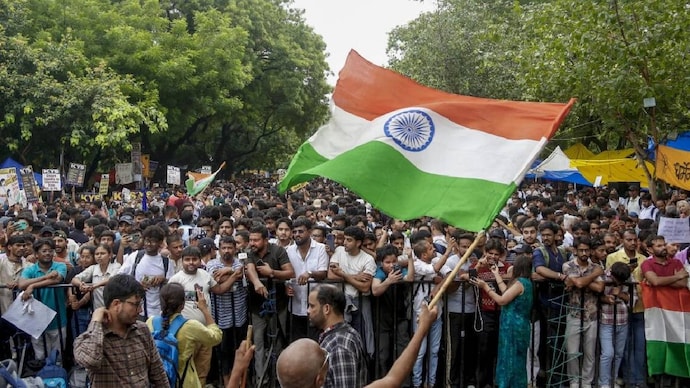
For a month, Jantar Mantar was more than a protest site. It became a home for thousands who arrived with anger, hope and stories of their own. From parents fighting for their children's future to students, workers and strangers united by a common cause, the CJP movement became a rare moment of collective resistance.
I'd always heard of post-vacation withdrawals. But this might be the first time an entire generation of the world's largest democracy is experiencing something we might call ‘post-protest withdrawals.’
For a month, Jantar Mantar stopped being just a stretch of road in the heart of Delhi. It became home. Home to students, parents, teachers, doctors, daily wage labourers, retired men, first-time protesters and, somewhere in the middle of it all, us journalists.
Every spare hour was spent running back to the protest site, chasing stories. Only to realise, very quickly, that the story was never the speeches from the stage. It was always the people standing beneath it.
The movement, started by the Cockroach Janta Party over the NEET paper leak, drew people from every corner of the country. In a nation where protests are so often boxed into regions, languages, castes or political affiliations, this one refused to fit into any of them.
There were faces from Kerala standing beside faces from Kashmir. Students from Bihar shared meals with families from Maharashtra. Strangers became familiar because they all carried the same grievance and the same hope.
Now, with the Cockroach Janta Party announcing the immediate withdrawal of the protest in what it called an act of good faith after one of the movement's principal demands, Union Education Minister Dharmendra Pradhan's resignation, was met, thousands are packing their bags and returning to lives they had temporarily put on hold.
The slogans have fallen silent. The tarpaulin sheets are being folded away. And an entire generation is trying to remember what normal feels like after spending weeks chanting slogans.
The crowd at Jantar Mantar was impossible to stereotype.
There were people who arrived in Delhi carrying nothing but a rucksack, no hotel bookings, no relatives to stay with, no certainty of how long they would last. There were also those who once dismissed the movement with the familiar, "Not my circus, not my monkeys," only to eventually find themselves pulled in, perhaps by conviction, perhaps by curiosity, perhaps even by FOMO. Somewhere between the committed and the hesitant, everyone became part of the same story.
One afternoon, an elderly man approached us while we were filming.
He struggled to unlock his phone. Even entering a four-digit PIN seemed unfamiliar to him. He held the device out and quietly asked if we could record a video on it.
My first instinct, admittedly, was the same as anyone else's at a protest crowded with influencers and content creators. I assumed he wanted to make content.
Instead, he wanted to send a message to his daughter.
He called her Gudiya. And Gudiya was his wallpaper.
He had travelled alone from a remote village in Uttar Pradesh, leaving her behind at home. He wanted strangers to help him record little video messages so she would know he was safe. And that he was fighting for a better education system that doesn’t let her down.
Not very far away stood another parent – a woman from Jamshedpur, who told us that travelling to Delhi was the first act of rebellion she had ever committed.
She had argued with her husband. She had fought with her in laws. She had never travelled outside her home by herself before.
Yet there she was, standing beneath the July sun, holding a placard.
There were school students, barely sixteen, spending months of saved pocket money not on themselves but on water bottles, biscuits and medicines for strangers protesting beside them.
There was a daily wage labourer who showed up every evening and stayed until dawn, quietly cleaning the protest grounds. Nobody paid him. Nobody asked him to do it. He simply believed that if people were fighting for something bigger than themselves, the least he could do was make sure they woke up to a clean space.
Perhaps my favourite memory came on 20 July, the day of the Chalo Sansad march.
By then, the government had deployed network jammers around parts of the protest site. For a generation accustomed to booking cabs, sending live locations and refreshing social media every few seconds, the loss of the internet became strangely disorienting.
Suddenly, everyone was on the same mission. Find signal. People shared autos with complete strangers.
I was trying to do exactly that when a man asked if he could squeeze into the auto with me. On any other day, in any other city, my answer would almost certainly have been no.
But these weren't ordinary days. People were scared. People were confused. Many were injured. Everyone was exhausted. Yet somehow, everyone trusted one another a little more than usual.
So I nodded. Neither of us had any idea where we wanted to be dropped off, the only instruction being "bhaiya, jahan internet aaye wahan chorh dijiye".
During the ride, he introduced himself. He was a jawan in the Indian Army. He had reached Delhi at five that morning after travelling from Rajasthan. He hadn't come for himself. He had come for his younger brother, who had died after the NEET paper leak in 2024 shattered years of preparation and hope.
The silence that followed his sentence felt heavier than any slogan I heard that month, as I found myself dumbfounded, at a loss for words. That is perhaps what will stay with me long after the protest itself has ended.
Because while parts of the internet dismissed Jantar Mantar as a Gen Z trend, a content creation hub or yet another inconvenience causing traffic jams, the people who stood there saw something entirely different.
For Gudiya's father, it was hope. For the woman who left home for the first time, it was freedom. For the labourer with the broom, it was dignity. For the soldier from Rajasthan, it was grief searching for justice. And for thousands of young Indians who had spent years believing that merit alone could change their lives, it was proof that they were not grieving alone.
Protests are often remembered through headlines. Through demands met or demands rejected. Through arrests, speeches and government statements. But standing at Jantar Mantar, I realised that history is rarely written by microphones.
Maybe this is what this generation will miss the most, the rare feeling of looking around a crowd of complete strangers and realising that, for a brief moment in time, everyone believed they could leave the country a little better than they had found it.
Growing up, I listened to my Baba’s stories from his days at JNU. Just another young Bengali boy, doing what many around him dismissed as a waste of time, protesting, organising, believing he could bring about change. As a child, those stories felt romantic, exciting.
Standing among Jantar Mantar's sea of protesters this past month, I finally understood them. I finally understood why he did it. Because sometimes, even when history refuses to remember your name, simply choosing to stand up together can become an act of hope in itself.
I'd always heard of post-vacation withdrawals. But this might be the first time an entire generation of the world's largest democracy is experiencing something we might call ‘post-protest withdrawals.’
For a month, Jantar Mantar stopped being just a stretch of road in the heart of Delhi. It became home. Home to students, parents, teachers, doctors, daily wage labourers, retired men, first-time protesters and, somewhere in the middle of it all, us journalists.
Every spare hour was spent running back to the protest site, chasing stories. Only to realise, very quickly, that the story was never the speeches from the stage. It was always the people standing beneath it.
The movement, started by the Cockroach Janta Party over the NEET paper leak, drew people from every corner of the country. In a nation where protests are so often boxed into regions, languages, castes or political affiliations, this one refused to fit into any of them.
There were faces from Kerala standing beside faces from Kashmir. Students from Bihar shared meals with families from Maharashtra. Strangers became familiar because they all carried the same grievance and the same hope.
Now, with the Cockroach Janta Party announcing the immediate withdrawal of the protest in what it called an act of good faith after one of the movement's principal demands, Union Education Minister Dharmendra Pradhan's resignation, was met, thousands are packing their bags and returning to lives they had temporarily put on hold.
The slogans have fallen silent. The tarpaulin sheets are being folded away. And an entire generation is trying to remember what normal feels like after spending weeks chanting slogans.
The crowd at Jantar Mantar was impossible to stereotype.
There were people who arrived in Delhi carrying nothing but a rucksack, no hotel bookings, no relatives to stay with, no certainty of how long they would last. There were also those who once dismissed the movement with the familiar, "Not my circus, not my monkeys," only to eventually find themselves pulled in, perhaps by conviction, perhaps by curiosity, perhaps even by FOMO. Somewhere between the committed and the hesitant, everyone became part of the same story.
One afternoon, an elderly man approached us while we were filming.
He struggled to unlock his phone. Even entering a four-digit PIN seemed unfamiliar to him. He held the device out and quietly asked if we could record a video on it.
My first instinct, admittedly, was the same as anyone else's at a protest crowded with influencers and content creators. I assumed he wanted to make content.
Instead, he wanted to send a message to his daughter.
He called her Gudiya. And Gudiya was his wallpaper.
He had travelled alone from a remote village in Uttar Pradesh, leaving her behind at home. He wanted strangers to help him record little video messages so she would know he was safe. And that he was fighting for a better education system that doesn’t let her down.
Not very far away stood another parent – a woman from Jamshedpur, who told us that travelling to Delhi was the first act of rebellion she had ever committed.
She had argued with her husband. She had fought with her in laws. She had never travelled outside her home by herself before.
Yet there she was, standing beneath the July sun, holding a placard.
There were school students, barely sixteen, spending months of saved pocket money not on themselves but on water bottles, biscuits and medicines for strangers protesting beside them.
There was a daily wage labourer who showed up every evening and stayed until dawn, quietly cleaning the protest grounds. Nobody paid him. Nobody asked him to do it. He simply believed that if people were fighting for something bigger than themselves, the least he could do was make sure they woke up to a clean space.
Perhaps my favourite memory came on 20 July, the day of the Chalo Sansad march.
By then, the government had deployed network jammers around parts of the protest site. For a generation accustomed to booking cabs, sending live locations and refreshing social media every few seconds, the loss of the internet became strangely disorienting.
Suddenly, everyone was on the same mission. Find signal. People shared autos with complete strangers.
I was trying to do exactly that when a man asked if he could squeeze into the auto with me. On any other day, in any other city, my answer would almost certainly have been no.
But these weren't ordinary days. People were scared. People were confused. Many were injured. Everyone was exhausted. Yet somehow, everyone trusted one another a little more than usual.
So I nodded. Neither of us had any idea where we wanted to be dropped off, the only instruction being "bhaiya, jahan internet aaye wahan chorh dijiye".
During the ride, he introduced himself. He was a jawan in the Indian Army. He had reached Delhi at five that morning after travelling from Rajasthan. He hadn't come for himself. He had come for his younger brother, who had died after the NEET paper leak in 2024 shattered years of preparation and hope.
The silence that followed his sentence felt heavier than any slogan I heard that month, as I found myself dumbfounded, at a loss for words. That is perhaps what will stay with me long after the protest itself has ended.
Because while parts of the internet dismissed Jantar Mantar as a Gen Z trend, a content creation hub or yet another inconvenience causing traffic jams, the people who stood there saw something entirely different.
For Gudiya's father, it was hope. For the woman who left home for the first time, it was freedom. For the labourer with the broom, it was dignity. For the soldier from Rajasthan, it was grief searching for justice. And for thousands of young Indians who had spent years believing that merit alone could change their lives, it was proof that they were not grieving alone.
Protests are often remembered through headlines. Through demands met or demands rejected. Through arrests, speeches and government statements. But standing at Jantar Mantar, I realised that history is rarely written by microphones.
Maybe this is what this generation will miss the most, the rare feeling of looking around a crowd of complete strangers and realising that, for a brief moment in time, everyone believed they could leave the country a little better than they had found it.
Growing up, I listened to my Baba’s stories from his days at JNU. Just another young Bengali boy, doing what many around him dismissed as a waste of time, protesting, organising, believing he could bring about change. As a child, those stories felt romantic, exciting.
Standing among Jantar Mantar's sea of protesters this past month, I finally understood them. I finally understood why he did it. Because sometimes, even when history refuses to remember your name, simply choosing to stand up together can become an act of hope in itself.
I'd always heard of post-vacation withdrawals. But this might be the first time an entire generation of the world's largest democracy is experiencing something we might call ‘post-protest withdrawals.’
For a month, Jantar Mantar stopped being just a stretch of road in the heart of Delhi. It became home. Home to students, parents, teachers, doctors, daily wage labourers, retired men, first-time protesters and, somewhere in the middle of it all, us journalists.
Every spare hour was spent running back to the protest site, chasing stories. Only to realise, very quickly, that the story was never the speeches from the stage. It was always the people standing beneath it.
The movement, started by the Cockroach Janta Party over the NEET paper leak, drew people from every corner of the country. In a nation where protests are so often boxed into regions, languages, castes or political affiliations, this one refused to fit into any of them.
There were faces from Kerala standing beside faces from Kashmir. Students from Bihar shared meals with families from Maharashtra. Strangers became familiar because they all carried the same grievance and the same hope.
Now, with the Cockroach Janta Party announcing the immediate withdrawal of the protest in what it called an act of good faith after one of the movement's principal demands, Union Education Minister Dharmendra Pradhan's resignation, was met, thousands are packing their bags and returning to lives they had temporarily put on hold.
The slogans have fallen silent. The tarpaulin sheets are being folded away. And an entire generation is trying to remember what normal feels like after spending weeks chanting slogans.
The crowd at Jantar Mantar was impossible to stereotype.
There were people who arrived in Delhi carrying nothing but a rucksack, no hotel bookings, no relatives to stay with, no certainty of how long they would last. There were also those who once dismissed the movement with the familiar, "Not my circus, not my monkeys," only to eventually find themselves pulled in, perhaps by conviction, perhaps by curiosity, perhaps even by FOMO. Somewhere between the committed and the hesitant, everyone became part of the same story.
One afternoon, an elderly man approached us while we were filming.
He struggled to unlock his phone. Even entering a four-digit PIN seemed unfamiliar to him. He held the device out and quietly asked if we could record a video on it.
My first instinct, admittedly, was the same as anyone else's at a protest crowded with influencers and content creators. I assumed he wanted to make content.
Instead, he wanted to send a message to his daughter.
He called her Gudiya. And Gudiya was his wallpaper.
He had travelled alone from a remote village in Uttar Pradesh, leaving her behind at home. He wanted strangers to help him record little video messages so she would know he was safe. And that he was fighting for a better education system that doesn’t let her down.
Not very far away stood another parent – a woman from Jamshedpur, who told us that travelling to Delhi was the first act of rebellion she had ever committed.
She had argued with her husband. She had fought with her in laws. She had never travelled outside her home by herself before.
Yet there she was, standing beneath the July sun, holding a placard.
There were school students, barely sixteen, spending months of saved pocket money not on themselves but on water bottles, biscuits and medicines for strangers protesting beside them.
There was a daily wage labourer who showed up every evening and stayed until dawn, quietly cleaning the protest grounds. Nobody paid him. Nobody asked him to do it. He simply believed that if people were fighting for something bigger than themselves, the least he could do was make sure they woke up to a clean space.
Perhaps my favourite memory came on 20 July, the day of the Chalo Sansad march.
By then, the government had deployed network jammers around parts of the protest site. For a generation accustomed to booking cabs, sending live locations and refreshing social media every few seconds, the loss of the internet became strangely disorienting.
Suddenly, everyone was on the same mission. Find signal. People shared autos with complete strangers.
I was trying to do exactly that when a man asked if he could squeeze into the auto with me. On any other day, in any other city, my answer would almost certainly have been no.
But these weren't ordinary days. People were scared. People were confused. Many were injured. Everyone was exhausted. Yet somehow, everyone trusted one another a little more than usual.
So I nodded. Neither of us had any idea where we wanted to be dropped off, the only instruction being "bhaiya, jahan internet aaye wahan chorh dijiye".
During the ride, he introduced himself. He was a jawan in the Indian Army. He had reached Delhi at five that morning after travelling from Rajasthan. He hadn't come for himself. He had come for his younger brother, who had died after the NEET paper leak in 2024 shattered years of preparation and hope.
The silence that followed his sentence felt heavier than any slogan I heard that month, as I found myself dumbfounded, at a loss for words. That is perhaps what will stay with me long after the protest itself has ended.
Because while parts of the internet dismissed Jantar Mantar as a Gen Z trend, a content creation hub or yet another inconvenience causing traffic jams, the people who stood there saw something entirely different.
For Gudiya's father, it was hope. For the woman who left home for the first time, it was freedom. For the labourer with the broom, it was dignity. For the soldier from Rajasthan, it was grief searching for justice. And for thousands of young Indians who had spent years believing that merit alone could change their lives, it was proof that they were not grieving alone.
Protests are often remembered through headlines. Through demands met or demands rejected. Through arrests, speeches and government statements. But standing at Jantar Mantar, I realised that history is rarely written by microphones.
Maybe this is what this generation will miss the most, the rare feeling of looking around a crowd of complete strangers and realising that, for a brief moment in time, everyone believed they could leave the country a little better than they had found it.
Growing up, I listened to my Baba’s stories from his days at JNU. Just another young Bengali boy, doing what many around him dismissed as a waste of time, protesting, organising, believing he could bring about change. As a child, those stories felt romantic, exciting.
Standing among Jantar Mantar's sea of protesters this past month, I finally understood them. I finally understood why he did it. Because sometimes, even when history refuses to remember your name, simply choosing to stand up together can become an act of hope in itself.

