Why India still allows hazardous pesticides despite safer alternatives?
Government records showed safe alternatives for 27 pesticides, yet only three were fully banned in 2023. Cost pressures, industry lobbying and weak enforcement have kept the rest in use across Indian farms.
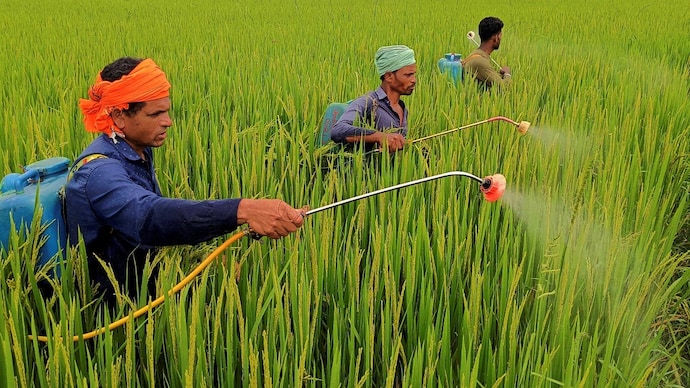
Every morning, millions of Indian households prepare meals using fresh vegetables, fruits and grains, rarely suspecting that some of the food on their plates may carry residues of pesticides linked to cancer, developmental disorders and reproductive harm. A review of official government documents suggests that many hazardous agrochemicals continue to be used in Indian agriculture despite the availability of safer alternatives.
The issue traces back to the Centre's Draft Pesticides Prohibition Order, 2020, issued by the Ministry of Agriculture. The draft was based on recommendations of scientific experts, who concluded that 27 widely used pesticides had safer chemical or biological alternatives available in the Indian market. The committee warned that several of these chemicals were associated with serious health risks, including cancer, foetal abnormalities and neurological damage in children.
However, when the government issued its final decision in 2023, only three pesticides -- Dicofol, Dinocap and Methomyl -- were completely banned. The remaining 24 chemicals were allowed to remain in the market, with limited restrictions on their use rather than an outright prohibition.
The decision has reignited questions over why older pesticides continue to be permitted despite official acknowledgement of safer substitutes.
CHEAP CHEMICALS DOMINATE THE MARKET
Industry experts say economics lies at the heart of the issue.
Most of the pesticides identified in the draft order were developed 50 to 100 years ago and their patents have long expired. As generic molecules, they can be manufactured cheaply by multiple companies. Spraying these pesticides typically costs Rs 150 to Rs 250 per acre.
By contrast, newer biological pesticides or safer chemical alternatives often remain under patent or involve more expensive manufacturing processes, pushing application costs to Rs 800 to Rs 1,500 per acre.
With more than 85 per cent of India's farmers classified as small or marginal landholders, many choose the cheaper products to reduce cultivation costs.
The report raises the question of whether the government should subsidise safer alternatives while phasing out hazardous chemicals, instead of allowing older pesticides to dominate the market.
INDUSTRY PRESSURE AND ECONOMIC CONCERNS
India is among the world's largest producers and exporters of pesticides. According to the analysis, nearly 75 per cent of the country's pesticide market depends on older generic chemicals.
When the government proposed banning all 27 pesticides in 2020, industry bodies warned that such a move would force hundreds of manufacturing units to shut down, jeopardise investments worth thousands of crores and increase dependence on costlier imported products.
According to the report, policymakers ultimately opted for a compromise, balancing economic considerations against scientific recommendations.
CHEMICALS STILL WIDELY USED
The government documents reviewed highlight several pesticides that remain in use despite restrictions or bans elsewhere.
- Monocrotophos, classified by the World Health Organisation as highly hazardous, is banned in over 100 countries. India has prohibited its use only on vegetables, while allowing it on crops such as cotton and cereals.
- Chlorpyrifos, a neurotoxic pesticide linked to impaired brain development in children, continues to be permitted for most crops despite restrictions in many countries.
- Carbofuran, considered highly toxic to birds, fish and pollinators, remains available in granular form for soil application.
- Acephate, associated with endocrine disruption, continues to be used on crops including paddy and cotton.
- Carbendazim, linked to reproductive toxicity and foetal abnormalities, remains widely used in horticulture.
- Mancozeb, among India's most widely sold fungicides, has been associated with thyroid-related health concerns.
- Captan, Thiophanate-methyl, Zineb, Butachlor and Oxyfluorfen also continue to be approved for various agricultural applications despite health or environmental concerns raised internationally.
HERBICIDES UNDER SCRUTINY
The report also highlights continued use of controversial herbicides, including Glyphosate, Paraquat Dichloride and 2,4-D.
Paraquat, regarded as one of the world's most toxic herbicides because there is no known antidote for poisoning, has already been proposed for prohibition through a draft notification. However, manufacturers are reportedly preparing legal challenges against the move.
Glyphosate, meanwhile, remains one of the world's most controversial herbicides. It has faced thousands of cancer-related lawsuits internationally, while scientific debate over its carcinogenic potential continues. Critics also point to concerns over endocrine disruption and environmental contamination.
RESTRICTIONS LARGELY ON PAPER
Instead of imposing complete bans, the government has in several cases removed the "label claim" for specific crops. For instance, Monocrotophos cannot officially be used on vegetables, while Chlorpyrifos has been restricted on selected crops.
However, the report argues that such measures are difficult to enforce because India lacks a nationwide monitoring system capable of verifying pesticide use across millions of farms. Dealers often continue selling older pesticides and farmers may use them on crops where they are no longer officially permitted.
SLOW APPROVALS FOR SAFER PRODUCTS
The report also points to delays in introducing safer alternatives. Registering and approving new biological or low-toxicity pesticides in India typically takes three to five years, allowing older chemicals to retain their market dominance.
Industry groups have also argued that abruptly banning conventional pesticides could reduce crop yields by 20 per cent to 30 per cent, posing risks to India's food security. Critics, however, contend that this argument has repeatedly been used to delay the transition to safer alternatives.
EXPORT CONCERNS
The policy debate has implications beyond public health.
The report notes that consignments of Indian agricultural products, including mangoes, litchis, rice and tea, have faced rejection in international markets, particularly in the European Union, because pesticide residues exceeded permissible limits.
While export markets apply stringent residue standards, critics argue that food sold within India is often subject to weaker enforcement, leaving domestic consumers exposed to chemicals that many countries have already phased out.
The findings raise broader questions over whether India's pesticide regulatory framework sufficiently balances agricultural productivity, industry interests and public health, particularly when official documents themselves acknowledge the availability of safer alternatives.
Every morning, millions of Indian households prepare meals using fresh vegetables, fruits and grains, rarely suspecting that some of the food on their plates may carry residues of pesticides linked to cancer, developmental disorders and reproductive harm. A review of official government documents suggests that many hazardous agrochemicals continue to be used in Indian agriculture despite the availability of safer alternatives.
The issue traces back to the Centre's Draft Pesticides Prohibition Order, 2020, issued by the Ministry of Agriculture. The draft was based on recommendations of scientific experts, who concluded that 27 widely used pesticides had safer chemical or biological alternatives available in the Indian market. The committee warned that several of these chemicals were associated with serious health risks, including cancer, foetal abnormalities and neurological damage in children.
However, when the government issued its final decision in 2023, only three pesticides -- Dicofol, Dinocap and Methomyl -- were completely banned. The remaining 24 chemicals were allowed to remain in the market, with limited restrictions on their use rather than an outright prohibition.
The decision has reignited questions over why older pesticides continue to be permitted despite official acknowledgement of safer substitutes.
CHEAP CHEMICALS DOMINATE THE MARKET
Industry experts say economics lies at the heart of the issue.
Most of the pesticides identified in the draft order were developed 50 to 100 years ago and their patents have long expired. As generic molecules, they can be manufactured cheaply by multiple companies. Spraying these pesticides typically costs Rs 150 to Rs 250 per acre.
By contrast, newer biological pesticides or safer chemical alternatives often remain under patent or involve more expensive manufacturing processes, pushing application costs to Rs 800 to Rs 1,500 per acre.
With more than 85 per cent of India's farmers classified as small or marginal landholders, many choose the cheaper products to reduce cultivation costs.
The report raises the question of whether the government should subsidise safer alternatives while phasing out hazardous chemicals, instead of allowing older pesticides to dominate the market.
INDUSTRY PRESSURE AND ECONOMIC CONCERNS
India is among the world's largest producers and exporters of pesticides. According to the analysis, nearly 75 per cent of the country's pesticide market depends on older generic chemicals.
When the government proposed banning all 27 pesticides in 2020, industry bodies warned that such a move would force hundreds of manufacturing units to shut down, jeopardise investments worth thousands of crores and increase dependence on costlier imported products.
According to the report, policymakers ultimately opted for a compromise, balancing economic considerations against scientific recommendations.
CHEMICALS STILL WIDELY USED
The government documents reviewed highlight several pesticides that remain in use despite restrictions or bans elsewhere.
- Monocrotophos, classified by the World Health Organisation as highly hazardous, is banned in over 100 countries. India has prohibited its use only on vegetables, while allowing it on crops such as cotton and cereals.
- Chlorpyrifos, a neurotoxic pesticide linked to impaired brain development in children, continues to be permitted for most crops despite restrictions in many countries.
- Carbofuran, considered highly toxic to birds, fish and pollinators, remains available in granular form for soil application.
- Acephate, associated with endocrine disruption, continues to be used on crops including paddy and cotton.
- Carbendazim, linked to reproductive toxicity and foetal abnormalities, remains widely used in horticulture.
- Mancozeb, among India's most widely sold fungicides, has been associated with thyroid-related health concerns.
- Captan, Thiophanate-methyl, Zineb, Butachlor and Oxyfluorfen also continue to be approved for various agricultural applications despite health or environmental concerns raised internationally.
HERBICIDES UNDER SCRUTINY
The report also highlights continued use of controversial herbicides, including Glyphosate, Paraquat Dichloride and 2,4-D.
Paraquat, regarded as one of the world's most toxic herbicides because there is no known antidote for poisoning, has already been proposed for prohibition through a draft notification. However, manufacturers are reportedly preparing legal challenges against the move.
Glyphosate, meanwhile, remains one of the world's most controversial herbicides. It has faced thousands of cancer-related lawsuits internationally, while scientific debate over its carcinogenic potential continues. Critics also point to concerns over endocrine disruption and environmental contamination.
RESTRICTIONS LARGELY ON PAPER
Instead of imposing complete bans, the government has in several cases removed the "label claim" for specific crops. For instance, Monocrotophos cannot officially be used on vegetables, while Chlorpyrifos has been restricted on selected crops.
However, the report argues that such measures are difficult to enforce because India lacks a nationwide monitoring system capable of verifying pesticide use across millions of farms. Dealers often continue selling older pesticides and farmers may use them on crops where they are no longer officially permitted.
SLOW APPROVALS FOR SAFER PRODUCTS
The report also points to delays in introducing safer alternatives. Registering and approving new biological or low-toxicity pesticides in India typically takes three to five years, allowing older chemicals to retain their market dominance.
Industry groups have also argued that abruptly banning conventional pesticides could reduce crop yields by 20 per cent to 30 per cent, posing risks to India's food security. Critics, however, contend that this argument has repeatedly been used to delay the transition to safer alternatives.
EXPORT CONCERNS
The policy debate has implications beyond public health.
The report notes that consignments of Indian agricultural products, including mangoes, litchis, rice and tea, have faced rejection in international markets, particularly in the European Union, because pesticide residues exceeded permissible limits.
While export markets apply stringent residue standards, critics argue that food sold within India is often subject to weaker enforcement, leaving domestic consumers exposed to chemicals that many countries have already phased out.
The findings raise broader questions over whether India's pesticide regulatory framework sufficiently balances agricultural productivity, industry interests and public health, particularly when official documents themselves acknowledge the availability of safer alternatives.
Every morning, millions of Indian households prepare meals using fresh vegetables, fruits and grains, rarely suspecting that some of the food on their plates may carry residues of pesticides linked to cancer, developmental disorders and reproductive harm. A review of official government documents suggests that many hazardous agrochemicals continue to be used in Indian agriculture despite the availability of safer alternatives.
The issue traces back to the Centre's Draft Pesticides Prohibition Order, 2020, issued by the Ministry of Agriculture. The draft was based on recommendations of scientific experts, who concluded that 27 widely used pesticides had safer chemical or biological alternatives available in the Indian market. The committee warned that several of these chemicals were associated with serious health risks, including cancer, foetal abnormalities and neurological damage in children.
However, when the government issued its final decision in 2023, only three pesticides -- Dicofol, Dinocap and Methomyl -- were completely banned. The remaining 24 chemicals were allowed to remain in the market, with limited restrictions on their use rather than an outright prohibition.
The decision has reignited questions over why older pesticides continue to be permitted despite official acknowledgement of safer substitutes.
CHEAP CHEMICALS DOMINATE THE MARKET
Industry experts say economics lies at the heart of the issue.
Most of the pesticides identified in the draft order were developed 50 to 100 years ago and their patents have long expired. As generic molecules, they can be manufactured cheaply by multiple companies. Spraying these pesticides typically costs Rs 150 to Rs 250 per acre.
By contrast, newer biological pesticides or safer chemical alternatives often remain under patent or involve more expensive manufacturing processes, pushing application costs to Rs 800 to Rs 1,500 per acre.
With more than 85 per cent of India's farmers classified as small or marginal landholders, many choose the cheaper products to reduce cultivation costs.
The report raises the question of whether the government should subsidise safer alternatives while phasing out hazardous chemicals, instead of allowing older pesticides to dominate the market.
INDUSTRY PRESSURE AND ECONOMIC CONCERNS
India is among the world's largest producers and exporters of pesticides. According to the analysis, nearly 75 per cent of the country's pesticide market depends on older generic chemicals.
When the government proposed banning all 27 pesticides in 2020, industry bodies warned that such a move would force hundreds of manufacturing units to shut down, jeopardise investments worth thousands of crores and increase dependence on costlier imported products.
According to the report, policymakers ultimately opted for a compromise, balancing economic considerations against scientific recommendations.
CHEMICALS STILL WIDELY USED
The government documents reviewed highlight several pesticides that remain in use despite restrictions or bans elsewhere.
- Monocrotophos, classified by the World Health Organisation as highly hazardous, is banned in over 100 countries. India has prohibited its use only on vegetables, while allowing it on crops such as cotton and cereals.
- Chlorpyrifos, a neurotoxic pesticide linked to impaired brain development in children, continues to be permitted for most crops despite restrictions in many countries.
- Carbofuran, considered highly toxic to birds, fish and pollinators, remains available in granular form for soil application.
- Acephate, associated with endocrine disruption, continues to be used on crops including paddy and cotton.
- Carbendazim, linked to reproductive toxicity and foetal abnormalities, remains widely used in horticulture.
- Mancozeb, among India's most widely sold fungicides, has been associated with thyroid-related health concerns.
- Captan, Thiophanate-methyl, Zineb, Butachlor and Oxyfluorfen also continue to be approved for various agricultural applications despite health or environmental concerns raised internationally.
HERBICIDES UNDER SCRUTINY
The report also highlights continued use of controversial herbicides, including Glyphosate, Paraquat Dichloride and 2,4-D.
Paraquat, regarded as one of the world's most toxic herbicides because there is no known antidote for poisoning, has already been proposed for prohibition through a draft notification. However, manufacturers are reportedly preparing legal challenges against the move.
Glyphosate, meanwhile, remains one of the world's most controversial herbicides. It has faced thousands of cancer-related lawsuits internationally, while scientific debate over its carcinogenic potential continues. Critics also point to concerns over endocrine disruption and environmental contamination.
RESTRICTIONS LARGELY ON PAPER
Instead of imposing complete bans, the government has in several cases removed the "label claim" for specific crops. For instance, Monocrotophos cannot officially be used on vegetables, while Chlorpyrifos has been restricted on selected crops.
However, the report argues that such measures are difficult to enforce because India lacks a nationwide monitoring system capable of verifying pesticide use across millions of farms. Dealers often continue selling older pesticides and farmers may use them on crops where they are no longer officially permitted.
SLOW APPROVALS FOR SAFER PRODUCTS
The report also points to delays in introducing safer alternatives. Registering and approving new biological or low-toxicity pesticides in India typically takes three to five years, allowing older chemicals to retain their market dominance.
Industry groups have also argued that abruptly banning conventional pesticides could reduce crop yields by 20 per cent to 30 per cent, posing risks to India's food security. Critics, however, contend that this argument has repeatedly been used to delay the transition to safer alternatives.
EXPORT CONCERNS
The policy debate has implications beyond public health.
The report notes that consignments of Indian agricultural products, including mangoes, litchis, rice and tea, have faced rejection in international markets, particularly in the European Union, because pesticide residues exceeded permissible limits.
While export markets apply stringent residue standards, critics argue that food sold within India is often subject to weaker enforcement, leaving domestic consumers exposed to chemicals that many countries have already phased out.
The findings raise broader questions over whether India's pesticide regulatory framework sufficiently balances agricultural productivity, industry interests and public health, particularly when official documents themselves acknowledge the availability of safer alternatives.

