Why do house rents vary so much between Indian cities?
A 2 BHK apartment in an upmarket area can cost as much as Rs 85,000 a month in Mumbai but less than Rs 35,000 in Ahmedabad. The difference comes down to jobs, migration, infrastructure, housing supply and local demand. Here's why rents vary so sharply across India and which cities are the most and least expensive for tenants.
If you've ever wondered why a two-bedroom apartment in Mumbai in a posh area can cost more than Rs 80,000 a month while a similar home in Ahmedabad might rent for less than half that amount, you're not alone.
Across India, rents vary dramatically from one city to another. In some places, tenants are spending a significant portion of their income just to secure housing close to work. In others, renters still enjoy relatively affordable accommodation despite growing urbanisation.
The reason isn't just about the size of the house. Rental prices are shaped by a complex mix of job opportunities, migration, infrastructure, housing supply and local demand. In simple terms, the more people want to live in a city and the fewer homes available, the higher the rent tends to be.
WHY DO HOUSE RENTS DIFFER SO MUCH BETWEEN CITIES?
At its core, rent is driven by one simple economic principle is demand and supply.
When thousands of people move to a city for work, education or business opportunities, the demand for housing rises. If the supply of rental homes cannot keep pace, landlords can charge higher rents.
This is exactly what has happened in many of India's major metropolitan areas. Cities such as Mumbai, Delhi, Bengaluru and Hyderabad attract professionals from across the country, creating intense competition for quality housing.
At the same time, land is limited in many urban centres. In Mumbai, for example, geographical constraints and extremely high land prices make housing expensive, and those costs eventually get passed on to tenants.
THE JOB MARKET HAS A HUGE IMPACT ON RENTS
One of the biggest drivers of rental demand is employment.
Cities with thriving IT, financial services, consulting and startup sectors attract a steady stream of professionals looking for housing close to workplaces.
Bengaluru, often called India's Silicon Valley, continues to see strong rental demand because of its technology ecosystem. Hyderabad has experienced a similar trend as major companies expand their presence in the city.
Mumbai remains India's financial capital, while Gurugram and Noida benefit from their proximity to Delhi and concentration of corporate offices.
Simply put, where jobs go, renters follow.
INFRASTRUCTURE CAN CHANGE RENTS OVERNIGHT
A new metro line, highway, airport expansion or business park can significantly alter rental prices in a locality.
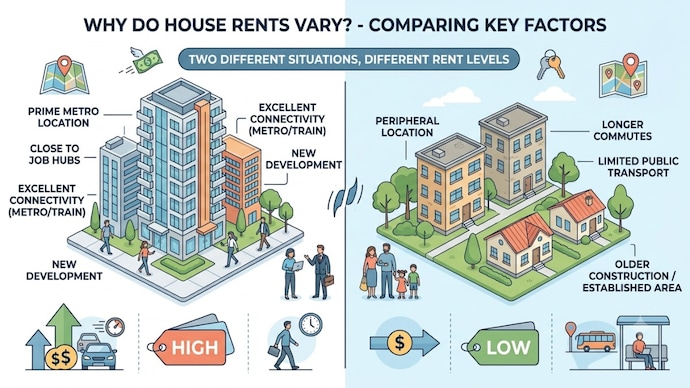
Areas with strong connectivity often command premium rents because they reduce commuting time and improve access to workplaces, schools, hospitals and shopping centres.
For example, neighbourhoods located near metro corridors often witness rent increases as more people seek convenient transportation options.
Similarly, areas surrounding IT parks and commercial districts frequently become rental hotspots due to high demand from working professionals.
LOCATION MATTERS MORE THAN THE CITY
When people discuss rents in a city, they often overlook one important fact: rental prices can vary enormously within the same city.
A 2 BHK apartment in a prime neighbourhood may cost two or three times more than a similar property in an outer suburb.
Factors that influence neighbourhood-level rents include:
- Distance from business districts
- Access to public transport
- Quality of schools and hospitals
- Safety and security
- Availability of shopping and entertainment options
- Road infrastructure
This is why two apartments of similar size can have dramatically different rents despite being located in the same city.
MONTHLY RENT FOR A 2 BHK APARTMENT
WHY IS MUMBAI SO EXPENSIVE?
Mumbai's rental market is unique.
The city combines enormous demand with severe land constraints. It is India's financial capital, hosts some of the country's highest-paying jobs and continues to attract migrants from every state.
At the same time, the city has limited room for horizontal expansion because it is surrounded by the sea. This combination of strong demand and limited supply has kept both property prices and rents among the highest in the country.
For many residents, moving to suburbs such as Thane or Navi Mumbai has become a way to balance affordability with access to employment opportunities.
WHICH CITIES OFFER BETTER VALUE FOR TENANTS?
For renters looking to maximise value, cities such as Ahmedabad, Kolkata and Pune often offer more affordable housing options.
These cities still provide employment opportunities and urban amenities but generally have lower land costs and less intense housing demand than Mumbai or Delhi.
As a result, tenants can often rent larger homes for significantly lower monthly payments.
RENTAL YIELDS: WHERE LANDLORDS EARN MORE
Rental yield measures how much rental income a property generates relative to its value.
Cities such as Bengaluru and Hyderabad currently offer some of India's strongest rental yields, often ranging between 3.5 per cent and 4 per cent.
This reflects a healthy balance between property values and rental demand, making these markets attractive to investors as well as tenants.
RENTAL YIELD COMPARISON
ALSO READ: 2000 vs 2026: How the cost of essentials in India has changed
WHAT'S NEXT FOR INDIA'S RENTAL MARKET?
Rental demand has remained strong in recent years, supported by office reopenings, migration and continued job creation in major cities.
As more companies adopt hybrid and return-to-office policies, demand for housing near employment centres is expected to remain elevated.
For tenants, this means affordability will continue to be a challenge in India's biggest metros. For landlords and investors, strong demand could keep rental markets active in the years ahead.
The reality is that India's rental story is ultimately a story about jobs, migration and urban growth. The cities attracting the most people continue to command the highest rents, and unless housing supply catches up, that trend is unlikely to change anytime soon.
If you've ever wondered why a two-bedroom apartment in Mumbai in a posh area can cost more than Rs 80,000 a month while a similar home in Ahmedabad might rent for less than half that amount, you're not alone.
Across India, rents vary dramatically from one city to another. In some places, tenants are spending a significant portion of their income just to secure housing close to work. In others, renters still enjoy relatively affordable accommodation despite growing urbanisation.
The reason isn't just about the size of the house. Rental prices are shaped by a complex mix of job opportunities, migration, infrastructure, housing supply and local demand. In simple terms, the more people want to live in a city and the fewer homes available, the higher the rent tends to be.
WHY DO HOUSE RENTS DIFFER SO MUCH BETWEEN CITIES?
At its core, rent is driven by one simple economic principle is demand and supply.
When thousands of people move to a city for work, education or business opportunities, the demand for housing rises. If the supply of rental homes cannot keep pace, landlords can charge higher rents.
This is exactly what has happened in many of India's major metropolitan areas. Cities such as Mumbai, Delhi, Bengaluru and Hyderabad attract professionals from across the country, creating intense competition for quality housing.
At the same time, land is limited in many urban centres. In Mumbai, for example, geographical constraints and extremely high land prices make housing expensive, and those costs eventually get passed on to tenants.
THE JOB MARKET HAS A HUGE IMPACT ON RENTS
One of the biggest drivers of rental demand is employment.
Cities with thriving IT, financial services, consulting and startup sectors attract a steady stream of professionals looking for housing close to workplaces.
Bengaluru, often called India's Silicon Valley, continues to see strong rental demand because of its technology ecosystem. Hyderabad has experienced a similar trend as major companies expand their presence in the city.
Mumbai remains India's financial capital, while Gurugram and Noida benefit from their proximity to Delhi and concentration of corporate offices.
Simply put, where jobs go, renters follow.
INFRASTRUCTURE CAN CHANGE RENTS OVERNIGHT
A new metro line, highway, airport expansion or business park can significantly alter rental prices in a locality.
Areas with strong connectivity often command premium rents because they reduce commuting time and improve access to workplaces, schools, hospitals and shopping centres.
For example, neighbourhoods located near metro corridors often witness rent increases as more people seek convenient transportation options.
Similarly, areas surrounding IT parks and commercial districts frequently become rental hotspots due to high demand from working professionals.
LOCATION MATTERS MORE THAN THE CITY
When people discuss rents in a city, they often overlook one important fact: rental prices can vary enormously within the same city.
A 2 BHK apartment in a prime neighbourhood may cost two or three times more than a similar property in an outer suburb.
Factors that influence neighbourhood-level rents include:
- Distance from business districts
- Access to public transport
- Quality of schools and hospitals
- Safety and security
- Availability of shopping and entertainment options
- Road infrastructure
This is why two apartments of similar size can have dramatically different rents despite being located in the same city.
MONTHLY RENT FOR A 2 BHK APARTMENT
WHY IS MUMBAI SO EXPENSIVE?
Mumbai's rental market is unique.
The city combines enormous demand with severe land constraints. It is India's financial capital, hosts some of the country's highest-paying jobs and continues to attract migrants from every state.
At the same time, the city has limited room for horizontal expansion because it is surrounded by the sea. This combination of strong demand and limited supply has kept both property prices and rents among the highest in the country.
For many residents, moving to suburbs such as Thane or Navi Mumbai has become a way to balance affordability with access to employment opportunities.
WHICH CITIES OFFER BETTER VALUE FOR TENANTS?
For renters looking to maximise value, cities such as Ahmedabad, Kolkata and Pune often offer more affordable housing options.
These cities still provide employment opportunities and urban amenities but generally have lower land costs and less intense housing demand than Mumbai or Delhi.
As a result, tenants can often rent larger homes for significantly lower monthly payments.
RENTAL YIELDS: WHERE LANDLORDS EARN MORE
Rental yield measures how much rental income a property generates relative to its value.
Cities such as Bengaluru and Hyderabad currently offer some of India's strongest rental yields, often ranging between 3.5 per cent and 4 per cent.
This reflects a healthy balance between property values and rental demand, making these markets attractive to investors as well as tenants.
RENTAL YIELD COMPARISON
ALSO READ: 2000 vs 2026: How the cost of essentials in India has changed
WHAT'S NEXT FOR INDIA'S RENTAL MARKET?
Rental demand has remained strong in recent years, supported by office reopenings, migration and continued job creation in major cities.
As more companies adopt hybrid and return-to-office policies, demand for housing near employment centres is expected to remain elevated.
For tenants, this means affordability will continue to be a challenge in India's biggest metros. For landlords and investors, strong demand could keep rental markets active in the years ahead.
The reality is that India's rental story is ultimately a story about jobs, migration and urban growth. The cities attracting the most people continue to command the highest rents, and unless housing supply catches up, that trend is unlikely to change anytime soon.

