The Panipat route: How clothes from New York end up in Sarojini
"Sarojini ke kapde pehen ke jaati madam disco." But where do those clothes actually come from? We went to Panipat to find out.
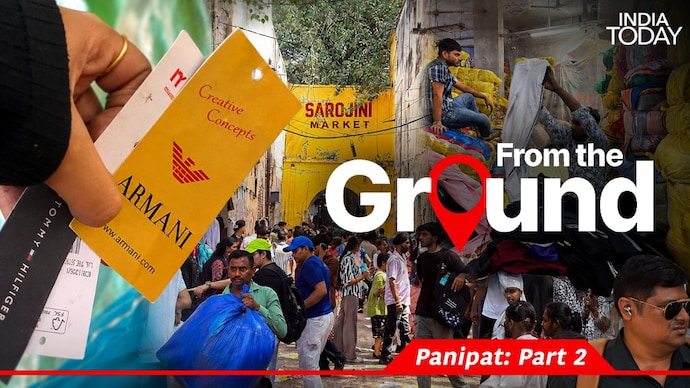
Ever wondered how you can pick up a Ralph Lauren shirt for just Rs 250 at Sarojini Nagar? Or score a pair of sturdy jeans for Rs 150? Or walk away with a Louis Vuitton pullover for barely Rs 300?
The answer often leads to Haryana's Panipat - a city that has quietly been keeping India's bargain-fashion markets stocked long before "thrifting" became a buzzword.
In Part 2 of our Panipat series, we uncover another side of the city's textile economy: how fashion finds that make their way to India's most famous bargain markets, including Sarojini Nagar, via Panipat.
In Part 1, we explored how textile waste from India and around the world gets a second life in Panipat. This time, trace the journey of the clothes that don’t get recycled but find a new chance for sure.
Where the journey begins
They are garments collected from donation bins, charity organisations, thrift stores, and commercial sorting facilities overseas. Their journey may begin in countries such as the United States, Canada, South Korea, China, the UAE, or Japan - some of the most common sources of clothing imported by traders in Panipat.
So, let us take you to Barsat Road, Panipat's wholesale hub, where these clothes finally arrive after travelling thousands of miles by sea and road before being redistributed to markets across the country. Sarojini is not the only place sourcing clothes from here, btw!
"From Kashmir to Kanyakumari, Panipat sends these clothes everywhere in India," a 55-year-old wholesaler told India Today from his tiny porta cabin office at the entrance of a warehouse stacked with massive bales of clothing, wrapped in plastic sheets and tightly sealed with metal wires.
The whole Barsat Road stretch looks like this. On both sides of the road are such big warehouses – filled with countless such packed bales. Each bale weighs 80-100 kg and contains a particular type of clothing ranging from women’s jeans, men’s cotton trousers, Korean tops, white shirts, palazzos, cardigans to overcoats, summer dresses and winter jackets and so on. There are different bales of undergarments as well.
Retailers from across the country come here to buy these bales.
But there's a catch - they only get to open a bale after making the payment.
An 80-kg bale can cost anywhere between Rs 8,000 and Rs 30,000, depending on its contents. Bales containing tops are cheaper while those containing winter jackets are expensive.
A-grade bales typically contain only about 5 to 10 per cent of garments with minor defects. Lower-grade bales, classified as B and C, contain a higher proportion of defective or heavily worn items.
Here’s the math: For example, if the bale costs Rs 250 per kilogram and there are roughly three pants per kilogram, each pant costs the buyer around Rs 80–Rs 100. The retailer can then sell it for Rs 200, Rs 300 or more.
What’s inside the bales?
Every bale is a surprise. Buyers know only the category of clothing inside. The brands, sizes, colours and designs remain a mystery until the bale is opened.
When one warehouse owner opened a bale at our request, we found a Louis Vuitton teddy knitwear pullover designed by Virgil Abloh among the garments.
So now you know how a Sarojini Nagar vendor can sell a Louis Vuitton pullover for just Rs 300. For the seller, it may have cost as little as Rs 70.
"A single bale can contain anything from unsold fashion inventory and export surplus to factory rejects and used clothing. We mostly import from China and Korea," Aman Jain of Vardhaman Impex – a wholesaler and distributor – told us.
"Many garments abroad go out of fashion very quickly. People often wear them only once or twice before discarding them, preferring to buy something new rather than wash and reuse them. These clothes are then collected, sorted, and resold," Jain added. He mostly imports from China and Korea.
The United States, Canada, and Japan are also among the most common source countries from which these traders import clothing.
Many clothes sold in street markets like Sarojini still carry tags from thrift stores and donation organisations such as Goodwill, the Salvation Army and Value Village. These labels offer a glimpse into how the global second-hand clothing trade works.
In countries such as the United States and Canada, large charities and thrift chains collect donated clothing, selling a portion through their own stores at affordable prices. The remaining stock - including unsold items, lower-grade garments and clothes with minor defects - is sorted, compressed into bales and channelled into the international second-hand clothing trade.
In China, specialised sorting companies process huge volumes of used clothing, grading garments by type and quality before packing them into tightly compressed bales for export. Many of these bales are eventually imported by wholesalers in Panipat.
“We work with several companies throughout the process. The goods come from multiple countries and are then distributed across India. Most shipments arrive through Gujarat, primarily via Mundra Port,” a businessman said during a casual conversation after declining to be interviewed.
Elaborating on the logistics, Jain, whose business primarily relies on imports from China, explained, “The clothes are loaded into shipping containers in China. Each container weighs around 25 tonnes and carries approximately 350 bales of different categories. The containers travel by sea to Mundra Port in India and are then transported to Panipat.”
It takes 2 months for the order to be delivered.
Reports also suggest that, due to import restrictions, some of the clothing arriving in Panipat is imported as 'mutilated' used garments for recycling. Once in Panipat, the imported bundles are sorted. The best-quality garments are often sold across India, while lower-grade clothing is sent for recycling.
The journey continues
After travelling thousands of kilometres to reach Panipat, many of the garments continue their journey across India.
Traders and dealers said the clothes are supplied to buyers nationwide - from Himachal Pradesh, Jammu and Kashmir and the Northeast to Kerala and even Kanyakumari - before being sold through local markets, fairs, shops and showrooms.
“We have delivered in over 1,500 pincodes so far,” Jain told us, while another added, “Buyers come from all over India - street vendors, small retailers and showroom owners,” noting that jackets are especially popular in hill states such as Himachal Pradesh and Ladakh.
The business has also moved online, with many traders selling through YouTube and WhatsApp. Many are also listed on platforms such as IndiaMART.
Fake tags alert!
But before these garments reach their final destinations, they often make one more stop: tagging and ironing workshops, some tucked away behind the warehouses on Barsat Road.
If a vendor wants, each garment can be ironed, folded, packed, and fitted with a brand tag in Panipat before being transported to another city. The entire process costs around Rs 6–7 per piece.
“You want a company tag? That costs Rs 1 extra. A regular tag costs 50 paise. You can get tags for Max, Zara, Tommy Hilfiger - there are many such brand tags available,” a woman at one of the workshops told us.
Ever seen clothes in local markets carrying tags of well-known brands even though you knew they weren't genuine?Now you know how that happens.
"Not all vendors opt for such tags, though. Only a few who sell in proper stores are the ones getting them packed and add these tags," she added.
That said, this doesn't mean every branded item passing through Panipat's ecosystem is fake. That LV sweater could actually be genuine. You never know!
Ever wondered how you can pick up a Ralph Lauren shirt for just Rs 250 at Sarojini Nagar? Or score a pair of sturdy jeans for Rs 150? Or walk away with a Louis Vuitton pullover for barely Rs 300?
The answer often leads to Haryana's Panipat - a city that has quietly been keeping India's bargain-fashion markets stocked long before "thrifting" became a buzzword.
In Part 2 of our Panipat series, we uncover another side of the city's textile economy: how fashion finds that make their way to India's most famous bargain markets, including Sarojini Nagar, via Panipat.
In Part 1, we explored how textile waste from India and around the world gets a second life in Panipat. This time, trace the journey of the clothes that don’t get recycled but find a new chance for sure.
Where the journey begins
They are garments collected from donation bins, charity organisations, thrift stores, and commercial sorting facilities overseas. Their journey may begin in countries such as the United States, Canada, South Korea, China, the UAE, or Japan - some of the most common sources of clothing imported by traders in Panipat.
So, let us take you to Barsat Road, Panipat's wholesale hub, where these clothes finally arrive after travelling thousands of miles by sea and road before being redistributed to markets across the country. Sarojini is not the only place sourcing clothes from here, btw!
"From Kashmir to Kanyakumari, Panipat sends these clothes everywhere in India," a 55-year-old wholesaler told India Today from his tiny porta cabin office at the entrance of a warehouse stacked with massive bales of clothing, wrapped in plastic sheets and tightly sealed with metal wires.
The whole Barsat Road stretch looks like this. On both sides of the road are such big warehouses – filled with countless such packed bales. Each bale weighs 80-100 kg and contains a particular type of clothing ranging from women’s jeans, men’s cotton trousers, Korean tops, white shirts, palazzos, cardigans to overcoats, summer dresses and winter jackets and so on. There are different bales of undergarments as well.
Retailers from across the country come here to buy these bales.
But there's a catch - they only get to open a bale after making the payment.
An 80-kg bale can cost anywhere between Rs 8,000 and Rs 30,000, depending on its contents. Bales containing tops are cheaper while those containing winter jackets are expensive.
A-grade bales typically contain only about 5 to 10 per cent of garments with minor defects. Lower-grade bales, classified as B and C, contain a higher proportion of defective or heavily worn items.
Here’s the math: For example, if the bale costs Rs 250 per kilogram and there are roughly three pants per kilogram, each pant costs the buyer around Rs 80–Rs 100. The retailer can then sell it for Rs 200, Rs 300 or more.
What’s inside the bales?
Every bale is a surprise. Buyers know only the category of clothing inside. The brands, sizes, colours and designs remain a mystery until the bale is opened.
When one warehouse owner opened a bale at our request, we found a Louis Vuitton teddy knitwear pullover designed by Virgil Abloh among the garments.
So now you know how a Sarojini Nagar vendor can sell a Louis Vuitton pullover for just Rs 300. For the seller, it may have cost as little as Rs 70.
"A single bale can contain anything from unsold fashion inventory and export surplus to factory rejects and used clothing. We mostly import from China and Korea," Aman Jain of Vardhaman Impex – a wholesaler and distributor – told us.
"Many garments abroad go out of fashion very quickly. People often wear them only once or twice before discarding them, preferring to buy something new rather than wash and reuse them. These clothes are then collected, sorted, and resold," Jain added. He mostly imports from China and Korea.
The United States, Canada, and Japan are also among the most common source countries from which these traders import clothing.
Many clothes sold in street markets like Sarojini still carry tags from thrift stores and donation organisations such as Goodwill, the Salvation Army and Value Village. These labels offer a glimpse into how the global second-hand clothing trade works.
In countries such as the United States and Canada, large charities and thrift chains collect donated clothing, selling a portion through their own stores at affordable prices. The remaining stock - including unsold items, lower-grade garments and clothes with minor defects - is sorted, compressed into bales and channelled into the international second-hand clothing trade.
In China, specialised sorting companies process huge volumes of used clothing, grading garments by type and quality before packing them into tightly compressed bales for export. Many of these bales are eventually imported by wholesalers in Panipat.
“We work with several companies throughout the process. The goods come from multiple countries and are then distributed across India. Most shipments arrive through Gujarat, primarily via Mundra Port,” a businessman said during a casual conversation after declining to be interviewed.
Elaborating on the logistics, Jain, whose business primarily relies on imports from China, explained, “The clothes are loaded into shipping containers in China. Each container weighs around 25 tonnes and carries approximately 350 bales of different categories. The containers travel by sea to Mundra Port in India and are then transported to Panipat.”
It takes 2 months for the order to be delivered.
Reports also suggest that, due to import restrictions, some of the clothing arriving in Panipat is imported as 'mutilated' used garments for recycling. Once in Panipat, the imported bundles are sorted. The best-quality garments are often sold across India, while lower-grade clothing is sent for recycling.
The journey continues
After travelling thousands of kilometres to reach Panipat, many of the garments continue their journey across India.
Traders and dealers said the clothes are supplied to buyers nationwide - from Himachal Pradesh, Jammu and Kashmir and the Northeast to Kerala and even Kanyakumari - before being sold through local markets, fairs, shops and showrooms.
“We have delivered in over 1,500 pincodes so far,” Jain told us, while another added, “Buyers come from all over India - street vendors, small retailers and showroom owners,” noting that jackets are especially popular in hill states such as Himachal Pradesh and Ladakh.
The business has also moved online, with many traders selling through YouTube and WhatsApp. Many are also listed on platforms such as IndiaMART.
Fake tags alert!
But before these garments reach their final destinations, they often make one more stop: tagging and ironing workshops, some tucked away behind the warehouses on Barsat Road.
If a vendor wants, each garment can be ironed, folded, packed, and fitted with a brand tag in Panipat before being transported to another city. The entire process costs around Rs 6–7 per piece.
“You want a company tag? That costs Rs 1 extra. A regular tag costs 50 paise. You can get tags for Max, Zara, Tommy Hilfiger - there are many such brand tags available,” a woman at one of the workshops told us.
Ever seen clothes in local markets carrying tags of well-known brands even though you knew they weren't genuine?Now you know how that happens.
"Not all vendors opt for such tags, though. Only a few who sell in proper stores are the ones getting them packed and add these tags," she added.
That said, this doesn't mean every branded item passing through Panipat's ecosystem is fake. That LV sweater could actually be genuine. You never know!

