In the age of WhatsApp and Gmail, Gen Z is waiting for their snail mail
Gen Z is now paying to receive beautifully decorated, handwritten letters. Here's all you need to know about the snail mail trend - the one bringing back the joy of receiving a physical letter in the age of WhatsApp and Gmail.
"Dakiya daak laya, dakiya daak laya..." is simply a thing of the past now.
The ones who have lived in that era know the excitement of a postman ringing the doorbell and the curiosity that follows – is it a letter, a money order, or a postcard. But today, before the doorbell even rings, your society app has already told you who's coming and why. Amazon. Blinkit. Swiggy. Maybe Myntra. Every week, the doorsteps witness a parade of deliveries. There's little mystery left, but there's only the satisfaction of instant gratification.
And in this instant culture, the internet has got people waiting for letters again. Not the instant ones, but the tactile ones. The ones that come on fragile paper and not in a Word document. Gen Z is happily waiting for their snail mails now.
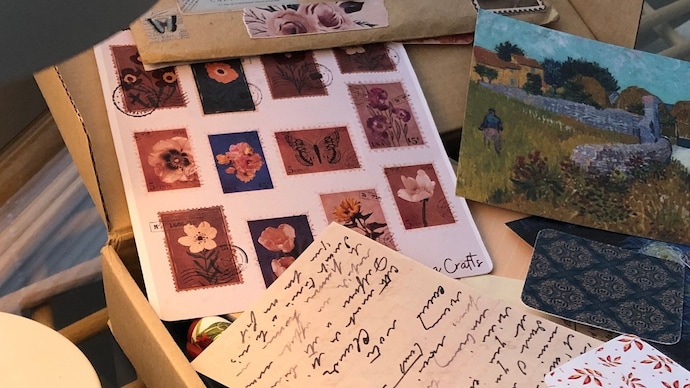
A lot of artistic people who enjoy creating aesthetically pleasing stationery, beautiful calligraphy, and cute crafts have started snail mail clubs. They charge a membership fee and send you beautifully decorated, handwritten letters delivered to your doorstep, often filled with stickers, postcards, and other small keepsakes. A lot of times there are aesthetic extras like stickers, washi tape and pressed flowers too.
Search "snail mail" on Instagram or Pinterest, and you'll find beautifully styled envelopes layered with washi tape, vintage stamps, pressed flowers, colourful stickers and calligraphy. Much like journaling, scrapbooking and stationery collecting, letters have become an aesthetic hobby in themselves.
The rise of snail mail clubs
Amid this culture of convenience, amid the AI slop fatigue and the never-ending digital burnout, people are just trying to stay connected and building little communities by themselves. While snail mail clubs have been around for a while now, especially in the West, it's catching up in India right now.
As a term, snail mail is not new. It was essentially a tongue-in-cheek phrase used for traditional postal mail that moved at, well, a snail's pace.
Today, it's (un)surprisingly a new-age business model that's surfacing all over the internet. What happens at a snail mail club? You come across a social media account that sends out aesthetic envelopes containing letters, often handwritten, an artistic postcard, quirky stickers, and perhaps a few other whimsical stationery items. Some people send bookmarks or fridge magnets, while others keep a surprise element. It's usually a subscription-based model where you receive these envelopes every month.
On average, subscriptions start at around Rs 300-500 a month and can go up depending on the kind of snail mail club it is.
These mails are often thematic. Some people offer travel-based letters, some send out affirmations, some are funny or quirky, others are floral or literary, and some are simply random yet beautiful.
While the content of the letter is not always revealed (that's the mystery element probably), the themes are shared every month.
And that's about it. That's a snail mail club. And believe it or not, people are increasingly subscribing to them thanks to the impact of social media.
For many Gen Zers indulging in this trend, it's less about nostalgia and more about the novelty and appeal of analog experiences, which they are increasingly drawn to.
From pen pals to letter-writing workshops, the essence of letters has always been there. Just every generation has its own way of connecting to it. And the aesthetic snail mail is just the new way to go about it.
In a world where messages disappear into endless chats, receiving letters feels heartfelt. And perhaps that's why these clubs have found a place in the instant digital age where people write a lot on apps, receive a lot of e-mails but instantly and on apps.
So, yes, these clubs are not taking over instant messaging or deliveries. They don't need to. These clubs are just here to make you feel the joy of receiving letters. To make you pause, take your time, sit with it, admire the artwork, reflect, introspect, and maybe pin it on your office desk.
"Dakiya daak laya, dakiya daak laya..." is simply a thing of the past now.
The ones who have lived in that era know the excitement of a postman ringing the doorbell and the curiosity that follows – is it a letter, a money order, or a postcard. But today, before the doorbell even rings, your society app has already told you who's coming and why. Amazon. Blinkit. Swiggy. Maybe Myntra. Every week, the doorsteps witness a parade of deliveries. There's little mystery left, but there's only the satisfaction of instant gratification.
And in this instant culture, the internet has got people waiting for letters again. Not the instant ones, but the tactile ones. The ones that come on fragile paper and not in a Word document. Gen Z is happily waiting for their snail mails now.
A lot of artistic people who enjoy creating aesthetically pleasing stationery, beautiful calligraphy, and cute crafts have started snail mail clubs. They charge a membership fee and send you beautifully decorated, handwritten letters delivered to your doorstep, often filled with stickers, postcards, and other small keepsakes. A lot of times there are aesthetic extras like stickers, washi tape and pressed flowers too.
Search "snail mail" on Instagram or Pinterest, and you'll find beautifully styled envelopes layered with washi tape, vintage stamps, pressed flowers, colourful stickers and calligraphy. Much like journaling, scrapbooking and stationery collecting, letters have become an aesthetic hobby in themselves.
The rise of snail mail clubs
Amid this culture of convenience, amid the AI slop fatigue and the never-ending digital burnout, people are just trying to stay connected and building little communities by themselves. While snail mail clubs have been around for a while now, especially in the West, it's catching up in India right now.
As a term, snail mail is not new. It was essentially a tongue-in-cheek phrase used for traditional postal mail that moved at, well, a snail's pace.
Today, it's (un)surprisingly a new-age business model that's surfacing all over the internet. What happens at a snail mail club? You come across a social media account that sends out aesthetic envelopes containing letters, often handwritten, an artistic postcard, quirky stickers, and perhaps a few other whimsical stationery items. Some people send bookmarks or fridge magnets, while others keep a surprise element. It's usually a subscription-based model where you receive these envelopes every month.
On average, subscriptions start at around Rs 300-500 a month and can go up depending on the kind of snail mail club it is.
These mails are often thematic. Some people offer travel-based letters, some send out affirmations, some are funny or quirky, others are floral or literary, and some are simply random yet beautiful.
While the content of the letter is not always revealed (that's the mystery element probably), the themes are shared every month.
And that's about it. That's a snail mail club. And believe it or not, people are increasingly subscribing to them thanks to the impact of social media.
For many Gen Zers indulging in this trend, it's less about nostalgia and more about the novelty and appeal of analog experiences, which they are increasingly drawn to.
From pen pals to letter-writing workshops, the essence of letters has always been there. Just every generation has its own way of connecting to it. And the aesthetic snail mail is just the new way to go about it.
In a world where messages disappear into endless chats, receiving letters feels heartfelt. And perhaps that's why these clubs have found a place in the instant digital age where people write a lot on apps, receive a lot of e-mails but instantly and on apps.
So, yes, these clubs are not taking over instant messaging or deliveries. They don't need to. These clubs are just here to make you feel the joy of receiving letters. To make you pause, take your time, sit with it, admire the artwork, reflect, introspect, and maybe pin it on your office desk.
"Dakiya daak laya, dakiya daak laya..." is simply a thing of the past now.
The ones who have lived in that era know the excitement of a postman ringing the doorbell and the curiosity that follows – is it a letter, a money order, or a postcard. But today, before the doorbell even rings, your society app has already told you who's coming and why. Amazon. Blinkit. Swiggy. Maybe Myntra. Every week, the doorsteps witness a parade of deliveries. There's little mystery left, but there's only the satisfaction of instant gratification.
And in this instant culture, the internet has got people waiting for letters again. Not the instant ones, but the tactile ones. The ones that come on fragile paper and not in a Word document. Gen Z is happily waiting for their snail mails now.
A lot of artistic people who enjoy creating aesthetically pleasing stationery, beautiful calligraphy, and cute crafts have started snail mail clubs. They charge a membership fee and send you beautifully decorated, handwritten letters delivered to your doorstep, often filled with stickers, postcards, and other small keepsakes. A lot of times there are aesthetic extras like stickers, washi tape and pressed flowers too.
Search "snail mail" on Instagram or Pinterest, and you'll find beautifully styled envelopes layered with washi tape, vintage stamps, pressed flowers, colourful stickers and calligraphy. Much like journaling, scrapbooking and stationery collecting, letters have become an aesthetic hobby in themselves.
The rise of snail mail clubs
Amid this culture of convenience, amid the AI slop fatigue and the never-ending digital burnout, people are just trying to stay connected and building little communities by themselves. While snail mail clubs have been around for a while now, especially in the West, it's catching up in India right now.
As a term, snail mail is not new. It was essentially a tongue-in-cheek phrase used for traditional postal mail that moved at, well, a snail's pace.
Today, it's (un)surprisingly a new-age business model that's surfacing all over the internet. What happens at a snail mail club? You come across a social media account that sends out aesthetic envelopes containing letters, often handwritten, an artistic postcard, quirky stickers, and perhaps a few other whimsical stationery items. Some people send bookmarks or fridge magnets, while others keep a surprise element. It's usually a subscription-based model where you receive these envelopes every month.
On average, subscriptions start at around Rs 300-500 a month and can go up depending on the kind of snail mail club it is.
These mails are often thematic. Some people offer travel-based letters, some send out affirmations, some are funny or quirky, others are floral or literary, and some are simply random yet beautiful.
While the content of the letter is not always revealed (that's the mystery element probably), the themes are shared every month.
And that's about it. That's a snail mail club. And believe it or not, people are increasingly subscribing to them thanks to the impact of social media.
For many Gen Zers indulging in this trend, it's less about nostalgia and more about the novelty and appeal of analog experiences, which they are increasingly drawn to.
From pen pals to letter-writing workshops, the essence of letters has always been there. Just every generation has its own way of connecting to it. And the aesthetic snail mail is just the new way to go about it.
In a world where messages disappear into endless chats, receiving letters feels heartfelt. And perhaps that's why these clubs have found a place in the instant digital age where people write a lot on apps, receive a lot of e-mails but instantly and on apps.
So, yes, these clubs are not taking over instant messaging or deliveries. They don't need to. These clubs are just here to make you feel the joy of receiving letters. To make you pause, take your time, sit with it, admire the artwork, reflect, introspect, and maybe pin it on your office desk.

