Unforgettable bytes, slogans and placards: How CJP won before it won
The Cockroach Janta Party protest turned placards, slogans and viral moments into its sharpest political language. The campaign showed how humour, memes and street imagery drove attention before the resignation demand was met.
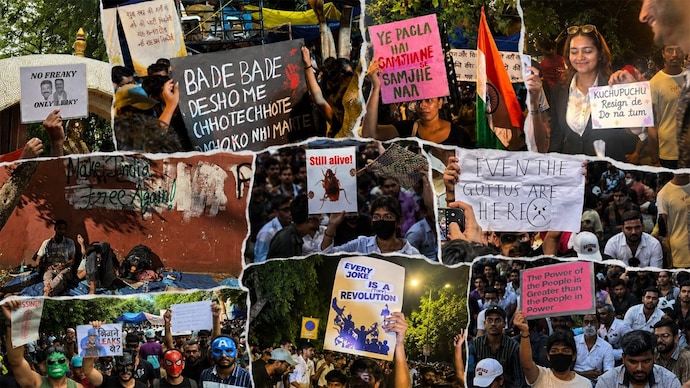
Would it be an exaggeration to say that the Cockroach Janta Party (CJP) protest, which set out to demand former education minister Dharmendra Pradhan's resignation, was won not by big speeches, but by strong placards and slogans? Try, for a moment, to recall a single instance where a speech by Abhijeet Dipke, the founder of CJP, or anyone else at the podium, stole the show. Chances are, you can't. What you probably do remember are the placards — inventive, witty, and laced with humour — which quietly became the reason this Gen Z protest won hearts (and eventually, a resignation).
The insult that became an identity Gen Z was proud of
Everyone had something to say, and they said it through cardboard and marker, borrowing freely from pop culture, Bollywood and memes. The placards and slogans spoke a language every young Indian understood (some Boomers and Gen X may need subtitles), and became the defining voice of the movement.
Remark by Chief Justice of India Surya Kant, who likened unemployed youth and social media activists to cockroaches and parasites. Instead of getting offended, Gen Z did what Gen Z does best — it turned the insult into a brand. Digital communications strategist Abhijeet Dipke spun the jibe into a satirical outfit called the Cockroach Janta Party, a cheeky play on the ruling BJP's name, and by June 6, the party's supporters were out at Jantar Mantar, cockroach masks and all. An rest, as they say is history.
The best bytes, placards and slogans from the protest
At Jantar Mantar, one protester's banner read: "You think calling me anti-national will hurt me? I've been called Chinese all my life." Years of facing racism over her appearance, she said, had already given her thick skin — so being labelled "anti-national" for demanding Education Minister Dharmendra Pradhan's resignation didn't sting the way it was meant to. She spoke to Mo of Everything's producer about it; the video of her placard has been circulating since.
Then there's the image that's already being called one of the movement's defining ones: Rhiya Ahir stepping directly in front of a police van and refusing to move. Clips of the moment spread fast, with many online calling it a symbol of the protest's courage.
Not every placard was solemn. One protester, who said they were hit in the leg during the July 20 protest, came back with a handmade sign reading: "Police daddy, hit me harder!" They admitted the fear hadn't fully gone — but seeing others return despite the alleged police action pushed them to show up again too.
A placard mocking exam paper leaks by referencing a sanitary napkin ad line too struck a chord with many as the humour was on point.
One photograph that went viral showed a protester holding up a sign that read, simply, "Every joke is a (tiny) revolution" — which might be the single best one-line explanation for why this movement worked at all. Humour wasn't a distraction from the politics. It was the delivery mechanism.
And then, because protests are never just one register — the Marvel superheroes showed up.
Here are some more of the placards that stood out from the movement:
When the internet left the phone and hit the street
What's genuinely new about CJP, compared to the placard-and-slogan protests Jantar Mantar has hosted for decades, is how seamlessly the offline signage fed the online feed and vice versa. A placard photographed at the protest would be a meme by evening and a reel by midnight. Reels set to Bollywood tracks, parody raps recapping the week's events, and running jokes about police batons and disappearing nameplates gave the protest a second life on Instagram and X — arguably reaching more people there than the actual crowd at Jantar Mantar ever could. 'Protest date' became one such moment where protesters turned the situation into full-blown humour, with quips like, "Saath mein Delhi Police se maar khaane chalogi?" on social media.
This is also where the tone occasionally sharpened. Not every sign was playful — some turned openly profane once the police crackdown on July 21 saw tear gas and lathi charges used against a march that had, until then, been carrying flowers and copies of the Constitution to hand to officers. The humour didn't disappear; it just got angrier, and arguably more effective for it.
Founder Dipke, when news broke of the minister's resignation, reportedly said only three words: "We have done it." One protester, 19-year-old Lavanya Bharti, put it more colourfully to Aljazeera reporters, telling them the cockroaches were "crawling all over" the government now.
That, perhaps, is the real story behind CJP's win — not a party, not a podium, but a placard.
Would it be an exaggeration to say that the Cockroach Janta Party (CJP) protest, which set out to demand former education minister Dharmendra Pradhan's resignation, was won not by big speeches, but by strong placards and slogans? Try, for a moment, to recall a single instance where a speech by Abhijeet Dipke, the founder of CJP, or anyone else at the podium, stole the show. Chances are, you can't. What you probably do remember are the placards — inventive, witty, and laced with humour — which quietly became the reason this Gen Z protest won hearts (and eventually, a resignation).
The insult that became an identity Gen Z was proud of
Everyone had something to say, and they said it through cardboard and marker, borrowing freely from pop culture, Bollywood and memes. The placards and slogans spoke a language every young Indian understood (some Boomers and Gen X may need subtitles), and became the defining voice of the movement.
Remark by Chief Justice of India Surya Kant, who likened unemployed youth and social media activists to cockroaches and parasites. Instead of getting offended, Gen Z did what Gen Z does best — it turned the insult into a brand. Digital communications strategist Abhijeet Dipke spun the jibe into a satirical outfit called the Cockroach Janta Party, a cheeky play on the ruling BJP's name, and by June 6, the party's supporters were out at Jantar Mantar, cockroach masks and all. An rest, as they say is history.
The best bytes, placards and slogans from the protest
At Jantar Mantar, one protester's banner read: "You think calling me anti-national will hurt me? I've been called Chinese all my life." Years of facing racism over her appearance, she said, had already given her thick skin — so being labelled "anti-national" for demanding Education Minister Dharmendra Pradhan's resignation didn't sting the way it was meant to. She spoke to Mo of Everything's producer about it; the video of her placard has been circulating since.
Then there's the image that's already being called one of the movement's defining ones: Rhiya Ahir stepping directly in front of a police van and refusing to move. Clips of the moment spread fast, with many online calling it a symbol of the protest's courage.
Not every placard was solemn. One protester, who said they were hit in the leg during the July 20 protest, came back with a handmade sign reading: "Police daddy, hit me harder!" They admitted the fear hadn't fully gone — but seeing others return despite the alleged police action pushed them to show up again too.
A placard mocking exam paper leaks by referencing a sanitary napkin ad line too struck a chord with many as the humour was on point.
One photograph that went viral showed a protester holding up a sign that read, simply, "Every joke is a (tiny) revolution" — which might be the single best one-line explanation for why this movement worked at all. Humour wasn't a distraction from the politics. It was the delivery mechanism.
And then, because protests are never just one register — the Marvel superheroes showed up.
Here are some more of the placards that stood out from the movement:
When the internet left the phone and hit the street
What's genuinely new about CJP, compared to the placard-and-slogan protests Jantar Mantar has hosted for decades, is how seamlessly the offline signage fed the online feed and vice versa. A placard photographed at the protest would be a meme by evening and a reel by midnight. Reels set to Bollywood tracks, parody raps recapping the week's events, and running jokes about police batons and disappearing nameplates gave the protest a second life on Instagram and X — arguably reaching more people there than the actual crowd at Jantar Mantar ever could. 'Protest date' became one such moment where protesters turned the situation into full-blown humour, with quips like, "Saath mein Delhi Police se maar khaane chalogi?" on social media.
This is also where the tone occasionally sharpened. Not every sign was playful — some turned openly profane once the police crackdown on July 21 saw tear gas and lathi charges used against a march that had, until then, been carrying flowers and copies of the Constitution to hand to officers. The humour didn't disappear; it just got angrier, and arguably more effective for it.
Founder Dipke, when news broke of the minister's resignation, reportedly said only three words: "We have done it." One protester, 19-year-old Lavanya Bharti, put it more colourfully to Aljazeera reporters, telling them the cockroaches were "crawling all over" the government now.
That, perhaps, is the real story behind CJP's win — not a party, not a podium, but a placard.
Would it be an exaggeration to say that the Cockroach Janta Party (CJP) protest, which set out to demand former education minister Dharmendra Pradhan's resignation, was won not by big speeches, but by strong placards and slogans? Try, for a moment, to recall a single instance where a speech by Abhijeet Dipke, the founder of CJP, or anyone else at the podium, stole the show. Chances are, you can't. What you probably do remember are the placards — inventive, witty, and laced with humour — which quietly became the reason this Gen Z protest won hearts (and eventually, a resignation).
The insult that became an identity Gen Z was proud of
Everyone had something to say, and they said it through cardboard and marker, borrowing freely from pop culture, Bollywood and memes. The placards and slogans spoke a language every young Indian understood (some Boomers and Gen X may need subtitles), and became the defining voice of the movement.
Remark by Chief Justice of India Surya Kant, who likened unemployed youth and social media activists to cockroaches and parasites. Instead of getting offended, Gen Z did what Gen Z does best — it turned the insult into a brand. Digital communications strategist Abhijeet Dipke spun the jibe into a satirical outfit called the Cockroach Janta Party, a cheeky play on the ruling BJP's name, and by June 6, the party's supporters were out at Jantar Mantar, cockroach masks and all. An rest, as they say is history.
The best bytes, placards and slogans from the protest
At Jantar Mantar, one protester's banner read: "You think calling me anti-national will hurt me? I've been called Chinese all my life." Years of facing racism over her appearance, she said, had already given her thick skin — so being labelled "anti-national" for demanding Education Minister Dharmendra Pradhan's resignation didn't sting the way it was meant to. She spoke to Mo of Everything's producer about it; the video of her placard has been circulating since.
Then there's the image that's already being called one of the movement's defining ones: Rhiya Ahir stepping directly in front of a police van and refusing to move. Clips of the moment spread fast, with many online calling it a symbol of the protest's courage.
Not every placard was solemn. One protester, who said they were hit in the leg during the July 20 protest, came back with a handmade sign reading: "Police daddy, hit me harder!" They admitted the fear hadn't fully gone — but seeing others return despite the alleged police action pushed them to show up again too.
A placard mocking exam paper leaks by referencing a sanitary napkin ad line too struck a chord with many as the humour was on point.
One photograph that went viral showed a protester holding up a sign that read, simply, "Every joke is a (tiny) revolution" — which might be the single best one-line explanation for why this movement worked at all. Humour wasn't a distraction from the politics. It was the delivery mechanism.
And then, because protests are never just one register — the Marvel superheroes showed up.
Here are some more of the placards that stood out from the movement:
When the internet left the phone and hit the street
What's genuinely new about CJP, compared to the placard-and-slogan protests Jantar Mantar has hosted for decades, is how seamlessly the offline signage fed the online feed and vice versa. A placard photographed at the protest would be a meme by evening and a reel by midnight. Reels set to Bollywood tracks, parody raps recapping the week's events, and running jokes about police batons and disappearing nameplates gave the protest a second life on Instagram and X — arguably reaching more people there than the actual crowd at Jantar Mantar ever could. 'Protest date' became one such moment where protesters turned the situation into full-blown humour, with quips like, "Saath mein Delhi Police se maar khaane chalogi?" on social media.
This is also where the tone occasionally sharpened. Not every sign was playful — some turned openly profane once the police crackdown on July 21 saw tear gas and lathi charges used against a march that had, until then, been carrying flowers and copies of the Constitution to hand to officers. The humour didn't disappear; it just got angrier, and arguably more effective for it.
Founder Dipke, when news broke of the minister's resignation, reportedly said only three words: "We have done it." One protester, 19-year-old Lavanya Bharti, put it more colourfully to Aljazeera reporters, telling them the cockroaches were "crawling all over" the government now.
That, perhaps, is the real story behind CJP's win — not a party, not a podium, but a placard.

