Ground Zero @ Jantar Mantar | A tidal wave
The sights, smells and soundbites at Jantar Mantar
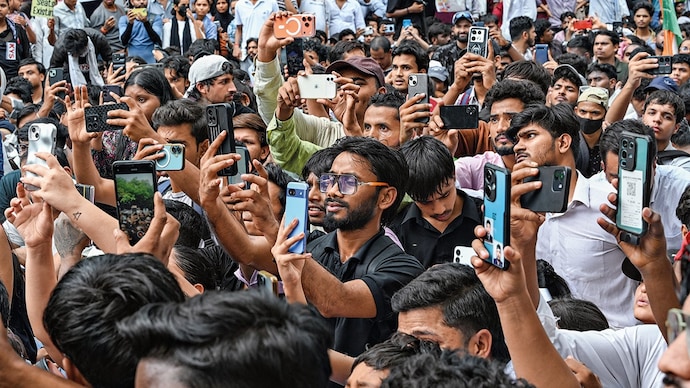
The first thing you noticed was the smell. Before the slogans, or the stage, or the sea of phones raised towards it. It was the smell of sweat under rain-dampened T-shirts, of rajma-chawal gone bad in the afternoon sun. Of overripe bananas, wet cardboard and the sharp antiseptic odour of disinfectant sprayed on the ground.
The first thing you noticed was the smell. Before the slogans, or the stage, or the sea of phones raised towards it. It was the smell of sweat under rain-dampened T-shirts, of rajma-chawal gone bad in the afternoon sun. Of overripe bananas, wet cardboard and the sharp antiseptic odour of disinfectant sprayed on the ground.
The first thing you noticed was the smell. Before the slogans, or the stage, or the sea of phones raised towards it. It was the smell of sweat under rain-dampened T-shirts, of rajma-chawal gone bad in the afternoon sun. Of overripe bananas, wet cardboard and the sharp antiseptic odour of disinfectant sprayed on the ground.
Regardless, a young woman went around, black trash bag in hand, asking everyone out, “Anyone has trash?” A plastic bottle, a paper cup, a biscuit wrapper, a disposable spoon, she collected them all. “We are here to protest, not litter,” she said. “We gotta clean up the trash ourselves.” She was Soumya, 25 years old, a resident of Dwarka.
Jantar Mantar was swarming with people like her. One group took turns distributing drinking water; two young women held aloft cartons of Parle-G biscuits as they moved through the crowd. A metal container full of khichdi hung from each forearm of a man who called out for those unfed. On the stage, the speakers appeared tired but patient, telling the organisers: “Thank you for your support. Please form a line.”
Some students had come with parents; some had lied to their parents to be there. Young men had taken leave from work; others had stepped off an express train and walked straight to Jantar Mantar, their bags stuffed with books, water bottles, posters, even the tricolour. A lady was there at the protest only because her US-based daughter asked her to. “We were also students until a few years ago and we know how hard it is to secure a job after you graduate,” said Kanishka, 26, who works in real estate. “When we saw how students were beaten up and tear-gassed, we decided to come and show support.”
Khalid, a tailor from Bhajanpura, was there with his family—standing firm against the crush of the crowd. “My sisters appeared for NEET in 2024 and nothing happened,” he said. “Today, I’m here for the future of my 10-year-old daughter.” The root cause now belongs to his daughter too—a grievance bequeathed prematurely.
It may have started as a protest about leaks in the NEET paper. But, in a matter of days, it has become something larger: a generation asking to be heard. The police, if they approached the dense mass of protesters, were greeted with chants of “loser, loser!”. “Let them pass, ignore them,” came the announcement from the stage. “The whole world is watching them. They know what they have done to us.”
The old iconography of Indian dissent lives on. Bhagat Singh posters hanged from the railings; Che Guevara’s faraway look leaps out of an image taped to a lamp post; Gandhi watched affably from a banner strung between trees. But these images were just the backdrop. The loudest language at Jantar Mantar was something else—of memes, reels, livestreams, selfie videos, hashtags scrawled on cardboard beside hand-drawn slogans.
You can watch the changing grammar of protest in real time: every few minutes, someone grabbed a fellow protester for a quick interview. “One minute, we’re live. Just say why you came,” said one. One woman finished recording a reel, then turned her phone around to watch someone else’s. “The whole movement is driven by social media,” said Saurav Das, spokesperson for the Cockroach Janta Party. “People are coming here and finding out for themselves what the truth is. Time’s up for traditional media.”
The CJP claims its Instagram account was banned. But that’s just one account. “Utth be s**ley, bahut ho gaya tera (Get up—you’ve had enough)”—a viral meme reportedly quotes a policeman as he hauled up the fasting activist Sonam Wangchuk at Jantar Mantar on July 18. Since then, social media has been flooded with protesters turning those rude words into a protest slogan, spawning newer ones. “My Ex and Modi are Heartless”, winked a hand-made poster brandished by a young man as police watched on. “The future of our democracy depends not on how it treats those who agree with it, but on how it treats its young citizens when they dare to speak with courage, hope and conviction,” says Wangchuk.
Deepak Kunju came all the way from Dantewada, Chhattisgarh, with a friend to do just that. His demand sounded painfully modest: “You cannot give jobs, at least hold exams properly so that children can stand on their own feet.” A pause later, he added, “At least admit you are wrong.”
—with Anjum Sharma

