Aviation sector | The high cost of flying
War-driven fuel shocks and airspace closures are forcing service cuts and sending airfares soaring, battering an aviation sector already burdened by weak balance sheets
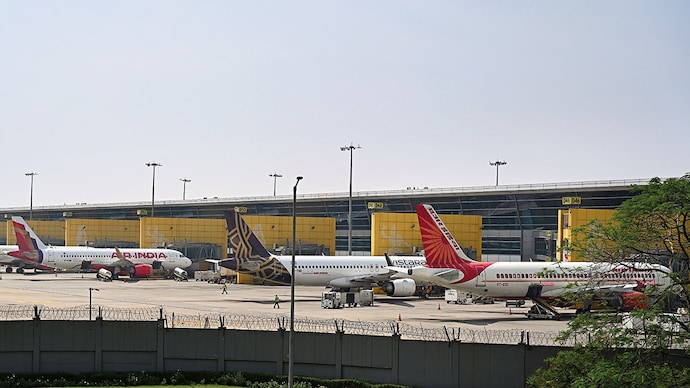
It is a paradox that the Indian aviation sector is still trying to resolve. Just when air travel had been peaking, and airlines were ordering more aircraft, when new airports were coming up even as older ones were being expanded, came a series of events that sent airlines headlong into turbulence. The repercussions of the war in West Asia, which erupted at the end of February, are in plain sight. It has led to a surge in aviation turbine fuel (ATF) prices, driving up operating costs for airlines. Airspace closures, on the other hand, have upended some of the world’s busiest aviation corridors, forcing airlines to reroute or cancel services.
It is a paradox that the Indian aviation sector is still trying to resolve. Just when air travel had been peaking, and airlines were ordering more aircraft, when new airports were coming up even as older ones were being expanded, came a series of events that sent airlines headlong into turbulence. The repercussions of the war in West Asia, which erupted at the end of February, are in plain sight. It has led to a surge in aviation turbine fuel (ATF) prices, driving up operating costs for airlines. Airspace closures, on the other hand, have upended some of the world’s busiest aviation corridors, forcing airlines to reroute or cancel services.
Mumbai-based content strategist Sanchi Mehta faced that inconvenience first-hand, when she found that her flight to Hong Kong had been cancelled just weeks before a planned holiday with friends. Helpline staff told her the flight had been overbooked and advised her to seek a refund through the online travel agency, even as her friends remained booked on the same flight. With replacement fares far more expensive and her refund still pending, Mehta was forced to abandon the trip, despite having already paid for hotels and other travel reservations. Fares have escalated multifold, with the Abu Dhabi-Delhi route going up to around Rs 70,000, from Rs 10,000-15,000 earlier. The prices of India-US flights climbed from Rs 45,000-1 lakh to Rs 1.3 lakh-2.25 lakh, while Bengaluru-Frankfurt fares rose from around Rs 80,000 to Rs 1.9 lakh
LONG WAY ROUND
High prices, however, are only one part of the problem. The closure of airspaces has meant flights are now taking longer. Already barred from Pakistani airspace since Operation Sindoor in 2025, the Directorate General of Civil Aviation (DGCA) on February 28 announced additional restrictions, advising pilots to avoid 11 flight information regions covering Iran, Iraq, Israel, Syria, Yemen and parts of Saudi Arabia. Flights to Europe and North America that once overflew Pakistan and the Gulf have been pushed north and west through Central Asia, the Caucasus, Egypt and East Africa.
Thus, a Delhi-London flight is taking two hours longer as airlines avoid Iranian and Iraqi airspace, while some Europe-bound services are being rerouted via Africa. In March, a Delhi-Manchester flight returned to Delhi, having spent more than 13 hours in the air, after being denied overflight clearance in Eritrean airspace. Air India has introduced technical stops on some North America-bound services, extending Delhi-New York travel time from about 17 hours to roughly 22 (see Detours in the Sky). Technical fuel stops in Vienna, Rome, Copenhagen and Addis Ababa are also becoming increasingly common for long-haul aircraft operating near their payload limits.
The Pakistan airspace ban had already put Indian airlines at a competitive disadvantage. European airlines such as Lufthansa and Asian carriers like Cathay Pacific continue to operate shorter routes, while Indian airlines are forced to take longer, more expensive detours. These routes are increasing fuel burn by 1.3-1.9 tonnes per flight, while block times—total operation duration of an aircraft—have lengthened by 35-70 minutes per sector. Further adding to costs are war-risk insurance premiums on international operations, which have reportedly risen several times.
The consequent pressures have already prompted airlines to trim services. Air India has suspended seven international routes between June and August, while IndiGo has reduced frequencies on some international sectors from July 1 to September 30, though services could resume earlier if conditions improve. SpiceJet’s UAE operations have also been disrupted. On domestic routes, airlines are scheduled to operate 7 per cent fewer weekly flights in June than a year earlier, as rising fuel costs render some services commercially unviable.
It has begun showing in passenger numbers. According to DGCA data, international passenger traffic on Indian airlines plunged 39.3 per cent year-on-year in April, while domestic traffic declined 3.47 per cent.
FUEL SHOCK
Fuel costs have emerged as the biggest immediate challenge for airlines. Domestic jet fuel prices in Delhi rose from about Rs 90,455 per kilolitre before the conflict to around Rs 1.05 lakh now. International ATF prices had already surged by Rs 73-75 per litre, prompting the Federation of Indian Airlines (FIA) to protest. “The ATF pricing for international operations was increased by Rs 73 per litre, making international operations, along with domestic operations, completely unviable and resulting in significant losses,” the FIA told the government. The free falling rupee has not helped matters either.
Part of the blame, of course, lies with the Indian airlines themselves. They remain unusually exposed to oil price fluctuations because they do little hedging. Irish ultra-low-cost airline Ryanair, for example, had locked in roughly 80 per cent of its 2026 fuel requirements before the conflict; Lufthansa had secured over 80 per cent of its first-quarter needs. IndiGo has publicly eschewed such cover altogether.
Nevertheless, the Union cabinet on June 3 approved a one-time ATF Price Stabilisation Fund of up to Rs 10,000 crore to cushion sudden price swings. Under it, oil marketing companies (OMCs) will receive a recoverable, interest-free advance to stabilise ATF prices for scheduled Indian airlines; the differential will be recovered once prices moderate. “Since February, the government has been very proactive in coming to the rescue of airlines vis-a-vis the West Asia conflict,” says Kapil Kaul, CEO of aviation advisory company, CAPA India. “This stabilisation fund is one such move, and it will be helpful.” IndiGo called the intervention “a welcome relief that reflects the government’s understanding of the critical role aviation plays in connecting people and enabling economic growth”.
Earlier, in April, the government had directed public sector OMCs to cap price hikes at roughly 25 per cent—about Rs 15 per litre—and absorb the rest. The cost of fuel, already 30-40 per cent of operating costs before the conflict, has risen to 55-60 per cent, according to airlines.
Relief came from Delhi and Maharashtra as well, which together form the backbone of Indian aviation—Delhi handled 77.8 million passengers in 2024, as per Airports Council International, while Mumbai is India’s second-busiest aviation hub, with around 55 million traffic. On May 15, Maharashtra reduced VAT (value-added tax) on ATF from 18 per cent to 7 per cent for six months. Delhi followed a day later, dropping its rate from 25 to 7 per cent. Following these reductions, the Centre urged other states to follow suit. “We have been engaging with state governments to reduce VAT on ATF for some time, and specifically during crisis periods,” civil aviation minister Ram Mohan Naidu said. States have resisted because VAT on ATF is a major source of revenue; Delhi alone estimates that the lower rate will cost it Rs 985 crore annually. There are also concerns about precedent.
VAT, however, is not the only tax burden airlines face. There is also the 11 per cent excise duty on ATF, which rises automatically as prices rise because it is calculated as a percentage rather than a fixed levy. “In the past, airlines have represented that excise duty be made an absolute number rather than a percentage of ATF price,” the FIA said. Crack spreads—the difference between crude and refined fuel prices—are another issue that compounds the strain.
Meanwhile, the elephant in the room—bringing ATF under GST—remains unaddressed, given that it is a politically difficult decision. Including ATF under GST could intensify pressure to bring petrol and diesel into the same framework, further eroding states’ fiscal autonomy.
SOARING LOSSES
Indian airlines were already struggling before the war in West Asia. The crash of the Air India flight in Ahmedabad in June 2025 and IndiGo’s failure to comply with the new flight crew time limitations mandated by the DGCA later in December had exposed the chinks in the armour of the country’s leading carriers. IndiGo also had 50-70 planes sitting idle because of technical glitches involving Pratt & Whitney engines. Cancelled flights had become a norm.
Government data tabled in Parliament showed the industry posting a collective net loss of Rs 924 crore in FY24, ballooning to Rs 5,290 crore in FY25 (see Survival Mode).
The government’s Rs 5,000-crore emergency loan scheme has provided some relief, but carriers have largely responded by cutting services and levying fuel surcharges. Domestic passengers now pay an additional Rs 299-899 per ticket, while international travellers face surcharges of around Rs 17,000 per sector to Europe and Rs 23,200 to North America and Australia. Even so, fare hikes can go only so far. “At the end of the day, I would not want to price myself out of competition,” says one airline executive. “Passing on the burden to consumers also has its limits.”
According to Jagannarayan Padmanabhan, senior director and global head of consulting at Crisil Intelligence, India remains one of the fastest-growing aviation markets globally, with strong structural demand from rising middle-class travel, infrastructure expansion and regional connectivity. “But the current cycle is showing that growth alone does not ensure sustainable profitability,” he says. Airlines that combine scale, disciplined pricing and fuel-efficient operations are likely to weather the turbulence; those with weaker balance sheets may not.
In March, credit rating agency ICRA revised its outlook on the sector from ‘Stable’ to ‘Negative’, where it remains. At India’s international airports, the departure boards still display the same destinations. The flights just take longer, cost far more and sometimes do not fly at all.

