3 years, multiple blockbusters: Testing Naseeruddin Shah's hyper-masculinity claim
A viral clip has revived Naseeruddin Shah's critique of hyper-masculine Indian cinema. Box office figures from 2024 to mid-2026 show alpha heroes still dominate, though softer films have also found audiences.
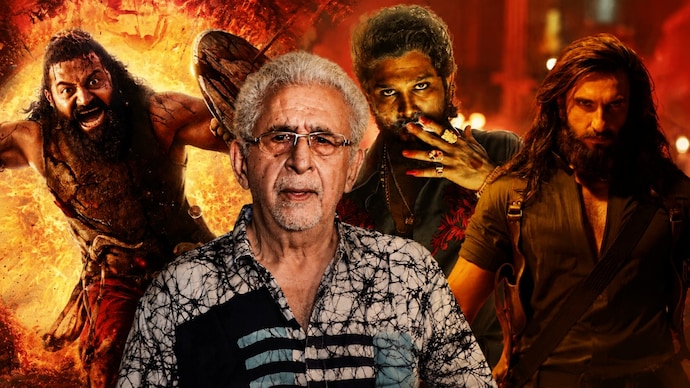
Three years ago, actor Naseeruddin Shah said something in an interview that has now found a fresh lease of life on social media. Talking about the state of Hindi and Indian cinema, the veteran actor argued that men were growing more insecure, and that this insecurity was being papered over with hyper-masculine heroes on screen. "Men's insecurity is increasing," he said, adding, "That's why hyper-masculinity is being emphasised even more."
He wasn't gentle about naming names either. Shah admitted he simply could not sit through RRR or Pushpa, films that had, by then, become cultural events rather than mere releases. "I tried to watch RRR, but I couldn't. I tried to watch Pushpa, but I couldn't," he said, adding that beyond the sheer thrill of watching such spectacles, he couldn't understand what audiences were getting out of them. He made an exception for Mani Ratnam, a film-maker he called capable and free of any agenda. His closing line was the one that really stuck: a film that women like will always succeed, and women, he felt, gravitate towards sensitive storytelling rather than muscle and machismo. "I wonder how many women liked RRR," he said.
That conversation took place in 2023, at the peak of the RRR-Pushpa-Animal wave. So now that the clip is going viral all over again, it seemed worth asking a straightforward question: has anything actually changed? We went back to the box office charts of 2024, 2025 and the first half of 2026 to see whether India's biggest hits are still built on the same hyper-masculine template Shah was talking about, or whether the more sensitive cinema he hoped for has managed to find an audience too.
2024: the year of the alpha hero
The numbers from 2024 read almost like a rebuttal to anyone hoping for a change in taste. Pushpa 2: The Rule, the very franchise Shah singled out, went on to become the highest-grossing Indian film of the year, pulling in Rs 1,742.10 crore worldwide. Allu Arjun's red-sander smuggler, all sweat, swagger and rage, was rewarded more handsomely than ever.
Close behind was Kalki 2898 AD, which earned Rs 1,042.25 crore with its story of a lone hero fighting to save humanity. Stree 2 followed with Rs 857.15 crore. Bhool Bhulaiyaa 3 rounded off the year's big four with Rs 400.25 crore. Interestingly, unlike Pushpa 2 and Kalki 2898 AD, however, Stree 2 and Bhool Bhulaiyaa 3 are horror comedies that rely on an ensemble cast rather than a larger-than-life hero, showing that audiences also embraced stories driven by humour and multiple characters.
2025: the strongmen keep winning, but so does a love story
If 2024 belonged to Pushpa, 2025 belonged to Dhurandhar.. Directed by Aditya Dhar, the spy-action thriller struck a chord with audiences through its high-octane action, larger-than-life heroism and a lead hero who embodied strength, courage and resilience. Headlined by Ranveer Singh, the film presented a classic action hero who takes on impossible odds and emerges victorious, a sign often associated with hyper-masculine storytelling. The film's massive success at the box office, earning over Rs 1,300 crore worldwide, made it not only the highest-grossing Indian film of the year but also further strengthened the argument that audiences continue to be drawn to powerful male-led spectacles.
Rishab Shetty's Kantara: Chapter 1 came second, crossing Rs 850 crore and comfortably outperforming the original Kantara, which had made Rs 408 crore in 2022. The film's folk-hero mythology, all raw strength and divine fury, is about as hyper-masculine as Indian cinema gets. Vicky Kaushal's Chhaava followed in third place with over Rs 800 crore, a historical drama that leaned heavily on valour, war and the image of the invincible warrior-king.
And yet, tucked into that same list is Saiyaara, a romance that earned Rs 570.33 crore worldwide without a single sword fight or muscle-flexing hero to its name. It is precisely the kind of "sensitive" cinema Shah said would eventually find its place, and by year's end, it had done exactly that, outperforming plenty of louder, more aggressive films released around it.
2026 so far: more of the same, with a few exceptions
The trend has continued in 2026 as well. Dhurandhar: The Revenge has earned Rs 1,813 crore worldwide, surpassing the success of the original film. Border 2, a war drama based on patriotism and battlefield bravery, has collected Rs 450.19 crore. Meanwhile, Telugu films Peddi and Karuppu have grossed Rs 338.98 crore and Rs 310.07 crore respectively. Like many of the biggest hits in recent years, these films are driven by larger-than-life heroes, action-packed storytelling and powerful male protagonists who dominate the narrative.
| Year | Film | Worldwide Gross Collection |
|---|---|---|
| 2024 | Pushpa 2: The Rule | Rs 1,742.10 crore |
| Kalki 2898 AD | Rs 1,042.25 crore | |
| Stree 2 | Rs 857.15 crore | |
| Bhool Bhulaiyaa 3 | Rs 400.25 crore | |
| 2025 | Dhurandhar | Rs 1,307.35 crore |
| Kantara: Chapter 1 | Over Rs 850 crore | |
| Chhaava | Over Rs 800 crore | |
| Saiyaara | Rs 570.33 crore | |
| 2026 | Dhurandhar: The Revenge | Rs 1,813.39 crore |
| Border 2 | Rs 450.19 crore | |
| Peddi | Rs 338.98 crore | |
| Karuppu | Rs 310.07 crore |
So, was he right?
Going by the numbers, Naseeruddin Shah's argument holds up rather well. Look at the twelve biggest Indian hits across these three years, and at least nine of them are built around a hyper-masculine central figure: a smuggler, a soldier, a spy, a warrior-king, a folk demigod, or a sci-fi saviour. The commercial logic of Indian cinema, at least at the very top of the charts, still runs on spectacle, dominance and the thrill of watching one man overpower everything in his path, which is exactly what Shah meant when he spoke of insecurity being dressed up as strength.
| Year | Highest-Grossing Indian Film | Worldwide Gross Collection |
|---|---|---|
| 2024 | Pushpa 2: The Rule | Rs 1,742.10 crore |
| 2025 | Dhurandhar | Rs 1,307.35 crore |
| 2026 | Dhurandhar: The Revenge | Rs 1,813.39 crore |
But his other prediction deserves equal credit. He said sensitive films would still find their audience, and Saiyaara is proof that they can, and handsomely so. Stree 2 and Bhool Bhulaiyaa 3, while not devoid of spectacle, also show that comedy and ensemble storytelling can hold their own against solo-hero action. The pattern isn't absolute, and it never really was; Shah himself pointed to A Wednesday as an example of a hit film without a conventional muscular hero. What the last three years confirm is less a total takeover by hyper-masculinity and more a market split down the middle: the biggest numbers still favour the alpha hero, but there is real room, and real money, in the films that don't need one.
Three years ago, actor Naseeruddin Shah said something in an interview that has now found a fresh lease of life on social media. Talking about the state of Hindi and Indian cinema, the veteran actor argued that men were growing more insecure, and that this insecurity was being papered over with hyper-masculine heroes on screen. "Men's insecurity is increasing," he said, adding, "That's why hyper-masculinity is being emphasised even more."
He wasn't gentle about naming names either. Shah admitted he simply could not sit through RRR or Pushpa, films that had, by then, become cultural events rather than mere releases. "I tried to watch RRR, but I couldn't. I tried to watch Pushpa, but I couldn't," he said, adding that beyond the sheer thrill of watching such spectacles, he couldn't understand what audiences were getting out of them. He made an exception for Mani Ratnam, a film-maker he called capable and free of any agenda. His closing line was the one that really stuck: a film that women like will always succeed, and women, he felt, gravitate towards sensitive storytelling rather than muscle and machismo. "I wonder how many women liked RRR," he said.
That conversation took place in 2023, at the peak of the RRR-Pushpa-Animal wave. So now that the clip is going viral all over again, it seemed worth asking a straightforward question: has anything actually changed? We went back to the box office charts of 2024, 2025 and the first half of 2026 to see whether India's biggest hits are still built on the same hyper-masculine template Shah was talking about, or whether the more sensitive cinema he hoped for has managed to find an audience too.
2024: the year of the alpha hero
The numbers from 2024 read almost like a rebuttal to anyone hoping for a change in taste. Pushpa 2: The Rule, the very franchise Shah singled out, went on to become the highest-grossing Indian film of the year, pulling in Rs 1,742.10 crore worldwide. Allu Arjun's red-sander smuggler, all sweat, swagger and rage, was rewarded more handsomely than ever.
Close behind was Kalki 2898 AD, which earned Rs 1,042.25 crore with its story of a lone hero fighting to save humanity. Stree 2 followed with Rs 857.15 crore. Bhool Bhulaiyaa 3 rounded off the year's big four with Rs 400.25 crore. Interestingly, unlike Pushpa 2 and Kalki 2898 AD, however, Stree 2 and Bhool Bhulaiyaa 3 are horror comedies that rely on an ensemble cast rather than a larger-than-life hero, showing that audiences also embraced stories driven by humour and multiple characters.
2025: the strongmen keep winning, but so does a love story
If 2024 belonged to Pushpa, 2025 belonged to Dhurandhar.. Directed by Aditya Dhar, the spy-action thriller struck a chord with audiences through its high-octane action, larger-than-life heroism and a lead hero who embodied strength, courage and resilience. Headlined by Ranveer Singh, the film presented a classic action hero who takes on impossible odds and emerges victorious, a sign often associated with hyper-masculine storytelling. The film's massive success at the box office, earning over Rs 1,300 crore worldwide, made it not only the highest-grossing Indian film of the year but also further strengthened the argument that audiences continue to be drawn to powerful male-led spectacles.
Rishab Shetty's Kantara: Chapter 1 came second, crossing Rs 850 crore and comfortably outperforming the original Kantara, which had made Rs 408 crore in 2022. The film's folk-hero mythology, all raw strength and divine fury, is about as hyper-masculine as Indian cinema gets. Vicky Kaushal's Chhaava followed in third place with over Rs 800 crore, a historical drama that leaned heavily on valour, war and the image of the invincible warrior-king.
And yet, tucked into that same list is Saiyaara, a romance that earned Rs 570.33 crore worldwide without a single sword fight or muscle-flexing hero to its name. It is precisely the kind of "sensitive" cinema Shah said would eventually find its place, and by year's end, it had done exactly that, outperforming plenty of louder, more aggressive films released around it.
2026 so far: more of the same, with a few exceptions
The trend has continued in 2026 as well. Dhurandhar: The Revenge has earned Rs 1,813 crore worldwide, surpassing the success of the original film. Border 2, a war drama based on patriotism and battlefield bravery, has collected Rs 450.19 crore. Meanwhile, Telugu films Peddi and Karuppu have grossed Rs 338.98 crore and Rs 310.07 crore respectively. Like many of the biggest hits in recent years, these films are driven by larger-than-life heroes, action-packed storytelling and powerful male protagonists who dominate the narrative.
| Year | Film | Worldwide Gross Collection |
|---|---|---|
| 2024 | Pushpa 2: The Rule | Rs 1,742.10 crore |
| Kalki 2898 AD | Rs 1,042.25 crore | |
| Stree 2 | Rs 857.15 crore | |
| Bhool Bhulaiyaa 3 | Rs 400.25 crore | |
| 2025 | Dhurandhar | Rs 1,307.35 crore |
| Kantara: Chapter 1 | Over Rs 850 crore | |
| Chhaava | Over Rs 800 crore | |
| Saiyaara | Rs 570.33 crore | |
| 2026 | Dhurandhar: The Revenge | Rs 1,813.39 crore |
| Border 2 | Rs 450.19 crore | |
| Peddi | Rs 338.98 crore | |
| Karuppu | Rs 310.07 crore |
So, was he right?
Going by the numbers, Naseeruddin Shah's argument holds up rather well. Look at the twelve biggest Indian hits across these three years, and at least nine of them are built around a hyper-masculine central figure: a smuggler, a soldier, a spy, a warrior-king, a folk demigod, or a sci-fi saviour. The commercial logic of Indian cinema, at least at the very top of the charts, still runs on spectacle, dominance and the thrill of watching one man overpower everything in his path, which is exactly what Shah meant when he spoke of insecurity being dressed up as strength.
| Year | Highest-Grossing Indian Film | Worldwide Gross Collection |
|---|---|---|
| 2024 | Pushpa 2: The Rule | Rs 1,742.10 crore |
| 2025 | Dhurandhar | Rs 1,307.35 crore |
| 2026 | Dhurandhar: The Revenge | Rs 1,813.39 crore |
But his other prediction deserves equal credit. He said sensitive films would still find their audience, and Saiyaara is proof that they can, and handsomely so. Stree 2 and Bhool Bhulaiyaa 3, while not devoid of spectacle, also show that comedy and ensemble storytelling can hold their own against solo-hero action. The pattern isn't absolute, and it never really was; Shah himself pointed to A Wednesday as an example of a hit film without a conventional muscular hero. What the last three years confirm is less a total takeover by hyper-masculinity and more a market split down the middle: the biggest numbers still favour the alpha hero, but there is real room, and real money, in the films that don't need one.

