There are actors. There are filmstars. And then there is Ranveer Singh, an artiste who has spent the last decade and a half blurring the line between the two.
In an era when celebrities are increasingly polished, measured and media-trained, Singh has built an empire out of unpredictability, on the screen and off it, too. One day he is arriving at an event in a neon tracksuit that looks borrowed from another planet; the next day he is deeply immersed in his role of a rapper -- so completely that the audience forgets the man beneath the costume. That rare ability to be both spectacle and craftsman is what makes him one of Bollywood's most exciting new-generation heroes.
Born on July 6, 1985, it all began for Ranveer Singh with a film that nobody expected to become a phenomenon. When Band Baaja Baaraat released in 2010, it was viewed as a modest romantic comedy rather than a major launch vehicle. Yet the film's infectious charm and Singh's effortlessly believable turn as Delhi boy Bittoo Sharma transformed it into a sleeper hit. Overnight, Hindi cinema had found a new leading man — one who possesses neither the traditional restraint of an image-obsessed industry insider nor the carefully cultivated mystique of a conventional star.
Singh followed up his debut hit with Ladies vs Ricky Bahl in 2011 and Lootera two years later. His roles in both films won applause. The real transformation, however, would arrive with Sanjay Leela Bhansali.
If Goliyon Ki Raasleela: Ram-Leela (2013) introduced the audience to Singh's volcanic charisma as a reckless lover, Bajirao Mastani (2015) revealed a different dimension altogether. As the legendary Peshwa Bajirao, he delivered a performance of authority, carrying the weight of history with surprising ease. Then came Padmaavat (2018), and with it Alauddin Khilji — perhaps the boldest performance of his career. Savage, unsettling and magnetic, Singh's portrayal of the Delhi Sultan was so overwhelming that he dominated conversations long after the credits rolled.
Those three films did more than produce blockbusters. They shattered the notion that Singh could be boxed into a single screen image. Guy next door, romantic hero, warrior king, larger-than-life tyrant — he inhabited each persona with startling conviction. The Bhansali years transformed him from a rising star into one of the industry's most valuable leading men.
What followed was a masterclass in versatility. He became the ambitious street rapper Murad in Gully Boy (2019), earning widespread acclaim for one of the finest performances of his generation. He channelled the spirit of cricket icon Kapil Dev in 83 (2021), brought mass appeal to Simmba (2018), and showcased his flair for old-school Bollywood romance in Rocky Aur Rani Kii Prem Kahaani (2023). Few contemporary actors move between genres, tones and character types with such confidence.
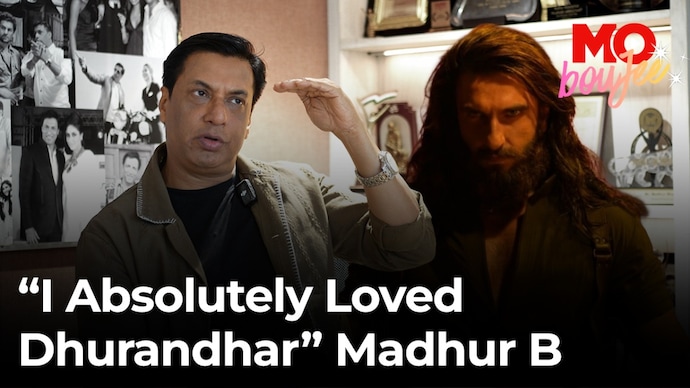
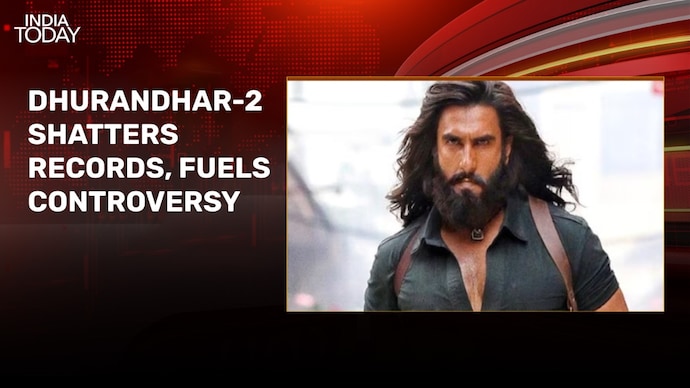
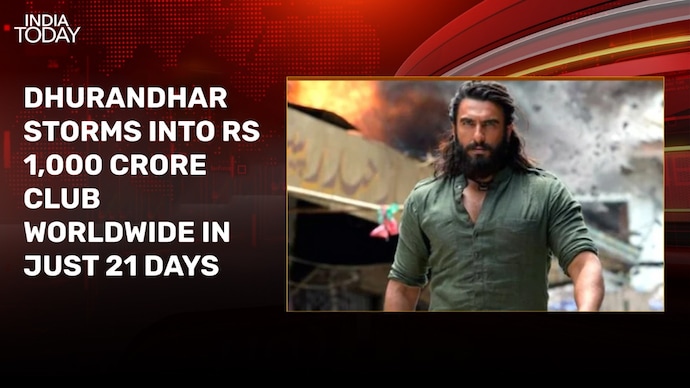
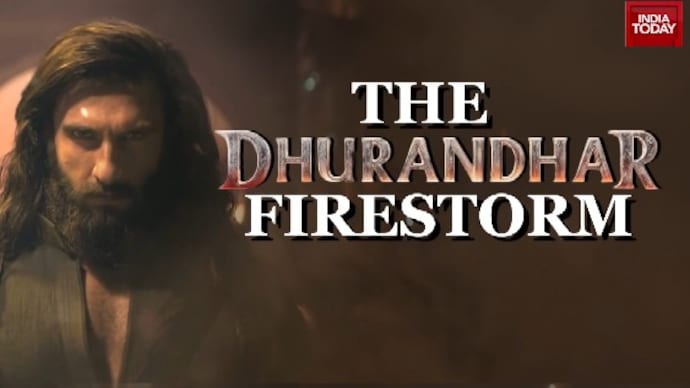
But Singh's best -- and biggest -- was yet to come. The unique connection he has held with fans over the years has been one that was built as much on personality as performance. That connection got the right scope to exhibit itself in the Dhurandhar films. Dhurandhar (2025) and Dhurandhar: The Revenge (2026 not only broke records. These films also amplified Ranveer Singh's appeal across demographics and strengthened his position as a genuine crowd favourite.
Off screen, he has become a phenomenon in his own right. His wardrobe choices routinely trigger headlines; his red-carpet appearances often feel like performance art. In 2016, his appearance at a major awards ceremony in an eccentric, flamboyant ensemble that generated days of discussion. In 2019, videos of him dancing with fans and crashing public events became social-media gold. During the 2023 Cricket World Cup, his animated reactions from the stands once again demonstrated his uncanny ability to command attention without even being on screen.
He amused fans by dressing up in a skirt at a promotional event for Bajirao Mastani and shocked the world only too many times – think of the Kantara moment at IFFI 2025 where he unwittingly drew High Court wrath by trying to enact a sacred ritual sequence, or the AIB Knockout of 2015 that attracted police complaints for allegedly sexually-explicit humour. And in a bizarre fashion stunt, Singh arrived at Shahid Kapoor's 2017 birthday dressed in a costume that many on social media felt resembled a condom (some said it looked like a sperm). With Ranveer Singh, expected the unexpected.
Of course, unpredictability comes at a price. Singh's career has occasionally brushed up against controversy. His nude magazine photoshoot in 2022 ignited fierce public debate and legal complaints. More recently, the ongoing Don 3 impasse saw him make headlines for all the wrong reasons. Don 3 director Farhan Akhtar's complaint to the Federation of Western India Cine Employees (FWICE) over the actor's alleged exit from the project days before shooting was to start, the film body imposed a non-cooperative directive against Singh. Singh, in turn slapped a legal notice on FWICE, and the film body withdrew its directive. The drama has been no less than what the script of a thriller might be.
Today Ranveer Singh is more than a filmstar. He is a role model and a style icon who has featured in Forbes India's Celebrity 100 list since 2012.
Through it all, his personal life has remained a source of admiration. After co-starring in Bhansali's blockbuster trilogy, Singh and Deepika Padukone married in a fairy-tale ceremony at Lake Como in 2018. In 2024, the couple welcomed their daughter, Dua, adding a new chapter to one of Indian cinema's most beloved love stories.
Today, Ranveer Singh occupies a space few actors ever reach. He is an entertainer, a shape-shifting performer and a cultural event. Whether he's commanding a historical epic, fronting a commercial blockbuster or simply walking into a room dressed like nobody else on Earth, he generates conversation. And in the attention economy that defines modern stardom, that may be his greatest superpower of all.