Actor Akhil Akkineni has spent 11 years chasing one hit. Is Lenin finally it?
Telugu actor Akhil Akkineni heads into Lenin after years of uneven choices and the fallout from Agent. The release is seen as a crucial test of whether he can finally secure a lasting screen identity.
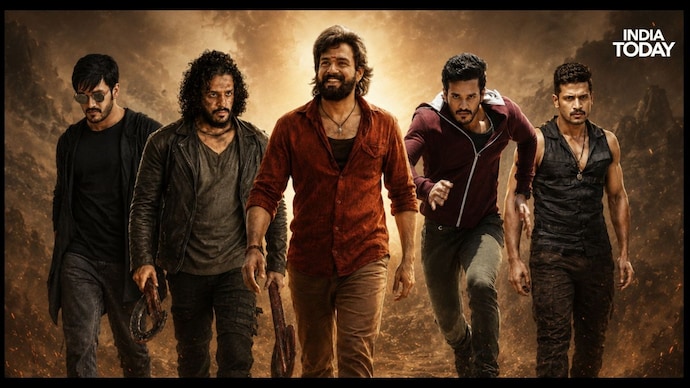
Producer Dil Raju once summed up the ingredients of a commercial entertainer during the pre-release event of Thalapathy Vijay's Varisu. 'If you want dance, there is dance. If you want fights, there are fights. If you want emotion, that is there too.' He was describing a film, but he might as well have been outlining the blueprint of a commercial star. The ability to dance effortlessly, command action sequences and deliver emotional scenes has long been the industry's ideal. Plenty of actors spend years trying to master that combination. Very few appear to possess it from the moment they arrive.
When Akhil Akkineni made his debut in 2015, he seemed to fit that blueprint almost perfectly. He could dance with ease, looked convincing in action and carried himself with the confidence of someone destined for stardom. It is little surprise that the industry spoke about him as the next big commercial hero even before he had built a filmography.
He could dance. He could fight. He looked every bit the part of a leading man. He belonged to one of Telugu cinema's most celebrated families. The Akkineni surname did not simply open doors, it carried decades of goodwill and expectation with it. Eleven years later, Akhil is still the actor everyone agrees "has it". The only thing missing is the film that proves it.
So what went wrong? Were the scripts never good enough? Did audiences fail to connect with him? Or did Akhil spend so much time reinventing himself that nobody ever got the chance to know who he really was on-screen? And just how important is his upcoming film, Lenin?
Born into expectations
Few actors have entered Telugu cinema with expectations as enormous as Akhil's. Long before his official debut, audiences had already watched him grow up. At barely a year old, he appeared in Sisindri (1995), the Telugu adaptation of Baby's Day Out, produced by his father Nagarjuna. Nearly two decades later came Manam, where his brief appearance alongside three generations of the Akkineni family became one of the film's most memorable moments. The cameo carried the emotional weight of an introduction audiences had been waiting years to see.
A record opening, a painful landing
By the time the full-length debut, Akhil (2015) was released, the groundwork had already been laid. Directed by VV Vinayak and produced by Nithiin, the film generated extraordinary pre-release business for a debut actor. Akhil spent months preparing physically, including stunt training in Thailand, and the film opened to around Rs 10 crore across Andhra Pradesh and Telangana on its first day, with a worldwide opening of nearly Rs 14 crore, making it the biggest opening ever for a debut film by a Telugu actor at the time.
Then audiences watched the film.
Reviews were mixed, word-of-mouth turned quickly and one of Telugu cinema's biggest launches collapsed almost as fast as it had begun. Given the scale of the expectations, the silence that followed arguably spoke louder than the failure itself. Most actors spend their early careers strengthening a single screen image. Akhil did the opposite. Every film seemed determined to introduce a completely different version of him.
Hello (2017) positioned him as a sensitive romantic hero. Mr Majnu (2019) leaned further into the urban lover image. Most Eligible Bachelor(2021) finally gave him something that connected with family audiences and became his first commercial success. For a brief period, it appeared he had found the direction his career had been searching for.
Then came perhaps the most surprising decision of all. Instead of building on that success, Akhil pivoted towards Agent (2023), an ambitious action thriller mounted on a massive budget. It demanded a complete physical transformation, international-style action and a very different screen persona. On paper, it looked like a calculated attempt to launch Akhil as a pan-Indian action star. Instead, it became one of the most heavily criticised Telugu films in recent years.
The criticism was relentless. Audiences questioned the screenplay, performances, action and overall execution. The film became the subject of widespread trolling on social media and remained absent from major streaming platforms for an unusually long period, reflecting the scale of its commercial and reputational damage.
It was not that Akhil was unwilling to experiment with different scripts. Rather, most of the films he chose failed to translate well on screen, while some of his performances fell short of what audiences expected from an actor with his potential.
For Akhil, the setback extended well beyond the box office. Months after the release of Agent, he suffered a serious accident at home after slipping on a wet bathroom floor and falling onto broken glass. The injury damaged a vein, tendon and nerve in his left hand, requiring multiple surgeries and a recovery that lasted nearly sixteen months. For much of that period, even returning to the gym was impossible.
Looking back, Akhil has acknowledged that while some of Agent's failure was within his control, not all of it was. More importantly, he has spoken about learning from those mistakes rather than allowing them to define him.
Can Lenin finally end the search?
That brings us to Lenin. Releasing this week, the film arguably carries more significance than any project Akhil has taken up since his debut. Not because it needs to become an industry record-breaker, but because it needs to answer a question that has followed the actor for more than a decade: Can Akhil Akkineni finally prove that he is both a credible actor and a genuine crowd-puller?
This time, the approach feels noticeably different. Unlike previous campaigns, which focussed on everything from the boy-next-door image to physical transformations and larger-than-life heroism, the promotions for Lenin have centred more on the story, the performance and the character. Akhil himself appears calmer, more measured and less interested in selling an image than in talking about the film itself. After everything that happened following Agent, there is a sense that this project has been approached with greater patience and maturity.
Talent has never really been the issue. Neither has effort. Few actors would willingly rebuild themselves after such a public setback, recover from multiple surgeries and return carrying the weight of expectations that have followed them since childhood. If anything, Akhil's career has shown that hard work alone cannot guarantee success. The right film has to arrive at the right moment.
That moment may finally be here.
Whether Lenin succeeds or not will ultimately be decided by audiences, not by pre-release hype or industry goodwill. But if the film connects, it could achieve something far more valuable than delivering a commercial success. It could finally give Akhil a screen identity that audiences embrace, rather than forcing him into yet another reinvention in search of the comeback he has been waiting for over the past eleven years.
Producer Dil Raju once summed up the ingredients of a commercial entertainer during the pre-release event of Thalapathy Vijay's Varisu. 'If you want dance, there is dance. If you want fights, there are fights. If you want emotion, that is there too.' He was describing a film, but he might as well have been outlining the blueprint of a commercial star. The ability to dance effortlessly, command action sequences and deliver emotional scenes has long been the industry's ideal. Plenty of actors spend years trying to master that combination. Very few appear to possess it from the moment they arrive.
When Akhil Akkineni made his debut in 2015, he seemed to fit that blueprint almost perfectly. He could dance with ease, looked convincing in action and carried himself with the confidence of someone destined for stardom. It is little surprise that the industry spoke about him as the next big commercial hero even before he had built a filmography.
He could dance. He could fight. He looked every bit the part of a leading man. He belonged to one of Telugu cinema's most celebrated families. The Akkineni surname did not simply open doors, it carried decades of goodwill and expectation with it. Eleven years later, Akhil is still the actor everyone agrees "has it". The only thing missing is the film that proves it.
So what went wrong? Were the scripts never good enough? Did audiences fail to connect with him? Or did Akhil spend so much time reinventing himself that nobody ever got the chance to know who he really was on-screen? And just how important is his upcoming film, Lenin?
Born into expectations
Few actors have entered Telugu cinema with expectations as enormous as Akhil's. Long before his official debut, audiences had already watched him grow up. At barely a year old, he appeared in Sisindri (1995), the Telugu adaptation of Baby's Day Out, produced by his father Nagarjuna. Nearly two decades later came Manam, where his brief appearance alongside three generations of the Akkineni family became one of the film's most memorable moments. The cameo carried the emotional weight of an introduction audiences had been waiting years to see.
A record opening, a painful landing
By the time the full-length debut, Akhil (2015) was released, the groundwork had already been laid. Directed by VV Vinayak and produced by Nithiin, the film generated extraordinary pre-release business for a debut actor. Akhil spent months preparing physically, including stunt training in Thailand, and the film opened to around Rs 10 crore across Andhra Pradesh and Telangana on its first day, with a worldwide opening of nearly Rs 14 crore, making it the biggest opening ever for a debut film by a Telugu actor at the time.
Then audiences watched the film.
Reviews were mixed, word-of-mouth turned quickly and one of Telugu cinema's biggest launches collapsed almost as fast as it had begun. Given the scale of the expectations, the silence that followed arguably spoke louder than the failure itself. Most actors spend their early careers strengthening a single screen image. Akhil did the opposite. Every film seemed determined to introduce a completely different version of him.
Hello (2017) positioned him as a sensitive romantic hero. Mr Majnu (2019) leaned further into the urban lover image. Most Eligible Bachelor(2021) finally gave him something that connected with family audiences and became his first commercial success. For a brief period, it appeared he had found the direction his career had been searching for.
Then came perhaps the most surprising decision of all. Instead of building on that success, Akhil pivoted towards Agent (2023), an ambitious action thriller mounted on a massive budget. It demanded a complete physical transformation, international-style action and a very different screen persona. On paper, it looked like a calculated attempt to launch Akhil as a pan-Indian action star. Instead, it became one of the most heavily criticised Telugu films in recent years.
The criticism was relentless. Audiences questioned the screenplay, performances, action and overall execution. The film became the subject of widespread trolling on social media and remained absent from major streaming platforms for an unusually long period, reflecting the scale of its commercial and reputational damage.
It was not that Akhil was unwilling to experiment with different scripts. Rather, most of the films he chose failed to translate well on screen, while some of his performances fell short of what audiences expected from an actor with his potential.
For Akhil, the setback extended well beyond the box office. Months after the release of Agent, he suffered a serious accident at home after slipping on a wet bathroom floor and falling onto broken glass. The injury damaged a vein, tendon and nerve in his left hand, requiring multiple surgeries and a recovery that lasted nearly sixteen months. For much of that period, even returning to the gym was impossible.
Looking back, Akhil has acknowledged that while some of Agent's failure was within his control, not all of it was. More importantly, he has spoken about learning from those mistakes rather than allowing them to define him.
Can Lenin finally end the search?
That brings us to Lenin. Releasing this week, the film arguably carries more significance than any project Akhil has taken up since his debut. Not because it needs to become an industry record-breaker, but because it needs to answer a question that has followed the actor for more than a decade: Can Akhil Akkineni finally prove that he is both a credible actor and a genuine crowd-puller?
This time, the approach feels noticeably different. Unlike previous campaigns, which focussed on everything from the boy-next-door image to physical transformations and larger-than-life heroism, the promotions for Lenin have centred more on the story, the performance and the character. Akhil himself appears calmer, more measured and less interested in selling an image than in talking about the film itself. After everything that happened following Agent, there is a sense that this project has been approached with greater patience and maturity.
Talent has never really been the issue. Neither has effort. Few actors would willingly rebuild themselves after such a public setback, recover from multiple surgeries and return carrying the weight of expectations that have followed them since childhood. If anything, Akhil's career has shown that hard work alone cannot guarantee success. The right film has to arrive at the right moment.
That moment may finally be here.
Whether Lenin succeeds or not will ultimately be decided by audiences, not by pre-release hype or industry goodwill. But if the film connects, it could achieve something far more valuable than delivering a commercial success. It could finally give Akhil a screen identity that audiences embrace, rather than forcing him into yet another reinvention in search of the comeback he has been waiting for over the past eleven years.

