Jr NTR's new film sparks Lord Murugan row: Why 'Born in the North' angered Tamils
A first-look poster from Jr NTR and Trivikram Srinivas's upcoming film has set off an online argument over Lord Murugan's origins. The row has widened into a debate on Tamil cultural identity, mythology and how the deity is represented on screen.
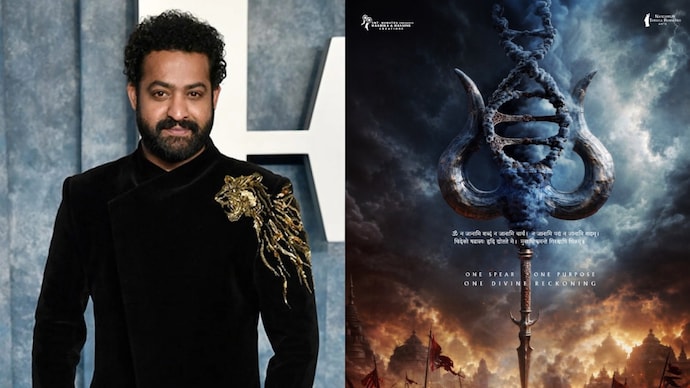
The first glimpse of Jr NTR and Trivikram Srinivas’s upcoming untitled film on Lord Murugan, also known as Karthikeya, has triggered a major debate online. And it's one that has moved beyond cinema into questions of mythology, cultural identity and representation. The phrase "Born in the North" used by the producer during the announcement ignited a row over Lord Murugan's origins as he is fondly called Tamil Kadavul (God of the Tamils) in the South.
The poster hinted that Lord Murugan, or his divine spear, the Vel, could play a pivotal role in shaping Jr NTR's character arc. Producer Naga Vamsi unveiled the poster with the caption: "Born in the North. Forged in the Heartland. Worshipped in the South. Now... A tale destined to belong to the universe (sic)."
The phrase “Born in the North” soon became the centre of a heated debate on X, with several Tamil users questioning the description and accusing the makers of cultural misrepresentation. For many, the issue was not simply about depicting a deity on screen, but about whether a deity deeply embedded in Tamil identity was being reinterpreted without acknowledging that cultural and historical connection.
Why the “Born in the North” line upset Tamils
Several users argued that Lord Murugan is not just a deity of worship, but an important symbol of Tamil culture, language and history, often referred to as “Tamil Kadavul." They pointed to ancient Tamil traditions and literature, including references from Sangam-era texts, that associate Murugan with the Kurinji landscape - the mountainous region of ancient Tamil Nadu.
Many also highlighted Murugan’s six sacred abodes, the Arupadaiveedu (six sacred abodes of Lord Murugan), all located in Tamil Nadu, as evidence of his deep cultural connection with the state.
Some users accused the makers of “altering history” for cinematic purposes, calling it an example of cultural appropriation where elements of a community’s heritage are used or reshaped without sensitivity towards their original context.
One user wrote, "“Stop using Lord Murugan for content if you don’t understand who He is. He’s Tamil Kadavul, not a prop for cinematic fantasies.” Another said, "“Born in North? That’s simply incorrect. Lord Muruga is revered as Tamil Kadavul, deeply rooted in Tamil culture and tradition.”
Here are some reactions:
Why another section of users defended the makers
The debate also saw another group of users arguing that Lord Murugan’s identity extends beyond Tamil Nadu and that he never had a physical birth as cited in some of the mythological texts.
They pointed out that Murugan is worshipped across India under different names – as Subramanya Swamy in parts of South India and as Kartikeya or Skanda in North India – and argued that he cannot be restricted to one region.
One user wrote, "“He’s worshipped as Subramanya Swamy in Telugu states and Karnataka and as Kartikeya/Skanda in North India. Just because you worship him more doesn’t make him only a Tamil god.” Others referred to Hindu Puranic traditions, which describe Murugan’s birth at Saravana Poigai, a sacred lake associated with the Himalayas.
So, where does Lord Murugan belong?
The disagreement largely stems from two different ways of looking at Murugan’s identity.
Lord Murugan, also fondly called Por Kadavul (God of War), is closely tied to Tamil culture, literature and geography. His association with the Kurinji landscape and his presence in Tamil devotional traditions have made him an important cultural symbol for centuries.
In broader Hindu mythology, Murugan is identified as Kartikeya/Skanda, the son of Lord Shiva and Goddess Parvati, with legends of his birth and worship spread across different parts of India.
Therefore, while Tamil tradition places strong emphasis on Murugan’s cultural roots in Tamil Nadu, pan-Indian traditions view him as a deity worshipped across regions.
What remains unknown about Jr NTR-Trivikram’s film
The makers have not yet revealed the complete story or clarified whether the poster’s reference to Murugan’s origins is part of the film’s actual narrative or a symbolic creative choice. Months before the film's announcement, Jr NTR was seen carrying a book on the history of Lord Murugan, indicating that he had begun his prep for the film. It is unclear if he will play Lord Murugan in the film or a character who is a devotee of the deity.
The film, produced by Naga Vamsi, will feature music by Anirudh Ravichander. Until more details emerge, the debate continues – with one side questioning cultural representation and the other arguing that Murugan’s identity transcends regional boundaries.
The first glimpse of Jr NTR and Trivikram Srinivas’s upcoming untitled film on Lord Murugan, also known as Karthikeya, has triggered a major debate online. And it's one that has moved beyond cinema into questions of mythology, cultural identity and representation. The phrase "Born in the North" used by the producer during the announcement ignited a row over Lord Murugan's origins as he is fondly called Tamil Kadavul (God of the Tamils) in the South.
The poster hinted that Lord Murugan, or his divine spear, the Vel, could play a pivotal role in shaping Jr NTR's character arc. Producer Naga Vamsi unveiled the poster with the caption: "Born in the North. Forged in the Heartland. Worshipped in the South. Now... A tale destined to belong to the universe (sic)."
The phrase “Born in the North” soon became the centre of a heated debate on X, with several Tamil users questioning the description and accusing the makers of cultural misrepresentation. For many, the issue was not simply about depicting a deity on screen, but about whether a deity deeply embedded in Tamil identity was being reinterpreted without acknowledging that cultural and historical connection.
Why the “Born in the North” line upset Tamils
Several users argued that Lord Murugan is not just a deity of worship, but an important symbol of Tamil culture, language and history, often referred to as “Tamil Kadavul." They pointed to ancient Tamil traditions and literature, including references from Sangam-era texts, that associate Murugan with the Kurinji landscape - the mountainous region of ancient Tamil Nadu.
Many also highlighted Murugan’s six sacred abodes, the Arupadaiveedu (six sacred abodes of Lord Murugan), all located in Tamil Nadu, as evidence of his deep cultural connection with the state.
Some users accused the makers of “altering history” for cinematic purposes, calling it an example of cultural appropriation where elements of a community’s heritage are used or reshaped without sensitivity towards their original context.
One user wrote, "“Stop using Lord Murugan for content if you don’t understand who He is. He’s Tamil Kadavul, not a prop for cinematic fantasies.” Another said, "“Born in North? That’s simply incorrect. Lord Muruga is revered as Tamil Kadavul, deeply rooted in Tamil culture and tradition.”
Here are some reactions:
Why another section of users defended the makers
The debate also saw another group of users arguing that Lord Murugan’s identity extends beyond Tamil Nadu and that he never had a physical birth as cited in some of the mythological texts.
They pointed out that Murugan is worshipped across India under different names – as Subramanya Swamy in parts of South India and as Kartikeya or Skanda in North India – and argued that he cannot be restricted to one region.
One user wrote, "“He’s worshipped as Subramanya Swamy in Telugu states and Karnataka and as Kartikeya/Skanda in North India. Just because you worship him more doesn’t make him only a Tamil god.” Others referred to Hindu Puranic traditions, which describe Murugan’s birth at Saravana Poigai, a sacred lake associated with the Himalayas.
So, where does Lord Murugan belong?
The disagreement largely stems from two different ways of looking at Murugan’s identity.
Lord Murugan, also fondly called Por Kadavul (God of War), is closely tied to Tamil culture, literature and geography. His association with the Kurinji landscape and his presence in Tamil devotional traditions have made him an important cultural symbol for centuries.
In broader Hindu mythology, Murugan is identified as Kartikeya/Skanda, the son of Lord Shiva and Goddess Parvati, with legends of his birth and worship spread across different parts of India.
Therefore, while Tamil tradition places strong emphasis on Murugan’s cultural roots in Tamil Nadu, pan-Indian traditions view him as a deity worshipped across regions.
What remains unknown about Jr NTR-Trivikram’s film
The makers have not yet revealed the complete story or clarified whether the poster’s reference to Murugan’s origins is part of the film’s actual narrative or a symbolic creative choice. Months before the film's announcement, Jr NTR was seen carrying a book on the history of Lord Murugan, indicating that he had begun his prep for the film. It is unclear if he will play Lord Murugan in the film or a character who is a devotee of the deity.
The film, produced by Naga Vamsi, will feature music by Anirudh Ravichander. Until more details emerge, the debate continues – with one side questioning cultural representation and the other arguing that Murugan’s identity transcends regional boundaries.

