Ram Charan's Peddi is Tollywood's RCB moment: An industry desperate for June win
Ram Charan's Peddi has emerged as a crucial release for Telugu cinema after the industry's a weak theatrical run in 2026. Its performance will shape confidence around star-led films, theatres and the industry's broader recovery.
When Royal Challengers Bengaluru (RCB) finally lifted the IPL trophy in 2025, the celebration was not just about a cricket team winning a tournament. It was about the end of a long wait. After years of near-misses, fans finally saw something go right. Everyone remembers the celebrations that followed, but very few remember the tension that preceded them. The emotional weight that Indian sports lovers carried in those final overs. The silence before the exhalation.
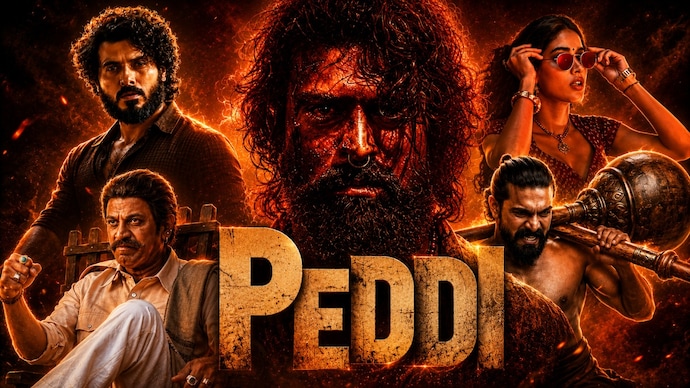
Telugu cinema finds itself in a similar situation today. The industry has spent the first half of 2026 searching for a theatrical success that could restore confidence. Big-ticket releases arrived with enormous expectations, only to leave behind disappointment. Small-budget films barely registered. Theatres have sat emptier than at any point since the post-Covid slump. In that climate, Peddi has gradually transformed from a Ram Charan film into something much larger, a potential turning point for an industry desperately in need of one.
The weight of this wait is enormous. The sigh of box office relief is not just anticipatory, it feels essential for survival at this point.
And fittingly, almost poetically, it is a cricket film carrying this weight. But why has Peddi ended up here, and what exactly is at stake?
When star power stops being enough
For years, Telugu cinema operated on a simple belief: stars guaranteed returns. No matter the content, audiences would storm into theatres to celebrate the star. That formula now appears less reliable than ever.
Whether it is Prabhas's The Raja Saab, Mahesh Babu's Guntur Kaaram, Jr NTR's Devara and War 2, or Ram Charan's Game Changer, several high-profile releases built around major stars have struggled to generate lasting audience enthusiasm beyond the initial fan-driven rush.
The bigger concern for the industry is that these films have not merely faced box-office challenges. Many have also left sections of their own fan bases dissatisfied — audiences who traditionally turned up to theatres simply to celebrate their favourite stars.
Today, even that loyalty appears to have limits. Fan groups may continue to highlight opening-day records and collection figures, but industry stakeholders are increasingly speaking about a deeper issue: audiences are becoming far more selective about what they choose to watch in theatres.
The consequences are being felt across the ecosystem. Theatre owners are openly discussing how non-Telugu releases are contributing more significantly to their revenues. Producers are reassessing budgets and release strategies. The long-held assumption that a star's presence alone would bring audiences in is being seriously questioned for the first time.
It is against this backdrop that Peddi arrives with a star like Ram Charan who has the potential to bring all sections of the audience to theatres.
The question of Ram Charan’s star power
The pressure surrounding Peddi is particularly significant for Ram Charan. Following the global success of RRR, expectations around his career reached unprecedented levels. Translating that momentum into a successful solo journey, however, has proven difficult. And it has already been four years since he has tasted that kind of success again.
Game Changer was expected to establish Charan as a major pan-India force independent of Rajamouli. Instead, it raised questions about script selection, project planning and the direction of his post-RRR career. Years of his prime were invested in a film that did not deliver and Charan, to his credit, largely absorbed the criticism without public deflection.
That composure has preserved his goodwill. He remains well-regarded within the industry and among audiences who are, genuinely, rooting for him to find the right material. Peddi is a direct attempt to provide exactly that. The film takes him back to familiar territory: a rooted rural drama driven by emotion and character, precisely the kind of storytelling that produced Rangasthalam (2018), still regarded by many as the finest performance of his career outside the Rajamouli universe.
The objective is clear. Charan is not chasing spectacle. He is returning to the ground where he is strongest. Whether Peddi can deliver on that instinct remains the central question of his career right now.
Buchi Babu Sana: the weight of the second film
If Charan carries one layer of pressure, director Buchi Babu Sana carries another.
His debut, Uppena, was widely praised for its emotional depth and storytelling maturity. It earned national recognition and established him as one of Telugu cinema's most promising young filmmakers. But second films have a habit of defining careers in ways that debuts do not. Moving from newcomers to a major star project introduces a completely different set of pressures — louder expectations, more scrutinised creative decisions and the constant negotiation between a director's instincts and a star vehicle's commercial requirements.
From what has been revealed, Peddi is ambitious. It combines rural drama, sport, family emotion and larger commercial elements. The challenge is not whether these ingredients work individually, but whether they converge into something coherent and emotionally true. There are reportedly moments of significant emotional consequence in the film — the kind that, when they land, define a film's legacy, and when they do not, feel miscalculated and manipulative.
For Buchi Babu, this is the film that will establish whether Uppena was the beginning of a sustained directorial career or a difficult act to follow.
Janhvi Kapoor and the question of credibility
Another significant talking point ahead of the release has been Janhvi Kapoor. Her Telugu debut in Devara: Part 1 generated mixed reactions, and much of that scepticism has followed her into Peddi. Promotional material has done little to silence those concerns, with discussions about her role continuing across social media.
For Kapoor, the film represents an important opportunity to establish credibility within South cinema. A convincing performance could meaningfully shift perceptions. A weak one risks reinforcing existing criticism and closing a door she is still trying to open. Given the scrutiny already surrounding the film, her performance will be examined with particular attention.
The promotional campaign and its damage
For a film carrying this much expectation, the promotional campaign should have built genuine, widening momentum. Pan-India tours were conducted. Material dropped consistently. The machinery was in motion. And yet, somewhere along the way, the campaign began generating the wrong kind of attention.
The exception is Chikkri. The song, composed by AR Rahman, connected strongly, offering a clear glimpse into the film's emotional and musical identity. Beyond that, however, reactions have been more divided than the scale of the release would suggest. The trailer and subsequent promotional material generated discussion, but not the unanimous enthusiasm that typically surrounds a major event film.
Comparisons to Rangasthalam surfaced quickly and have not gone away — questions about originality, tonal consistency and the blend of sport with action and emotion have come to dominate pre-release conversation. Janhvi Kapoor's casting and her role in the trailer drew pointed criticism, adding a layer of scepticism the campaign has not managed to neutralise.
The moment that crystallised the campaign's troubles, however, was the Bhopal promotional event. Ram Charan's speech there attracted significant online mockery, and the resulting trolling cycle consumed the conversation around the film for days, overshadowing whatever the event was meant to achieve and adding noise to an already complicated pre-release narrative.
None of these concerns are individually fatal. Films have survived mixed promotional runs before and delivered entirely on the strength of their content. But the cumulative effect matters. In a media environment where pre-release sentiment travels fast and tends to harden, a campaign that has created as many questions as it has answered places an enormous burden on the film itself.
Peddi will need to win its audience from inside the theatre — through the content, through word of mouth, through the experience itself. The promotional runway has not made that task easier.
Why the entire industry is watching
The significance of Peddi extends far beyond the careers of those directly involved. The Telugu film industry is currently navigating several interconnected challenges: declining theatrical footfalls, increasing OTT competition, cautious investors, and ongoing disputes around revenue-sharing models and ticket pricing.
A successful Peddi would carry benefits that ripple outward. It would renew confidence among producers and distributors who have grown wary of large-scale investment. It would offer relief to exhibitors and theatre owners who have had a deeply difficult stretch. It would reinforce the case for theatrical releases at a time when that case is being actively questioned. The sports-drama format, in particular, is thought to travel well into northern markets — and if Peddi finds a genuine pan-India audience, even on a smaller scale than RRR, it would meaningfully strengthen Telugu cinema's position at a time when cross-market appeal is more important than ever.
The reverse is equally significant. A failure would extend the dry spell, deepen anxiety among producers, fuel uncomfortable conversations about the long-term viability of the star-driven model. With few comparable large-scale releases on the immediate horizon, the industry does not have an obvious alternative to absorb the impact.
Peddi, in other words, is no longer just a film. It has become a referendum.
Only thing that matters
All the industry conversations surrounding Peddi are real and consequential. The box-office anxiety is genuine. The career implications are significant. The broader stakes for Telugu cinema are impossible to ignore.
But none of those factors will ultimately decide the film's fate.
No amount of goodwill, star power or industry expectation can compensate if a film fails to connect emotionally. Equally, a genuinely engaging film can overcome promotional missteps, pre-release scepticism and the weight of expectation. That is the position Peddi finds itself in. The actor needs it. The theatres need it. The fans want it. An entire industry is watching.
But when the lights go down on June 3 night (paid premieres in selected markets - June 4 marks Peddi's worldwide release), on the same day RCB won the IPL trophy for the first time in 2025, none of that will be in the room. Only the film will. Whether audiences leave feeling what RCB fans felt at that moment of long-awaited triumph, or file out in the silence of another disappointment, will be decided entirely by what happens on screen.
When Royal Challengers Bengaluru (RCB) finally lifted the IPL trophy in 2025, the celebration was not just about a cricket team winning a tournament. It was about the end of a long wait. After years of near-misses, fans finally saw something go right. Everyone remembers the celebrations that followed, but very few remember the tension that preceded them. The emotional weight that Indian sports lovers carried in those final overs. The silence before the exhalation.
Telugu cinema finds itself in a similar situation today. The industry has spent the first half of 2026 searching for a theatrical success that could restore confidence. Big-ticket releases arrived with enormous expectations, only to leave behind disappointment. Small-budget films barely registered. Theatres have sat emptier than at any point since the post-Covid slump. In that climate, Peddi has gradually transformed from a Ram Charan film into something much larger, a potential turning point for an industry desperately in need of one.
The weight of this wait is enormous. The sigh of box office relief is not just anticipatory, it feels essential for survival at this point.
And fittingly, almost poetically, it is a cricket film carrying this weight. But why has Peddi ended up here, and what exactly is at stake?
When star power stops being enough
For years, Telugu cinema operated on a simple belief: stars guaranteed returns. No matter the content, audiences would storm into theatres to celebrate the star. That formula now appears less reliable than ever.
Whether it is Prabhas's The Raja Saab, Mahesh Babu's Guntur Kaaram, Jr NTR's Devara and War 2, or Ram Charan's Game Changer, several high-profile releases built around major stars have struggled to generate lasting audience enthusiasm beyond the initial fan-driven rush.
The bigger concern for the industry is that these films have not merely faced box-office challenges. Many have also left sections of their own fan bases dissatisfied — audiences who traditionally turned up to theatres simply to celebrate their favourite stars.
Today, even that loyalty appears to have limits. Fan groups may continue to highlight opening-day records and collection figures, but industry stakeholders are increasingly speaking about a deeper issue: audiences are becoming far more selective about what they choose to watch in theatres.
The consequences are being felt across the ecosystem. Theatre owners are openly discussing how non-Telugu releases are contributing more significantly to their revenues. Producers are reassessing budgets and release strategies. The long-held assumption that a star's presence alone would bring audiences in is being seriously questioned for the first time.
It is against this backdrop that Peddi arrives with a star like Ram Charan who has the potential to bring all sections of the audience to theatres.
The question of Ram Charan’s star power
The pressure surrounding Peddi is particularly significant for Ram Charan. Following the global success of RRR, expectations around his career reached unprecedented levels. Translating that momentum into a successful solo journey, however, has proven difficult. And it has already been four years since he has tasted that kind of success again.
Game Changer was expected to establish Charan as a major pan-India force independent of Rajamouli. Instead, it raised questions about script selection, project planning and the direction of his post-RRR career. Years of his prime were invested in a film that did not deliver and Charan, to his credit, largely absorbed the criticism without public deflection.
That composure has preserved his goodwill. He remains well-regarded within the industry and among audiences who are, genuinely, rooting for him to find the right material. Peddi is a direct attempt to provide exactly that. The film takes him back to familiar territory: a rooted rural drama driven by emotion and character, precisely the kind of storytelling that produced Rangasthalam (2018), still regarded by many as the finest performance of his career outside the Rajamouli universe.
The objective is clear. Charan is not chasing spectacle. He is returning to the ground where he is strongest. Whether Peddi can deliver on that instinct remains the central question of his career right now.
Buchi Babu Sana: the weight of the second film
If Charan carries one layer of pressure, director Buchi Babu Sana carries another.
His debut, Uppena, was widely praised for its emotional depth and storytelling maturity. It earned national recognition and established him as one of Telugu cinema's most promising young filmmakers. But second films have a habit of defining careers in ways that debuts do not. Moving from newcomers to a major star project introduces a completely different set of pressures — louder expectations, more scrutinised creative decisions and the constant negotiation between a director's instincts and a star vehicle's commercial requirements.
From what has been revealed, Peddi is ambitious. It combines rural drama, sport, family emotion and larger commercial elements. The challenge is not whether these ingredients work individually, but whether they converge into something coherent and emotionally true. There are reportedly moments of significant emotional consequence in the film — the kind that, when they land, define a film's legacy, and when they do not, feel miscalculated and manipulative.
For Buchi Babu, this is the film that will establish whether Uppena was the beginning of a sustained directorial career or a difficult act to follow.
Janhvi Kapoor and the question of credibility
Another significant talking point ahead of the release has been Janhvi Kapoor. Her Telugu debut in Devara: Part 1 generated mixed reactions, and much of that scepticism has followed her into Peddi. Promotional material has done little to silence those concerns, with discussions about her role continuing across social media.
For Kapoor, the film represents an important opportunity to establish credibility within South cinema. A convincing performance could meaningfully shift perceptions. A weak one risks reinforcing existing criticism and closing a door she is still trying to open. Given the scrutiny already surrounding the film, her performance will be examined with particular attention.
The promotional campaign and its damage
For a film carrying this much expectation, the promotional campaign should have built genuine, widening momentum. Pan-India tours were conducted. Material dropped consistently. The machinery was in motion. And yet, somewhere along the way, the campaign began generating the wrong kind of attention.
The exception is Chikkri. The song, composed by AR Rahman, connected strongly, offering a clear glimpse into the film's emotional and musical identity. Beyond that, however, reactions have been more divided than the scale of the release would suggest. The trailer and subsequent promotional material generated discussion, but not the unanimous enthusiasm that typically surrounds a major event film.
Comparisons to Rangasthalam surfaced quickly and have not gone away — questions about originality, tonal consistency and the blend of sport with action and emotion have come to dominate pre-release conversation. Janhvi Kapoor's casting and her role in the trailer drew pointed criticism, adding a layer of scepticism the campaign has not managed to neutralise.
The moment that crystallised the campaign's troubles, however, was the Bhopal promotional event. Ram Charan's speech there attracted significant online mockery, and the resulting trolling cycle consumed the conversation around the film for days, overshadowing whatever the event was meant to achieve and adding noise to an already complicated pre-release narrative.
None of these concerns are individually fatal. Films have survived mixed promotional runs before and delivered entirely on the strength of their content. But the cumulative effect matters. In a media environment where pre-release sentiment travels fast and tends to harden, a campaign that has created as many questions as it has answered places an enormous burden on the film itself.
Peddi will need to win its audience from inside the theatre — through the content, through word of mouth, through the experience itself. The promotional runway has not made that task easier.
Why the entire industry is watching
The significance of Peddi extends far beyond the careers of those directly involved. The Telugu film industry is currently navigating several interconnected challenges: declining theatrical footfalls, increasing OTT competition, cautious investors, and ongoing disputes around revenue-sharing models and ticket pricing.
A successful Peddi would carry benefits that ripple outward. It would renew confidence among producers and distributors who have grown wary of large-scale investment. It would offer relief to exhibitors and theatre owners who have had a deeply difficult stretch. It would reinforce the case for theatrical releases at a time when that case is being actively questioned. The sports-drama format, in particular, is thought to travel well into northern markets — and if Peddi finds a genuine pan-India audience, even on a smaller scale than RRR, it would meaningfully strengthen Telugu cinema's position at a time when cross-market appeal is more important than ever.
The reverse is equally significant. A failure would extend the dry spell, deepen anxiety among producers, fuel uncomfortable conversations about the long-term viability of the star-driven model. With few comparable large-scale releases on the immediate horizon, the industry does not have an obvious alternative to absorb the impact.
Peddi, in other words, is no longer just a film. It has become a referendum.
Only thing that matters
All the industry conversations surrounding Peddi are real and consequential. The box-office anxiety is genuine. The career implications are significant. The broader stakes for Telugu cinema are impossible to ignore.
But none of those factors will ultimately decide the film's fate.
No amount of goodwill, star power or industry expectation can compensate if a film fails to connect emotionally. Equally, a genuinely engaging film can overcome promotional missteps, pre-release scepticism and the weight of expectation. That is the position Peddi finds itself in. The actor needs it. The theatres need it. The fans want it. An entire industry is watching.
But when the lights go down on June 3 night (paid premieres in selected markets - June 4 marks Peddi's worldwide release), on the same day RCB won the IPL trophy for the first time in 2025, none of that will be in the room. Only the film will. Whether audiences leave feeling what RCB fans felt at that moment of long-awaited triumph, or file out in the silence of another disappointment, will be decided entirely by what happens on screen.

