Samantha's supergirl era begins in a saree: The making of an action heroine
Actor Samantha's journey from romantic roles to action performer now leads to Maa Inti Bangaram, where she plays a saree-clad housewife who fights back. The film extends a career shift shaped by The Family Man 2, Yashoda and Citadel: Honey Bunny.
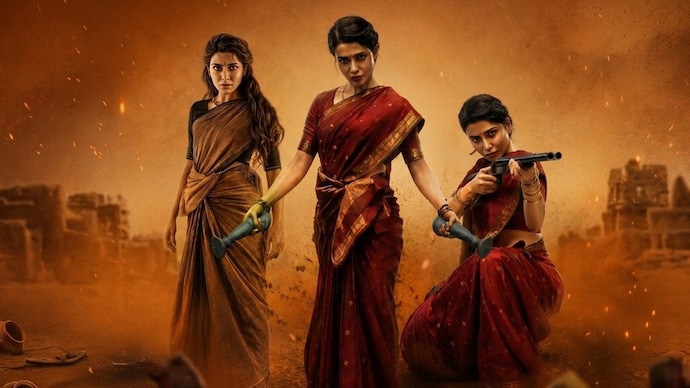
For 15 years, Samantha was a face of romance, vulnerability and emotional intensity in Tamil and Telugu cinema. However, there seems to have been a shift in the way she started perceiving cinema and art since 2021. From the fierce Raji in The Family Man 2 to the spy world of Citadel: Honey Bunny, the survival instincts of Yashoda, she has rewritten her image.
Which now brings us to her upcoming Telugu film, Maa Inti Bangaram, where she plays a housewife who fights in a saree.
Over the years, Samantha has built a new identity – one where the saree is not a symbol of fragility, but armour. One where guns triumph over glamour.
As Maa Inti Bangaram is slated for a grand release on June 19, let us look at how Samantha went from playing the woman waiting for the hero to rescue her to becoming the woman wielding the weapon.
Samantha and fifty shades of love
Samantha, for the major part of her career, acted in love stories – in many shades. From Ye Maaya Chesave to Eega to Neethane En Ponvasantham, she played the loveable heroine who loves convincingly and cries beautifully. She anchored romantic dramas and comedies with effortlessness.
These films, many of them superhits, made her indispensable in Tamil and Telugu cinema. Audiences knew what to expect. It made her one of the top heroines.
And then it all stopped one day. Not being a top actor, but being a stereotypical leading face.
The role that cracked the mould open
It was Raj and DK's The Family Man 2 that changed the conversation around Samantha overnight. As Raji – a Sri Lankan Tamil militant who carries the weight of displacement, grief and ideology in her body – she delivered a complex role that shocked everyone.
The fact that this was her OTT debut made it even more remarkable, as it was an out-and-out risk, both in terms of the content and the character. Raji wasn’t just a completely de-glam role, she was also the antithesis of what most Samantha characters had enjoyed until then – beauty, agency, love and the possibility of a normal life.
The role was risky not just in terms of her career, but also what she was representing. In Tamil Nadu, a film on Sri Lankan politics treads on a risky path. The reception to her role could have easily gone south. Despite some criticisms, Samantha announced big and loudly that she could pull off action convincingly and how.
It was not a one-off role where Samantha got to try something different on OTT. She was so drawn to action that she wanted to bring it to Telugu cinema as well, where women, for the most part, are viewed through a conservative lens.
In the 2022 film Yashoda, she played a pregnant woman fighting for survival inside a shady medical facility. The film received mixed reviews, but Samantha brought in the physicality the role demanded and delivered a performance that made it convincing.
Citadel and the global pivot
Citadel: Honey Bunny widened the frame. The Prime Video series placed Samantha inside a glossy, high-octane spy universe – a world of safe houses, double identities and elaborate action choreography. Where The Family Man’s Raji was raw and interior, Nadia/Honey in Citadel was kinetic and externally spectacular.
The show came at a point in her career where she was battling myositis – an autoimmune condition that affects her muscles. Samantha talked about giving up and wanted to opt out of the show because of her health. But she took on the challenge and aced the action choreography.
Citadel: Honey Bunny drew mixed responses critically, but what it did for Samantha's image was unambiguous: it announced her as a viable action lead in the pan-India, streaming-era sense of the term. The audience was no longer regional. The stakes, commercially and visually, were larger. And she met them.
More importantly, she looked like she belonged there – not like a dramatic actor gamely trying action, but like someone who had decided this was her register now.
Maa Inti Bangaram and saree as armour
Director Nandini Reddy's Maa Inti Bangaram, Samantha's second production venture, is making the right noise, especially after the teaser and trailer release. It features Samantha, in a saree, in full action mode.
In commercial cinema, the saree carries enormous symbolism. It has always been associated with tradition and femininity in its most conventional form.
Samantha's Maa Inti Bangaram avatar shifts this entirely. The saree here is not softness – it is the costume of a woman who is about to cause serious damage. The juxtaposition is not accidental. It is the whole point. She is not despite the saree. She is because of it – a heroine who refuses to let the iconography of femininity be weaponised against her, and instead weaponises it herself.
This is Samantha 2.0.
This is a risky move in every sense – as an actor and as a producer. The safety net of a conventional commercial project is gone. There is no minimum guarantee. The action heroine space in South cinema has also been unforgiving for women. A male action star can weather a failure and stage a comeback. A women-led actioner that underperforms risks closing doors.
Yet Samantha places her trust in her projects. The action roles haven't always been praised unanimously, but the consistency of the choice – the refusal to return to what was safe and familiar – has earned her something more durable than a hit: a new identity entirely her own.
Whether Maa Inti Bangaram delivers on that promise, we will know on June 19.
For 15 years, Samantha was a face of romance, vulnerability and emotional intensity in Tamil and Telugu cinema. However, there seems to have been a shift in the way she started perceiving cinema and art since 2021. From the fierce Raji in The Family Man 2 to the spy world of Citadel: Honey Bunny, the survival instincts of Yashoda, she has rewritten her image.
Which now brings us to her upcoming Telugu film, Maa Inti Bangaram, where she plays a housewife who fights in a saree.
Over the years, Samantha has built a new identity – one where the saree is not a symbol of fragility, but armour. One where guns triumph over glamour.
As Maa Inti Bangaram is slated for a grand release on June 19, let us look at how Samantha went from playing the woman waiting for the hero to rescue her to becoming the woman wielding the weapon.
Samantha and fifty shades of love
Samantha, for the major part of her career, acted in love stories – in many shades. From Ye Maaya Chesave to Eega to Neethane En Ponvasantham, she played the loveable heroine who loves convincingly and cries beautifully. She anchored romantic dramas and comedies with effortlessness.
These films, many of them superhits, made her indispensable in Tamil and Telugu cinema. Audiences knew what to expect. It made her one of the top heroines.
And then it all stopped one day. Not being a top actor, but being a stereotypical leading face.
The role that cracked the mould open
It was Raj and DK's The Family Man 2 that changed the conversation around Samantha overnight. As Raji – a Sri Lankan Tamil militant who carries the weight of displacement, grief and ideology in her body – she delivered a complex role that shocked everyone.
The fact that this was her OTT debut made it even more remarkable, as it was an out-and-out risk, both in terms of the content and the character. Raji wasn’t just a completely de-glam role, she was also the antithesis of what most Samantha characters had enjoyed until then – beauty, agency, love and the possibility of a normal life.
The role was risky not just in terms of her career, but also what she was representing. In Tamil Nadu, a film on Sri Lankan politics treads on a risky path. The reception to her role could have easily gone south. Despite some criticisms, Samantha announced big and loudly that she could pull off action convincingly and how.
It was not a one-off role where Samantha got to try something different on OTT. She was so drawn to action that she wanted to bring it to Telugu cinema as well, where women, for the most part, are viewed through a conservative lens.
In the 2022 film Yashoda, she played a pregnant woman fighting for survival inside a shady medical facility. The film received mixed reviews, but Samantha brought in the physicality the role demanded and delivered a performance that made it convincing.
Citadel and the global pivot
Citadel: Honey Bunny widened the frame. The Prime Video series placed Samantha inside a glossy, high-octane spy universe – a world of safe houses, double identities and elaborate action choreography. Where The Family Man’s Raji was raw and interior, Nadia/Honey in Citadel was kinetic and externally spectacular.
The show came at a point in her career where she was battling myositis – an autoimmune condition that affects her muscles. Samantha talked about giving up and wanted to opt out of the show because of her health. But she took on the challenge and aced the action choreography.
Citadel: Honey Bunny drew mixed responses critically, but what it did for Samantha's image was unambiguous: it announced her as a viable action lead in the pan-India, streaming-era sense of the term. The audience was no longer regional. The stakes, commercially and visually, were larger. And she met them.
More importantly, she looked like she belonged there – not like a dramatic actor gamely trying action, but like someone who had decided this was her register now.
Maa Inti Bangaram and saree as armour
Director Nandini Reddy's Maa Inti Bangaram, Samantha's second production venture, is making the right noise, especially after the teaser and trailer release. It features Samantha, in a saree, in full action mode.
In commercial cinema, the saree carries enormous symbolism. It has always been associated with tradition and femininity in its most conventional form.
Samantha's Maa Inti Bangaram avatar shifts this entirely. The saree here is not softness – it is the costume of a woman who is about to cause serious damage. The juxtaposition is not accidental. It is the whole point. She is not despite the saree. She is because of it – a heroine who refuses to let the iconography of femininity be weaponised against her, and instead weaponises it herself.
This is Samantha 2.0.
This is a risky move in every sense – as an actor and as a producer. The safety net of a conventional commercial project is gone. There is no minimum guarantee. The action heroine space in South cinema has also been unforgiving for women. A male action star can weather a failure and stage a comeback. A women-led actioner that underperforms risks closing doors.
Yet Samantha places her trust in her projects. The action roles haven't always been praised unanimously, but the consistency of the choice – the refusal to return to what was safe and familiar – has earned her something more durable than a hit: a new identity entirely her own.
Whether Maa Inti Bangaram delivers on that promise, we will know on June 19.

