Mango Pachcha review: Sanchith impresses in a film that needed time to ripen
Mango Pachcha movie review: Directed by Viveka, this crime drama is a fast-paced tale of an underdog's journey through Mysuru's drug underworld. The film's tight runtime focusses more on Pachcha than the Mango he sells, making it a more emotional experience than a thrilling one.
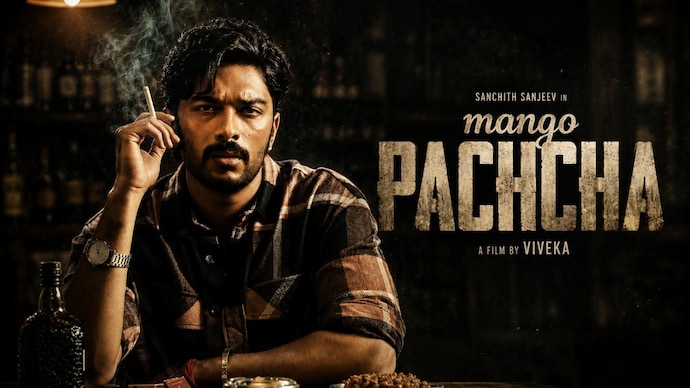
Not very often do we come across films that generate interest purely because of their subject. More often than not, anticipation is built around the names attached to a project rather than the story it is trying to tell. Mango Pachcha seemed to strike a balance between the two. A Kannada film with an intriguing premise, a nostalgic backdrop, a promising young director, and the debut of a new star backed by a well-known lineage, it had all the ingredients of a potential breakout success.
The question, then, is whether Mango Pachcha delivers on that promise or joins the long list of films that looked far better before release than they did after it. Director Viveka has delivered a fast-paced crime drama with a tight runtime of just 95 minutes. Within this crisp edit, the filmmaker attempts to capture a vintage Mysuru beyond the grandeur of the royal palace and the scenic Chamundi Hills — exploring the drug-infested underbelly of the city, the roots of its narcotics problem, and the lives caught within it. At the centre of this world is Sanchith Sanjeev, who makes his debut as Prashantha aka Mango Pachcha.
But does the debut of the star kid overshadow the potential of an otherwise interesting story? Does the film's brisk 95-minute runtime and tightly packed screenplay leave too little room to explore what truly matters? At times, Mango Pachcha feels torn between being a crime drama and a launch vehicle. While Sanchith Sanjeev delivers a commendable debut, the weight of introducing a new star occasionally shifts the focus away from the film's strongest element — its core story.
The story opens with a tourist in Mysuru being introduced to the legend of Mango Pachcha. The film then cuts to the burning of 300 kg of cannabis confiscated by the police, followed by the arrest of a peddler who is sent to jail, where he encounters Prashantha, better known as Mango Pachcha. What begins as a local myth soon transforms into a personal account, with Pachcha taking over as the narrator of his own story.
Who is Prashantha? What draws him into the world of cannabis trafficking? What are the stakes involved? Who are the key players in this underworld? How does he evolve into the feared figure known as Mango Pachcha? And what ultimately lands him behind bars? The film sets out to answer all these questions, but does so at breakneck speed.
In its rush to maintain momentum and engagement, Mango Pachcha often races past moments that could have added depth to the story, created greater intrigue around its world, and brought more emotional weight to its characters. It is a story full of potential, but one that lacks the conviction needed to realise it. This Mango feels more raw than ripe.
Sanchith Sanjeev makes a promising debut. As Kichcha Sudeep's nephew, carrying the moniker "Kichcha Jr." brings both admiration and pressure in equal measure. Lineage aside, Sanchith's performance can be viewed in two distinct phases — before and after the interval. The actor possesses undeniable screen presence and shines in moments of fury, vulnerability and inner turmoil. His performance in the film's climax is particularly impressive and hints at considerable potential.
However, when it comes to dialogue delivery and sustained screen engagement, the debutant occasionally lacks the punch needed to elevate key moments. Part of the responsibility may lie with the film itself. The drama is engaging enough to support a runtime closer to 140–150 minutes, allowing its characters and conflicts more room to breathe. With that additional space, Sanchith may have had more opportunities to showcase his range and leave a stronger impression.
Debutant director Viveka recently said that the decision to keep the film's runtime crisp was entirely his, with the aim of making it fast-paced and engaging. However, that approach ultimately falls short of delivering a well-rounded film. There is an amateurish touch to the way many scenes have been handled. The dialogues often feel generic, the screenplay lacks conviction and appears compromised at crucial junctures, while several key elevation moments miss the cinematic flair needed to leave a lasting impact.
There are numerous flaws in the execution of a subject that was well-chosen and a story that was conceived with clarity. That said, Viveka deserves credit for effectively landing the film's emotional beats and delivering a climax that is both impactful and satisfying. It is in those final moments that Mango Pachcha comes closest to fulfilling the promise of its premise.
One promise that Mango Pachcha falls well short of delivering on is its depiction of Mysuru, Karnataka's heritage city. The promotional material suggested that the city itself would play a character in the story. In reality, however, Mysuru barely makes a cameo appearance. Ironically, the surprise cameo towards the end of the film leaves a bigger impact than the city does. This creates a sense of disappointment, particularly for those who know the city.
To an extent, the limitations are understandable. With budget constraints, recreating the Mysuru of the early and mid-2000s is no easy task. Viveka's attempt to mask a modern city with a retro tint is evident. But atmosphere cannot be created through dialogue alone. Name-dropping landmarks and neighbourhoods while confining the narrative to indoor and controlled locations, does little to capture the soul of the city.
There is a strange irony at the heart of Mango Pachcha. A film named after the cannabis variant Mysore Mango, built around a peddler portrayed as a legendary figure in Mysuru's underworld, leaves the city itself with little significance. For a story so deeply rooted in Mysuru on paper, the city feels surprisingly absent on screen.
Performances by the rest of the cast are commendable. Kaajal Kunder does well as the female lead, while Mayur Patel delivers as the antagonist. However, the story needed a stronger, more commanding presence as its main villain, and Prashanth Hiremath falls short of delivering what the role required.
From a technical standpoint, Mango Pachcha has its merits, but it is far from flawless. Cinematographers Shekar Chandra and Swami effectively capture the film's emotions and aesthetics, but fall short when it comes to delivering impactful elevation moments. The editing is a weak link, with the film's crisp runtime often translating into cuts that feel choppy and abrupt. Charan Raj's music does much of the heavy lifting, serving as the backbone of the film's engagement. His score keeps pace with the narrative and helps the audience navigate its rapid transitions.
Mango Pachcha is a film with the right ingredients but not enough time to let them ripen. Beneath its flaws lies an interesting story, a promising debut performance and a world that deserved deeper exploration. Viveka's fast-paced approach keeps the film moving, but in the process leaves several of its strongest ideas underdeveloped.
The second half fares better than the first, finding greater emotional footing and allowing its characters to resonate more effectively, before culminating in a strong and impactful climax. Much like an unripe mango, there is enough flavour here to suggest what it could have been, but not enough sweetness to make the entire journey fully satisfying.
Not very often do we come across films that generate interest purely because of their subject. More often than not, anticipation is built around the names attached to a project rather than the story it is trying to tell. Mango Pachcha seemed to strike a balance between the two. A Kannada film with an intriguing premise, a nostalgic backdrop, a promising young director, and the debut of a new star backed by a well-known lineage, it had all the ingredients of a potential breakout success.
The question, then, is whether Mango Pachcha delivers on that promise or joins the long list of films that looked far better before release than they did after it. Director Viveka has delivered a fast-paced crime drama with a tight runtime of just 95 minutes. Within this crisp edit, the filmmaker attempts to capture a vintage Mysuru beyond the grandeur of the royal palace and the scenic Chamundi Hills — exploring the drug-infested underbelly of the city, the roots of its narcotics problem, and the lives caught within it. At the centre of this world is Sanchith Sanjeev, who makes his debut as Prashantha aka Mango Pachcha.
But does the debut of the star kid overshadow the potential of an otherwise interesting story? Does the film's brisk 95-minute runtime and tightly packed screenplay leave too little room to explore what truly matters? At times, Mango Pachcha feels torn between being a crime drama and a launch vehicle. While Sanchith Sanjeev delivers a commendable debut, the weight of introducing a new star occasionally shifts the focus away from the film's strongest element — its core story.
The story opens with a tourist in Mysuru being introduced to the legend of Mango Pachcha. The film then cuts to the burning of 300 kg of cannabis confiscated by the police, followed by the arrest of a peddler who is sent to jail, where he encounters Prashantha, better known as Mango Pachcha. What begins as a local myth soon transforms into a personal account, with Pachcha taking over as the narrator of his own story.
Who is Prashantha? What draws him into the world of cannabis trafficking? What are the stakes involved? Who are the key players in this underworld? How does he evolve into the feared figure known as Mango Pachcha? And what ultimately lands him behind bars? The film sets out to answer all these questions, but does so at breakneck speed.
In its rush to maintain momentum and engagement, Mango Pachcha often races past moments that could have added depth to the story, created greater intrigue around its world, and brought more emotional weight to its characters. It is a story full of potential, but one that lacks the conviction needed to realise it. This Mango feels more raw than ripe.
Sanchith Sanjeev makes a promising debut. As Kichcha Sudeep's nephew, carrying the moniker "Kichcha Jr." brings both admiration and pressure in equal measure. Lineage aside, Sanchith's performance can be viewed in two distinct phases — before and after the interval. The actor possesses undeniable screen presence and shines in moments of fury, vulnerability and inner turmoil. His performance in the film's climax is particularly impressive and hints at considerable potential.
However, when it comes to dialogue delivery and sustained screen engagement, the debutant occasionally lacks the punch needed to elevate key moments. Part of the responsibility may lie with the film itself. The drama is engaging enough to support a runtime closer to 140–150 minutes, allowing its characters and conflicts more room to breathe. With that additional space, Sanchith may have had more opportunities to showcase his range and leave a stronger impression.
Debutant director Viveka recently said that the decision to keep the film's runtime crisp was entirely his, with the aim of making it fast-paced and engaging. However, that approach ultimately falls short of delivering a well-rounded film. There is an amateurish touch to the way many scenes have been handled. The dialogues often feel generic, the screenplay lacks conviction and appears compromised at crucial junctures, while several key elevation moments miss the cinematic flair needed to leave a lasting impact.
There are numerous flaws in the execution of a subject that was well-chosen and a story that was conceived with clarity. That said, Viveka deserves credit for effectively landing the film's emotional beats and delivering a climax that is both impactful and satisfying. It is in those final moments that Mango Pachcha comes closest to fulfilling the promise of its premise.
One promise that Mango Pachcha falls well short of delivering on is its depiction of Mysuru, Karnataka's heritage city. The promotional material suggested that the city itself would play a character in the story. In reality, however, Mysuru barely makes a cameo appearance. Ironically, the surprise cameo towards the end of the film leaves a bigger impact than the city does. This creates a sense of disappointment, particularly for those who know the city.
To an extent, the limitations are understandable. With budget constraints, recreating the Mysuru of the early and mid-2000s is no easy task. Viveka's attempt to mask a modern city with a retro tint is evident. But atmosphere cannot be created through dialogue alone. Name-dropping landmarks and neighbourhoods while confining the narrative to indoor and controlled locations, does little to capture the soul of the city.
There is a strange irony at the heart of Mango Pachcha. A film named after the cannabis variant Mysore Mango, built around a peddler portrayed as a legendary figure in Mysuru's underworld, leaves the city itself with little significance. For a story so deeply rooted in Mysuru on paper, the city feels surprisingly absent on screen.
Performances by the rest of the cast are commendable. Kaajal Kunder does well as the female lead, while Mayur Patel delivers as the antagonist. However, the story needed a stronger, more commanding presence as its main villain, and Prashanth Hiremath falls short of delivering what the role required.
From a technical standpoint, Mango Pachcha has its merits, but it is far from flawless. Cinematographers Shekar Chandra and Swami effectively capture the film's emotions and aesthetics, but fall short when it comes to delivering impactful elevation moments. The editing is a weak link, with the film's crisp runtime often translating into cuts that feel choppy and abrupt. Charan Raj's music does much of the heavy lifting, serving as the backbone of the film's engagement. His score keeps pace with the narrative and helps the audience navigate its rapid transitions.
Mango Pachcha is a film with the right ingredients but not enough time to let them ripen. Beneath its flaws lies an interesting story, a promising debut performance and a world that deserved deeper exploration. Viveka's fast-paced approach keeps the film moving, but in the process leaves several of its strongest ideas underdeveloped.
The second half fares better than the first, finding greater emotional footing and allowing its characters to resonate more effectively, before culminating in a strong and impactful climax. Much like an unripe mango, there is enough flavour here to suggest what it could have been, but not enough sweetness to make the entire journey fully satisfying.

