Rao Bahadur review: Satyadev carries a film that takes too long to find itself
Rao Bahadur movie review: Director Maha's Rao Bahadur, starring Satyadev, Vikas Muppala and Deepa Thomas, is a psychological drama that talks about lineage, prejudice and skin colour obsession. The film, built on a theatrical setup, takes a while to warm up but leaves you with plenty of afterthoughts.
In 2018, director Venkatesh Maha waltzed into Telugu cinema with the path-breaking C/o Kancharapalem, one of the industry's finest films of the decade. After Uma Maheswara Ugra Roopasya and an episode in Modern Love Hyderabad, the filmmaker is back with Rao Bahadur – a film that Mahesh Babu and Namrata Shirodkar saw enough potential in to present. It hit theatres on July 3.
Bhuvanam Ramappa Rao Bahadur (Satyadev) hails from a royal family but is in his final days, battling liver cancer and psychological disorders. His doctors are baffled – an end-stage cancer patient who is also an alcoholic has no business surviving this long. His wife Renuka (Deepa Thomas) has been locked inside a room for eight years, ever since the death of their second son, Kusumappa.
Consumed by grief, Ramappa has taken to the bottle and lost touch with reality, retreating into a world of his own. He confesses his innermost thoughts to his closest friend and family doctor Narayanachari (Vikas Muppala). His elder son Lavanna and househelp Achchamma (Bala Parasar) are worried about his deteriorating health. But deep down, something is eating him alive. What happened to his second son? Why does Renuka never step out of that room?
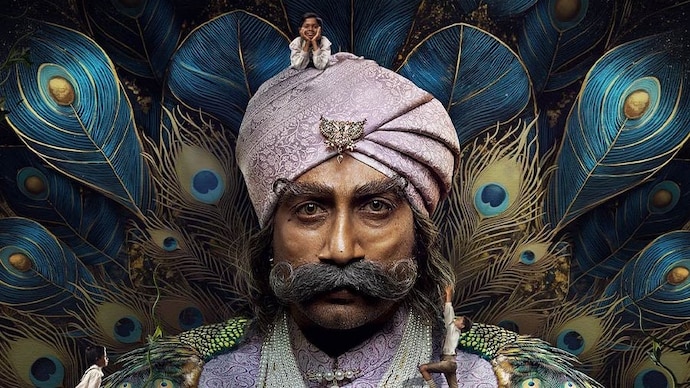
Rao Bahadur announces its quirks from the very first frame. Set between 1968 and 1991, the film moves back and forth through Ramappa's life – his royal lineage, his ascent to royalty, his love life, his guilt and his grief. Venkatesh Maha constructs the film like a theatrical production, and the magical realism layered through it makes for rich and visually distinctive cinema.
That said, the theatrical setup and magical realism will not be everyone's cup of tea. The first half is deliberately unhurried – almost wilfully so – and can test your patience. It is only at the intermission that the central conflict fully reveals itself, and that is when Rao Bahadur truly finds its footing. Once it does, the film uses its quirkiness purposefully, weaving in a sharp commentary on society's obsession with lineage, skin colour, oppression and privilege.
Venkatesh Maha pushes the envelope with Rao Bahadur – an experimental Telugu film that carries genuine social commentary without ever getting preachy about it. The messages land because they are embedded in the story rather than delivered at it, and that restraint is the film's biggest strength.
Whether that is enough to draw in a wide audience is a different question. Experimental films of this nature rarely find the crowd they deserve, and Rao Bahadur is no exception. What it does have is an arresting central performance from Satyadev, who moves through several looks and a wide emotional register, carrying the film almost entirely on his shoulders. This is as much a showcase for him as it is a story.
The runtime is the film's most apparent flaw – it could have been significantly tighter for the message to land with more force. The story takes too long to settle, and by the time it does, some of the impact has already dissipated. Deepa Thomas, Bala Parasar and Vikas Muppala in their supporting roles keep proceedings grounded and interesting through the slower stretches.
Rao Bahadur is a sincere and bold attempt at art cinema within the Telugu film industry. Its shortcomings are real, but so is its ambition – and in an industry that rarely bets on films like this, that alone puts it a step ahead.
In 2018, director Venkatesh Maha waltzed into Telugu cinema with the path-breaking C/o Kancharapalem, one of the industry's finest films of the decade. After Uma Maheswara Ugra Roopasya and an episode in Modern Love Hyderabad, the filmmaker is back with Rao Bahadur – a film that Mahesh Babu and Namrata Shirodkar saw enough potential in to present. It hit theatres on July 3.
Bhuvanam Ramappa Rao Bahadur (Satyadev) hails from a royal family but is in his final days, battling liver cancer and psychological disorders. His doctors are baffled – an end-stage cancer patient who is also an alcoholic has no business surviving this long. His wife Renuka (Deepa Thomas) has been locked inside a room for eight years, ever since the death of their second son, Kusumappa.
Consumed by grief, Ramappa has taken to the bottle and lost touch with reality, retreating into a world of his own. He confesses his innermost thoughts to his closest friend and family doctor Narayanachari (Vikas Muppala). His elder son Lavanna and househelp Achchamma (Bala Parasar) are worried about his deteriorating health. But deep down, something is eating him alive. What happened to his second son? Why does Renuka never step out of that room?
Rao Bahadur announces its quirks from the very first frame. Set between 1968 and 1991, the film moves back and forth through Ramappa's life – his royal lineage, his ascent to royalty, his love life, his guilt and his grief. Venkatesh Maha constructs the film like a theatrical production, and the magical realism layered through it makes for rich and visually distinctive cinema.
That said, the theatrical setup and magical realism will not be everyone's cup of tea. The first half is deliberately unhurried – almost wilfully so – and can test your patience. It is only at the intermission that the central conflict fully reveals itself, and that is when Rao Bahadur truly finds its footing. Once it does, the film uses its quirkiness purposefully, weaving in a sharp commentary on society's obsession with lineage, skin colour, oppression and privilege.
Venkatesh Maha pushes the envelope with Rao Bahadur – an experimental Telugu film that carries genuine social commentary without ever getting preachy about it. The messages land because they are embedded in the story rather than delivered at it, and that restraint is the film's biggest strength.
Whether that is enough to draw in a wide audience is a different question. Experimental films of this nature rarely find the crowd they deserve, and Rao Bahadur is no exception. What it does have is an arresting central performance from Satyadev, who moves through several looks and a wide emotional register, carrying the film almost entirely on his shoulders. This is as much a showcase for him as it is a story.
The runtime is the film's most apparent flaw – it could have been significantly tighter for the message to land with more force. The story takes too long to settle, and by the time it does, some of the impact has already dissipated. Deepa Thomas, Bala Parasar and Vikas Muppala in their supporting roles keep proceedings grounded and interesting through the slower stretches.
Rao Bahadur is a sincere and bold attempt at art cinema within the Telugu film industry. Its shortcomings are real, but so is its ambition – and in an industry that rarely bets on films like this, that alone puts it a step ahead.

