Chandrayaan-3's analysis links landing site soil to first known lunar meteorite
Both the meteorite, called ALHA 81005, and the soil at the Shiv Shakti Statio – Chandrayaan's landing site – contain nearly similar amounts of aluminium oxide and a combination of iron oxide and magnesium oxide.
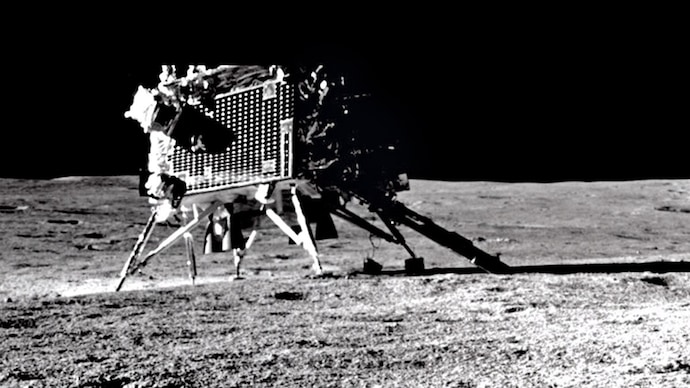
The soil analysed by Chandrayaan-3's Pragyan rover in the southern high-latitudes on the Moon's nearside has a geochemical composition closely resembling that of the first meteorite confirmed to have a lunar origin, according to a new study.
For instance, both the meteorite, called ALHA 81005, and the soil at the Shiv Shakti Statio – Chandrayaan's landing site – contain nearly similar amounts of aluminium oxide and a combination of iron oxide and magnesium oxide.
The study – "Chandrayaan-3 APXS measurements reveal Lunar highland compositional diversity and meteorite connections" – was conducted by scientists from the Physical Research Laboratory (PRL), Ahmedabad.
It was published in the "npj Space Exploration" journal, the Indian Space Research Organisation (Isro) said in a statement on Friday.
The study, however, noted that the findings do not mean "the Lunar meteorite came from the Shiv Shakti Statio; rather, it indicates that both represent a similar type of magnesium-rich lunar crust and regolith (unconsolidated material found on the surface of the Moon)."
ALHA 81005 was discovered in the Allan Hills region of Antarctica during a 1981-1982 expedition.
The analysis also revealed that the soil at Shiv Shakti Statio is a mixture of materials from different layers of the Moon's crust.
The surface appears to contain not only material from the upper crust but also fragments of magnesium-rich rocks, likely derived from the Moon's deeper layers, according to the Isro.
"By linking the Shiv Shakti Statio to the Moon's first recognised meteorite, the Chandrayaan-3 mission has opened new avenues for understanding the formation of the ancient lunar crust," the Isro said.
The soil analysed by Chandrayaan-3's Pragyan rover in the southern high-latitudes on the Moon's nearside has a geochemical composition closely resembling that of the first meteorite confirmed to have a lunar origin, according to a new study.
For instance, both the meteorite, called ALHA 81005, and the soil at the Shiv Shakti Statio – Chandrayaan's landing site – contain nearly similar amounts of aluminium oxide and a combination of iron oxide and magnesium oxide.
The study – "Chandrayaan-3 APXS measurements reveal Lunar highland compositional diversity and meteorite connections" – was conducted by scientists from the Physical Research Laboratory (PRL), Ahmedabad.
It was published in the "npj Space Exploration" journal, the Indian Space Research Organisation (Isro) said in a statement on Friday.
The study, however, noted that the findings do not mean "the Lunar meteorite came from the Shiv Shakti Statio; rather, it indicates that both represent a similar type of magnesium-rich lunar crust and regolith (unconsolidated material found on the surface of the Moon)."
ALHA 81005 was discovered in the Allan Hills region of Antarctica during a 1981-1982 expedition.
The analysis also revealed that the soil at Shiv Shakti Statio is a mixture of materials from different layers of the Moon's crust.
The surface appears to contain not only material from the upper crust but also fragments of magnesium-rich rocks, likely derived from the Moon's deeper layers, according to the Isro.
"By linking the Shiv Shakti Statio to the Moon's first recognised meteorite, the Chandrayaan-3 mission has opened new avenues for understanding the formation of the ancient lunar crust," the Isro said.

