India's Aditya-L1 has completed a year of studying the Sun's secrets
India's first dedicated space-based solar observatory is helping scientists investigate the processes behind solar activity and its effects on Earth's space environment.

The Indian Space Research Organisation (ISRO) is India's national space agency, headquartered in Bengaluru. It operates under the Department of Space (DOS), and the Chairman of ISRO also serves as the executive of DOS.
ISRO was established on August 15, 1969, under the leadership of the renowned scientist Dr. Vikram Sarabhai. It evolved from the Indian National Committee for Space Research (INCOSPAR). In 1972, the Government of India established the Department of Space and ISRO, bringing it directly under the Prime Minister's oversight.
ISRO launched its first satellite, Aryabhata, on April 19, 1975, marking a significant milestone in India's space technology journey. In 1980, India sent the Rohini satellite into space using its indigenous launch vehicle, SLV-3, making India one of the few countries capable of launching satellites independently.
Chandrayaan-1, India's first lunar mission launched in 2008 discovered water molecules on the Moon.
Mangalyaan, launched in 2013, was India's first Mars mission. It was successfully placed into Mars' orbit at a remarkably low cost, making India the first country to achieve this feat in its very first attempt.
Chandrayaan-2, launched in 2019, was partially successful but provided ISRO with crucial data.
Chandrayaan-3, launched in 2023, successfully landed on the Moon's South Pole, making India the first to achieve this milestone.
Currently, ISRO is working on the Gaganyaan mission, aiming to launch India's first manned space mission.
ISRO is playing a vital role not only in India but also globally in space research and technology. Its innovations and success stories have established India as a space superpower.
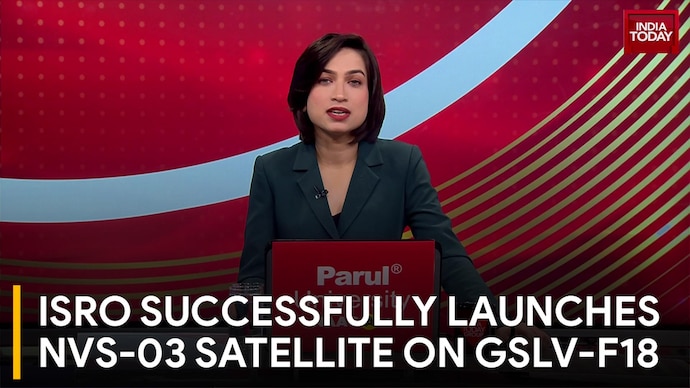
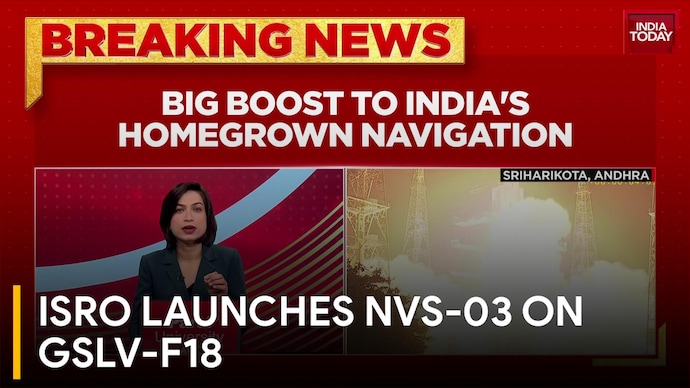
The Indian Space Research Organisation (ISRO) successfully launched the NVS-03 navigation satellite aboard the GSLV-F18 rocket, strengthening India's indigenous NavIC constellation. The satellite was injected into an orbit of 170.3 kilometres by 38,080 kilometres. The mission deployed India's third indigenous atomic clock into orbit, serving as a critical timing component for regional positioning and civilian as well as strategic navigation services. Prime Minister Narendra Modi commended ISRO scientists and engineers, describing the launch as an important milestone in advancing technological self-reliance. Officials confirmed the satellite systems and solar panels are functioning normally. ISRO also announced plans to carry out five additional launches within the current financial year while progressing towards the first uncrewed Gaganyaan mission.
The Indian Space Research Organisation has successfully launched its next-generation navigation satellite, NVS-03, aboard the GSLV-F18 rocket from the Satish Dhawan Space Centre in Sriharikota, Andhra Pradesh. Marking the 20th flight of the Geosynchronous Satellite Launch Vehicle, the rocket placed the 2,250-kilogram satellite into a Geosynchronous Transfer Orbit. NVS-03 is the third satellite in ISRO's second-generation navigation series designed to bolster and sustain the NavIC constellation. The satellite features an indigenously developed rubidium atomic clock alongside signals in the L1, L5, and S bands, reducing dependence on foreign navigation systems like GPS and GLONASS for civilian, commercial, and strategic requirements. ISRO confirmed the satellite is healthy with solar panels deployed. Officials noted that five more launches are planned for the financial year alongside preparations for the uncrewed Gaganyaan mission.
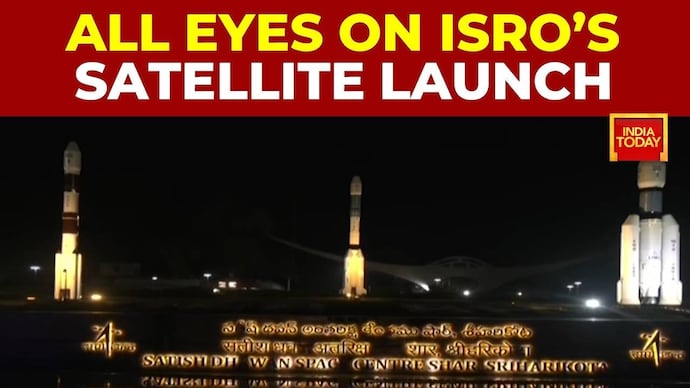
The Indian Space Research Organisation is preparing to launch its GSLV-F18 rocket from the second launchpad at Sriharikota. The mission carries the NVS-03 satellite, the third spacecraft in India's next-generation navigation satellite series. The satellite is designed to strengthen NavIC, the country's independent regional navigation system, and will help ensure the continuity of navigation services for users across India and beyond.
Prime Minister Narendra Modi and Russian President Vladimir Putin visited an exhibition at Bharat Mandapam showcasing India's cutting-edge science, indigenous defence technology, and space innovations. Accompanied by Commerce Minister Piyush Goyal, the leaders reviewed private optical SAR satellites built by IIT Madras innovators, battle-proven drone killers, counter-drone systems, advanced radars, and unmanned underwater submersibles. Experts discussed deepening bilateral collaboration across defence and civilian domains, noting the $100 billion bilateral trade target set for 2030. Key strategic areas of interest included potential cooperation in automobiles, critical minerals, and mass production of military and civil jet-powered drones to bolster operational capabilities and offset defence voids.
An exhibition at Bharat Mandapam in New Delhi highlighted India's emerging prowess in defence and space technologies, spotlighting private sector innovations developed alongside the Indian Space Research Organisation. Among the featured innovations is OptoSAR, a 190-kilogram satellite designed by IIT Madras alumni that combines optical payloads and synthetic aperture radar. The satellite simultaneously captures images through clouds, smoke, and nighttime conditions, serving defence operations, flood monitoring, and forest fire management. Following the launch of Mission Drishti in May, developers aim to build a constellation of 30 satellites within three years to cater to global requirements. The initiative reflects growing government backing and grants aimed at expanding India's private space tech sector.
A special address outlines India's vision for space exploration, highlighting collective responsibility, multilateral cooperation, and sustainability. The space domain must be guided by international law and open scientific data to serve humanity. ISRO's contributions encompass weather forecasting, disaster management, navigation, and launching over four hundred and thirty satellites for thirty-four countries. Key milestones include Chandrayaan-3 landing near the lunar south pole and Aditya-L1 studying the Sun. India aims to establish an Indian space station by 2035 and land an Indian on the Moon by 2040. India's private space sector is expanding alongside ISRO. Bilateral space collaboration with France, which began at Thumba in the 1960s, continues to grow across advanced technologies and Earth observation. A call was made at the space summit in Paris for global partners to explore, innovate, and protect space together.
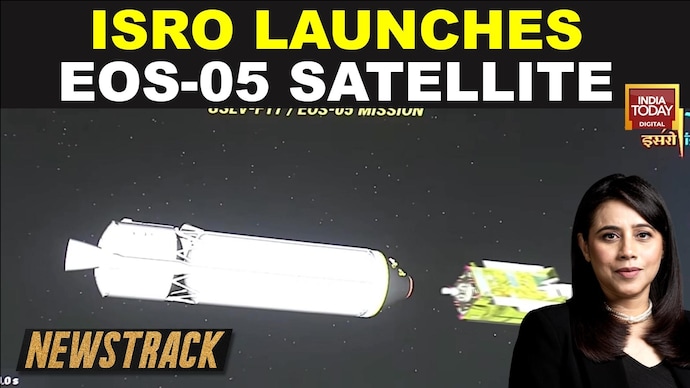
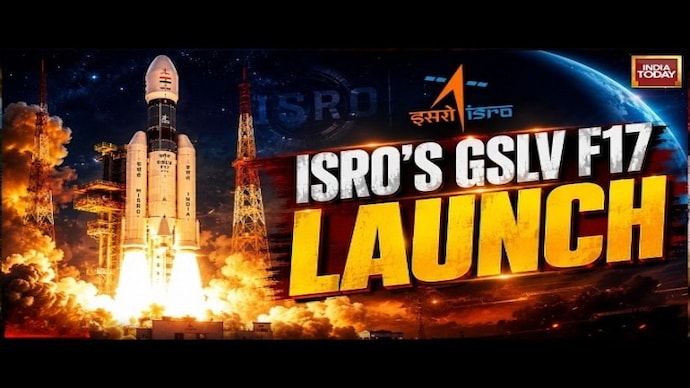
The Indian Space Research Organisation (ISRO) has successfully launched its first dedicated geostationary imaging satellite, EOS-05, aboard the GSLV-F17 rocket from Sriharikota. Operating from a geosynchronous orbit around 36,000 kilometres above Earth, the satellite enables continuous regional observation to aid weather monitoring, agriculture, water resource assessment, disaster management, and strategic surveillance. The mission precisely injected the satellite into its intended transfer orbit, overcoming a previous mission setback from August 2021.
Nine days after deadly flash floods struck Nepal, two workers trapped inside a hydropower project tunnel were rescued alive on Friday.
The Indian Space Research Organisation (ISRO) has successfully launched the Earth Observation Satellite EOS-05 aboard the GSLV F17 from the Satish Dhawan Space Centre in Sriharikota.
The Karnataka government has withdrawn the controversial Parks Amendment Bill following widespread protests by citizens and opposition parties across Bengaluru. The proposed legislation sought to permit up to five percent of government parkland to be utilised for public purposes and infrastructure projects, sparking concerns over the loss of green spaces such as Lalbagh and Cubbon Park. Opposition leaders accused the administration of attempting to facilitate the contentious Tunnel Road Project, alleging unscientific planning. Defending the move to recall the bill, Congress spokespersons maintained that a democratic government must heed public feedback, confirming that revised proposals would undergo wider public consultation before returning to the assembly. Meanwhile, the BJP characterised the rollback as a major victory for the 'Save Parks, Save Bengaluru' movement, accusing the ruling dispensation of ignoring ecological concerns.
A devastating flood triggered by a glacial collapse in Nepal's Rasuwa region near the Nepal-Tibet border has highlighted major risks of cascading Himalayan hazards. In response to rising threat levels from Glacial Lake Outburst Floods, the National Disaster Management Authority has identified 195 vulnerable glacier lakes across Himachal Pradesh, Sikkim, Ladakh, Arunachal Pradesh, Jammu and Kashmir, and Uttarakhand. India relies on multiple disaster monitoring systems, including Indian Space Research Organisation satellites for remote sensing and terrain mapping, Met Department weather models providing river sub-basin quantitative precipitation forecasts, and Central Water Commission river gauges offering up to 24-hour advance flood warnings. The National Remote Sensing Centre integrates geospatial data into a national emergency database to provide hazard maps and early warnings. However, the Nepal disaster underscores gaps in monitoring high-altitude ice collapses, where one failure sets off a chain of catastrophic events across the fragile Himalayan ecosystem.
The Karnataka government has withdrawn the controversial Parks Amendment Bill following widespread protests by citizens and opposition parties across Bengaluru.
Delhi Police have detained right-wing activist Swatantra Bharat Bhardwaj from Bulandshahr, Uttar Pradesh, following a viral video and podcast where he claimed to have assaulted Sanjay Kumar, the father of influencer Nishu Azad, during protests at Jantar Mantar.
Space Kidz India's ShaktiSat initiative has progressed to its second phase, bringing together girl students from 108 countries to build an engineering model of a 12U satellite prelude to a Moon mission. In phase one, a translated curriculum educated 9,800 girls towards a goal of 12,000. For phase two, over 100 students travelled to India, assembling structural architecture, solar panels, and coding rugged payloads without requiring a clean room, while learning from senior ISRO scientists. The satellite includes six payloads, featuring an infrared camera from Macquarie University, an IoT payload from Brazil, space debris capture cameras from Alabama and Purdue universities, a magnetometer from Switzerland, Poland, and the Philippines, an Egyptian drag sail designed to deorbit the satellite into Earth's atmosphere, and an AI-tested payload. The mission team has requested the Prime Minister to launch the satellite on 11 October to promote female participation in the space sector.
The Indian Space Research Organisation has successfully launched the GSLV F17 mission carrying the EOS-05 satellite. This marks the launch of India's first-ever imaging satellite into a geosynchronous orbit. The mission reflects the innovation, excellence, and growing capabilities of the domestic space sector along with expanding partnerships with Indian industry. This successful launch in September marks another milestone following the previous mission conducted in January 2026, adding strength and scale across the space ecosystem.
In an interview with India Today, Dr. Rijan Bhakta Kayastha, professor at Kathmandu University and climate researcher, provided an assessment of the massive flood originating near the Nepal-China border. Dr. Kayastha explained that the sudden surge along the Lende River was likely triggered by an ice avalanche blocking the river in Tibet, creating a dammed lake that subsequently outburst. Addressing the severity of the disaster, Dr. Kayastha remarked, "This is historic and unprecedented, a very, very big flood." He noted that the unpopulated source region in Tibet prevented early warnings before the water reached Rasuwagadhi. Highlighting environmental factors, Dr. Kayastha stated, "We have to blame this event also to climate change," explaining how high day temperatures accelerate ice melt and break glaciers. He alerted that ongoing hydropower construction sites in the mountainous region could lead to high casualties among workers. Finally, Dr. Kayastha suggested that India's space agency ISRO could assist by analyzing satellite images to confirm the flood's exact cause.
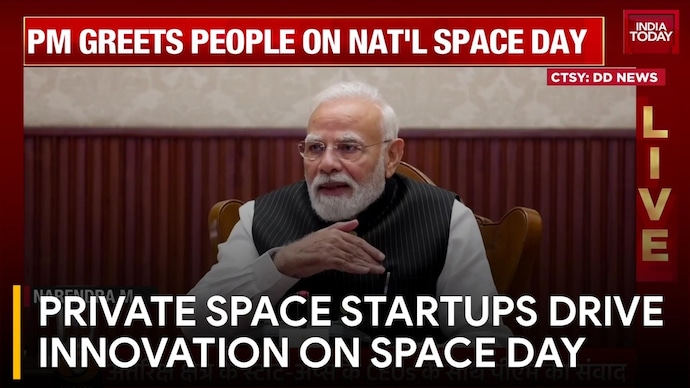
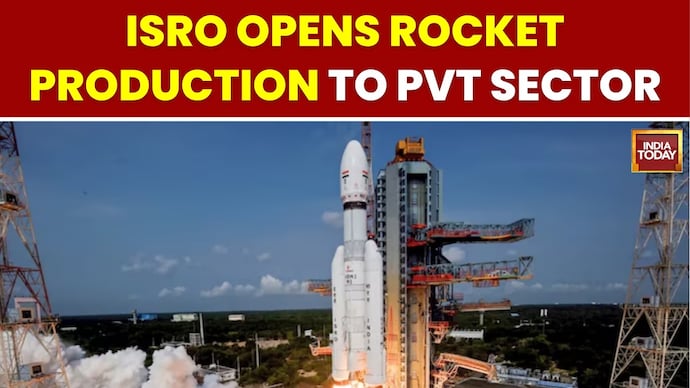
During an interaction with founders and chief executive officers of twenty space startups on National Space Day, discussions focused on expanding private participation and technology applications across agriculture, environment, and daily life. Startup leaders highlighted rapid advancements including orbital satellite launches, spacecraft docking, in-space refueling, space debris removal, space-based pharmaceutical manufacturing, and global ground station networks. The meeting emphasized India's potential to become a global hub for space technology, investment, and talent pool due to cost competitiveness, strong technical capabilities, and high risk-taking capacity. Additionally, routine production of operational rockets and launch vehicles like PSLV, LVM3, and SSLV is being transitioned to private industry and public sector partners, allowing national space agencies to focus on research, deep space exploration, and advanced technologies to expand the space economy.
Prime Minister Narendra Modi interacted with chief executive officers of Indian space startups to discuss expanding India's space technology capabilities and attracting global investment. During the interaction, startups highlighted innovations including space pharmaceutical manufacturing, robotic spacecraft for space debris removal, and orbital refueling stations. The conversation emphasized India's potential to become a global hub for cost-effective satellite manufacturing, launch services, and defense intelligence. Meanwhile, the Indian Space Research Organisation is transitioning away from routine launch vehicle production to focus on advanced research, deep space exploration, and new technologies. Operational rocket manufacturing for PSLV, LVM3, and SSLV is being handed over to private players and public sector partners. Over 120 indigenous space technologies have been transferred to commercial entities, while startups like Skyroot Aerospace and Agnikul Cosmos develop independent rockets. The strategic shift aims to grow India's space economy from $8 billion to $44 billion by 2033.
Prime Minister Narendra Modi interacted with CEOs and founders of 20 space startups in New Delhi ahead of National Space Day. During the meeting, Prime Minister Modi highlighted that India's space sector can serve as a magnet for global talent, companies, and investment. He urged startups to expand space technology applications across agriculture, dairy, livestock management, and environmental monitoring to directly benefit citizens' daily lives. Startup leaders, including representatives from Skyroot Aerospace, Agnikul Cosmos, Pixxel, Dhruva Space, GalaxEye, Bellatrix Aerospace, and Digantra, shared their vision for private space exploration and acknowledged government reforms opening the sector to private participation. Discussions also covered innovations such as docking, space refueling, pharmaceutical manufacturing in space, and space debris removal. PM Modi encouraged closer collaboration with Atal Tinkering Labs to inspire young minds and assured continued government support to build a commercially viable global space hub.
India celebrates National Space Day on August 23 to mark the historic soft landing of Chandrayaan-3 on the South Pole of the Moon. The occasion highlights growing space ambitions, innovation, and achievements in the private space sector. Youth and Gen Z professionals, including engineers, designers, coders, and scientists, are actively contributing to advanced areas such as propulsion systems, composite materials, rocket stages, and satellite platforms. Successes of space missions continue to inspire youth across the nation to pursue careers as scientists and aeronautical engineers. The expanding space sector is attracting global investors, supporting long-term national development goals, and positioning the country as a major player in the global space order.