India has an e-waste problem. Delhi has smelled an opportunity
As technology use increases across India, one policy move in the national capital reflects a wider shift in how governments may approach one of the country's fastest-growing waste streams.
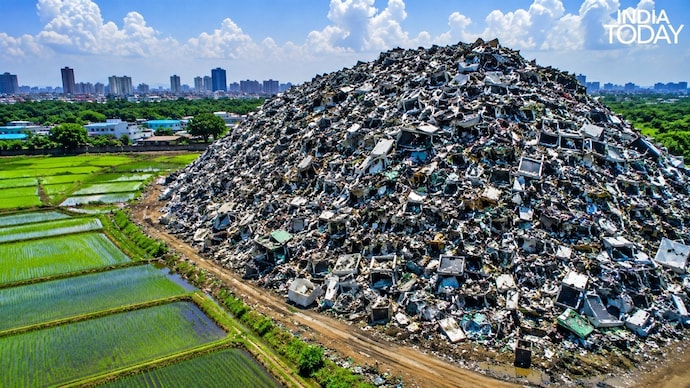
A dead smartphone rarely makes headlines. Neither does a worn-out laptop, a broken television or a discarded charger. Yet together, these forgotten gadgets form one of the fastest-growing waste streams in the world.
The problem of electronic waste, also known as e-waste, is growing more prominent by the day as humans turn to rapidly developing technologies.
Not only that. E-waste is present even when nations push for a sustainable future.
For instance, as India tries and pushes to transition towards electric vehicles, e-waste is involved as the batteries used in the vehicles could end up in a heap of electronic waste if not managed properly.
But Delhi seems to have recognised the problem early on, before it becomes unmanageable.
The Delhi government has built a dedicated battery recycling framework into its newly notified EV Policy 2026, introduced by Chief Minister Rekha Gupta and her administration.
While the policy is primarily aimed at hastening electric mobility, in a bid to fight winter pollution, its provisions on battery waste mark an important shift in how governments are beginning to view electronic waste; not simply as rubbish to be discarded, but as a valuable resource that must be safely collected, recycled and reused.
WHAT IS THE DELHI GOVERNMENT'S NEW E-WASTE POLICY?
Under the policy, the Delhi Pollution Control Committee (DPCC) has been designated as the coordinating body for developing standard operating procedures (SOPs) for the collection, storage, transportation and recycling of end-of-life batteries.
The framework also aligns with the Battery Waste Management Rules, 2022, which require producers to collect and recycle spent batteries.
Although the initiative focusses on EV batteries, it shines a light on a much larger issue confronting India.
The issue of India's rapidly expanding e-waste crisis.
WHAT IS E-WASTE AND WHY IS IT GROWING RAPIDLY IN INDIA?
E-waste refers to discarded electrical and electronic equipment, including mobile phones, computers, televisions, refrigerators, air conditioners, batteries, chargers and countless other devices that have reached the end of their useful lives.
Unlike ordinary household waste, electronic waste often contains hazardous substances such as lead, cadmium, chromium and brominated flame retardants.
When dumped in landfills, burned in the open or dismantled using unsafe methods, these materials can contaminate soil, water and air, posing risks to both the environment and public health.
At the same time, e-waste is far from worthless.
It contains valuable metals, including gold, silver, copper, aluminium, lithium, cobalt and nickel, all of which can be recovered and reused, reducing both environmental pollution and the need to mine fresh raw materials.
“E-waste is not just a disposal problem, it is a governance problem, a public health problem and a resource-recovery opportunity,” said Anjal Prakash, environmentalist, and one of the authors on the panel of the Intergovernmental Panel on Climate Change (IPCC).
But managing e-waste is far from simple.
Prakash added that effective management of e-waste requires traceable collection systems, safe storage, authorised recycling and accountability across the value chain, from producers and bulk consumers to recyclers and local bodies.
India’s revised e-waste rules already provide this framework through mandatory registration on the Central Pollution Control Board (CPCB) portal and funnelling of the waste to authorised recyclers.
Yet a question remains. Is that enough?
A WASTE THAT GROWS EACH YEAR
The world generated a record 62 million tonnes of e-waste in 2022, yet only 22.3% was formally collected and recycled, according to a 2024 report.
The report also projected this figure to climb to 82 million tonnes by 2030 if trends continue.
India is part of that trend too. The nation's rapid digitalisation has transformed everyday life, but it has also fuelled an unprecedented rise in discarded electronics.
India generated approximately 3.8 Million Metric Tons (MMT) of e-waste in FY24, making it the third-largest e-waste generator globally.
According to Central Pollution Control Board (CPCB) data, India’s annual e-waste generation increased from 1.01 million metric tonnes in 2019-20 to 1.751 million metric tonnes in 2023-24, that points to India’s rapidly growing electronic waste challenge.
While the quantity channelled to authorised recyclers has increased over the years, a significant volume still remains outside the formal recycling chain.
Government data further show that Delhi processed 2,130.79 tonnes of e-waste in 2021-22, highlighting that the capital already has an operational recycling base even as the scale of the challenge continues to grow.
A large share of India’s discarded electronics continues to flow through the informal sector, where crude dismantling methods often expose workers and nearby communities to hazardous pollutants while wasting valuable materials that could otherwise be scientifically recovered.
A STEP IN THE RIGHT DIRECTION?
Experts say Delhi’s new battery recycling framework is significant because it addresses a future waste stream before it reaches the scale of today’s e-waste challenge.
“Delhi’s updated EV policy is not just a mobility transition plan; it is also the beginning of a future battery and e-waste management challenge that must be addressed from day one,” said Nitin Gupta, Co-founder and CEO of Attero, a tech company specialising in e-waste and lithium-ion battery recycling.
As EV adoption accelerates, cities will inevitably see growing volumes of end-of-life lithium-ion batteries, chargers and power electronics.
If these materials enter informal recycling channels, they can contaminate soil and water while wasting critical minerals such as lithium, cobalt, nickel and graphite, all of which are resources that India currently imports in large quantities.
If that's not a good enough incentive, India's e-waste contains an estimated USD 6 billion worth of recoverable materials, but only around USD 3.6 billion is currently extractable using existing technologies.
Nitin Gupta said Delhi’s emphasis on formalising waste streams and improving accountability could help ensure that more discarded batteries and electronics are channelled into authorised recycling facilities instead of informal processing networks.
But he stressed that collection targets alone won't be enough. Also required would be consumer awareness, efficient collection systems, traceability, producer responsibility and modern recycling infrastructure.
Viewed this way, discarded electronics are not merely waste but an “urban mine” containing valuable raw materials that can be recovered and returned to the economy, he added.
LOCAL POLICY, NATIONAL POTENTIAL?
Delhi’s battery recycling framework will not solve India’s e-waste problem overnight.
But it reflects a broader shift in thinking, in moving from treating electronic waste as an unavoidable by-product of development to recognising it as both an environmental challenge and an economic opportunity.
As India continues to digitise, and millions more electronic devices and EV batteries enter the market, the country’s ability to collect, recycle and recover these materials will become increasingly important.
Stronger enforcement of existing regulations, greater public awareness and expanding authorised recycling networks will be critical to ensuring that valuable resources remain in circulation rather than ending up in landfills or informal scrap markets.
Delhi’s latest initiative is therefore about much more than electric vehicles and goes beyond fighting pollution.
It is an early step towards building a circular economy in which yesterday’s electronics become tomorrow’s raw materials instead of tomorrow’s pollution.
If implemented effectively, it could offer a blueprint for other Indian cities grappling with one of the country’s fastest-growing environmental challenges.
A dead smartphone rarely makes headlines. Neither does a worn-out laptop, a broken television or a discarded charger. Yet together, these forgotten gadgets form one of the fastest-growing waste streams in the world.
The problem of electronic waste, also known as e-waste, is growing more prominent by the day as humans turn to rapidly developing technologies.
Not only that. E-waste is present even when nations push for a sustainable future.
For instance, as India tries and pushes to transition towards electric vehicles, e-waste is involved as the batteries used in the vehicles could end up in a heap of electronic waste if not managed properly.
But Delhi seems to have recognised the problem early on, before it becomes unmanageable.
The Delhi government has built a dedicated battery recycling framework into its newly notified EV Policy 2026, introduced by Chief Minister Rekha Gupta and her administration.
While the policy is primarily aimed at hastening electric mobility, in a bid to fight winter pollution, its provisions on battery waste mark an important shift in how governments are beginning to view electronic waste; not simply as rubbish to be discarded, but as a valuable resource that must be safely collected, recycled and reused.
WHAT IS THE DELHI GOVERNMENT'S NEW E-WASTE POLICY?
Under the policy, the Delhi Pollution Control Committee (DPCC) has been designated as the coordinating body for developing standard operating procedures (SOPs) for the collection, storage, transportation and recycling of end-of-life batteries.
The framework also aligns with the Battery Waste Management Rules, 2022, which require producers to collect and recycle spent batteries.
Although the initiative focusses on EV batteries, it shines a light on a much larger issue confronting India.
The issue of India's rapidly expanding e-waste crisis.
WHAT IS E-WASTE AND WHY IS IT GROWING RAPIDLY IN INDIA?
E-waste refers to discarded electrical and electronic equipment, including mobile phones, computers, televisions, refrigerators, air conditioners, batteries, chargers and countless other devices that have reached the end of their useful lives.
Unlike ordinary household waste, electronic waste often contains hazardous substances such as lead, cadmium, chromium and brominated flame retardants.
When dumped in landfills, burned in the open or dismantled using unsafe methods, these materials can contaminate soil, water and air, posing risks to both the environment and public health.
At the same time, e-waste is far from worthless.
It contains valuable metals, including gold, silver, copper, aluminium, lithium, cobalt and nickel, all of which can be recovered and reused, reducing both environmental pollution and the need to mine fresh raw materials.
“E-waste is not just a disposal problem, it is a governance problem, a public health problem and a resource-recovery opportunity,” said Anjal Prakash, environmentalist, and one of the authors on the panel of the Intergovernmental Panel on Climate Change (IPCC).
But managing e-waste is far from simple.
Prakash added that effective management of e-waste requires traceable collection systems, safe storage, authorised recycling and accountability across the value chain, from producers and bulk consumers to recyclers and local bodies.
India’s revised e-waste rules already provide this framework through mandatory registration on the Central Pollution Control Board (CPCB) portal and funnelling of the waste to authorised recyclers.
Yet a question remains. Is that enough?
A WASTE THAT GROWS EACH YEAR
The world generated a record 62 million tonnes of e-waste in 2022, yet only 22.3% was formally collected and recycled, according to a 2024 report.
The report also projected this figure to climb to 82 million tonnes by 2030 if trends continue.
India is part of that trend too. The nation's rapid digitalisation has transformed everyday life, but it has also fuelled an unprecedented rise in discarded electronics.
India generated approximately 3.8 Million Metric Tons (MMT) of e-waste in FY24, making it the third-largest e-waste generator globally.
According to Central Pollution Control Board (CPCB) data, India’s annual e-waste generation increased from 1.01 million metric tonnes in 2019-20 to 1.751 million metric tonnes in 2023-24, that points to India’s rapidly growing electronic waste challenge.
While the quantity channelled to authorised recyclers has increased over the years, a significant volume still remains outside the formal recycling chain.
Government data further show that Delhi processed 2,130.79 tonnes of e-waste in 2021-22, highlighting that the capital already has an operational recycling base even as the scale of the challenge continues to grow.
A large share of India’s discarded electronics continues to flow through the informal sector, where crude dismantling methods often expose workers and nearby communities to hazardous pollutants while wasting valuable materials that could otherwise be scientifically recovered.
A STEP IN THE RIGHT DIRECTION?
Experts say Delhi’s new battery recycling framework is significant because it addresses a future waste stream before it reaches the scale of today’s e-waste challenge.
“Delhi’s updated EV policy is not just a mobility transition plan; it is also the beginning of a future battery and e-waste management challenge that must be addressed from day one,” said Nitin Gupta, Co-founder and CEO of Attero, a tech company specialising in e-waste and lithium-ion battery recycling.
As EV adoption accelerates, cities will inevitably see growing volumes of end-of-life lithium-ion batteries, chargers and power electronics.
If these materials enter informal recycling channels, they can contaminate soil and water while wasting critical minerals such as lithium, cobalt, nickel and graphite, all of which are resources that India currently imports in large quantities.
If that's not a good enough incentive, India's e-waste contains an estimated USD 6 billion worth of recoverable materials, but only around USD 3.6 billion is currently extractable using existing technologies.
Nitin Gupta said Delhi’s emphasis on formalising waste streams and improving accountability could help ensure that more discarded batteries and electronics are channelled into authorised recycling facilities instead of informal processing networks.
But he stressed that collection targets alone won't be enough. Also required would be consumer awareness, efficient collection systems, traceability, producer responsibility and modern recycling infrastructure.
Viewed this way, discarded electronics are not merely waste but an “urban mine” containing valuable raw materials that can be recovered and returned to the economy, he added.
LOCAL POLICY, NATIONAL POTENTIAL?
Delhi’s battery recycling framework will not solve India’s e-waste problem overnight.
But it reflects a broader shift in thinking, in moving from treating electronic waste as an unavoidable by-product of development to recognising it as both an environmental challenge and an economic opportunity.
As India continues to digitise, and millions more electronic devices and EV batteries enter the market, the country’s ability to collect, recycle and recover these materials will become increasingly important.
Stronger enforcement of existing regulations, greater public awareness and expanding authorised recycling networks will be critical to ensuring that valuable resources remain in circulation rather than ending up in landfills or informal scrap markets.
Delhi’s latest initiative is therefore about much more than electric vehicles and goes beyond fighting pollution.
It is an early step towards building a circular economy in which yesterday’s electronics become tomorrow’s raw materials instead of tomorrow’s pollution.
If implemented effectively, it could offer a blueprint for other Indian cities grappling with one of the country’s fastest-growing environmental challenges.

