Monsoon turns Godavari furious: River at high flood level, tributaries roaring
Heavy monsoon rain across central India has driven the Godavari system into a dangerous flood phase. Authorities have issued alerts as major tributaries swell and river levels stay elevated.
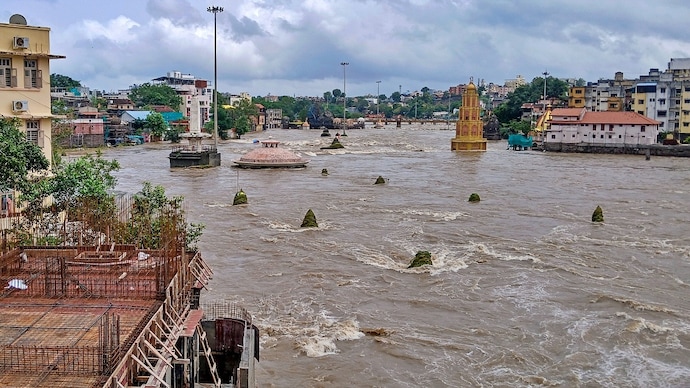
Intense monsoon rainfall across central India has pushed the Godavari river system into a dangerous phase, with several of its major tributaries carrying massive flood discharges and water levels nearing the High Flood Level (HFL) in multiple locations.
The most dramatic surge has been recorded on the Indravati River, one of the Godavari's largest tributaries. Near Pathagudem on the Chhattisgarh-Telangana border, the river is carrying an extraordinary 10,12,881 cusecs of floodwater, bringing it close to its High Flood Level.
The exceptional flow reflects the enormous runoff generated by relentless monsoon rains over the Indravati catchment.
The floodwaters are rapidly feeding into the Godavari, causing the main river to swell downstream. At the Tupakulagudem-Sammakka Barrage, flood inflows have crossed 12.60 lakh cusecs, forcing authorities to keep multiple gates open to safely release water downstream.
Officials have urged residents living in low-lying areas along the river to remain alert as water levels continue to rise.
Adding to the flood threat is the Sabari River, another major Godavari tributary. The river is flowing in spate at Chintur, carrying nearly 74,000 cusecs following widespread heavy rainfall across its extensive catchment in Odisha and Chhattisgarh.
The Sabari drains an area of around 21,474 square kilometres before joining the Godavari at Kunavaram in Andhra Pradesh, making it a significant contributor during peak monsoon floods.
Flooding has also intensified in Maharashtra, where the Kathani River has inundated parts of Gadchiroli district. The Kathani feeds into the Wainganga River, which ultimately joins the Godavari basin, further increasing the volume of water moving through the river system.
The widespread flooding is being fuelled by a monsoon depression moving across central India, which continues to dump heavy rainfall over Maharashtra, Chhattisgarh, Madhya Pradesh and adjoining regions.
With major tributaries simultaneously in flood and additional rainfall forecast over the Godavari basin, hydrologists warn that river levels could remain elevated over the coming days.
Disaster management agencies have advised people living along riverbanks to avoid venturing into floodwaters and follow evacuation advisories wherever issued.
Intense monsoon rainfall across central India has pushed the Godavari river system into a dangerous phase, with several of its major tributaries carrying massive flood discharges and water levels nearing the High Flood Level (HFL) in multiple locations.
The most dramatic surge has been recorded on the Indravati River, one of the Godavari's largest tributaries. Near Pathagudem on the Chhattisgarh-Telangana border, the river is carrying an extraordinary 10,12,881 cusecs of floodwater, bringing it close to its High Flood Level.
The exceptional flow reflects the enormous runoff generated by relentless monsoon rains over the Indravati catchment.
The floodwaters are rapidly feeding into the Godavari, causing the main river to swell downstream. At the Tupakulagudem-Sammakka Barrage, flood inflows have crossed 12.60 lakh cusecs, forcing authorities to keep multiple gates open to safely release water downstream.
Officials have urged residents living in low-lying areas along the river to remain alert as water levels continue to rise.
Adding to the flood threat is the Sabari River, another major Godavari tributary. The river is flowing in spate at Chintur, carrying nearly 74,000 cusecs following widespread heavy rainfall across its extensive catchment in Odisha and Chhattisgarh.
The Sabari drains an area of around 21,474 square kilometres before joining the Godavari at Kunavaram in Andhra Pradesh, making it a significant contributor during peak monsoon floods.
Flooding has also intensified in Maharashtra, where the Kathani River has inundated parts of Gadchiroli district. The Kathani feeds into the Wainganga River, which ultimately joins the Godavari basin, further increasing the volume of water moving through the river system.
The widespread flooding is being fuelled by a monsoon depression moving across central India, which continues to dump heavy rainfall over Maharashtra, Chhattisgarh, Madhya Pradesh and adjoining regions.
With major tributaries simultaneously in flood and additional rainfall forecast over the Godavari basin, hydrologists warn that river levels could remain elevated over the coming days.
Disaster management agencies have advised people living along riverbanks to avoid venturing into floodwaters and follow evacuation advisories wherever issued.
Intense monsoon rainfall across central India has pushed the Godavari river system into a dangerous phase, with several of its major tributaries carrying massive flood discharges and water levels nearing the High Flood Level (HFL) in multiple locations.
The most dramatic surge has been recorded on the Indravati River, one of the Godavari's largest tributaries. Near Pathagudem on the Chhattisgarh-Telangana border, the river is carrying an extraordinary 10,12,881 cusecs of floodwater, bringing it close to its High Flood Level.
The exceptional flow reflects the enormous runoff generated by relentless monsoon rains over the Indravati catchment.
The floodwaters are rapidly feeding into the Godavari, causing the main river to swell downstream. At the Tupakulagudem-Sammakka Barrage, flood inflows have crossed 12.60 lakh cusecs, forcing authorities to keep multiple gates open to safely release water downstream.
Officials have urged residents living in low-lying areas along the river to remain alert as water levels continue to rise.
Adding to the flood threat is the Sabari River, another major Godavari tributary. The river is flowing in spate at Chintur, carrying nearly 74,000 cusecs following widespread heavy rainfall across its extensive catchment in Odisha and Chhattisgarh.
The Sabari drains an area of around 21,474 square kilometres before joining the Godavari at Kunavaram in Andhra Pradesh, making it a significant contributor during peak monsoon floods.
Flooding has also intensified in Maharashtra, where the Kathani River has inundated parts of Gadchiroli district. The Kathani feeds into the Wainganga River, which ultimately joins the Godavari basin, further increasing the volume of water moving through the river system.
The widespread flooding is being fuelled by a monsoon depression moving across central India, which continues to dump heavy rainfall over Maharashtra, Chhattisgarh, Madhya Pradesh and adjoining regions.
With major tributaries simultaneously in flood and additional rainfall forecast over the Godavari basin, hydrologists warn that river levels could remain elevated over the coming days.
Disaster management agencies have advised people living along riverbanks to avoid venturing into floodwaters and follow evacuation advisories wherever issued.

