Launched to rescue falling Swift telescope, private spacecraft runs into trouble
A pioneering mission designed to prolong the life of one of Nasa's most productive space observatories has run into an early challenge. Engineers are now racing to save the spacecraft.
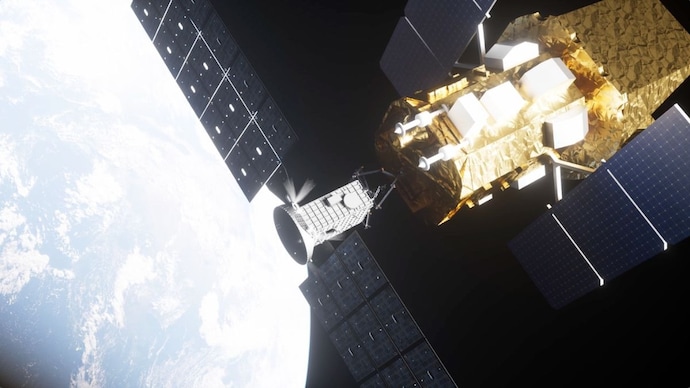
Nasa's effort to extend the life of its Neil Gehrels Swift Observatory has encountered an unexpected hurdle after the robotic spacecraft sent to rescue the ageing telescope, which is gradually losing altitude, developed a technical problem during its commissioning phase in orbit.
In an update provided by Nasa, the LINK servicing spacecraft, built by Katalyst Space, experienced an issue with its propulsion system while engineers were carrying out routine post-launch checks.
The anomaly caused the spacecraft to begin spinning, interrupting communications and delaying the next phase of the mission.
Despite the setback, Nasa and Katalyst Space said teams are working to regain full control of the spacecraft before deciding on the next steps.
MISSION TO SAVE A FALLING TELESCOPE
The LINK spacecraft was launched on Friday, July 3, aboard a Northrop Grumman Pegasus XL rocket from Kwajalein Atoll in the Marshall Islands.
Its mission is unlike a conventional satellite launch.
Instead of carrying scientific instruments, LINK is designed to rendezvous with Nasa's Swift Observatory, inspect it, dock with it and gradually raise its orbit over several months.
Swift, launched in November 2004, has spent more than two decades studying some of the universe's most energetic events, including gamma-ray bursts, which are brief but immensely powerful explosions linked to collapsing massive stars and merging neutron stars.
The observatory has also observed black holes, supernovae and other transient cosmic phenomena, making it one of Nasa's most productive astrophysics missions.
WHAT WENT WRONG?
The rescue mission is currently in the commissioning phase, when engineers verify that all spacecraft systems work as expected before beginning the journey to Swift.
Nasa said a malfunction involving LINK's thrusters caused the spacecraft to tumble, preventing normal communications with mission controllers. Engineers are analysing telemetry and attempting to restore stable attitude control before resuming commissioning.
The mission is particularly important because Swift's orbit has been steadily decaying due to atmospheric drag, accelerated by heightened solar activity in recent years.
Without a successful orbital boost, the observatory risks re-entering Earth's atmosphere earlier than planned.
If LINK can be recovered, it will continue its rendezvous with Swift and attempt to lift the telescope into a higher, more sustainable orbit, potentially extending its scientific life by several years.
Nasa's effort to extend the life of its Neil Gehrels Swift Observatory has encountered an unexpected hurdle after the robotic spacecraft sent to rescue the ageing telescope, which is gradually losing altitude, developed a technical problem during its commissioning phase in orbit.
In an update provided by Nasa, the LINK servicing spacecraft, built by Katalyst Space, experienced an issue with its propulsion system while engineers were carrying out routine post-launch checks.
The anomaly caused the spacecraft to begin spinning, interrupting communications and delaying the next phase of the mission.
Despite the setback, Nasa and Katalyst Space said teams are working to regain full control of the spacecraft before deciding on the next steps.
MISSION TO SAVE A FALLING TELESCOPE
The LINK spacecraft was launched on Friday, July 3, aboard a Northrop Grumman Pegasus XL rocket from Kwajalein Atoll in the Marshall Islands.
Its mission is unlike a conventional satellite launch.
Instead of carrying scientific instruments, LINK is designed to rendezvous with Nasa's Swift Observatory, inspect it, dock with it and gradually raise its orbit over several months.
Swift, launched in November 2004, has spent more than two decades studying some of the universe's most energetic events, including gamma-ray bursts, which are brief but immensely powerful explosions linked to collapsing massive stars and merging neutron stars.
The observatory has also observed black holes, supernovae and other transient cosmic phenomena, making it one of Nasa's most productive astrophysics missions.
WHAT WENT WRONG?
The rescue mission is currently in the commissioning phase, when engineers verify that all spacecraft systems work as expected before beginning the journey to Swift.
Nasa said a malfunction involving LINK's thrusters caused the spacecraft to tumble, preventing normal communications with mission controllers. Engineers are analysing telemetry and attempting to restore stable attitude control before resuming commissioning.
The mission is particularly important because Swift's orbit has been steadily decaying due to atmospheric drag, accelerated by heightened solar activity in recent years.
Without a successful orbital boost, the observatory risks re-entering Earth's atmosphere earlier than planned.
If LINK can be recovered, it will continue its rendezvous with Swift and attempt to lift the telescope into a higher, more sustainable orbit, potentially extending its scientific life by several years.
Nasa's effort to extend the life of its Neil Gehrels Swift Observatory has encountered an unexpected hurdle after the robotic spacecraft sent to rescue the ageing telescope, which is gradually losing altitude, developed a technical problem during its commissioning phase in orbit.
In an update provided by Nasa, the LINK servicing spacecraft, built by Katalyst Space, experienced an issue with its propulsion system while engineers were carrying out routine post-launch checks.
The anomaly caused the spacecraft to begin spinning, interrupting communications and delaying the next phase of the mission.
Despite the setback, Nasa and Katalyst Space said teams are working to regain full control of the spacecraft before deciding on the next steps.
MISSION TO SAVE A FALLING TELESCOPE
The LINK spacecraft was launched on Friday, July 3, aboard a Northrop Grumman Pegasus XL rocket from Kwajalein Atoll in the Marshall Islands.
Its mission is unlike a conventional satellite launch.
Instead of carrying scientific instruments, LINK is designed to rendezvous with Nasa's Swift Observatory, inspect it, dock with it and gradually raise its orbit over several months.
Swift, launched in November 2004, has spent more than two decades studying some of the universe's most energetic events, including gamma-ray bursts, which are brief but immensely powerful explosions linked to collapsing massive stars and merging neutron stars.
The observatory has also observed black holes, supernovae and other transient cosmic phenomena, making it one of Nasa's most productive astrophysics missions.
WHAT WENT WRONG?
The rescue mission is currently in the commissioning phase, when engineers verify that all spacecraft systems work as expected before beginning the journey to Swift.
Nasa said a malfunction involving LINK's thrusters caused the spacecraft to tumble, preventing normal communications with mission controllers. Engineers are analysing telemetry and attempting to restore stable attitude control before resuming commissioning.
The mission is particularly important because Swift's orbit has been steadily decaying due to atmospheric drag, accelerated by heightened solar activity in recent years.
Without a successful orbital boost, the observatory risks re-entering Earth's atmosphere earlier than planned.
If LINK can be recovered, it will continue its rendezvous with Swift and attempt to lift the telescope into a higher, more sustainable orbit, potentially extending its scientific life by several years.

