Severe dust storm triggers red alert across Delhi-NCR, light rain follows
With the monsoon gradually advancing northward, weather experts say such intense dust storms and thunderstorms may continue to occur across northwestern India in the coming days before more widespread rainfall activity takes over.
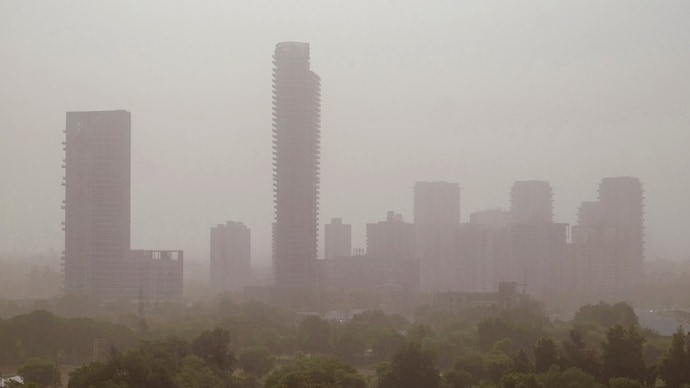
Delhi and its neighbouring regions witnessed a dramatic change in weather on Tuesday afternoon as powerful dust storms and strong winds swept across the National Capital Region (NCR), prompting the India Meteorological Department (IMD) to issue a red alert for severe weather conditions, expected to last for at least 3 hours.
The weather department warned that squally winds reaching speeds of up to 100 kmph could affect parts of Delhi-NCR over the next hour, with thunderstorms and lightning expected.
The sudden weather shift arrived around 2:30 pm when the IMD issued urgent warnings for Delhi, Haryana, Uttar Pradesh and Rajasthan. Within minutes, strong gusts reduced visibility across several parts of the capital, with dust clouds engulfing roads and residential areas.
The intense pre-monsoon activity brought temporary relief from the heat that had gripped the region over the past several days. Temperatures had remained above normal in many areas, allowing the atmosphere to store significant amounts of energy.
WHAT TRIGGERED THE DUST STORM?
Meteorologists explained that the dust storm was triggered by a classic pre-monsoon setup.
Extremely hot surface temperatures over northwest India created unstable atmospheric conditions. As cooler air associated with an approaching weather disturbance moved into the region, it forced warm air near the surface to rise rapidly.
This rising motion helped develop towering thunderstorm clouds. The downdrafts generated by these storms then pushed large amounts of dust from dry surfaces into the air, creating the wall of dust seen across Delhi-NCR.
Such storms are common during the transition period between summer and the arrival of the southwest monsoon.
The IMD forecast that the dust storm would be followed by thunderstorms, lightning, and light rainfall as moisture-bearing winds interacted with the unstable atmosphere. The rainfall is expected to help settle dust particles and bring further cooling to the region.
Apart from Delhi, several locations across Haryana, Uttar Pradesh and Rajasthan were placed under alert. Areas expected to be affected included Sonipat, Rohtak, Kharkhoda, Bhiwani and Charkhi Dadri in Haryana; Bagpat, Khekra, Pilakhua and Sikandrabad in Uttar Pradesh; and Alwar, Bhiwadi, Tijara and Deeg in Rajasthan.
Authorities advised residents to remain indoors during the peak of the storm, avoid unnecessary travel, and secure loose objects that could become airborne in strong winds.
With the monsoon gradually advancing northward, weather experts say such intense dust storms and thunderstorms may continue to occur across northwestern India in the coming days before more widespread rainfall activity takes over.
Shortly after the duststorm covered the national capital, light rainfall was experienced in parts of Delhi, bringing a refreshing change from the dusty conditions.
Delhi and its neighbouring regions witnessed a dramatic change in weather on Tuesday afternoon as powerful dust storms and strong winds swept across the National Capital Region (NCR), prompting the India Meteorological Department (IMD) to issue a red alert for severe weather conditions, expected to last for at least 3 hours.
The weather department warned that squally winds reaching speeds of up to 100 kmph could affect parts of Delhi-NCR over the next hour, with thunderstorms and lightning expected.
The sudden weather shift arrived around 2:30 pm when the IMD issued urgent warnings for Delhi, Haryana, Uttar Pradesh and Rajasthan. Within minutes, strong gusts reduced visibility across several parts of the capital, with dust clouds engulfing roads and residential areas.
The intense pre-monsoon activity brought temporary relief from the heat that had gripped the region over the past several days. Temperatures had remained above normal in many areas, allowing the atmosphere to store significant amounts of energy.
WHAT TRIGGERED THE DUST STORM?
Meteorologists explained that the dust storm was triggered by a classic pre-monsoon setup.
Extremely hot surface temperatures over northwest India created unstable atmospheric conditions. As cooler air associated with an approaching weather disturbance moved into the region, it forced warm air near the surface to rise rapidly.
This rising motion helped develop towering thunderstorm clouds. The downdrafts generated by these storms then pushed large amounts of dust from dry surfaces into the air, creating the wall of dust seen across Delhi-NCR.
Such storms are common during the transition period between summer and the arrival of the southwest monsoon.
The IMD forecast that the dust storm would be followed by thunderstorms, lightning, and light rainfall as moisture-bearing winds interacted with the unstable atmosphere. The rainfall is expected to help settle dust particles and bring further cooling to the region.
Apart from Delhi, several locations across Haryana, Uttar Pradesh and Rajasthan were placed under alert. Areas expected to be affected included Sonipat, Rohtak, Kharkhoda, Bhiwani and Charkhi Dadri in Haryana; Bagpat, Khekra, Pilakhua and Sikandrabad in Uttar Pradesh; and Alwar, Bhiwadi, Tijara and Deeg in Rajasthan.
Authorities advised residents to remain indoors during the peak of the storm, avoid unnecessary travel, and secure loose objects that could become airborne in strong winds.
With the monsoon gradually advancing northward, weather experts say such intense dust storms and thunderstorms may continue to occur across northwestern India in the coming days before more widespread rainfall activity takes over.
Shortly after the duststorm covered the national capital, light rainfall was experienced in parts of Delhi, bringing a refreshing change from the dusty conditions.

