Vietnamese crab exporter

Topic

Advertisement
TOPIC

IMD

IMD, commonly known as the India Meteorological Department, is the country’s principal agency for weather forecasting, meteorological observations and seismology. Established in 1875, the IMD functions under the Ministry of Earth Sciences and is headquartered in New Delhi.


The department plays a crucial role in monitoring India’s weather and climate conditions, issuing forecasts and early warnings for cyclones, heavy rainfall, thunderstorms, heatwaves, cold waves and other extreme weather events. Its alerts are widely used by governments, disaster management agencies, farmers, airlines, shipping companies and the general public.
 

The IMD is especially known for tracking monsoon patterns, which are vital for India’s agriculture and water resources. Every year, its southwest monsoon forecast is closely watched because nearly half of India’s farmland depends on rainfall for irrigation.
 

Apart from weather forecasting, the IMD also monitors earthquakes and seismic activity across the country through a network of observatories and weather stations. The department uses satellites, Doppler weather radars, ocean buoys and advanced computer models to improve forecasting accuracy.
 

Over the years, the IMD has expanded its role in disaster preparedness by issuing timely warnings during cyclones in the Bay of Bengal and Arabian Sea. Improved forecasting has helped reduce casualties during major storms in recent years.


Today, the IMD remains one of India’s most important scientific institutions, serving as the backbone of the country’s weather and climate monitoring system.

Follow IMD on

  • ALL
  • STORIES
  • VIDEOS

STORIES

Load More

VIDEOS

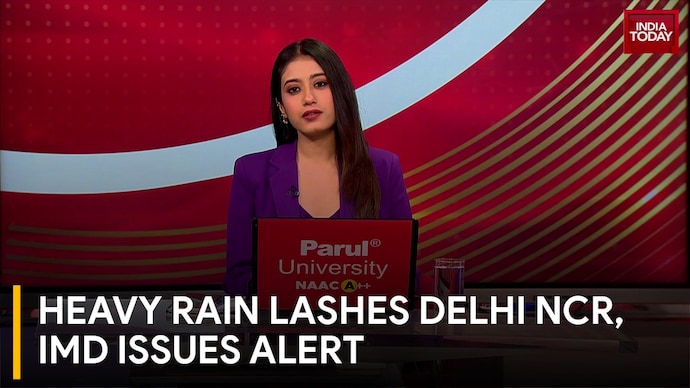
Heavy Rains Lash Delhi NCR, IMD Issues Weather Alert as Showers Disrupt Normal Life

Incessant heavy rains lashed Delhi NCR for a second straight day, bringing significant weather changes across North India. The India Meteorological Department issued alerts predicting continued cloud cover and widespread showers across the National Capital Region. While downpours led to waterlogging in some pockets, including previous disruptions near the airport, central Delhi and NDMC areas reported manageable conditions with steady rain. Traffic congestion on major routes saw partial respite owing to an ongoing long weekend, reducing commuter volumes on Saturday morning. However, with the monsoon reactivating and the weather department forecasting persistent rainfall over the next two to three days covering Sunday and Monday, concerns remain regarding civic readiness, water drainage, and potential traffic bottlenecks as the workweek resumes.

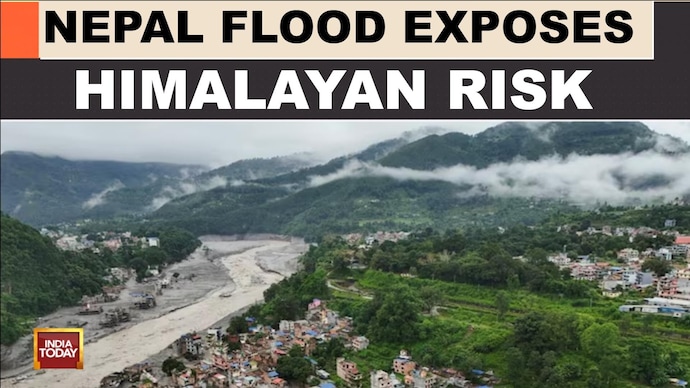
Nepal Glacial Flood Exposes Himalayan Risks: India Tracks 195 Vulnerable Glacier Lakes

A devastating flood triggered by a glacial collapse in Nepal's Rasuwa region near the Nepal-Tibet border has highlighted major risks of cascading Himalayan hazards. In response to rising threat levels from Glacial Lake Outburst Floods, the National Disaster Management Authority has identified 195 vulnerable glacier lakes across Himachal Pradesh, Sikkim, Ladakh, Arunachal Pradesh, Jammu and Kashmir, and Uttarakhand. India relies on multiple disaster monitoring systems, including Indian Space Research Organisation satellites for remote sensing and terrain mapping, Met Department weather models providing river sub-basin quantitative precipitation forecasts, and Central Water Commission river gauges offering up to 24-hour advance flood warnings. The National Remote Sensing Centre integrates geospatial data into a national emergency database to provide hazard maps and early warnings. However, the Nepal disaster underscores gaps in monitoring high-altitude ice collapses, where one failure sets off a chain of catastrophic events across the fragile Himalayan ecosystem.

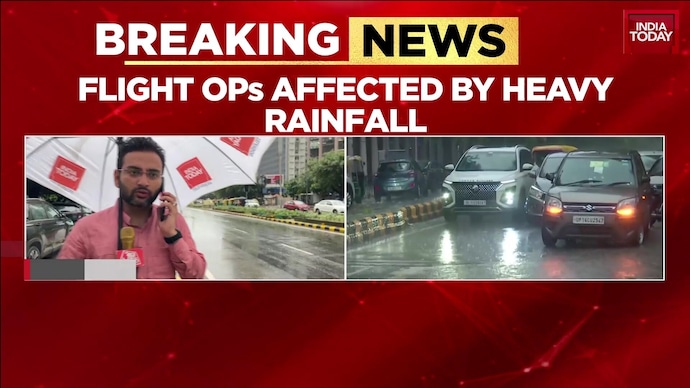
Delhi Rains: IGI Airport Waterlogged As Heavy Rain Triggers Flight Delays, Traffic Chaos

Torrential rainfall in Delhi and the National Capital Region has disrupted normal life, triggering severe traffic snarls, waterlogging on major roads, and chaos at the Indira Gandhi International Airport. Flight operations at the airport were hampered with mass flight diversions and delays after water flooded the entrance and forecourt of Terminal 3, forcing passengers to wade through water. The India Meteorological Department has warned that rainfall will continue across the national capital region. Following viral videos of the waterlogging, Delhi Airport authorities issued a statement confirming that water accumulated in the approach road and forecourt areas due to heavy afternoon downpours, adding that the accumulated water was cleared shortly after.

Delhi Rains: Red Alert Issued After Heavy Rain, Waterlogging At IGI Airport, Traffic Hit

A brief spell of heavy rainfall lasting sixty minutes has triggered waterlogging and traffic snarls across the national capital and Delhi NCR. The India Meteorological Department escalated its weather warning from an orange alert to a red alert, forecasting moderate-to-heavy rainfall. Severe waterlogging was reported outside Terminal arrivals at the Indira Gandhi International Airport, forcing passengers to wade through accumulated water. Traffic bottlenecks were observed along Delhi border flyovers and around the airport area as evening commute hours commenced amid Janmashtami.

Delhi Rains: Heavy Rain Triggers Waterlogging At IGI Airport, Flights From Mumbai, Ahmedabad Delayed

Heavy rainfall in Delhi NCR has caused severe waterlogging and traffic disruptions across the national capital, including central and south Delhi locations such as Connaught Place, Akbar Road, and Lajpat Nagar. Flight operations at the Indira Gandhi International Airport have been impacted due to waterlogging on the premises, leading to delays for arrivals from sectors including Ahmedabad, Mumbai, and Port Blair. An orange alert was issued ahead of the downpour, with expectations of wind speeds reaching forty to fifty kilometres per hour. The meteorological department has indicated that the active monsoon spell and weather alert will continue across Delhi NCR and parts of north India over the next two days.

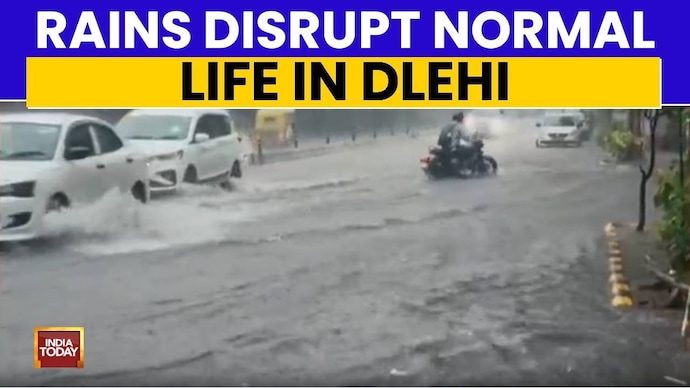
Heavy Rain Lashes Delhi NCR; Waterlogging, Traffic Jams Paralyse Capital, IMD Issues Red Alert

Heavy rainfall lashed the Delhi National Capital Region on Monday morning, causing severe waterlogging, traffic snarls, and disruption to daily life across several areas. Visuals from key locations including Connaught Place, ITO, South Avenue, Panchkuian Road, and Jantar Mantar showed submerged streets and commuters struggling through flooded roads. Strong winds and thunderstorms further aggravated the situation in Delhi, Noida, Gurgaon, and Faridabad. The India Meteorological Department issued orange and red alerts predicting continued rainfall. Although civic agencies deployed teams and activated water pumps across affected stretches, major routes including the Laxmi Nagar to ITO stretch witnessed extensive traffic congestion.

Video: Landslide buries two parked cars in Shimla amid heavy rain

Two parked cars were buried under rocks and debris after a landslide struck the Rajhana area on the outskirts of Shimla on Saturday amid heavy rainfall in Himachal Pradesh. Dramatic visuals from the site showed the vehicles crushed under massive boulders after a hillside gave way, though no casualties were reported. The landslide came as moderate to heavy rain battered the state, triggering multiple weather-related incidents, including the collapse of a bailey bridge installed last year near Sangla bus stand and floodwater inundating a single-storeyed house while threatening several others in Kinnaur district. The local weather department said Nahan recorded the highest rainfall at 158.9 mm since Friday evening, while the India Meteorological Department (IMD) issued a yellow alert for moderate to heavy rain at isolated places in Shimla, Kullu, Chamba, Bilaspur and Sirmaur districts.

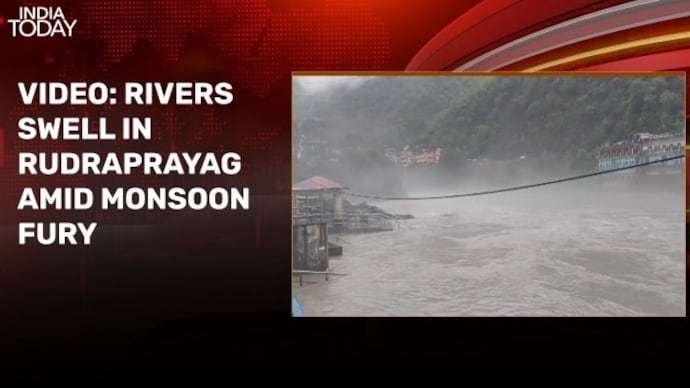
Video: Rivers swell in Rudraprayag as heavy rain lashes Uttarakhand

The Alaknanda and Mandakini rivers were in spate as heavy rains continued to lash Rudraprayag and other parts of Uttarakhand on Thursday. In Rudraprayag, torrential rains heavily disrupted normal life. According to data released by the India Meteorological Department (IMD) at 8.30 am, the state recorded an average rainfall of 52.4 mm over the previous 24 hours. District-wise data shows that Haridwar received the highest rainfall at 119.8 mm, which is 781% above normal. It was closely followed by Udham Singh Nagar, which recorded 119.1 mm of rainfall, or 1,034% above normal.

Heavy rain triggers waterlogging in Gurugram, work from home advisory issued

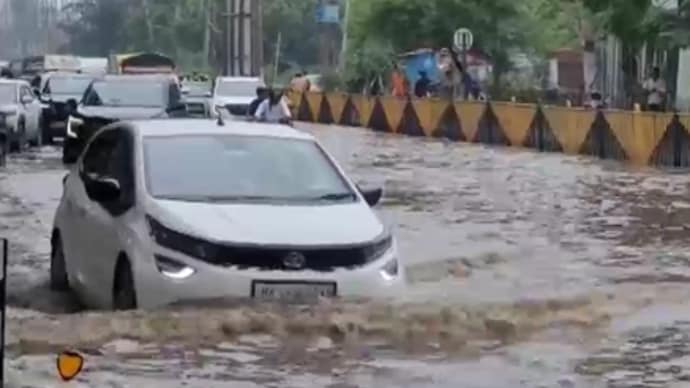
Heavy overnight rain continued to lash Gurugram on Thursday morning, triggering widespread waterlogging, traffic snarls and slow-moving vehicles across several parts of the city. The downpour caused hours-long congestion. In an advisory, the Gurugram Police urged corporate companies to allow employees to work from home amid adverse weather. The India Meteorological Department (IMD) has issued an orange alert for Gurugram, warning of more heavy rainfall throughout the day.

Video: Tree falls on car outside Delhi's National Heart Institute, disrupts traffic

Heavy overnight rainfall continued to lash parts of Delhi on Thursday, uprooting a tree outside the National Heart Institute that crashed onto parked cars and disrupted traffic in the area. The downpour also caused waterlogging and slow-moving traffic across several parts of the national capital. The India Meteorological Department (IMD) has issued a red alert for Delhi for Thursday, warning of extremely heavy rainfall and urging residents to exercise caution as more intense showers are expected throughout the day.

Video: Huge dust storm and rain batter Delhi-NCR; bring relief from heat

A powerful dust storm and strong winds swept across Delhi-NCR on Tuesday afternoon, prompting the IMD to issue a red alert for severe weather conditions. Winds of up to 100 kmph reduced visibility in several areas, while thunderstorms, lightning and light rain were forecast to follow. The sudden weather change brought temporary relief from the intense heat that had gripped the region in recent days.

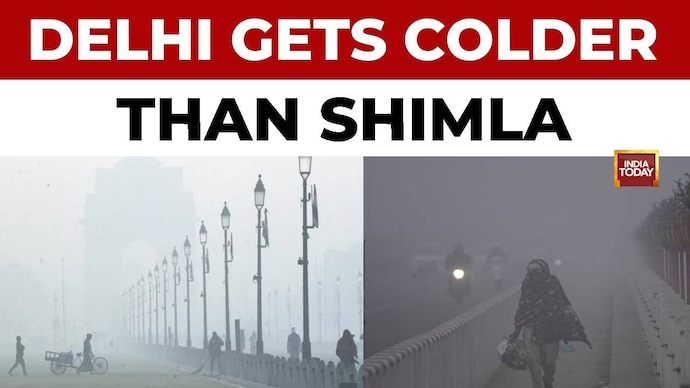
Anmol Bali Reports: Delhi Colder Than Shimla As Cold Wave Grips North India

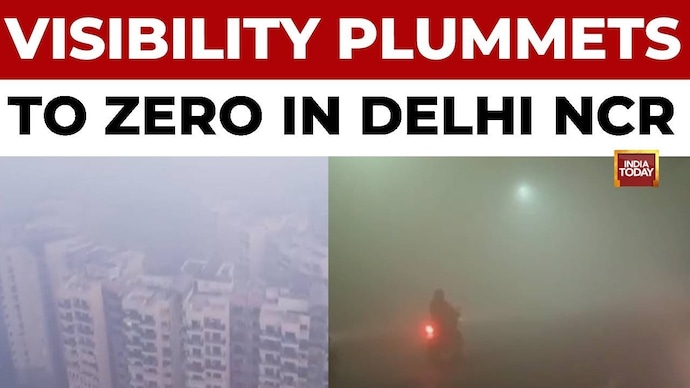
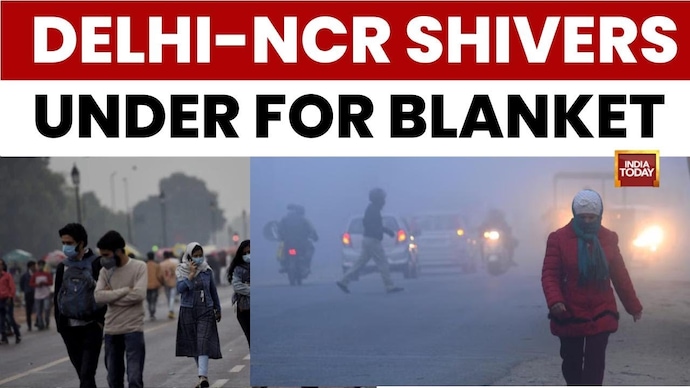
On this news report, the focus is on the severe cold wave conditions currently gripping the National Capital Region (NCR) and North India. Reporter Anmol Bali highlights a significant weather anomaly where Delhi has recorded temperatures lower than several prominent hill stations. Bali states, 'Delhi is currently even colder than Shimla', noting that the capital's temperature has dipped below those of Dharamshala, Jammu, Katra, and the Mukteshwar Hill Retreat. The report details that while Delhi recorded approximately 8.2 degrees Celsius, other regions like Amritsar in Punjab saw temperatures as low as 1.7 degrees Celsius. In addition to the bone-chilling cold, a thick layer of dense fog has engulfed the region, severely impacting visibility, with zero meters recorded in areas like Palam. The India Meteorological Department (IMD) data confirms these shocking numbers, illustrating the intensity of the current cold wave across the plains of North India.

Anmol Bali Reports: Delhi NCR Engulfed In Dense Fog As AQI Hits Severe Category

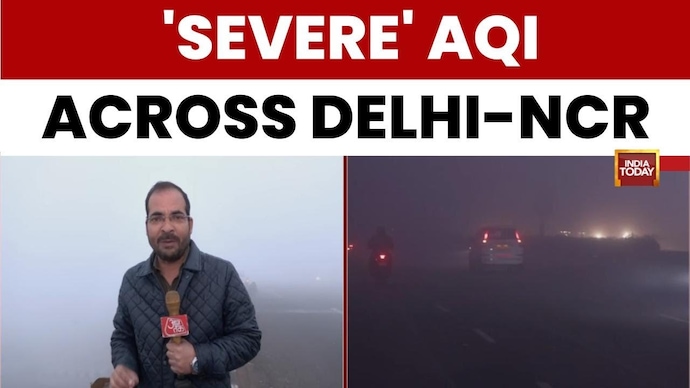
On this India Today special report, reporter Anmol Bali provides a ground update on the 'triple trouble' currently affecting the National Capital Region. Delhi and its adjoining areas of Noida, Gurugram, and Ghaziabad are grappling with a combination of extremely dense fog, a biting cold wave, and hazardous pollution levels. Anmol Bali notes that 'today in the morning, visibility over the Safdarjung was recorded around zero,' significantly impacting commuters. The Air Quality Index (AQI) has breached the 400 mark, slipping into the severe category and prompting the Commission for Air Quality Management to reimpose Stage 4 of the Graded Response Action Plan (GRAP). These restrictions include a ban on non-essential diesel trucks and all construction activities. The India Meteorological Department (IMD) has issued orange and red alerts for various parts of the capital as temperatures dip to a minimum of 6 degrees Celsius. The programme explores the logistical challenges and health risks posed by this deteriorating weather and environmental situation.

Delhi Weather News: GRAP 3 Curbs Reimposed As Cold Wave And Fog Grip Delhi NCR

On this Special Report, Shreya Chatterjee highlights the severe weather and pollution crisis currently gripping the National Capital Region. Delhi NCR is facing a 'triple attack' of dense fog, a biting cold wave, and deteriorating air quality, which has prompted the Commission for Air Quality Management to reimpose Stage 3 restrictions under the Graded Response Action Plan (GRAP). Shreya Chatterjee notes that 'the air quality has also come down to deteriorate again to severe category' following a brief period of relief. The programme features ground updates from correspondent Anmol Bali at Anand Vihar, where visibility remains significantly impacted. With minimum temperatures dropping to around 6 degrees Celsius, the city continues to face harsh winter conditions that have disrupted daily life and traffic. The report explores the impact of these conditions and the enforcement of GRAP 3 measures to curb rising pollution levels across the capital.

Delhi Weather Update: IMD Issues Yellow Alert For Fog; Air Quality Deteriorates To GRAP 3 Levels

This news bulletin provides a critical weather and pollution update for the Delhi NCR region. The National Capital is currently shrouded in a thick blanket of fog, which has significantly impacted travel, leading to the cancellation and delay of several flights and trains. The India Meteorological Department (IMD) has issued a yellow alert as visibility remains poor in the early hours. The speaker notes that 'until the wind speed picks up the fog Situation might not improve.' In addition to the weather challenges, air quality has deteriorated further, prompting the reimposition of GRAP 3 measures. Residents are advised to monitor travel schedules closely as temperatures remain low and the air quality index continues to decline after a brief period of relief. The report emphasizes the dual challenge of dense fog and soaring pollution levels affecting the region.

Kashmir Shivers: Severe Cold Wave Grips Valley, Temperatures Plunge to -25°C in Dras

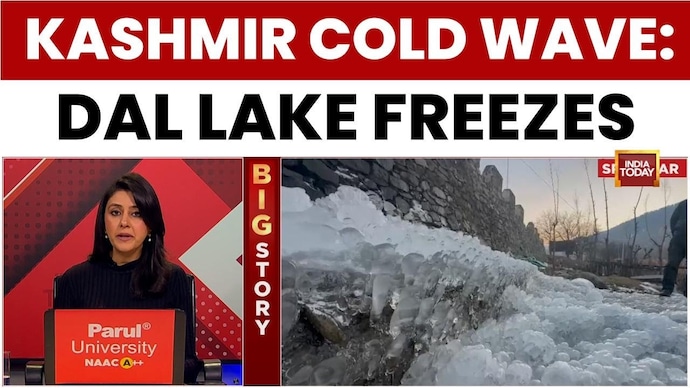
A severe cold wave has gripped Kashmir, with temperatures dropping significantly across the region. This special report details how the South Kashmir town recorded a minimum temperature of -6.2 degrees, marking one of the coldest nights of the season. The extreme cold has caused parts of the famous Dal Lake in Srinagar to freeze. Tourist destinations like Gulmarg and Pahalgam saw temperatures drop to nearly -10 degrees, while Dras recorded a freezing -25 degrees. According to the Indian Meteorological Department (IMD), these harsh conditions are expected to 'persist till the 20th of January'. A new western disturbance is anticipated after January 13th, which may bring the first snowfall of the season to the plains, offering some hope to local farmers for its benefits to fruit trees and water resources.