Birds near Ukraine's frontline are building nests with fibre optic cables. Here's why
These cables can stretch up to 20 kilometres, unspooling behind the drone as it flies. Once missions are over, the cables are left hanging from trees.
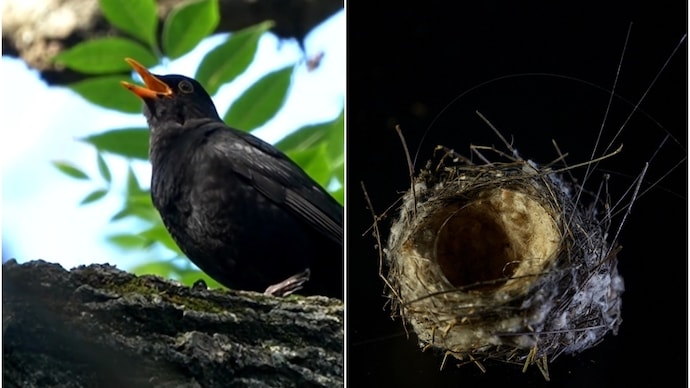
A pair of bird nests found near Ukraine's front line has offered an intriguing yet a concerning glimpse into how modern warfare is leaving its mark on the natural world.
Instead of being woven entirely from twigs and grass, the nests contain fibre-optic cables used to guide military drones, highlighting how four years of conflict have transformed not just the battlefield but also the surrounding environment.
Researchers at Kyiv's War Museum said the nests were recovered from areas near the front line by Ukrainian soldiers.
The museum believes they are among the first documented examples of birds using discarded fibre-optic drone cables as nesting material.
One nest will remain in the museum's collection, while the other will be sent to researchers in the Netherlands for scientific analysis before being returned to Ukraine.
DRONES AND WAR HIT THE ENVIRONMENT
Since Russia's full-scale invasion of Ukraine in February 2022, drones have become one of the most important weapons used by both sides.
To counter electronic jamming, many attack drones are guided using ultra-thin fibre-optic cables instead of radio signals.
These cables can stretch up to 20 kilometres, unspooling behind the drone as it flies.
Once missions are over, the cables are left hanging from trees, scattered across fields and draped over rooftops, especially in heavily contested regions such as Donetsk, Kharkiv and Zaporizhzhia.
Over time, birds have begun collecting the abandoned strands along with dry grass and other natural materials to build their nests.
Researchers have said that the unusual nests illustrate how wildlife adapts to environments altered by conflict, even as those changes create new risks.
WHICH BIRDS BUILT THE NESTS?
The species that built the nests remains unknown.
Dutch biologist Auke-Florian Hiemstra, who studies artificial materials used in bird nests, will examine one of the nests for DNA traces that could identify its builders.
Researchers, however, admit that they have never encountered a nest made with fibre-optic drone cables before.
Scientists caution that the synthetic cables could have mixed effects on birds. While the strong fibres may help create sturdier nests, they could also entangle chicks or adult birds, increasing the risk of injury.
Beyond their biological significance, the nests have become symbols of a changing landscape.
They document how the war's impact now extends beyond damaged cities and battlefields into ecosystems, where even birds are unknowingly incorporating the remnants of modern warfare into their daily lives.
A pair of bird nests found near Ukraine's front line has offered an intriguing yet a concerning glimpse into how modern warfare is leaving its mark on the natural world.
Instead of being woven entirely from twigs and grass, the nests contain fibre-optic cables used to guide military drones, highlighting how four years of conflict have transformed not just the battlefield but also the surrounding environment.
Researchers at Kyiv's War Museum said the nests were recovered from areas near the front line by Ukrainian soldiers.
The museum believes they are among the first documented examples of birds using discarded fibre-optic drone cables as nesting material.
One nest will remain in the museum's collection, while the other will be sent to researchers in the Netherlands for scientific analysis before being returned to Ukraine.
DRONES AND WAR HIT THE ENVIRONMENT
Since Russia's full-scale invasion of Ukraine in February 2022, drones have become one of the most important weapons used by both sides.
To counter electronic jamming, many attack drones are guided using ultra-thin fibre-optic cables instead of radio signals.
These cables can stretch up to 20 kilometres, unspooling behind the drone as it flies.
Once missions are over, the cables are left hanging from trees, scattered across fields and draped over rooftops, especially in heavily contested regions such as Donetsk, Kharkiv and Zaporizhzhia.
Over time, birds have begun collecting the abandoned strands along with dry grass and other natural materials to build their nests.
Researchers have said that the unusual nests illustrate how wildlife adapts to environments altered by conflict, even as those changes create new risks.
WHICH BIRDS BUILT THE NESTS?
The species that built the nests remains unknown.
Dutch biologist Auke-Florian Hiemstra, who studies artificial materials used in bird nests, will examine one of the nests for DNA traces that could identify its builders.
Researchers, however, admit that they have never encountered a nest made with fibre-optic drone cables before.
Scientists caution that the synthetic cables could have mixed effects on birds. While the strong fibres may help create sturdier nests, they could also entangle chicks or adult birds, increasing the risk of injury.
Beyond their biological significance, the nests have become symbols of a changing landscape.
They document how the war's impact now extends beyond damaged cities and battlefields into ecosystems, where even birds are unknowingly incorporating the remnants of modern warfare into their daily lives.

