Vietnamese crab exporter

Topic

Advertisement
TOPIC

Russia

Russia, the world's largest country, spans Eastern Europe and Northern Asia, covering 11 time zones and a vast array of landscapes. Known for its rich history and cultural heritage, Russia has been a significant player on the global stage for centuries. Its capital, Moscow, is a bustling metropolis renowned for its historical landmarks such as the Kremlin and Red Square, while St. Petersburg, the cultural capital, boasts grand architecture and world-famous museums like the Hermitage.

Russia's diverse geography includes expansive forests, tundra, and mountain ranges, contributing to its wealth of natural resources, including oil, gas, and minerals. The country has a population of over 140 million people, with Russian as the official language.

Politically, Russia is a federal semi-presidential republic, with a complex history marked by the Tsarist autocracy, the Soviet era, and its transformation into a market-oriented economy after the dissolution of the Soviet Union in 1991.

  • ALL
  • STORIES
  • VIDEOS

STORIES

Germany, Russia hold first ministerial meeting since Ukraine invasion

Germany and Russia held their first face-to-face ministerial meeting since the 2022 invasion on the sidelines of the UN General Assembly. The brief encounter signalled a limited diplomatic opening even as the Ukraine war, sanctions pressure and mutual accusations intensified.

Jaishankar rejects BRICS-UN binary amid wider global shifts

At the UN, S Jaishankar rejected framing BRICS and the United Nations as rival choices as India held talks with Russia and Iran. The broader day underscored shifting alignments from stronger India-US ties and US-China engagement to fresh security shocks across South Asia.

Jaishankar meets Russia, Iran at UN after Trump sanctions law

At the UN General Assembly, S Jaishankar held talks with Russian and Iranian counterparts on bilateral ties, BRICS and the Gulf conflict. The meetings came as India balanced diplomatic outreach, energy security and wider coordination after a new US sanctions law.

B2 for Putin, B1 for Xi: Does US tease visiting rivals with stealth bombers?

US President Donald Trump has rolled out the red carpet for two of America's biggest strategic rivals, with US bombers roaring overhead. A B-2 for Vladimir Putin in 2025, B-1B Lancers for Xi Jinping in 2026. Were these flyovers ceremonial? Or was Washington sending a message about American military might?

Load More

VIDEOS

UNGA: Attacks on Seafarers Unacceptable, Call for Maritime Safety, Zero Tolerance on Terrorism

At the United Nations General Assembly, External Affairs Minister S. Jaishankar raised serious concerns over attacks targeting commercial shipping and seafarers across conflict zones, extending from the Red Sea to the Black Sea and the Gulf. Emphasising that the loss of life among Indian and international seafarers is completely unacceptable, it was highlighted that India has partnered with Liberia and 23 other nations to rally global public opinion for maritime security and adherence to international law. The address underscored disruptions to critical sea lanes, international trade, and global energy supplies resulting from conflicts in West Asia and between Russia and Ukraine. Reaffirming India's consistent position on cross-border terrorism, the forum emphasised that state-sponsored terrorism cannot be treated as state policy or foreign diplomacy, stating firmly that goodwill and terror cannot coexist.

Trump And Xi Jinping Hold Bilateral Talks At White House On Trade, Wars

US President Donald Trump hosted Chinese President Xi Jinping at the White House for a bilateral meeting in the Oval Office during a two-day state visit. The meeting commenced following a ceremonial military review held in the Rose Garden. Discussions between the two leaders covered a wide range of critical topics, including bilateral trade, the economy, supply chains, rare earth elements, artificial intelligence competition, and energy security. Regional and international security concerns were also on the agenda, specifically Taiwan, the Indo-Pacific, and ongoing conflicts involving Russia, Ukraine, and Iran. Following the one-and-a-half-hour discussion, President Trump gave President Xi a brief tour of the newly constructed helipad and ballroom before seeing him off. While no joint press conference took place, separate readouts and statements are expected from Washington and Beijing detailing the discussions, ahead of an official state dinner scheduled for the evening.

India-US UNGA Talks, Russia Sanctions Bill And Oil Trade Concerns

External Affairs Minister S. Jaishankar met US Secretary of State Marco Rubio on the margins of the 81st session of the United Nations General Assembly. The two leaders discussed developments in the Middle East and addressed proposed sanctions targeting nations that engage in economic trade with Russia or Iran. The US State Department affirmed Washington's readiness to assist regional partners with energy security challenges. Crucial concerns surround the Russia and Iran Sanctions Act, which seeks to target Russian oil and gas revenues while authorising tariffs of up to 100% on major buyers, potentially impacting countries like India and China. India has stressed that such measures could strain bilateral relations, especially given its significant energy dependence. In August, Russian oil accounted for 45% of India's oil imports at 2.1 million barrels per day, following a record 2.82 million barrels per day in July. High-level engagements between both nations are set to continue in the coming months.

Trump Welcomes Xi Jinping in US Amid High-Stakes Summit on Trade and Global Tensions

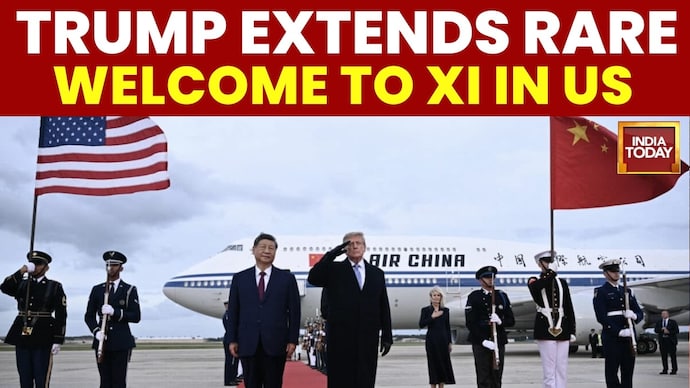
Chinese President Xi Jinping has arrived in the United States on a three-day official visit, marking his second summit meeting with US President Donald Trump in less than six months. In a rare diplomatic gesture not seen since 1962, President Donald Trump and First Lady Melania Trump received Xi Jinping and Chinese First Lady Peng Liyuan directly at Joint Base Andrews in Maryland. The arrival featured a red carpet reception, a 21-person honour cordon, and ceremonial cannon fire. Highlighting the agenda, bilateral discussions are set to address critical areas of friction, including trade, technology, supply chains, semiconductors, artificial intelligence, and geopolitical developments concerning Iran and Russia. Analysts note that while deep disagreements persist, the high-level engagement reflects an effort to establish guardrails, manage strategic competition, and stabilise diplomatic ties between the world's two largest economies.

John Sfakianakis: 'IMEC Can Help The Strait Of Hormuz, But It Cannot Replace' It

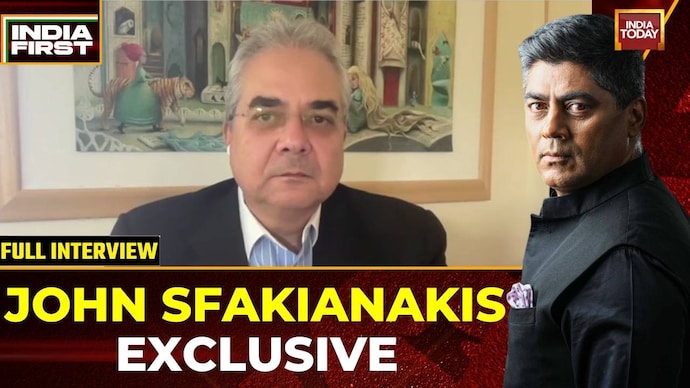
In an interview with India Today, John Sfakianakis, Chief Economist and Head of Economic Research at the Gulf Research Center and Associate Fellow at Chatham House, analyzed the feasibility of the India-Middle East-Europe Economic Corridor (IMEC) and mounting Middle East tensions. Evaluating the corridor, Sfakianakis noted, "IMEC can help the Strait of Hormuz, but it cannot replace the Strait of Hormuz." He highlighted major political, diplomatic, and infrastructural hurdles facing the project, pointing out that Saudi Arabia and Israel lack diplomatic ties and that the Arabian Peninsula currently lacks cross-border rail links. Addressing regional geopolitical friction, he explained that Saudi Arabia maintains a two-state solution for Palestine as a prerequisite for normalized ties with Israel. Sfakianakis also warned of broader economic ramifications from persistent conflicts involving Iran, Russia, and the United States, stressing that rising inflation remains the primary threat confronting global economies.

India-US Tariff Row Over Russian Oil, New Sanctions Bill and Xi Jinping's Visit

External Affairs Minister S. Jaishankar raised serious concerns with US Secretary of State Marco Rubio regarding a US Senate sanctions bill aimed at Russia and Iran. The proposed legislation empowers US President Donald Trump to impose tariffs of up to 100 percent on the top buyers of Russian oil and gas, directly impacting India and China. While Indian refiners imported roughly 45 percent of their crude from Russia in August, Indian officials highlight that these imports stabilise global energy markets. The tariff tensions unfold alongside preparations for Chinese President Xi Jinping's official visit to the United States.

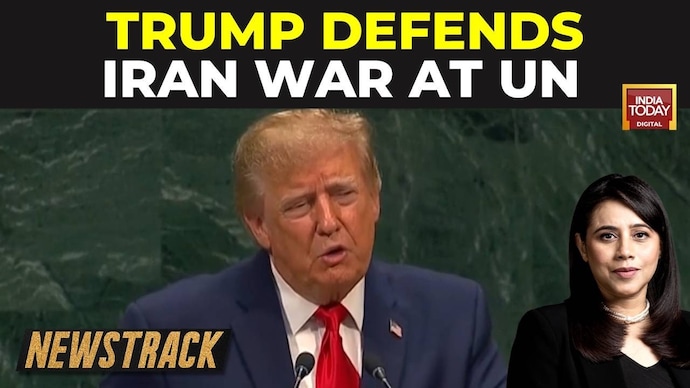
Trump Warns Iran of 'Annihilation' at UNGA, Hints at Deal, Pushes Ukraine Peace

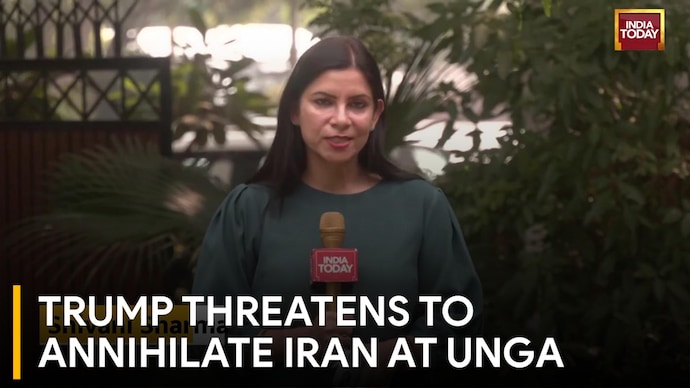
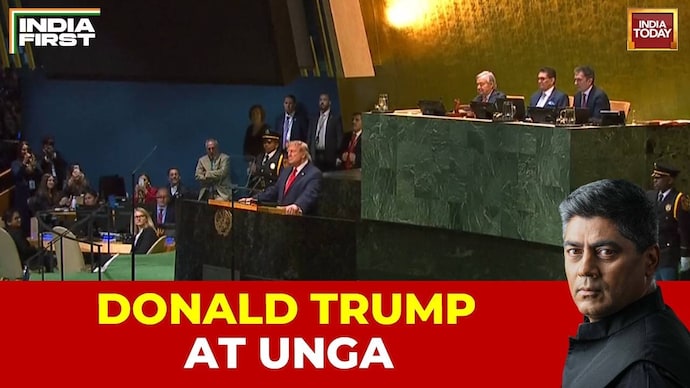
Addressing the United Nations General Assembly, US President Donald Trump stated he is weighing whether to completely annihilate Iran or negotiate a deal. Trump hinted a deal could take place after the US midterm elections around November, justifying US strikes as a measure to bring Iran to negotiations. He maintained his vision for Iran to develop under agreed terms and expressed optimism about mediating peace between Russia and Ukraine to end their ongoing war. Meanwhile, Iran has asserted readiness for effective and painful retaliation against any military aggression.

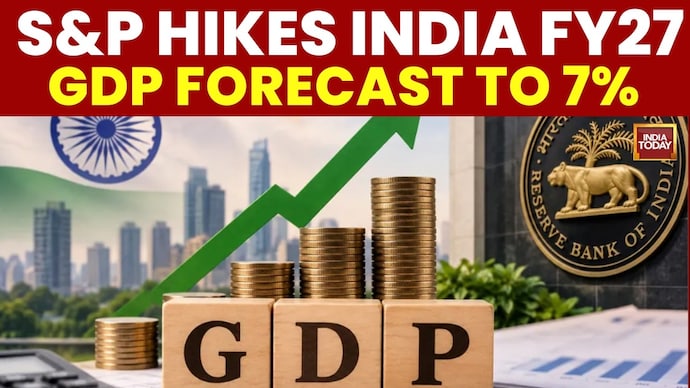
S&P Hikes India's FY27 GDP Forecast To 7%, Predicts RBI Rate Hike Amid Strong Growth

S&P Global Ratings has raised India's GDP growth forecast for financial year 2026-27 by 40 basis points to 7.0 per cent, revising its previous projection of 6.6 per cent upward. The rating agency cited robust industrial activity, healthy domestic consumption, strong goods exports, and accelerating government investment during the first quarter as primary drivers for the revision. Economists at S&P Global also project the Reserve Bank of India's rate-setting panel to hike the repo rate by 25 basis points to 5.50 per cent. The revised projection exceeds the Reserve Bank of India's estimate of 6.7 per cent and matches forecasts from agencies like Moody's. Analysts noted that India continues to maintain economic resilience despite external headwinds, including geopolitical conflicts in West Asia, the Russia-Ukraine war, global trade tariffs, and elevated crude oil prices.

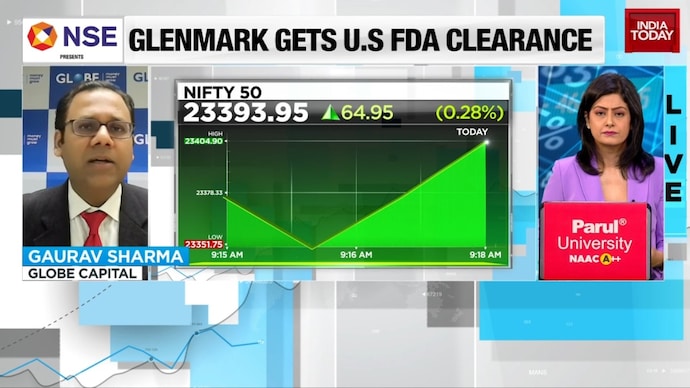
Markets Open Flat, S&P Ups GDP Target & SC Flags Medicine Pricing

Indian equity markets opened on a steady note above 23,400 levels, supported by gains in financial and banking stocks alongside broad-based sector participation. S&P raised India's FY27 GDP growth forecast by 40 basis points to 7 per cent, citing robust industrial activity, strong exports, and government spending, while projecting a repo rate hike by the Reserve Bank of India. Meanwhile, the Supreme Court raised serious concerns over the significant gap between the price to retailer (PTR) and the maximum retail price (MRP) of essential and life-saving medicines, questioning why more drugs are not covered under the drug price control order. Pharma companies, represented in court, cited research and development alongside marketing expenses for the variance in pricing. Additionally, global geopolitical developments remained in focus as Donald Trump highlighted sweeping tariff authorities and expressed support for the India-Middle East-Europe Economic Corridor.

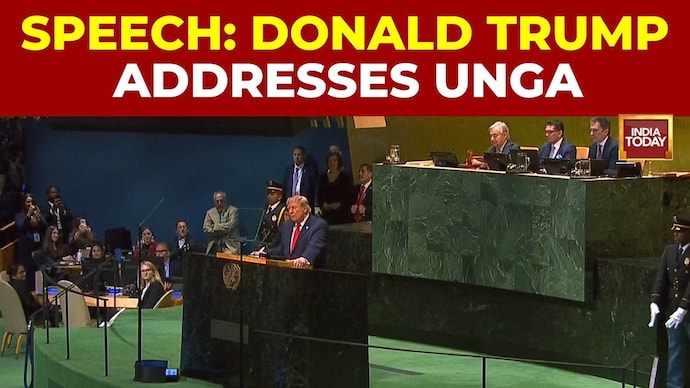
UNGA Address: Warning on Iran Nuclear Deal, Russian Oil Tariffs & Global Security

A speech delivered at the United Nations General Assembly addressed major international foreign policy challenges, focusing primarily on the Islamic Republic of Iran, the Russia-Ukraine conflict, and broader geopolitical developments. The address called for the complete economic isolation of Iran until it abandons its nuclear ambitions and ceases regional hostility, while leaving open the possibility of a negotiated agreement following the United States midterm elections. The speech also outlined potential enforcement actions concerning Russian energy exports, specifically mentioning the possible use of the Lindsey Graham sanctions bill to impose significant tariffs on countries importing oil from Russia, including India and China. Additionally, the address covered global security concerns, categorising Western hemisphere cartels alongside terror outfits, highlighting strategic interests in Greenland, and noting upcoming bilateral meetings at the White House.

Meera Shankar: 'It Puts India in a Very Difficult Spot'

In an exclusive interview, former Indian Ambassador to the United States Meera Shankar analyzed US foreign policy moves and their implications for India's strategic and energy security. Assessing US threats concerning Iran, Shankar highlighted the geopolitical challenges facing New Delhi, stating, "It puts India in a very difficult spot because so much of our oil imports have come from the Gulf." She emphasized the urgency of diversifying energy sources and accelerating the transition to a non-fossil fuel economy through renewables and electrification. Shankar also examined the address delivered at the United Nations General Assembly, noting it was tailored primarily to a domestic audience. Highlighting India's strategic ties across the Gulf, Russia, Central Asia, and the United States, she affirmed that New Delhi will continue to make independent calculations based on its own national interests.

Trump Warns Iran at UNGA, Calls for Global Sanctions, Labels AI 'Super Intelligence'

Addressing the United Nations General Assembly in New York, US President Donald Trump issued sharp warnings to Iran, designating it as the world's primary sponsor of terrorism. Trump called upon global nations to completely isolate Iran economically until it halts attacks on commercial shipping, terminates support for terrorism, and relinquishes its nuclear ambitions. He stated that while a deal with Tehran remains possible after the midterms, his alternative option is to completely annihilate the regime. Discussing other key foreign policy topics, Trump noted that Washington is engaging with both Moscow and Kyiv regarding Ukraine, and described Cuba as a failed state, leading to walkouts by Iranian and Cuban delegations. On technology, Trump announced that official US government documentation will replace the term artificial intelligence with super intelligence, dismissing apocalyptic warnings regarding the technology while asserting that the United States currently leads China in the sector.

'It Has Been My Great Honor to Settle Eight Wars': Donald Trump

Addressing the United Nations General Assembly and marking the 250th anniversary of American independence, United States President Donald Trump detailed his administration's domestic and international policy agenda. Domestically, Trump highlighted United States economic metrics, poverty reduction, and border security enforcement. In foreign affairs, Trump reiterated that Iran will not be permitted to obtain a nuclear weapon, referencing military strikes on Iranian nuclear sites, the destruction of Iranian naval vessels, and United States naval escorts in the Strait of Hormuz. Trump reviewed the cessation of hostilities in Gaza, the release of hostages, and the formation of a multilateral Board of Peace backed by the United Nations Security Council. He outlined diplomatic mediation across international disputes, including India and Pakistan, Cambodia and Thailand, Kosovo and Serbia, the Democratic Republic of the Congo and Rwanda, Armenia and Azerbaijan, as well as ongoing negotiations between Russia and Ukraine. Additionally, Trump detailed United States military operations in Venezuela, the apprehension of Nicolás Maduro, and an agreement involving 65 billion barrels of oil. He announced an accord with Denmark regarding Greenland to construct two military bases for Arctic defense. On technological policy, Trump stated that the United States government will prioritize super intelligence over traditional artificial intelligence terminology. The address concluded with calls for United Nations structural reforms, spending reductions, opposition to international carbon taxation, and the rejection of International Criminal Court jurisdiction.

Russia-Ukraine Escalation, War Clouds Over Iran, 81st UNGA Session Underway

The 81st session of the United Nations General Assembly is underway in New York amid intense global conflicts, including a massive escalation in the Russia-Ukraine war and rising war clouds over Iran. European states and the NATO alliance face growing concerns over the conflict expanding beyond Ukraine. US President Donald Trump arrived at the United Nations headquarters to address the gathering, delivering a direct message to Russian President Vladimir Putin to end and settle the war. Meanwhile, Russia maintains that weapon supplies by multiple nations to Ukraine remain unacceptable as global leaders convene to address security and economic concerns.

2,000 Drones Target Moscow, Wildberries Hubs Struck, Energy Facilities Hit

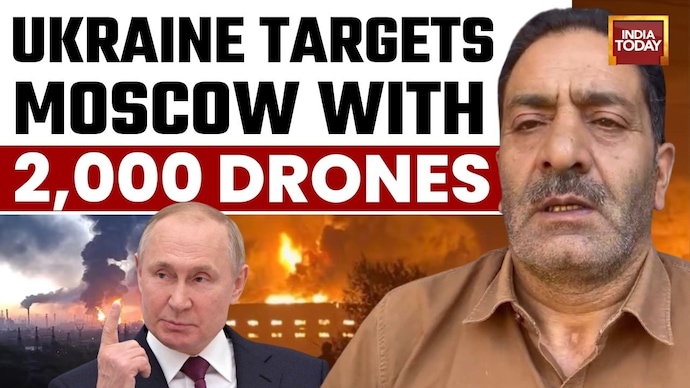
Russian security officials stated that Ukraine launched 2,000 long-range drones over a 48-hour period targeting military, logistics, and civilian infrastructure across the Moscow district during Russian elections, leaving two people dead and many injured. The strikes, travelling over 2,000 kilometres, hit military assets and more than 100 Wildberries logistics warehouses, which Ukraine alleges support Russian army logistics. Despite US President Donald Trump announcing a mutual agreement to halt attacks on energy infrastructure, strikes against energy sectors continue, intensifying pressure on global supplies alongside Middle East conflicts. Experts anticipate a larger retaliatory response from Russia.

US Russia Sanctions Law: Up To 100% Tariffs May Hit Top Oil Buyers India, China

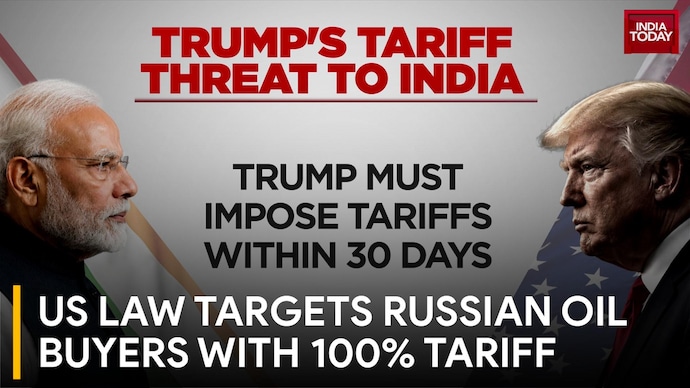
A newly signed United States sanctions law grants the administration authority to impose tariffs of up to 100% on imports from the five largest buyers of Russian crude oil and natural gas within 30 days. Although India and China are major purchasers, the legislation does not name specific nations or define how top importers will be calculated. In response, India has maintained that national interest and energy security for its 1.4 billion citizens remain paramount through diversified energy sourcing. New Delhi highlighted the potential impact on bilateral ties and global energy markets, reiterating its commitment to taking all necessary measures to protect domestic economic interests.

US-Greenland Deal: Trump Eyes Security Control, Arctic Route Rivalry & Rare Earth Minerals

United States President Donald Trump announced a permanent agreement concerning Greenland, claiming it grants Washington control over the island's security at no financial cost to the US. According to the US State Department, the arrangement bars non-NATO countries from establishing military bases, stationing troops, or making sensitive investments in Greenland, aiming to prevent Russia and China from gaining a strategic foothold. The island holds significant geopolitical importance due to its geographical proximity to Russia's Kola Peninsula, rich reserves of critical rare earth minerals, and the opening of Arctic Northern Sea Routes driven by melting ice caps. The US already operates the Pituffik Space Base in northwest Greenland, with plans to expand its military presence. However, authorities in Denmark and Greenland have pushed back, asserting that the autonomous territory is not for sale.

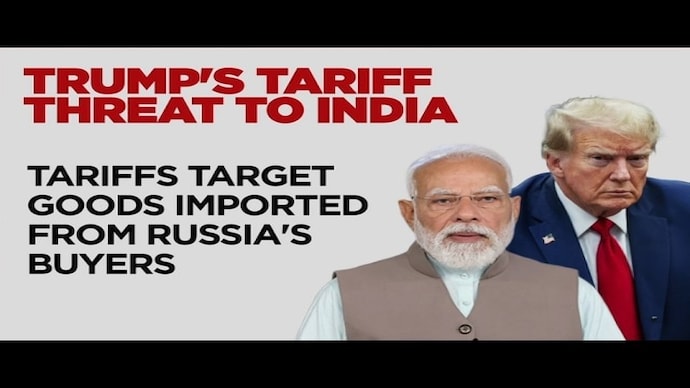
US Law on Russian Oil Tariffs, 100% Import Levies Risk, Impact on India-US Trade Talks

United States President Donald Trump has signed a new Russia sanctions bill into law, granting the administration authority to impose tariffs of up to 100% on goods imported from the top five buyers of Russian crude oil and natural gas within 30 days. The legislation covers major importers such as India and China, as well as countries aiding sanctions evasion. While the law grants significant executive discretion regarding implementation, the White House must notify Congress prior to removing any tariffs. The move comes ahead of high-level diplomatic engagements, including planned talks with Chinese President Xi Jinping and Ukrainian President Volodymyr Zelenskyy, aiming to exert pressure regarding the Russia-Ukraine war. For India, a leading purchaser of Russian crude, the law introduces new variables amid ongoing bilateral trade negotiations, where officials indicate substantial progress on an agreement ahead of scheduled ministerial discussions.

Trump Signs Sanctions Law Targeting Russian Oil Buyers; India And China In Focus

United States President Donald Trump has signed into law a new sanctions measure targeting Russia and Iran, which allows the imposition of tariffs of up to 100 per cent on the top five buyers of Russian oil and gas. While the legislation does not explicitly name India and China, both countries remain among the largest purchasers of Russian energy. The law grants the US president full authority after 30 days to issue decrees determining tariff scope, exemptions, or product-specific duties. The development introduces a new variable amid ongoing bilateral trade negotiations between India and the United States, where discussions around a potential trade deal are reported to be near completion. The law is also viewed as an instrument to increase pressure regarding the Russia-Ukraine conflict.

US Announces Greenland Deal To Block China, Russia Bases And Secure Rare Earths

The United States has announced an agreement concerning Greenland, aimed at securing long-term defence control and preventing adversaries from establishing military bases or making sensitive investments in the territory. The pact explicitly bars non-NATO nations from setting up military installations, directly countering potential security and commercial interests from Russia and China. Geographically situated close to Russia, Greenland offers strategic forward-basing advantages for American defence. Additionally, the arrangement permits US companies to invest in the territory and mine critical rare earth minerals, addressing international competition over essential natural resources. The White House and the US State Department outlined that the agreement provides permanent security capabilities in Greenland, ensuring no foreign adversary military presence and protecting regional interests without adding security costs to the United States.