Watch SpaceX Starship Flight 13 Live: World's biggest rocket ready for liftoff
After a last-second setback, SpaceX is ready to try again with Starship. Here's when and where you can watch one of the world's most anticipated rocket launches live from India.
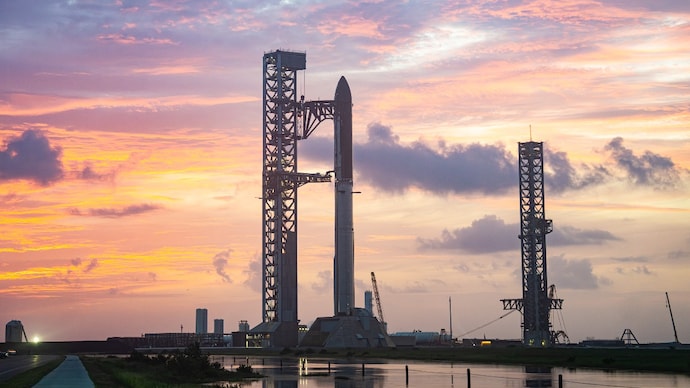
SpaceX launched the 13th integrated test flight of its Starship rocket in the early hours of Saturday, July 25, marking another key step in Elon Musk's ambition to build a fully reusable launch system for missions to Earth orbit, the Moon and eventually Mars.
The 90-minute launch window was scheduled to open at 4:15 am IST from Starbase in Boca Chica, Texas, and the liftoff occurred at around 4:21 am IST.
The launch was actually scheduled for Friday morning but was forced to be rescheduled due to poor weather conditions. But it was not the only time the launch was forced to be rescheduled.
The mission comes days after the previous countdown ended in a last-second abort due to an engine startup issue. SpaceX has since replaced two Raptor engines, completed additional checks and is ready to try again.
WATCH SPACEX'S STARSHIP FLIGHT 13 LIVE:
A NEW CHAPTER FOR SPACEX'S STARSHIP
Starship is the world's largest and most powerful rocket ever built.
Standing about 123 metres tall, it comprises the Super Heavy booster and the Starship upper stage, both designed to be fully reusable.
Since its first integrated test flight in 2023, SpaceX has steadily expanded the rocket's capabilities.
Earlier missions demonstrated stage separation, controlled splashdowns and the debut of the upgraded Version 3 vehicle.
Flight 13 is set to build on those milestones as the company works towards making Starship a reliable launch vehicle for future space missions, including Nasa's Artemis-III mission.
WHAT WILL FLIGHT 13 DO?
Flight 13 became the first Starship mission to carry 20 next-generation Starlink Version 3 satellites.
The satellites will briefly test systems such as solar arrays, antennas and laser communications before re-entering Earth's atmosphere along the same suborbital path as Starship.
The mission will also attempt an in-space relight of a Raptor engine, a critical capability for future orbital flights.
Meanwhile, the Super Heavy booster performed ascent, stage separation, boostback and a controlled splashdown in the Gulf of Mexico, while the Starship upper stage is expected to complete its planned trajectory before splashing down in the Indian Ocean.
A successful Flight 13 has brought SpaceX closer to operating Starship as a fully reusable launch system for deploying larger Starlink satellites, supporting Nasa's Artemis programme and laying the groundwork for future human missions to Mars.
SpaceX launched the 13th integrated test flight of its Starship rocket in the early hours of Saturday, July 25, marking another key step in Elon Musk's ambition to build a fully reusable launch system for missions to Earth orbit, the Moon and eventually Mars.
The 90-minute launch window was scheduled to open at 4:15 am IST from Starbase in Boca Chica, Texas, and the liftoff occurred at around 4:21 am IST.
The launch was actually scheduled for Friday morning but was forced to be rescheduled due to poor weather conditions. But it was not the only time the launch was forced to be rescheduled.
The mission comes days after the previous countdown ended in a last-second abort due to an engine startup issue. SpaceX has since replaced two Raptor engines, completed additional checks and is ready to try again.
WATCH SPACEX'S STARSHIP FLIGHT 13 LIVE:
A NEW CHAPTER FOR SPACEX'S STARSHIP
Starship is the world's largest and most powerful rocket ever built.
Standing about 123 metres tall, it comprises the Super Heavy booster and the Starship upper stage, both designed to be fully reusable.
Since its first integrated test flight in 2023, SpaceX has steadily expanded the rocket's capabilities.
Earlier missions demonstrated stage separation, controlled splashdowns and the debut of the upgraded Version 3 vehicle.
Flight 13 is set to build on those milestones as the company works towards making Starship a reliable launch vehicle for future space missions, including Nasa's Artemis-III mission.
WHAT WILL FLIGHT 13 DO?
Flight 13 became the first Starship mission to carry 20 next-generation Starlink Version 3 satellites.
The satellites will briefly test systems such as solar arrays, antennas and laser communications before re-entering Earth's atmosphere along the same suborbital path as Starship.
The mission will also attempt an in-space relight of a Raptor engine, a critical capability for future orbital flights.
Meanwhile, the Super Heavy booster performed ascent, stage separation, boostback and a controlled splashdown in the Gulf of Mexico, while the Starship upper stage is expected to complete its planned trajectory before splashing down in the Indian Ocean.
A successful Flight 13 has brought SpaceX closer to operating Starship as a fully reusable launch system for deploying larger Starlink satellites, supporting Nasa's Artemis programme and laying the groundwork for future human missions to Mars.
SpaceX launched the 13th integrated test flight of its Starship rocket in the early hours of Saturday, July 25, marking another key step in Elon Musk's ambition to build a fully reusable launch system for missions to Earth orbit, the Moon and eventually Mars.
The 90-minute launch window was scheduled to open at 4:15 am IST from Starbase in Boca Chica, Texas, and the liftoff occurred at around 4:21 am IST.
The launch was actually scheduled for Friday morning but was forced to be rescheduled due to poor weather conditions. But it was not the only time the launch was forced to be rescheduled.
The mission comes days after the previous countdown ended in a last-second abort due to an engine startup issue. SpaceX has since replaced two Raptor engines, completed additional checks and is ready to try again.
WATCH SPACEX'S STARSHIP FLIGHT 13 LIVE:
A NEW CHAPTER FOR SPACEX'S STARSHIP
Starship is the world's largest and most powerful rocket ever built.
Standing about 123 metres tall, it comprises the Super Heavy booster and the Starship upper stage, both designed to be fully reusable.
Since its first integrated test flight in 2023, SpaceX has steadily expanded the rocket's capabilities.
Earlier missions demonstrated stage separation, controlled splashdowns and the debut of the upgraded Version 3 vehicle.
Flight 13 is set to build on those milestones as the company works towards making Starship a reliable launch vehicle for future space missions, including Nasa's Artemis-III mission.
WHAT WILL FLIGHT 13 DO?
Flight 13 became the first Starship mission to carry 20 next-generation Starlink Version 3 satellites.
The satellites will briefly test systems such as solar arrays, antennas and laser communications before re-entering Earth's atmosphere along the same suborbital path as Starship.
The mission will also attempt an in-space relight of a Raptor engine, a critical capability for future orbital flights.
Meanwhile, the Super Heavy booster performed ascent, stage separation, boostback and a controlled splashdown in the Gulf of Mexico, while the Starship upper stage is expected to complete its planned trajectory before splashing down in the Indian Ocean.
A successful Flight 13 has brought SpaceX closer to operating Starship as a fully reusable launch system for deploying larger Starlink satellites, supporting Nasa's Artemis programme and laying the groundwork for future human missions to Mars.

