Sleepless nights with ChatGPT: The story behind Tejaswin Shankar's CWG bronze
Commonwealth Games: Alone in a hotel room after a brutal knee flare-up, Tejaswin Shankar had nothing but ChatGPT for company. Two days later: a doctor's green light, a friend's blueprint, and a team that carried him to CWG decathlon bronze.
We've all hit rock bottom at some point in our lives. That moment when the world falls silent, sleep refuses to come, and the only voice left is the one inside your own head.
For Tejaswin Shankar, rock bottom arrived in Glasgow.
Just four days earlier, the national record holder had walked away from the Commonwealth Games high jump final in tears after a flare-up of his long-standing knee injury left him unable to register a single valid jump.
It was the very event that had earned him a bronze medal at Birmingham 2022. This time, it left him wondering whether his Commonwealth Games, and perhaps even his season, had ended before it had truly begun.
Back in his hotel room, the silence grew louder.
"I had no emotions left," Tejaswin later told RevSportz. "Honestly, it was just me and ChatGPT."
It wasn't a throwaway line or a joke. It was the confession of an athlete who had sunk so deep into self-doubt that, in the middle of the night, the only conversation he could find was with an AI chatbot.
Commonwealth Games July 31: Highlights
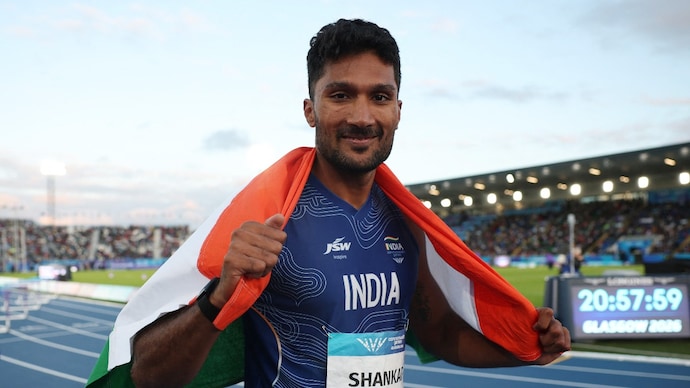
Four days later, he stood in the same mixed zone wearing a bronze medal, having become the first Indian to win a Commonwealth Games decathlon medal.
This is how he got from one to the other.
THE SWITCH FLIPS
Tejaswin wasn't looking for reassurance. He was looking for certainty that his campaign wasn't over.
His biggest fear wasn't the pain. Elite athletes compete through pain all the time. What terrified him was the possibility of turning a manageable injury into one that could end his season, or worse, his career.
The next morning, the first person he reached out to was recovery specialist Wayne Lombard. He asked him the only question that mattered: "Is it possible? Can I come back?"
Lombard's answer was simple: "It's possible."
Then came the medical verdict, from medical experts, that finally gave Tejaswin the clarity he'd been searching for.
"If you can compete through the pain, that's a different story. But there's no risk of a rupture or anything like that."
"That was all I needed to hear," Tejaswin said.
The goal changed instantly. He wasn't trying to find a pain-free knee any more. That wasn't possible. He simply had to accept that the pain would be his companion for the next two days, as long as it wouldn't get worse.
"When the doctor said you're not going to rupture anything, but you'll be in severe pain and that can be managed, that flipped the switch," Tejaswin told NNIS Sports. "Yes, it can be done."
For the first time since walking out of the high jump arena, the decathlon no longer felt impossible.
NOT ALONE ANYMORE
For an athlete who, just hours earlier, had described his world as shrinking to "just me and ChatGPT," what happened next was striking.
The medical clearance had given him permission to compete. The people around him gave him the belief that he could.
The doctors reassured him the injury wouldn't worsen. Physiotherapists worked relentlessly behind the scenes, with recovery sessions stretching late into the night. But one voice cut through everything else.
Long jumper Murali Sreeshankar had lived Tejaswin's nightmare. He had ruptured the same patellar tendon, a setback that cost him the Paris Olympics and forced him through months of rehabilitation before he fought his way back. If anyone understood the fear of wondering whether your body would hold up, it was him.
Over breakfast the next morning, Murali didn't ask Tejaswin to think about medals. He didn't even ask him to think about finishing the decathlon.
"Just show up for the 100 metres," he said. "Warm up. If it goes well, great. If not, stop after that."
It became the blueprint for the next two days.
"Everyone would say it will be okay," Tejaswin said. "But the one person's advice I would always listen to was Murali's, because he is the epitome of resilience. He came back from the same injury."
"There are so many people I'm probably missing," Tejaswin added, "but every single one of them went beyond what they had to and did anything and everything they could for me."
By the time the decathlon began, it no longer felt like one athlete trying to overcome an injury. It felt like an entire team willing one of its own back onto the track.
ONE EVENT AT A TIME
Every decathlete arrives with a plan. Almost nobody leaves having followed it.
Tejaswin's was ripped apart before the first event even began.
"My plan was to run a fast 100 metres," he said. "My plan was to be healthy and have the best period of my life without any challenges, and then just jog the 1500 because I'd have so many points accumulated in the first nine events."
Instead, he arrived at the start line carrying a painful knee and a completely different objective: survive.
Murali's words became his mantra. Don't think about the 1500 metres. Don't think about the medal table. Don't even think about tomorrow. Just finish the event in front of you.
"I just did not let my mind get ahead of myself," Tejaswin said. "What will happen in the 1500m? There's an event right now. Let's do it one event at a time."
The approach paid off immediately. A personal best of 7.82m in the long jump did more than pad his points tally. It proved the knee could hold up in one of the two events he believed carried the greatest risk.
"When that 7.82 popped up, I just thought I'd let out everything I had," he said. "I had no idea how I would do in the shot put because I had no energy left, plus I had not slept."
The emotional swings never stopped. One event lifted him into medal contention; the next threatened to undo all of it.
"That's the beauty of the decathlon," Tejaswin said. "It's a roller coaster. Everybody has a plan, but seldom do you go through the plan."
THE FINAL RECKONING
By the last event, the math had become impossible to ignore. Tejaswin knew England's Sammy Ball was his closest rival for bronze, needing to beat him by a specific margin over 1500 metres.
"My goal was to run as fast as I could and not lose sight of him," he said. "I knew he had to beat me by a certain number of seconds."
But even with the numbers in his head, he refused to race the clock.
"What matters isn't the time," he said. "What matters is whether you go back with a medal or not."
He finished fifth in the 1500m. It was enough. When he crossed the line, the arithmetic finally caught up with him: Tejaswin Shankar had won bronze with 7976 points, behind gold medallist Lindon Victor of Grenada and silver medallist Damian Warner of Canada. It was the first-ever Commonwealth Games decathlon medal for India, and Tejaswin's second CWG medal overall after his 2022 high jump bronze.
"I don't know if it's adversity, but the competitiveness in me is alive," he said. "I'm a bit of an adrenaline junkie, if you will. That's what I thrive for."
Ninety-six hours earlier, he had been alone in a hotel room with nothing but his own spiralling thoughts and a chatbot for company, convinced his season, maybe his career, was over.
"If I had been left alone, I had probably already given up," he admitted. "Those were tears of giving up."
Instead, he found a doctor who gave him permission, a friend who gave him a method, and a team that refused to let him quit.
"I just don't have the words," Tejaswin said, medal around his neck. "It feels unreal. I don't even know if I deserve it or not, but I'm just very, very happy."
Four days earlier, he had been alone in a hotel room, certain his season was over, with nothing but a chatbot for company. Now he walked out of the mixed zone with a bronze medal around his neck and a piece of history that belonged to him alone: the first Indian to stand on a Commonwealth Games decathlon podium.
We've all hit rock bottom at some point in our lives. That moment when the world falls silent, sleep refuses to come, and the only voice left is the one inside your own head.
For Tejaswin Shankar, rock bottom arrived in Glasgow.
Just four days earlier, the national record holder had walked away from the Commonwealth Games high jump final in tears after a flare-up of his long-standing knee injury left him unable to register a single valid jump.
It was the very event that had earned him a bronze medal at Birmingham 2022. This time, it left him wondering whether his Commonwealth Games, and perhaps even his season, had ended before it had truly begun.
Back in his hotel room, the silence grew louder.
"I had no emotions left," Tejaswin later told RevSportz. "Honestly, it was just me and ChatGPT."
It wasn't a throwaway line or a joke. It was the confession of an athlete who had sunk so deep into self-doubt that, in the middle of the night, the only conversation he could find was with an AI chatbot.
Commonwealth Games July 31: Highlights
Four days later, he stood in the same mixed zone wearing a bronze medal, having become the first Indian to win a Commonwealth Games decathlon medal.
This is how he got from one to the other.
THE SWITCH FLIPS
Tejaswin wasn't looking for reassurance. He was looking for certainty that his campaign wasn't over.
His biggest fear wasn't the pain. Elite athletes compete through pain all the time. What terrified him was the possibility of turning a manageable injury into one that could end his season, or worse, his career.
The next morning, the first person he reached out to was recovery specialist Wayne Lombard. He asked him the only question that mattered: "Is it possible? Can I come back?"
Lombard's answer was simple: "It's possible."
Then came the medical verdict, from medical experts, that finally gave Tejaswin the clarity he'd been searching for.
"If you can compete through the pain, that's a different story. But there's no risk of a rupture or anything like that."
"That was all I needed to hear," Tejaswin said.
The goal changed instantly. He wasn't trying to find a pain-free knee any more. That wasn't possible. He simply had to accept that the pain would be his companion for the next two days, as long as it wouldn't get worse.
"When the doctor said you're not going to rupture anything, but you'll be in severe pain and that can be managed, that flipped the switch," Tejaswin told NNIS Sports. "Yes, it can be done."
For the first time since walking out of the high jump arena, the decathlon no longer felt impossible.
NOT ALONE ANYMORE
For an athlete who, just hours earlier, had described his world as shrinking to "just me and ChatGPT," what happened next was striking.
The medical clearance had given him permission to compete. The people around him gave him the belief that he could.
The doctors reassured him the injury wouldn't worsen. Physiotherapists worked relentlessly behind the scenes, with recovery sessions stretching late into the night. But one voice cut through everything else.
Long jumper Murali Sreeshankar had lived Tejaswin's nightmare. He had ruptured the same patellar tendon, a setback that cost him the Paris Olympics and forced him through months of rehabilitation before he fought his way back. If anyone understood the fear of wondering whether your body would hold up, it was him.
Over breakfast the next morning, Murali didn't ask Tejaswin to think about medals. He didn't even ask him to think about finishing the decathlon.
"Just show up for the 100 metres," he said. "Warm up. If it goes well, great. If not, stop after that."
It became the blueprint for the next two days.
"Everyone would say it will be okay," Tejaswin said. "But the one person's advice I would always listen to was Murali's, because he is the epitome of resilience. He came back from the same injury."
"There are so many people I'm probably missing," Tejaswin added, "but every single one of them went beyond what they had to and did anything and everything they could for me."
By the time the decathlon began, it no longer felt like one athlete trying to overcome an injury. It felt like an entire team willing one of its own back onto the track.
ONE EVENT AT A TIME
Every decathlete arrives with a plan. Almost nobody leaves having followed it.
Tejaswin's was ripped apart before the first event even began.
"My plan was to run a fast 100 metres," he said. "My plan was to be healthy and have the best period of my life without any challenges, and then just jog the 1500 because I'd have so many points accumulated in the first nine events."
Instead, he arrived at the start line carrying a painful knee and a completely different objective: survive.
Murali's words became his mantra. Don't think about the 1500 metres. Don't think about the medal table. Don't even think about tomorrow. Just finish the event in front of you.
"I just did not let my mind get ahead of myself," Tejaswin said. "What will happen in the 1500m? There's an event right now. Let's do it one event at a time."
The approach paid off immediately. A personal best of 7.82m in the long jump did more than pad his points tally. It proved the knee could hold up in one of the two events he believed carried the greatest risk.
"When that 7.82 popped up, I just thought I'd let out everything I had," he said. "I had no idea how I would do in the shot put because I had no energy left, plus I had not slept."
The emotional swings never stopped. One event lifted him into medal contention; the next threatened to undo all of it.
"That's the beauty of the decathlon," Tejaswin said. "It's a roller coaster. Everybody has a plan, but seldom do you go through the plan."
THE FINAL RECKONING
By the last event, the math had become impossible to ignore. Tejaswin knew England's Sammy Ball was his closest rival for bronze, needing to beat him by a specific margin over 1500 metres.
"My goal was to run as fast as I could and not lose sight of him," he said. "I knew he had to beat me by a certain number of seconds."
But even with the numbers in his head, he refused to race the clock.
"What matters isn't the time," he said. "What matters is whether you go back with a medal or not."
He finished fifth in the 1500m. It was enough. When he crossed the line, the arithmetic finally caught up with him: Tejaswin Shankar had won bronze with 7976 points, behind gold medallist Lindon Victor of Grenada and silver medallist Damian Warner of Canada. It was the first-ever Commonwealth Games decathlon medal for India, and Tejaswin's second CWG medal overall after his 2022 high jump bronze.
"I don't know if it's adversity, but the competitiveness in me is alive," he said. "I'm a bit of an adrenaline junkie, if you will. That's what I thrive for."
Ninety-six hours earlier, he had been alone in a hotel room with nothing but his own spiralling thoughts and a chatbot for company, convinced his season, maybe his career, was over.
"If I had been left alone, I had probably already given up," he admitted. "Those were tears of giving up."
Instead, he found a doctor who gave him permission, a friend who gave him a method, and a team that refused to let him quit.
"I just don't have the words," Tejaswin said, medal around his neck. "It feels unreal. I don't even know if I deserve it or not, but I'm just very, very happy."
Four days earlier, he had been alone in a hotel room, certain his season was over, with nothing but a chatbot for company. Now he walked out of the mixed zone with a bronze medal around his neck and a piece of history that belonged to him alone: the first Indian to stand on a Commonwealth Games decathlon podium.
We've all hit rock bottom at some point in our lives. That moment when the world falls silent, sleep refuses to come, and the only voice left is the one inside your own head.
For Tejaswin Shankar, rock bottom arrived in Glasgow.
Just four days earlier, the national record holder had walked away from the Commonwealth Games high jump final in tears after a flare-up of his long-standing knee injury left him unable to register a single valid jump.
It was the very event that had earned him a bronze medal at Birmingham 2022. This time, it left him wondering whether his Commonwealth Games, and perhaps even his season, had ended before it had truly begun.
Back in his hotel room, the silence grew louder.
"I had no emotions left," Tejaswin later told RevSportz. "Honestly, it was just me and ChatGPT."
It wasn't a throwaway line or a joke. It was the confession of an athlete who had sunk so deep into self-doubt that, in the middle of the night, the only conversation he could find was with an AI chatbot.
Commonwealth Games July 31: Highlights
Four days later, he stood in the same mixed zone wearing a bronze medal, having become the first Indian to win a Commonwealth Games decathlon medal.
This is how he got from one to the other.
THE SWITCH FLIPS
Tejaswin wasn't looking for reassurance. He was looking for certainty that his campaign wasn't over.
His biggest fear wasn't the pain. Elite athletes compete through pain all the time. What terrified him was the possibility of turning a manageable injury into one that could end his season, or worse, his career.
The next morning, the first person he reached out to was recovery specialist Wayne Lombard. He asked him the only question that mattered: "Is it possible? Can I come back?"
Lombard's answer was simple: "It's possible."
Then came the medical verdict, from medical experts, that finally gave Tejaswin the clarity he'd been searching for.
"If you can compete through the pain, that's a different story. But there's no risk of a rupture or anything like that."
"That was all I needed to hear," Tejaswin said.
The goal changed instantly. He wasn't trying to find a pain-free knee any more. That wasn't possible. He simply had to accept that the pain would be his companion for the next two days, as long as it wouldn't get worse.
"When the doctor said you're not going to rupture anything, but you'll be in severe pain and that can be managed, that flipped the switch," Tejaswin told NNIS Sports. "Yes, it can be done."
For the first time since walking out of the high jump arena, the decathlon no longer felt impossible.
NOT ALONE ANYMORE
For an athlete who, just hours earlier, had described his world as shrinking to "just me and ChatGPT," what happened next was striking.
The medical clearance had given him permission to compete. The people around him gave him the belief that he could.
The doctors reassured him the injury wouldn't worsen. Physiotherapists worked relentlessly behind the scenes, with recovery sessions stretching late into the night. But one voice cut through everything else.
Long jumper Murali Sreeshankar had lived Tejaswin's nightmare. He had ruptured the same patellar tendon, a setback that cost him the Paris Olympics and forced him through months of rehabilitation before he fought his way back. If anyone understood the fear of wondering whether your body would hold up, it was him.
Over breakfast the next morning, Murali didn't ask Tejaswin to think about medals. He didn't even ask him to think about finishing the decathlon.
"Just show up for the 100 metres," he said. "Warm up. If it goes well, great. If not, stop after that."
It became the blueprint for the next two days.
"Everyone would say it will be okay," Tejaswin said. "But the one person's advice I would always listen to was Murali's, because he is the epitome of resilience. He came back from the same injury."
"There are so many people I'm probably missing," Tejaswin added, "but every single one of them went beyond what they had to and did anything and everything they could for me."
By the time the decathlon began, it no longer felt like one athlete trying to overcome an injury. It felt like an entire team willing one of its own back onto the track.
ONE EVENT AT A TIME
Every decathlete arrives with a plan. Almost nobody leaves having followed it.
Tejaswin's was ripped apart before the first event even began.
"My plan was to run a fast 100 metres," he said. "My plan was to be healthy and have the best period of my life without any challenges, and then just jog the 1500 because I'd have so many points accumulated in the first nine events."
Instead, he arrived at the start line carrying a painful knee and a completely different objective: survive.
Murali's words became his mantra. Don't think about the 1500 metres. Don't think about the medal table. Don't even think about tomorrow. Just finish the event in front of you.
"I just did not let my mind get ahead of myself," Tejaswin said. "What will happen in the 1500m? There's an event right now. Let's do it one event at a time."
The approach paid off immediately. A personal best of 7.82m in the long jump did more than pad his points tally. It proved the knee could hold up in one of the two events he believed carried the greatest risk.
"When that 7.82 popped up, I just thought I'd let out everything I had," he said. "I had no idea how I would do in the shot put because I had no energy left, plus I had not slept."
The emotional swings never stopped. One event lifted him into medal contention; the next threatened to undo all of it.
"That's the beauty of the decathlon," Tejaswin said. "It's a roller coaster. Everybody has a plan, but seldom do you go through the plan."
THE FINAL RECKONING
By the last event, the math had become impossible to ignore. Tejaswin knew England's Sammy Ball was his closest rival for bronze, needing to beat him by a specific margin over 1500 metres.
"My goal was to run as fast as I could and not lose sight of him," he said. "I knew he had to beat me by a certain number of seconds."
But even with the numbers in his head, he refused to race the clock.
"What matters isn't the time," he said. "What matters is whether you go back with a medal or not."
He finished fifth in the 1500m. It was enough. When he crossed the line, the arithmetic finally caught up with him: Tejaswin Shankar had won bronze with 7976 points, behind gold medallist Lindon Victor of Grenada and silver medallist Damian Warner of Canada. It was the first-ever Commonwealth Games decathlon medal for India, and Tejaswin's second CWG medal overall after his 2022 high jump bronze.
"I don't know if it's adversity, but the competitiveness in me is alive," he said. "I'm a bit of an adrenaline junkie, if you will. That's what I thrive for."
Ninety-six hours earlier, he had been alone in a hotel room with nothing but his own spiralling thoughts and a chatbot for company, convinced his season, maybe his career, was over.
"If I had been left alone, I had probably already given up," he admitted. "Those were tears of giving up."
Instead, he found a doctor who gave him permission, a friend who gave him a method, and a team that refused to let him quit.
"I just don't have the words," Tejaswin said, medal around his neck. "It feels unreal. I don't even know if I deserve it or not, but I'm just very, very happy."
Four days earlier, he had been alone in a hotel room, certain his season was over, with nothing but a chatbot for company. Now he walked out of the mixed zone with a bronze medal around his neck and a piece of history that belonged to him alone: the first Indian to stand on a Commonwealth Games decathlon podium.

